A 1921 side-by-side two-seater biplane using special form of steel-tube construction of SECM design.
Aircraft
Societe D’emboutissage et de Constructions Mecaniques / SECM
Founded 1916 by Felix Amiot. During First World War built Morane, Breguet and Sopwith types. After war repaired Breguets, and from 1921 helped in construction of early Dewoitine monoplane fighters. Specialized in metal stamping and press-work. Lutace of 1921 was side-by-side two-seater biplane using special form of steel-tube construction of SECM design. SECM 12 was two-seat single-engined night bomber (developed as SECM-Amiot 120B.N.2); 22 was trainer for French competition of 1923; 23 was 3- seat tourer; 24 an elementary trainer. Firm also made Lorraine-Dietrich aero engines, as fitted in Amiot-SECM (or Amiot) 122 series of late 1920s.
Societe Anonyme Pour La Fabrication Et Sexploitation Des Avions Raab
Greece
Formed at Athens in 1935, when Herr Raab transferred his aircraft manufacture from Riga.
S.R.A.P. T.7
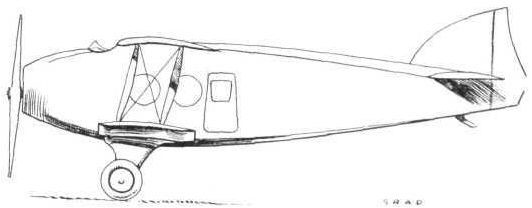
The 1927 S.R.A.P. T.7, also known as the Béchereau S.R.A.P. T.7 or Salmson-Béchereau S.R.A.P. T.7, was a two-bay biplane. Nine were built, powered by a 520 hp Salmson 18CMb radial engine, with a 16.90 m wingspan.
S.R.A.P. C.2
A two-seat monoplane powered by a 500hp Salmson engine.
Societe Anonyme Pour La Realisation D’avions Prototypes / S.R.A.P.
Established at Billancourt in 1926 to build aircraft to the design of Louis Becherau, formerly with Deperdussin and SPAD. First production design was the C.2, a two-seat monoplane powered by a 500hp Salmson engine.
The Paris-based S.R.A.P. is often listed as the ‘Société pour la Réalisation d’Appareils’. Flight truncated the name as ‘Société pour la Réalisation d’Avions’. However, ‘Prototypes’ seems important as it suggests that S.R.A.P. did not intend to manufacture aircraft designs in series.
Societe Anonyme Franqaise Aeronautique / SAFA
In early 1930s licenced to build Netherlands-designed Koolhoven F.K.43 four-seat high-wing monoplane as SAFA F.K.43.
SIA S.I.A.9
S.I.A.7 and 9 series of two-seat reconnaissance- bomber biplanes, dating from 1917, were designed by Umberto Savoia and Rodolfo Verduzio. Structural weakness attributed to both, and Type 9 was rejected by Italian Army on this account, though accepted by Navy.
SIA S.I.A.7
S.I.A.7 and 9 series of two-seat reconnaissance- bomber biplanes, dating from 1917, were designed by Umberto Savoia and Rodolfo Verduzio. Structural weakness attributed to both, and Type 9 was rejected by Italian Army on this account, though accepted by Navy.
Societa Italiano Aviazione / SIA
Had close Fiat links (like Ansaldo and several other Italian companies), and its S.I.A.7 and 9 series of two-seat reconnaissance- bomber biplanes, dating from 1917, were designed by Umberto Savoia and Rodolfo Verduzio. Structural weakness attributed to both, and Type 9 was rejected by Italian Army on this account, though accepted by Navy.

