Coal City IL.
USA
Built aircraft circa 1910-12.
Coal City IL.
USA
Built aircraft circa 1910-12.
William D Somerville of OshkOsh WI., USA, built the Somerville MX.II single engine, two seat homebuilt, registered N7048U.

The “Hoch-Tief-Doppeldecker” built by the “Deutsche Sommer Flugzeugwerke GmbH” at Frankfurt-Rebstock in 1912. This machine was designed by Robert Sommer and had a circular fuselage, was powered by a 70 hp Hoffmann “Rotor” 7-cylinder engine. The lower wings were attached direct to the landing gear, therefore there was some space between wings and body.
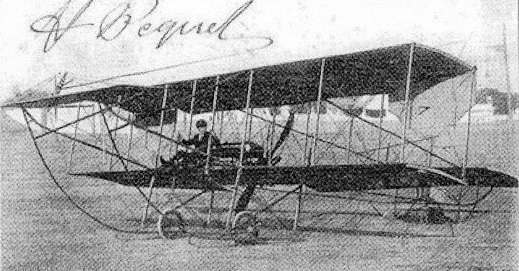
The Sommer 1910 Biplane was designed by Roger Sommer. It was a pusher configuration biplane resembling the successful Farman III, and was built in large numbers for the time. One was owned by Charles Rolls.
In May 1909 Sommer bought a Farman III aircraft, and on 7 August 1909 he gained fame in this by breaking the endurance record held by Wilbur Wright, making a flight lasting 2 hr 27 min 15 sec. Later that year he made a successful appearance at the Doncaster flight meeting, winning the prize for the greatest distance flown during the meeting. Meanwhile, he had started building an aircraft of his own design at Mouzon in the Ardennes, where his family had a felt-making business.
The design of the Sommer biplane was derived from that of the Farman III, the aircraft being a pusher configuration equal-span biplane powered by a 50 hp (37 kW) Gnome Omega. Lateral control was effected by D-shaped ailerons on the upper wing. A single elevator was mounted in front of the wings: behind the wings wire-braced wooden booms carried a horizontal surface which was operated independently of the front elevator and was used to adjust the aircraft’s trim rather than for control purposes. Early examples has a single large rudder mounted below this: this was later changed to four smaller rudders, two above it and two below, and subsequently changed again to one above and one below. The twin skids of the undercarriage were extended forwards to form part of the supporting structure for the elevator, and a single pair of wheels were mounted on an axle between the skids. A two-seat “Military” version with an extended upper wing was produced later.
The prototype was first flown by Sommer on 4 January 1910 at Mouzon, when he managed three flights of over 4 km (2.5 mi) This first machine was sold to a M. Viateaux within two weeks, and by the end of February he had built a replacement and established a flying school at Mouzon. A large number of examples were built: by spring 1910 Sommer had sixty aircraft on order. Sommer had established flying school at Douzy using his machines.
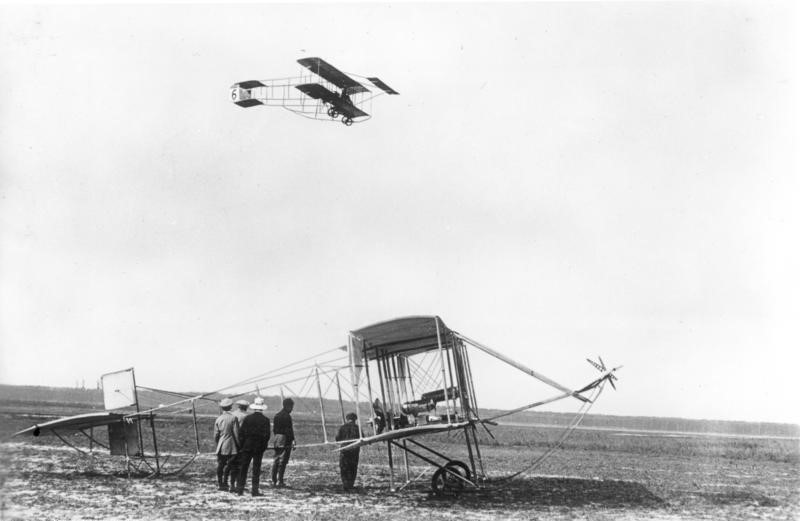
One example was bought by Charles Rolls, and was exhibited on the Royal Aero Society stand at the 1910 Aero Show at Olympia
A small number of license-built copies of the Sommer biplane were built in England by Humber. These were of mixed steel and wood construction, and one was used to carry out the world’s first official mail-carrying flight, when 6,500 letters were flown by Henri Pequet from the United Provinces Exhibition at Allahabad to Naini. The letters bore an official frank “First Aerial Post, U.P. Exhibition, Allahabad, 1911”, the text surrounding a drawing of the aircraft.
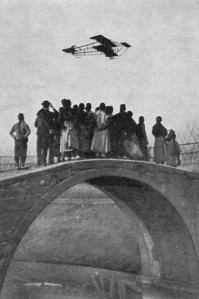
The first aeroplane flight in China was most likely on February 21, 1911, with René Vallon and his Sommer biplane flying over Shanghai. Like other entrepreneurial aviators, he was hoping to sell the concept to onlookers.
Powerplant: 1 × Gnome Omega 7, 37 kW (50 hp)
Wingspan: 10.36 m (34 ft 0 in)
Wing area: 36 m2 (390 sq ft)
Length: 12.5 m (41 ft 0 in)
Crew: 1
Capacity: 1
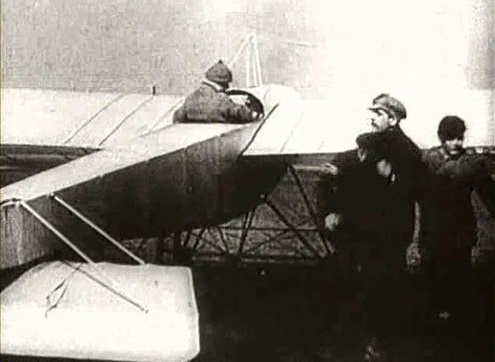
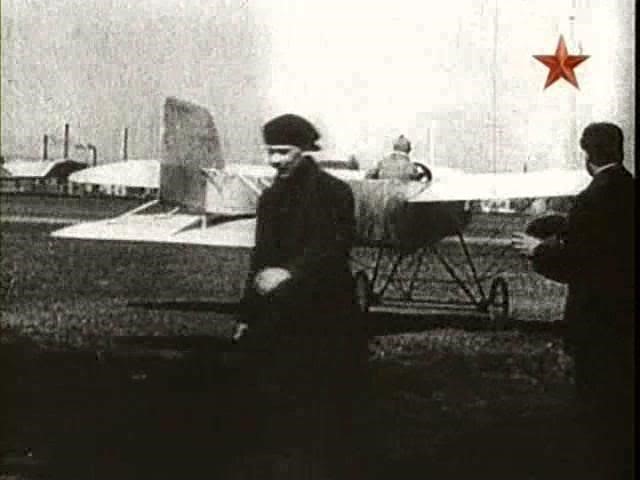
This Roger Sommer monoplane, a fabric covered fuselage version, was designed by Ingénieur Tonnet and flown circa 1911/1912. Léon Bathiat flew many variants of this fast monoplane in several competitions during 1910 and 1911, and in 1912 all interests were purchased by Bathiat who sold these monoplanes under the name Bathiat-Sanchez. Very similar to the Bathiat-Sanchez Type E, shown at the Paris Aero Salon of 1913.
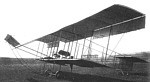
Special Sommer biplane of 1911 lifted 13 persons.
Span: 39’4″
Length: 41′
France
Roger Sommer had built an aircraft of his own design in 1908, achieving a few short straight-line flights in early 1909. This was housed at Châlons, where Sommer had a hangar between those occupied by Gabriel Voisin and Henri Farman. In May 1909 Sommer bought a Farman III aircraft, and on 7 August 1909 he gained fame in this by breaking the endurance record held by Wilbur Wright, making a flight lasting 2 hr 27 min 15 sec. Later that year he made a successful appearance at the Doncaster flight meeting, winning the prize for the greatest distance flown during the meeting. Meanwhile, he had started building an aircraft of his own design at Mouzon in the Ardennes, where his family had a felt-making business.
First began aeronautical work in 1904. Special Sommer biplane of 1911 lifted 13 persons. After a dormant period the company resumed aircraft construction 1915, and at the Armistice the Sommer works was claimed to have been producing up to 200 aircraft per month under subcontract.

Funded by Nat Somers and designed by Hugh Kendall the Somers Kendal SK-1 was planned to win a Royal Aero Club prize for the design of a light aircraft, and to race, all with acrobatic abilities.
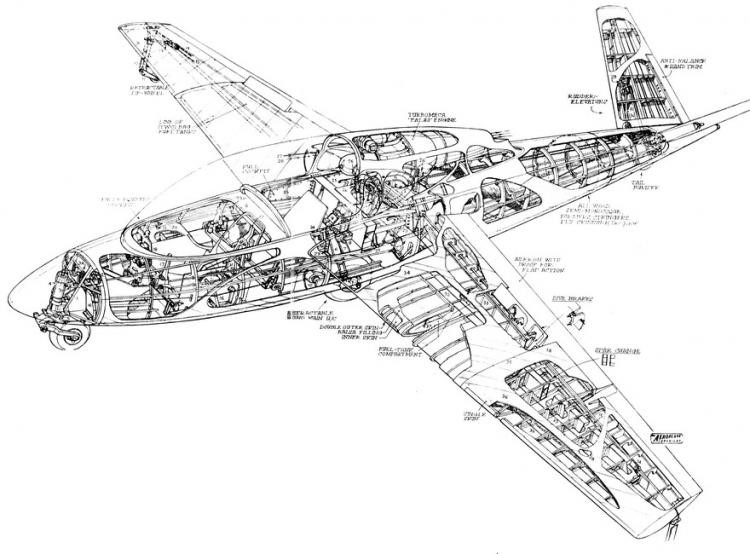
The tandem two-seat SK-1 is made of wood. The wings each hold a structural tank. Both tanks have a total capacity of 227 liters. The leading edge and wing tips are made of synthetic fiber impregnated fiberglass. The laminar wing has an aspect ratio of 8. The flaps extend over the entire span and contribute to the high lift by simultaneously operating down.
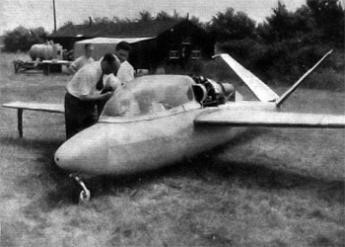
The only metal parts of the aircraft are the engine mounts, the landing gear and butterfly tail. The undercarriage front wheel was a Miles Gemini tail wheel, with a singe main wheel. Side outriggers fully retracted into the wing.
The butterfly tail is full flying and smaller trailing edge flaps act as servo trim tabs.
Built at Woodley, the first flight of the SK-1 was flown by Hugh Woodley Kendall, its designer, on Oct. 8, 1955, registered G-AOBC. It suffered a mid-air turbine failure on 11 July 1957.
The lack of market opportunity (either as aircraft race or as training aircraft for the RAF) terminated the project.
It went to the College of Aeronautics, Cranfield for use as a design example but departed in the mid-1960s.
It was found in 1974 under re-build at a farm near Dunstable.
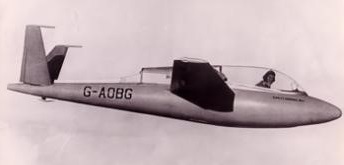
Circa 2010, the Somers-Kendall SK-1 was bought by Peter Bishop of Hamburg, Germany. The body is in good condition and it was transferred to Classic Aero Services in France for restoration.
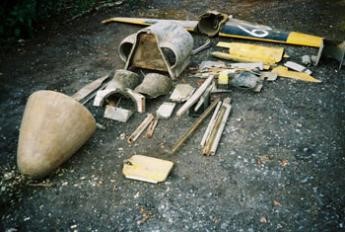
Some other elements exist, but the wings and canopy were missing.
Engine: Turbomeca Palas, 160 Kp
Span 22 ft 9 in / 6.93 m
Wing area: 6.25 m²
Length 20 ft 10 in / 6.35 m
Height: 1.62 m
Fuselage weight: 217 Kg
Engine and accessories weight: 90 Kg
Equipment and oil weight; 35 Kg
Empty weight: 343 Kg
Aerobatic mauw 1300 lb
Fuel capacity: 228 lt
Vne: 645 km / h
Max speed: 332 mph / 535 Km / h (at sea level)
Max cruise: 450 km / h
Initial climb rate: 1850 ft / min
Range: 1160 km at 20,000 ft at 190 kts
Take-off (50 feet, 750 Kg): 685m
Landing dist (50 feet to 650 Kg): 595m
Load factor: + / – 6 g

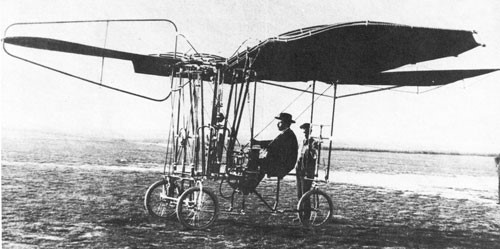
The “Sturmvogel” was an ornithopter designed by Austro-Hungarian engineer Andreas Soltau. It was powered by a carbonic acid engine. It was a relatively large machine, with a span of 11 meters and a wing area of 30 square meters. It had an elevator at the rear, a birdlike construction, and the rudder in front.
The machine was not successful, as the flapping had a too low frequency to lift it off. Tests were made at Linz on 16 August 1909, which were highly published in the contemporary Austro-Hungarian press. After his adventure with the Sturmvogel, Soltau left aeronautics, but he can still be traced in patents dating from the 1920s, one of which features a hot-air engine.
Austro-Hungarian engineer Andreas Soltau designed the “Sturmvogel” ornithopter. The machine was not successful, and after his adventure with the Sturmvogel, Soltau left aeronautics, but he can still be traced in patents dating from the 1920s, one of which features a hot-air engine.

