Southern Aircraft Corp / IMCO / Intercontinental Manufacturing

Southern Aircraft was formed by a group of former Luscombe Airplane Corporation employees in the late 1930s. Their first president was Willis C. Brown. Garland, Texas donated 27 acres of land to SAC and the Garland facility opened its doors in 1939.

In May 1939 the Southern Aircraft Corporation was formed in Houston, and in July 1940 this plant completed its first plane, a biplane designed for use as an army trainer. In December 1940 Southern Aircraft began excavation for a plant near Garland and in February 1941 moved from Houston and began production of military primary-training planes. In the new works made components for Consolidated B-24, Grumman Hellcat, and Avenger. The number of employees grew to 3,000 during WWII.

1940: Southern Aircraft Div, Portable Products Corp (pres: Willis C Brown), Garland and Greenville TX

In the late 1940s and early 1950s, the company’s focus shifted to commercial products such as school bus bodies, tractors, livestock trailers farm implements, and a short-lived Franklin-powered flying car called the Aerocar (1946). During the Korean conflict and the Vietnam War, aircraft and munitions were the primary products.

In 1949, the company’s name changed to IMCO, and over the years workers produced a variety of products, including farm tractors, flamethrowers, soft drink machines and school buses.

Even so, its major emphasis has always been products that support the defense and aerospace industries.

From 1955 through 1969 under the name Intercontinental Manufacturing it had a variety of owners which included Lionel Toy.

In 1968 Bergman Forging moved from their California operations to the Garland facility.

The Garland plant employs about 625 people, who develop and manufacture the steel bodies used in almost all 500-, 1,000- and 2,000-pound bombs in U.S. Navy and Air Force arsenals. The company also forges aluminum and magnesium components used in airplane and ordnance.

From 1988 through 2003 the company was owned by Datron Inc. who sold the firm to General Dynamics in 2003.
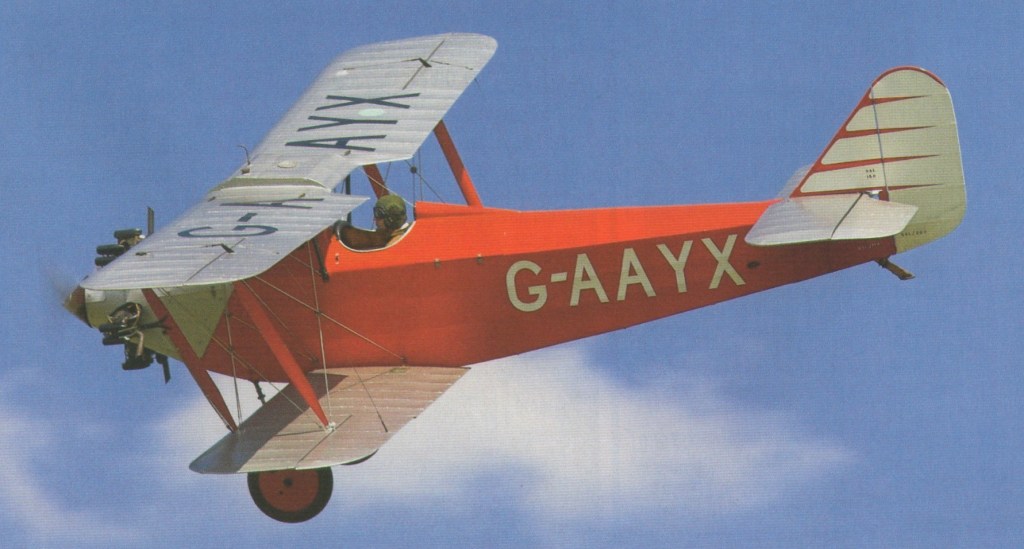
Southern Aircraft Martlet

F. G. Miles developed the Avro Baby into Martlet and Metal Martlet light aerobatic and sporting types. Last example flew 1931.

Southern Aircraft Martlet Article

The first Martlet G-AAII was a modified Avro Baby powered by an 85 hp ABC Hornet. Development of the type was by the Miles Brothers, D L Brown and H Hull at Shoreham and it was first flown in August 1929. During the following two years five Martletts were built; G-AAVD, G-AAYX, G-AAYZ and G-ABIF, all with different specifications and various powerplants. It was to have been succeeded by the Metal Martlett in 1931 but this machine was scrapped after a limited amount of flying.

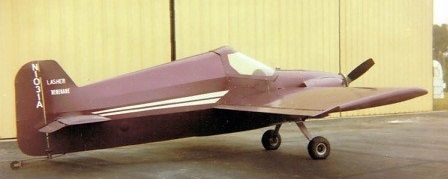
Southern Aeronautical Renegade

This Formula-V sport racer features a straight-line midwing design. The design was largely based on the Cassutt Special III, but was made suitable to accept VW or VW-based engines. Its designer, Charles Lasher, has chosen steel-tube construction for the fuselage and tail because of its ability to withstand the shock of a crash better than other materials

The wings are a wood-frame structure with fabric covering. The ship is made to handle any Volkswagen from 35 to 65 hp.

The first aircraft was built by M. Ricketts and after eighteen months of construction it was first flown in 1974, registered N73RL (c/n B15). Of conventional construction with all-wood wings and fabric-covered fuselage, the single-seat aircraft was powered by one 55 hp Volkswagen VW1600 motor car engine.

N73RL took second and third places in the Formula V competition at the 1978 and 1979 Cleveland National Air Races respectively, and was used for aerobatic displays.

Plans for amateur construction were marketed via Southern Aero Corporation of Miami Lakes, Florida, after 1983 via Charles Lasher.

Lasher Renegade I (N1031A c/n B96)

At least four Renegade I aircraft were completed in the USA:
N73RL, N1031A, N35DE, and N64JM (designated Michalak R-1).

Biplane Racer Andrew Buehler has set up an LLC and negotiated to acquire the design and manufacturing rights for the Renegade from Creighton King in 2014. Initial planning was for Ed Fisher of Raceair Designs to help with the development and construction of a new Renegade airframe, to use in the promotion of the design. Several minor improvements, and a new wing design were in the works.

Engine: VW 40-hp
Wingspan 16 ft
Length 14 ft
Gross Wt. 652 lb
Empty Wt. 400 lb
Fuel capacity 7.5 USG
Top speed 130 mph
Cruise 120 mph
Stall 49 mph
Climb rate 1000 fpm
Takeoff run 560 ft
Landing roll 400 ft
Range 375 sm

Span: 17 ft 0 in (5.18 m)
Wing chord, constant: 5 ft 0 in (1.52 m)
Length: 15 ft 0 in (4.57 m)
Height: 4 ft 3 in (1.30 m)
Empty weight: 451 lb (205 kg)
Max takeoff weight: 670 lb (304 kg)
Max speed: over 170 mph (273 kmh)
Max cruise speed: 145 mph (233 kmh)
Landing speed: 50 mph (81 kmh)
Max climb at sea level: 850 ft (259 m)/min
Service ceiling: 12,000 ft (3,660 m)
Range: 225 mls (362 km)

Southend MPAG Mayfly

An advanced two-seat man-powered aircraft completed by the Southend Man-Powered Aircraft Group, UK. The pilots were located in the nose, side-by-side, beneath a fully enclosed cockpit. A tractor propellor was mounted above the pilots. The fuselage was circular section, with conventional tail surfaces at the extreme rear. A high mounted wing had considerable taper to the tips. The construction was metal tube with balsa non-load carrying parts. The covering was aluminium foil. Tricycle undercarriage.

The project was abandoned after early tests showed mechanical drive problems.

Wingspan: 90.00 ft
Wing area: 400 sq.ft
Aspect ratio: 20:1
Empty weight: 156 lb

Southampton University MPA / SUMPAC

Built specially to compete for the Kremer prize of £5,000 for man-powered flight, design started in July 1960 and actual construction in January 1961. It was finished in September 1961.

First flown on 9 November 1961 at Lasham, the first flight was about 50 yds at a height of about six feet over level ground and in still air. A single seat, fixed wing monoplane with the propellor driven by pedalling.

By 1962 SUMPAC was flying up to 650 yds and executing turns.

In 1964 it was modified in various details and given a different belt drive mechanism. In flight test it was damaged after a stall at about 30 ft.

The machine was donated to the Shuttleworth Trust where it was displayed at Old Warden. It was allocated BAPC.7.

Wingspan: 80.00 ft
Wing area: 300 sq.ft
Aspect ratio: 21:1
Empty weight: 128 sq.ft

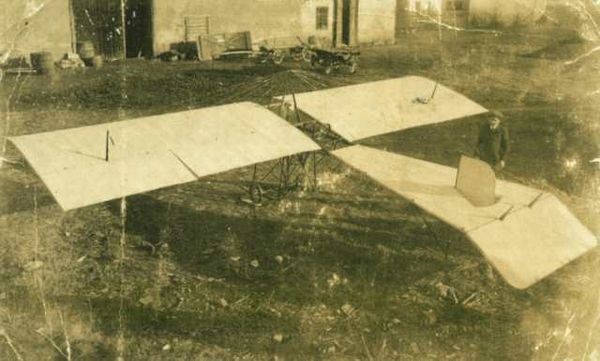
Šoštarko Monoplane

1911-12 monoplane of Austro-Hungarian/Croatian origin built by Slavoljub Šoštarko in Zagreb (Agram), Croatia – then part of the Austro-Hungarian Empire. Šoštarko was probably an automobile racer who crossed over to airplane design and flying, but when his monoplane was exhibited in Zagreb in 1912, it was destroyed during his very first attempt at flight. There is no evidence that Šoštarko flew after this. As one of a few others who were experimenting right next to the sheds of Mihajlo Mercep at the gates of Zagreb, to be expected, the Šoštarko monoplane shows some resemblance to the Mercep Rusjan-Novak monoplanes; i.e. wing-posts, tail assembly with rudder running through the stabilizer, etc.

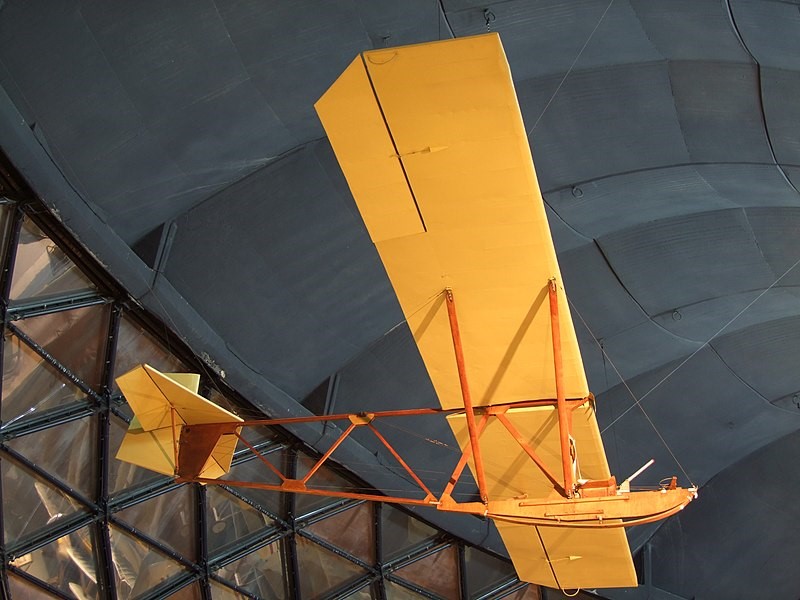
Šoštarić Vrabac / UTAV Vrabac

Utva Vrabac A, on display at the Aviation Museum – Belgrade

The Soštarić Vrabac, (Serbian: Врабац / Vrabac – sparrow), was a primary glider for basic pilot training designed and built in the Kingdom of Yugoslavia.

Of mixed composition, mostly wood and canvas, with undercarriage skis for landing, the Vrabac was designed by engineer Ivo Šoštarić in 1939, inspired by the success of the Zögling, a German primary glider. Unlike the Zögling, the Vrabac was not wire-braced, lacking a kingpost and using struts to brace the wings to the lower fuselage.

During tests at Vršac the Vrabac showed far better flight characteristics than not only its German exemplar, but also from the Polish Kocjan Wrona.

Production of 15 aircraft in two versions – A manufactured in the factory at Pančevo, and B began in 1939, as the first serially built glider in Serbia. Production continued after World War II and more than 150 were made. Due to the simple design of this glider, it was also made in local aeroclubs’ workshops during the winter, so that they could be used for training during the summer.

Vrabac A
Wingspan: 10 m (32 ft 10 in)
Wing area: 15 m2 (160 sq ft)
Aspect ratio: 11.7
Length: 6.03 m (19 ft 9 in)
Height: 2.15 m (7 ft 1 in)
Empty weight: 90 kg (198 lb)
Gross weight: 170 kg (375 lb)
Stall speed: 42.5 km/h (26.4 mph, 22.9 kn)
Never exceed speed: 70 km/h (43 mph, 38 kn)
Rate of sink: 1.17 m/s (230 ft/min) at a speed of 47.1 km/h (25 kn)