In 1936 Sparmann’s Flygplanverkstad built S-1 single-seat low-wing monoplane trainer. Several delivered to Swedish Air Force.
Aircraft
Sparmann’s Flygplanverkstad
Sweden
In 1936 built S-1 single-seat low-wing monoplane trainer. Several delivered to Swedish Air Force.
Sparling Propeller & Aeroplane Factory
(John Nicholas) Sparling Propeller & Aeroplane Factory
E St Louis MO.
USA
In 1912 the Sparling Propeller & Aeroplane Factory built a single-place, open biplane, personal representation of the Curtiss headless design with trailing-edge top-wing ailerons.
Spalenger S-18 III
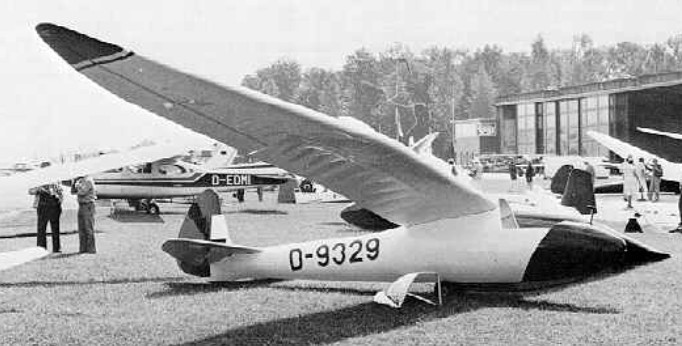
Designed by Jakob Spalinger. No. Built: 55
Spalinger S-18 III
Wing span: 14.3 m
Wing area: 14.16 sq.m
Aspect ratio: 14.44
Airfoil: go 535
Empty Weight: 158 kg
Gross Weight: 243 kg
Wing Load: 16.8 kg/sq.m
L/DMax: 24 71 kph
MinSink: 0.68 m/s 57 kph
Seats: 1
Spainhour 1912 monoplane
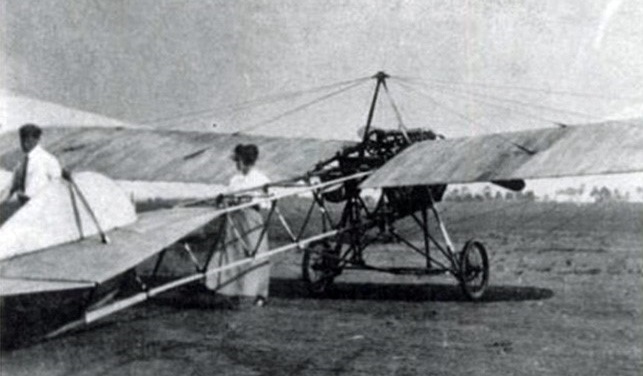
The monoplane of James S. Spainhour, of Pittsburgh, PA, had an unusual device for securing lateral control. The wings did not warp, or only very slightly. They were fixed to the fuselage by a floating bridge, and the angle of incidence of the whole of each wing could be altered by the movement of a pedal, one for each plane. When the angle of incidence of both the wings is increased the machine pitched up. The machine weighed 497 pounds, had a triangular fuselage and a span of 34 feet 5 inches. It was powered by a 40 hp four-cylinder Kowalsky engine, which had a self-starting crank. Spainhour made several short flights near Pittsburgh on a six-acre field, and moved to Mineola, Long Island, to get more room.
It apparently reached 1000′ high at speed of 50 mph
SPAD S.54
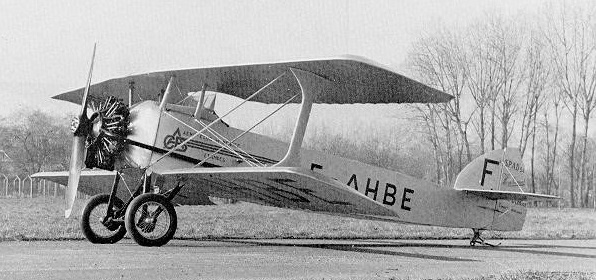
The SPAD S.54 was a French biplane trainer aircraft of the early 1920s, developed by Société Pour L’Aviation et ses Dérivés (SPAD).
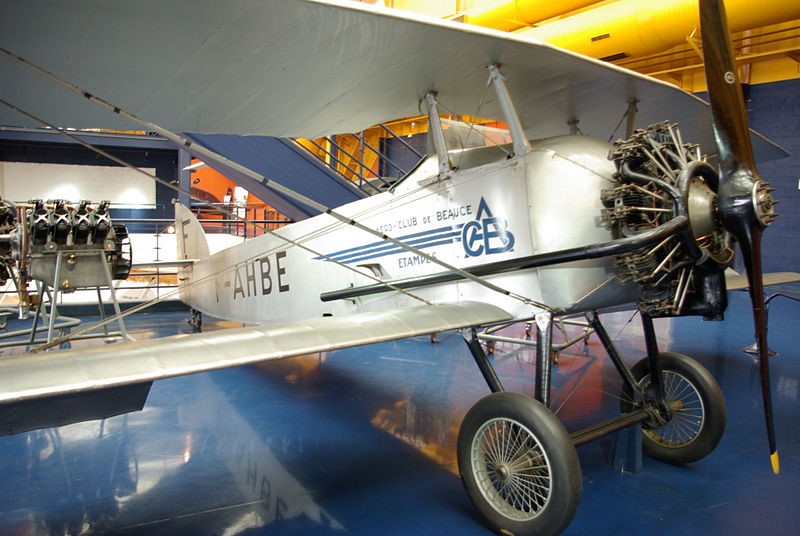
Designed by Louis Béchéreau, the S.54 first flew on 23 February 1922.
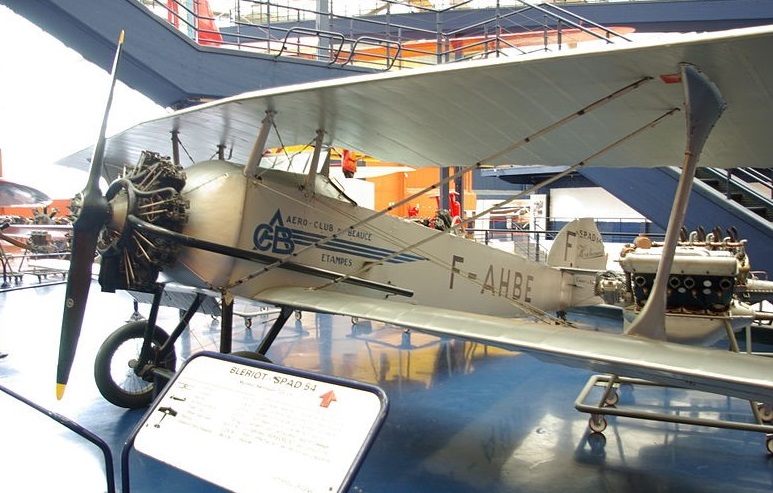
Twenty-five were built, operated by the Aéronautique Militaire.
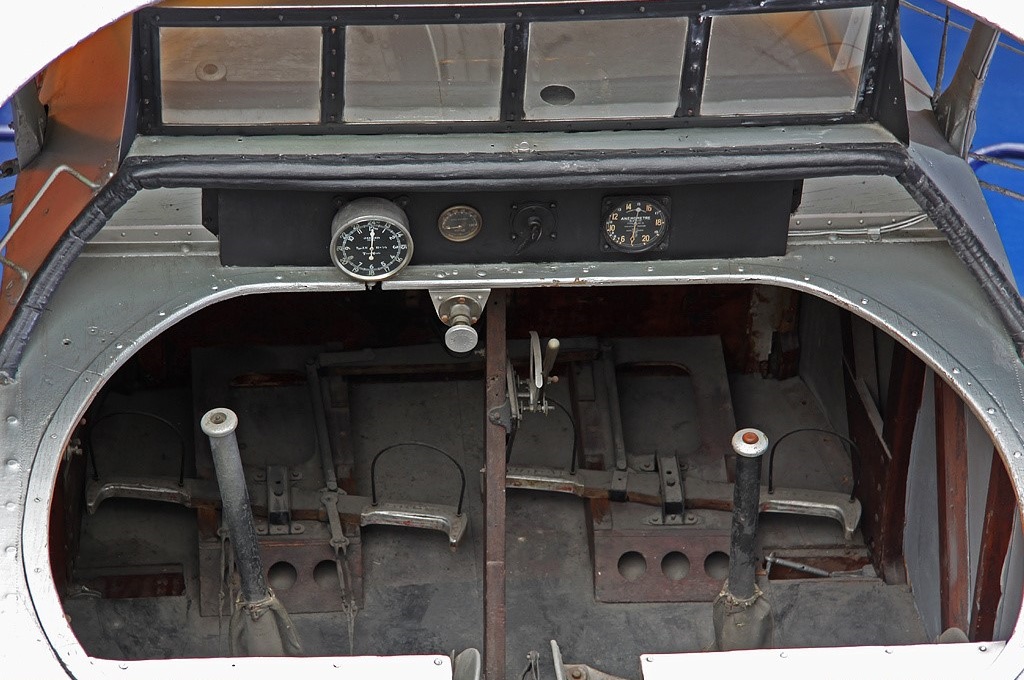
Engine: 1 × Clerget 9B, 97 kW (130 hp)
Wingspan: 8.96 m (29 ft 5 in)
Wing area: 23.52 m2 (253.2 sq ft)
Length: 7.24 m (23 ft 9 in)
Height: 2.57 m (8 ft 5 in)
Empty weight: 520 kg (1,146 lb)
Gross weight: 757 kg (1,669 lb)
Maximum speed: 120 km/h (75 mph, 65 kn)
Crew: 2
SPAD-Herbemont 52
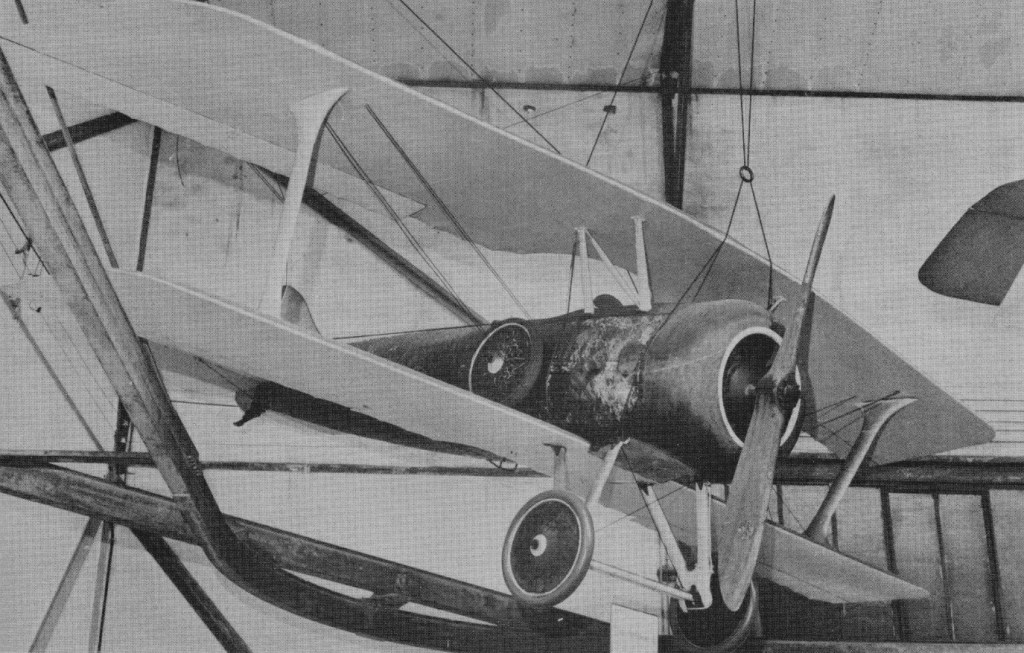
Derived from the SPAD 29, this was a one-and-only for aerobatic pilot Jean Casale who used it during air meets. The craft carried a spare wheel on each side of the fuselage.
It was donated to a museum by racing pilot Sadi-Lecointe.
Engine: Gnome-Rhone, 120 hp
Wingspan: 25.26 ft
Length: 18.99 ft
SPAD S.XVI
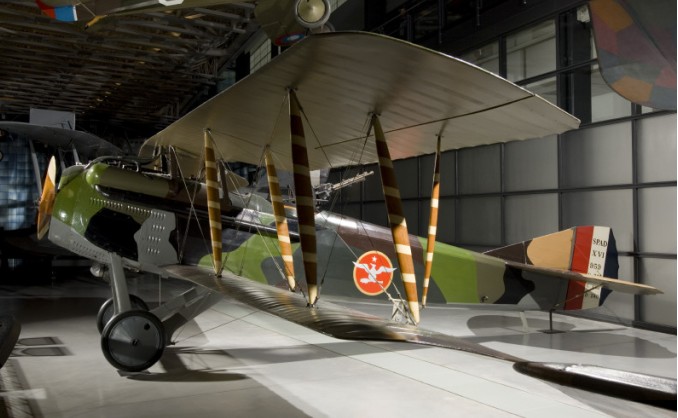
The Spad XVI was a two-seat version of the very successful single-seat Spad fighters of World War I, the Spad VII and the Spad XIII. The first Spad two-seater design to see front-line service was the Spad XI. The Spad XVI was an attempt to improve upon it by replacing the Spad XI’s 220-horsepower Hispano-Suiza engine with a 240-horsepower Lorraine-Dietrich 8Bb. The Spad XVI appeared in January 1918. It was slightly faster than the Spad XI, but had a lower ceiling and the same poor handling qualities. It offered no overall improvement. Nevertheless, approximately 1,000 Spad XVIs were built, ultimately equipping 32 French escadrilles.
Wingspan: 11.2 m (36 ft 9 in)
Length: 7.8 m (25 ft 7 in)
Height: 2.8 m (9 ft 2 in)
Weight: Empty, 906 kg (1,994 lb)
Gross, 1,140 kg (2,508 lb)
Materials:
Airframe: Wood
Covering: Fabric
Physical Description:
Single-engine, two-seat, French-built World War I reconnaissance and bomber aircraft; 240-horsepower Lorraine-Dietrich 8Bb engine.
SPAD XIII / S.17
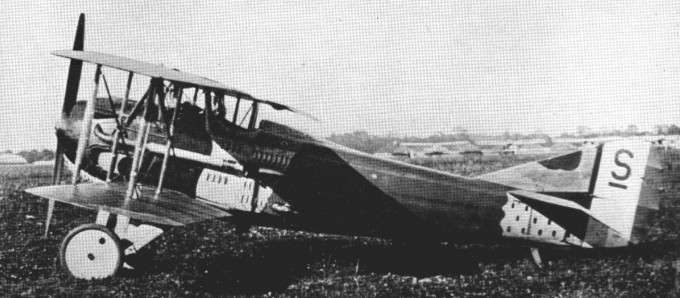
The SPAD XIII designed by M.Béchereau replaced the S.VII from mid-1917 with more power and double the armament. A two bay biplane, the two spar wooden wings and wooden fuselage are fabric covered. Conventional controls are fitted with ailerons are on the top wing only. Wings and control surfaces all have wire trailing edges giving the scalloped look.
The SPAD XIII had an exhaust-driven supercharger mounted vertically behind the cockpit. But this early development was hampered by lack of suitable alloys for the supercharger rotors.
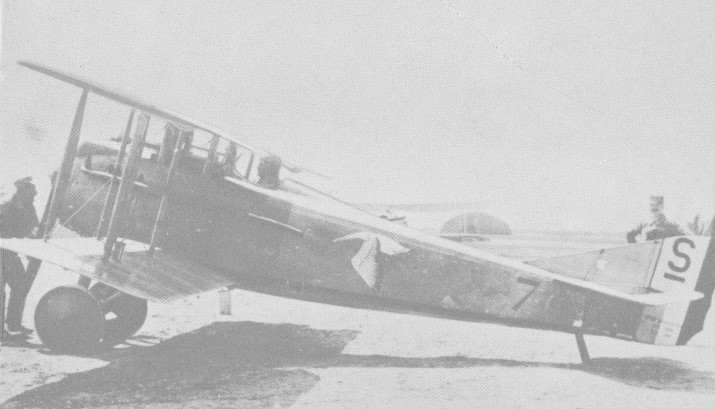
It was the Spad S.XIIIC.1 which was used almost exclusively by US and French squadrons in France in 1918. It was built initially with a 200 hp Hispano engine, but later models had a 235 hp Hispano, which made them very fast indeed. Standard armament was twin Vickers guns, but some, re designated S.17, carried cameras for high speed photo-reconnaissance duties.
There were flown about sixty Spad VII and XIII in Czechoslovakia after the Great War.
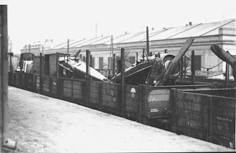
The Spad XIII was produced and deployed in great numbers. By the end of 1918, the parent company and eight other French manufactures had built 8,472. Almost every French fighter squadron was equipped with them by the end of the war, as well as the American units that were part of the American Expeditionary Force. Spads were also used by the British, the Italians, the Belgians, and the Russians.

Ultralight replica:
Squadron Aviation SPAD XIII
Loehle Aviation Spad XIII
Early Bird Aircraft Spad XIII
Light Sport Replica:
R.A.D. Inc Spad XIII
Engine: Hispano Suiza Model E, 180hp.
Engine: Hispano Suiza 8BA 8 cylinder, 220 hp
Length: 20 ft 4 in
Wingspan: 26 ft 4 in
Speed: 133 mph
Ceiling: 22,300 ft
Range: 200 miles
Engine: 220-horsepower Hispano-Suiza 8Be
Wingspan: 8.2 m (26 ft 11 in)
Length: 6.3 m (20 ft 8 in)
Height: 2.4 m (7 ft 11 in)
Weight: Empty, 566 kg (1,245 lb)
Gross, 820 kg (1,808 lb)
Max speed: 130 mph at 6000 ft
Service ceiling: 22,300 ft
Endurance: 2 hr
Seat: 1
Armament: 2 x Vickers mg
S.XIIIc.1
Span 20 ft. 4 in
Length 20 ft. 8 in
Height 7 ft. 6 in
Wing area 215 sq. ft
Max. speed 138.5 mph
Service ceiling 22,350 ft
S.XIIIc.1
Engine: Hispano Suiza, 220 hp
Span: 8.08 m
Length: 6.22 m
Empty weight: 570 kg
Top speed 215 km.p.h
Climb to 2000 m: 4 min 24 sec
Service ceiling: 6650 m
Range: 295 -400 km
Armament: two synchronized machine guns over the engine
SPAD XII
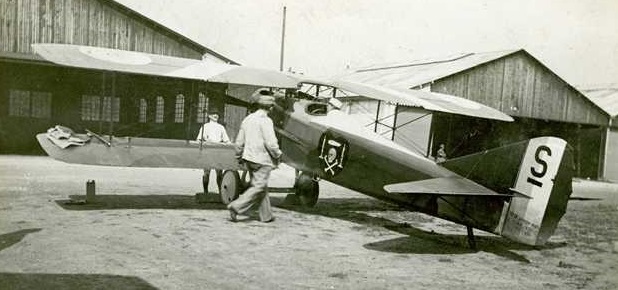
During the fall of 1916 French ace Georges Guynemer had to face too much jamming of his machine guns during combat and noted that the Hispano-Suiza 8 Aa 150hp was lacking of power to face the new German adversaries. He began (probably circa October 1916) to envisage the creation of a development of the SPAD VII, more powerful and having a better armament thanks to a cannon. He contacted Louis Bécheraut, the technical director of SPAD (Société anonyme Pour l’Aviation et ses Dérivés) with who he was a friend, asking him to realize the drawings of such an aircraft. The first time it is spoken about the aircraft is in a report of 10 December 1916 and designation was SPAD XII Canon 1 or Ca 1 (Ca from Canon). The French mounted 37mm and 47mm on Voisin Type 4 and type 8 bomber aircraft.
The placing of armament in the prop shaft removes the need for synchronization and therefore this design has a faster rate of fire. The very first one to use this in combat was the French fighter SPAD XII from WW1.
A 37mm S.A.M.C. cannon was positioned in the V formed by the cylinders and firing through the propeller shaft. It was 40 to 45 kilograms weight and it included 10 to 12 cannon shells. A synchronized 7,65mm Vickers machinegun with 400 rounds was fixed on the right of the engine cover.
Tests revealed the great performance of the aircraft, excellent for the period with a maximum speed near to 220km/h but they revealed also problems. The gun system was a problem because only one fired at a time. The pilot was obliged to recharge manually, in a very breezy cockpit with big smoke after each fire. Another problem was that the SPAD XII’s used a gear drive for the prop. Similar to troubles with the SE 5, the gears weren’t of the best quality manufacture and drive train vibration resulted.
The production in series of the SPAD-Canon was initiated after a first order of 300 aircraft. The beginning of the SPAD-Canon was marked with numerous problems due to the Hispano-Suiza 200hp engines. Those problems were finally corrected by mid-1918. The fighter was later equipped with a more powerful version of that engine, the 8Cb model delivering 220 hp thanks to a better compression.
At the end of November 1917 it was decided to modify the wings to obtain better control. That problem was resolved by the adoption of square wing extremities. Those wings were not available during some months so a temporary solution was applied in January-February 1918. New wings were adopted during the spring of 1918.
Finally there were no other ordering because the production effort was concentrated on the SPAD VII and XIII, more classics and more easy to master.
The first combat mission was of course made by the “S” prototype piloted by Georges Guynemer that attacked with lieutenant Battesti (SPA 73) a group of DFW two seaters on 5 July 1917. Unfortunately Guynemer was unable to fire due to his misplaced visor; the German aircraft opened fire and the two French were obliged to run away. Hit by 5 bullets (two of them in the radiator and the engine), the SPAD-Canon had to be sent back to the factory to be repaired. Guynemer recovered the aircraft on the 23 of July. “Pétadou” (nickname given to the aircraft by Guynemer) gave the opportunity for the ace to obtain his 49th and 50th kills on 27 and 28 of July: DFW single seater and two seater. Those two successes confirmed the power of the 37mm gun: one hit was resulting in the automatic destruction of the enemy. But the last victim struggled valiantly and the “S 832”, seriously hit, was again sent to Paris for repair. It came back to the front on 15 of August but for a short time. Guynemer obtained his 51th and 52nd kills (Albatros and DFW two seaters) on the 17 August but the aircraft was damaged on the next day during another probable kill on a DFW. That was the end of the aircraft because it was not repaired yet when Guynemer was missing in action on the 11 of September 1917, flying the SPAD XIII “S 504”. It seems that after that one or two SPAD XII were delivered to some squadrons equipped with SPAD VII and XIII.
It seems that a total of 30 samples served in operation until the end of the war (one source state 44 samples delivered up to July 1917). Five SPAD XII were on the front on 1st of April 1918; eight on 1st of November. The aircrafts were reserved in each squadron for the best pilots. The Allied ace of aces René Fonck flew during the first part of 1918 on the “S 445” and “S452”. He obtained with those aircraft 7 confirmed kills and 4 probable. On the 19th May, his 43rd and 44th victories could have been dramatic with blocked flying controls and it’s only after a dive of 3000 meters that Fonck managed to control the aircraft again. René Fonck became history’s most successful SPAD XII pilot, scoring 11 kills in the type while flying it as a transitional airplane between the VII and the XIII. At least one of those kills was scored purely through the use of the Vickers machine gun with no cannon shots at all. Georges Madon (41 kills) flew the “S 434” with the fuselage completely red painted; Gabriel Guérin (23 kills) was probably the owner of the “S 444”; Albert Deullin (20 kills) received one of the first SPAD XII, in August 1917. Other squadron leaders like Henry Hay de Slade (SPA 159, 19 kills) were also given a personal aircraft. Wingman of Guynemer during the first fight of the SPAD-Canon, François Battesti received his machine in October 1918 only. He loved the aircraft and it’s probably flying with him when he obtained his 7th and last kill on 29 of October. A second SPAD XII was delivered to the SPA 3 in 1918; it was piloted by one of the aces of the squadron, probably Georges Raymond (6 kills) or Jean Bozon-Verduraz (11 kills). One SPAD d XII was lastly delivered at the SPA 112 from which the two best pilots were Fernand Chavannes and Lionel de Marmier (both having 7 kills).
It seems that only two SPAD XII were exported. The first one (“S 449”) was provided to the Royal Flying Corps in January 1918. It got the British serial number “B6877” and was tested at Martlesham Heath. Like the French one, British test pilots found it was not well balanced due to a heavy nose. It’s career amongst the RFC was very short because it crashed on 4 of April en route to the Grain island for new tests.
The second SPAD XII sent to another country was taken in charge by the US Army Air Service (USAS). Ordered in July 1918 it was handed to the leader of the 139th Aero Squadron, the 1/Lt David Putnam. He was killed on the 12 of September without having received his aircraft yet. The aircraft was then given to Capt Charles Biddle (6 kills at that time), leader of the 13th Aero Squadron.

