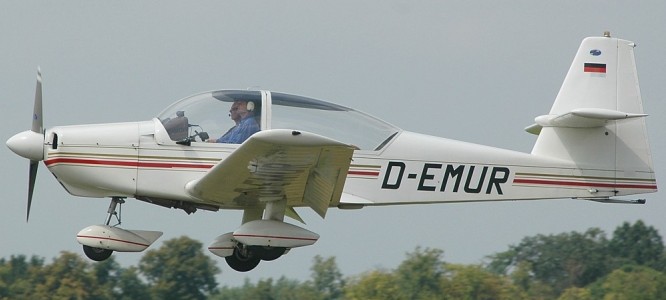
A four-seat lightplane
A four-seat lightplane
Alfons Pützer and Comte Antoine d’Assche, director of the French company Alpavia SA, formed a new company in 1966, Sportavia-Pützer, to produce the Fournier series of light aircraft.
Formed to take over from Alpavia SA manufacture of Avion-Planeur series designed by Rene Fournier, by spring 1969 had delivered 150 RF4D single-seaters. Two-seat RF5 flew 1968, followed by RF6 and RS180 Sportsman four-seat lightplane.
Sportavia Pützer went bankrupt in 1977 not long after the first prototype RF-9 had made its maiden flight.
Became entirely owned by Rhein-Flugzeugbau GmbH 1977 and lost name 1981.
The LSA Talons are strut-braced three-axis aircraft with conventional gear and a pusher prop configuration, based on an ultralight style of construction.
Sport Flight Aviation uses CAD/CAM technology to refine and verify its designs while also improving manufacturing processes. CNC machining of Talon components is done in-house, producing Talon aircraft kits.
With the powder-coat option, the only painting required on the Talon is the nose cone. The Talon has only a few welded components, such as the elevator interlink, torque tube, and fuel tank. All welding is done at the factory.
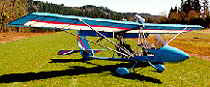
The range of the Talon varies depending on the model, engine used, loading, and fuel capacity. The TalonXP equipped with the standard 11.75 gallon welded aluminum fuel tank and Rotax 582 C drive, with 70 inch 3-blade prop can fly for at least 2.5 hours at 68mph. A TalonXP equipped the same, but with the HKS 700E 60hp four-stroke engine, can stay aloft for over three hours with a reasonable reserve. The single seat Magnum and Typhoon can accept an optional 22 gallon welded aluminum fuel tank.
The two-seat TalonXP has an empty weight of 479lbs and a gross weight of 950lbs. With the NorthSlope package installed, the useful payload can be increased to 570lbs. The TalonXP with a Rotax 582 engine can fly at 90mph in level flight. The Talon cruises between 62 and 85mph, depending on the model and engine installation. A typical TalonXP equipped with a Rotax 582 engine cruises at about 70mph. The single seat Magnum and Typhoon comparably equipped will cruise at 76-80mph.
All Talons are equipped with 3-position flaps; 10, 22, and 35 degree positions. Set in the 35 degree position, The TalonXP can comfortably fly at 40-43mph at low power settings. The stall takes place at 33-38mph.
The main boom is 5in. OD x .065in. wall 6061-T6 seamless drawn aluminum tubing. This tube is sleeved at hard points, such as the landing gear carry-through, for added durability. The skins are .050 6061-T6 mated together with stainless steel rivets, creating a light, strong, box-type structure. The Talon’s gear legs are nickel plated 4130 steel alloy tubing with .120in. wall, heat-treated in a special salt bath for strength and integrity.
All Talons come standard with an Aviation Products 5in. break-away full swivel steerable tail wheel.
All Talon models include a built-in curved instrument panel, 3-point shoulder harness, 8-inch spun aluminum welded wheels, streamlined aluminum struts, padded configurable seats, 3-axis control, AN aircraft hardware throughout (included with kit), welded aluminum fuel tank with 11.75 US gallon capacity, tinted polycarbonate windshield, differential ailerons, stainless steel control and structural cables, Mil-spec control pulleys, engine mount with 6 rubber isolators, and preformed wing ribs (XP and Super Magnum: 40 total, Magnum: 36 total)
Talon Magnum
Engine: HKS 700E, 61 hp
HP range: 40-70
Length: 21.6 ft
Wing span: 26 ft 3 in
Wing area: 138 sq.ft
Cruise: 80 mph
Stall: 38 mph
Range: 230 sm
Rate of climb: 1000 fpm
Takeoff dist: 175 ft
Empty weight: 437 lb
Gross weight: 735 lb
Fuel capacity: 11.75 USG
Landing dist: 225 ft
Seats: 1
Cockpit width: 24 in
Landing gear: tailwheel
LSA: yes
Talon XP
Engine: HKS 700E, 61 hp
HP range: 40-80
Length: 21.6 ft
Wing span: 28.5 ft
Wing area: 148 sq.ft
Empty weight: 535 lb
Gross weight: 1050 lb
Fuel capacity: 11.75 USG
Cruise: 72 mph
Stall: 41 mph
Range: 230 sm
Rate of climb: 900 fpm
Takeoff dist: 250 ft
Landing dist: 250 ft
Seats: 2 tandem
Cockpit width: 24 in
Landing gear: tailwheel
LSA: yes
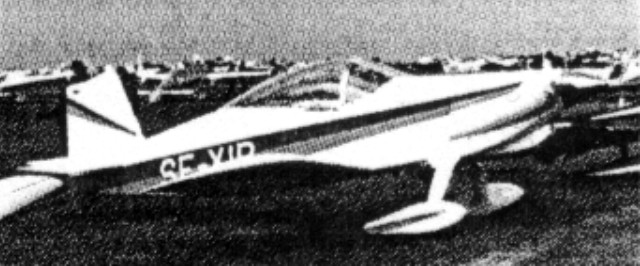
Modelled after the Thorp T-18 and incorporating folding wings.
Engine: Lycoming, 150 hp
HP range: 150-180
Speed max: 183 mph
Cruise: 165 mph
Range: 530 sm
Stall: 63 mph
ROC: 1200 fpm
Take-off dist: 900 ft
Landing dist: 1200 ft
Service ceiling: 18,000 ft
Fuel cap: 29 USG
Weight empty: 923 lbs
Gross: 1600 lbs
Height: 5.1 ft
Length: 19.33 ft
Wing span: 20.8 ft
Wing area: 86 sq.ft
Seats: 2
Landing gear: tail wheel
Sells plans and kits to construct the S-18 side-by-side two-seat low-wing monoplane, formerly sold by Sunderland Aircraft and based on the original Thorpe T-18 Tiger.
1995: 44211 Yucca, Unit A, Lancaster, CA 93535, USA.
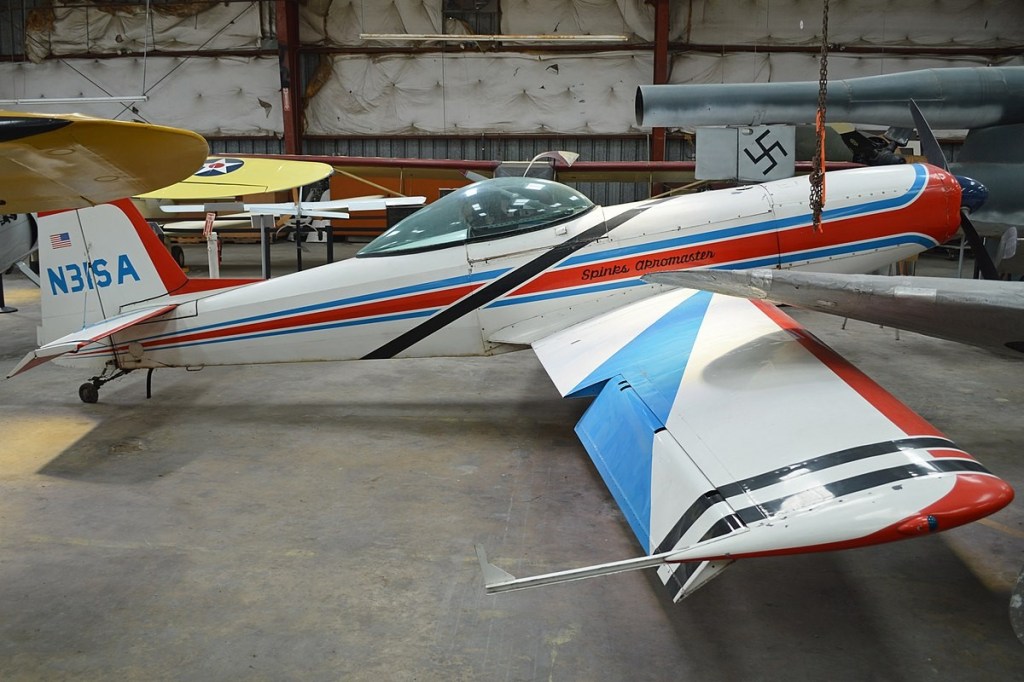
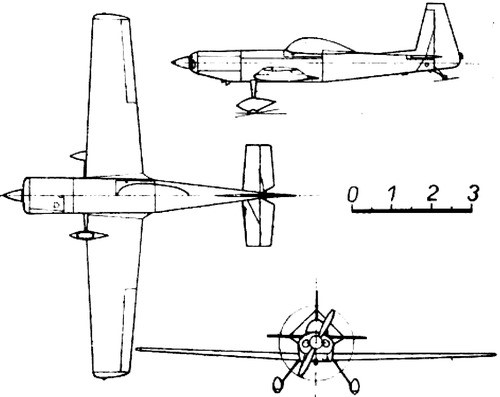
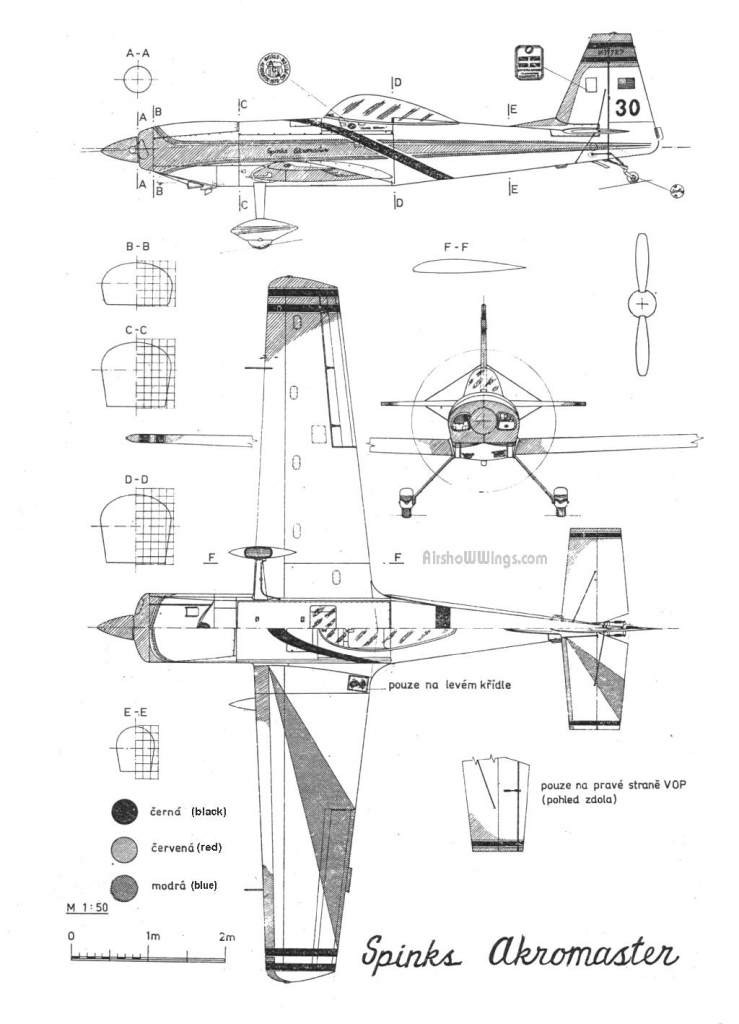
M H Spinks Sr designed and built the Spinks Akromaster, N7727, first flying on 28 August 1968.
A single-place cabin, low wing monoplane, it was marketed as a home-built for aerobatics.
Engine: 200hp Lycoming IO-360
Wingspan: 30’0″
Length: 24’0″
Useful load: 475 lb
Max speed: 280 mph
Cruise: 170 mph
Stall: 55 mph
Range: 1100 mi
Seats: 1
M H Spinks Sr
Ft Worth TX.
USA
Designed and built the Spinks Akromaster in 1968.
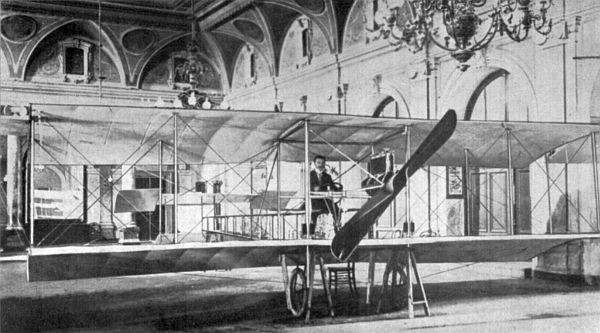
The first design of brothers Franz and Josef Spiller in Graz, Austria. It was exhibited in Graz in June 1910 before tests on the Graz flying field Thalerhof. The engine was a 50 hp Austro-Daimler automobile motor similar with that which Etrich also had no joy in Spring 1910 (before Ferdinand Porsche designed an aero engine of it). The Spillers later that year changed to a Puch aero engine, also built in Graz. Details of their achievements are almost undocumented, but they were experimenting at Thalerhof at least until 1912, with more or less success.
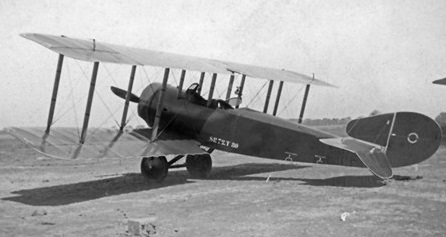
Between 1918 and 1925 the Royal Netherlands Navy used the Spijker-Trompenburg biplane for training duties.
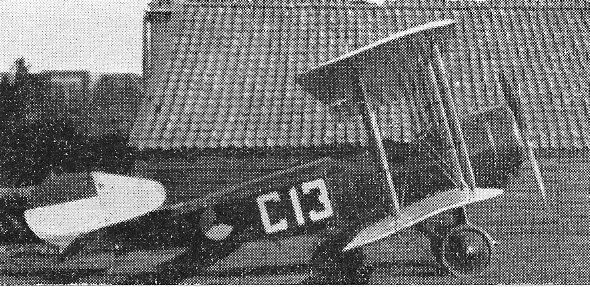
Designed by Henry Wijnmalen, the Spijker was first publicly displayed at the Amsterdam Aircraft Exhibition in August 1919.
The 1940 Spier Pursuit Trainer was a single-place cabin, low wing monoplane. unsuccessful prototype for military evaluation.
Engine: 175hp Lycoming O-435
Wingspan: 26’0″
Length: 21’0″
Useful load: 300 lb
Max speed: 190 mph
Cruise: 165 mph
Stall: 62 mph
Seats: 1

