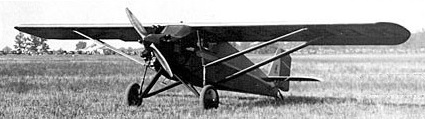
St. Louis Cardinal, 100 hp. model, at Lambert Field ca. 1929
St. Louis Aircraft seized the opportunity afforded by the “Lindbergh Boom” in 1928 to produce a line of light, enclosed-cabin, two-seat, single radial-engine monoplanes christened Cardinals. At 1929 Detroit Aircraft Show exhibited the Cardinal high-wing monoplane, the company’s first airplane. Cardinal Senior which followed had more power.
St Louis C2-85 Cabin
Unfortunately, the Cardinal’s timing was not ideal: having been beaten into production by such highly successful similar private aircraft as the Monocoupe, Curtiss Robin, and others, the Cardinal did not sell well, becoming an early victim of the Depression-era aeronautical slump.
The last of 21 Cardinals was delivered in 1931.
St Louis C2-60 as C2-110 NC951K
C2-60 Cardinal 1929 ATC 2-92, superseded by 273 Engine: LeBlond 5D, 60hp Wingspan: 32’4″ Length: 20’7″ Useful load: 600 lb Max speed: 105 mph Cruise: 90 mph Stall: 35 mph Range: 500 mi Seats: 2 Price: $3,700 No built: 10 1 later converted to C2-85 (N903K) 1 to C2-90 (NC31H) 1 to C2-110 (NC951K)
C2-90 Senior Cardinal 1929 ATC 264 Engine: LeBlond 7D, 90hp Length: 21’3″ Useful load: 545 lb Max speed: 118 mph Cruise speed: 102 mph Stall: 40 mph Range: 300 mi Seats: 2 Designer: Harry McKay Price: $3,750 No built: 6, 1 converted from C2-60.
C2-100 Super Cardinal 1929 Engine: 110hp Warner Scarab Seats: 2 No built: 1 conversion, NX12319, for factory tests
C2-110 Super Cardinal 1929 ATC 277 / 2-188 Engine: Kinner K-5, 100hp Length: 20’6″ Useful load: 557 lb Max speed: 125 mph Cruise speed: 107 mph Stall: 39 mph Range: 475 mi Price: $4,250 No built: 6, with 1 converted from C2-60; 1 as C2-100 Special under (2-188) Plush version of C2-90 with Kinner K-5
1929: St Louis Aircraft Co 8000 N Broadway St Louis MO USA
The St. Louis Aircraft Corporation was incorporated as a subsidiary of the St. Louis Car Co. during the First World War, in response to the Army’s urgent need for large quantities of aircraft to support the training of military aviators needed to meet American commitments to the Allies. But St. Louis Car (a highly successful manufacturer of railway cars and streetcars) had already been actively exposed to the new world of aviation. In late 1915, Tom Benoist, St. Louis’ earliest aeronautical entrepreneur, had arranged to construct his large Type 15 twin engine, six-seat flying boat in the St. Louis Car shops, lacking sufficient room in his own facilities. Sensing an opportunity to sell flying boats to Allied combatants in the War, Benoist contracted with St. Louis Car in October, 1915 for the production of large numbers (lots of 1000) of similar flying boats. However, Benoist’s sales efforts in Europe were eclipsed by those of Glenn Curtiss, and consequently no flying boat production occurred at St. Louis Car.
Later, when the U.S. did enter the War, Edwin B Messner of the St. Louis Car joined with AJ Seigels’ Huttig Sash and Door Co. (also of St. Louis) to form the St. Louis Aircraft Corporation, which went on to manufacture 450 JN-4D Jenny trainers (a Curtiss design) for the U.S. Army. The company became one of six across the country to produce the Curtiss JN 4D Jenny with first deliveries in 1918. The first order was for 200 planes, the company delivered 30 aircraft per month, and 57 JN 4D October 1918.
Although St. Louis Aircraft continued to exist (as a wholly-owned subsidiary of St. Louis Car) after World War I, its hopes of producing aircraft for private use were stymied by the glut of surplus military aircraft that became available. The company remained dormant until the so-called “Lindbergh Boom” in aviation developed in the wake of Lindbergh’s heroic solo flight from New York to Paris in May, 1927. An ingredient of this surge in aviation activity was the advent of powerful, reliable, air-cooled radial powerplants to replace the bulkier W.W. I-vintage water-cooled OX-5 and Liberty engines. St. Louis Aircraft seized the opportunity afforded by the “Lindbergh Boom” in 1928 to produce a line of light, enclosed-cabin, two-seat, single radial-engine monoplanes christened Cardinals. At 1929 Detroit Aircraft Show exhibited the Cardinal high-wing monoplane, the company’s first airplane. Cardinal Senior which followed had more power.
Unfortunately, the Cardinal’s timing was not ideal: having been beaten into production by such highly successful similar private aircraft as the Monocoupe, Curtiss Robin, and others, the Cardinal did not sell well, becoming an early victim of the Depression-era aeronautical slump. The last of 21 Cardinals was delivered in 1931.
The company had ordered 100 100 hp Kinner radial engines to power the KT monoplane light, but production ceased in 1931 at the height of the depression.
Having survived for several years on development and production contracts for military aircraft parts and equipment, St. Louis Aircraft didn’t produce another airplane until it brought out a biplane primary trainer in 1935, hoping to win an Army production contract. Initially unsuccessful, St. Louis Aircraft continued to develop the airplane and demonstrate it (including a crash at Wright Field in 1936) for the Army, which eventually acquired a trial batch of 14 trainers in 1939. The Army identified these trainers as PT-15. The hoped-for big production orders were not forthcoming, however, being won instead by the now-famous Boeing/Stearman PT-13/PT-17/N2S Army/Navy primary trainer.
While continuing to manufacture crew cars for motorized Army observation balloons (many of which operated at nearby Scott Field), St. Louis Aircraft renewed its efforts to get into the trainer-production business, especially with the World-War-I -fueled major buildup in military pilot-training programs. With its own funds, St. Louis Aircraft developed and flew in 1940 the PT-LM-4, a low-wing, all-metal primary trainer with a Ranger in-line engine. Although tested by NACA, the Army, and in Canada, the PT-LM-4 was not put into production. Instead, the Army gave St. Louis Aircraft production contracts for the similar Fairchild designed PT-19 trainer. During 1942-44, St. Louis Aircraft built and delivered 350 of these primary trainers, in two versions: the PT-19A (44), with a Ranger in-line engine, and PT-23/PT-23A (306), with a Continental radial. These trainers were all test-flown at St. Louis Aircraft’s own flying field, adjacent to the St. Louis Car factory on North Broadway in St. Louis. (This field was operated as a private airfield, Ross Airport, for a time after W.W. II.)
St. Louis PT-LM-4 trainer at Lambert Field, ca. 1940
Having already placed large-scale aircraft production contracts with the major airframe builders, the Army sought to employ secondary sources when it decided in 1941 to develop a significant glider assault capability. Not being burdened at the time with aircraft production contracts, St. Louis Aircraft was invited to participate in the Army’s glider program, obtaining contracts to develop eight-place and fifteen-place troop-carrying gliders. The eight-place XCG-5 demonstrated serious aerodynamic flaws during its first test flights (at Lambert Field) in 1942. The redesign necessary to correct the aerodynamic, as well as significant structural, problems doomed the XCG-5. The larger, heavier XCG-6 was never built.
St. Louis Aircraft once again went dormant following the end of World War II. It disappeared forever when the parent company, St. Louis Car, closed its doors for the last time in 1973. The historical record, the St. Louis Car and St. Louis Aircraft corporate archives were given to Washington University, where they now reside.
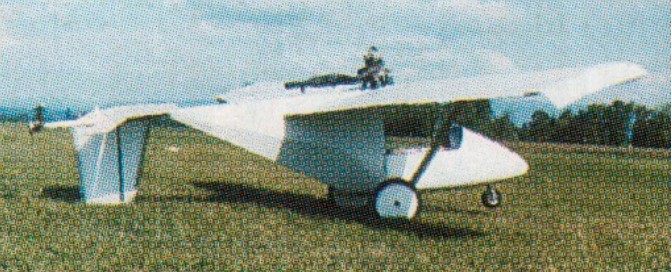
Single seat single engined high wing monoplane with conventional three axis control. Wing has unswept leading edge, swept forward trailing edge and tapering chord; inverted conventional tail. Pitch control by elevator on tail; yaw control by fin mounted rudder; roll control by spoilerons; control inputs through stick for pitch/roll and pedals for yaw. Wing braced from below by struts; wing profile; double surface. Undercarriage has two wheels side by side with tailskid; bungee suspension on both wheels. Push right go right nosewheel steering connected to yaw control. No brakes. Aluminium tube/glassfibre/steel tube framework partially enclosed (totally enclosed optional). Engine mounted above wing driving pusher propeller.
The Excelsior was designed by Chad and Charles Wille with the experience gained from the construction in 1947 of a Pietenpol Aircamper by Charles, who redesigned it in 1977 as a biplane called Aerial.
The Excelsior is immediately recognisable thanks to its unusual tail, with the fin forming a keel under the horizontal tail surfaces. On it is hinged the rudder, itself mounted on the tube which forms a tail skid. Even more unusual, the pusher propeller is placed behind this tail driven by a very long shaft from the motor mounted above the wing, a flexidyne damper being used to eliminate the vibrations implicit in such a long transmission.
A variety of materials are used in the Excelsior’s construction. A welded steel frame acts as the bottom of the fuselage structure and provides a mounting for the undercarriage, while the rest of the fuselage consists of aluminium tubes pop rivetted to the main transmission tube. The wings use a D section leading edge spar with foam ribs, the wings coming jig built from the factory. Covering is aircraft grade Dacron, heat shrunk with an iron and then doped.
The Excelsior was sold as plans for $95 or as a complete kit, in 1983.
Engine: Zenoah G25B, 20 hp at 6500 rpm Power per unit area 0.15 hp/sq.ft, 16.2 hp/sq.m Fuel capacity 3.0 US gal, 2.5 Imp gal, 11.4 litre Length overall 6.1 ft, 1.83 m Height overall 17.5ft, 5.33m Wing span 34.6ft, 10.54m Mean chord 3.8ft, 1.17m Sweepback 0 deg Total wing area 133 sq.ft, 12.4 sq.m Wing aspect ratio 8.9/1 Wheel track 4.8 ft, 1.45 m Empty weight 200 lb, 91kg Max take off weight 450 lb, 204kg Payload 250 lb, 113kg Max wing loading 3.38 lb/sq.ft, 16.5 kg/sq.m Max power loading 27.5 lb/hp, 10.2kg/hp Load factors; +4.0, 4.0 ultimate Max level speed 75 mph, 121 kph Max cruising speed 70 mph, 113kph Stalling speed 20mph, 32kph Max climb rate at sea level 600 ft/min, 3.1 m/s Best glide ratio with power off 20/1 Take off distance 200 ft, 60 m Landing dis¬tance 150 ft, 45 m
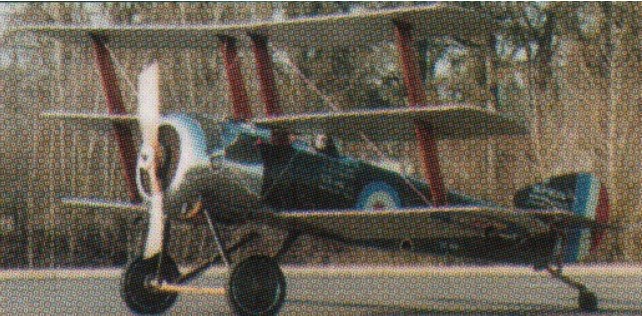
Offers plans to build Pietenpol Aerial as biplane develpment of Pietenpol Aircamper, plus Excelsior Ultralight and replica of First World War Sopwith Triplane.
1983-96: St Croix Ultralights, 5957 Seville Street, Lake Oswego, Oregon 97034, USA.
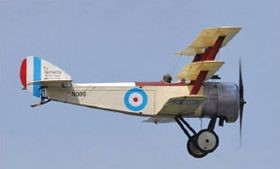
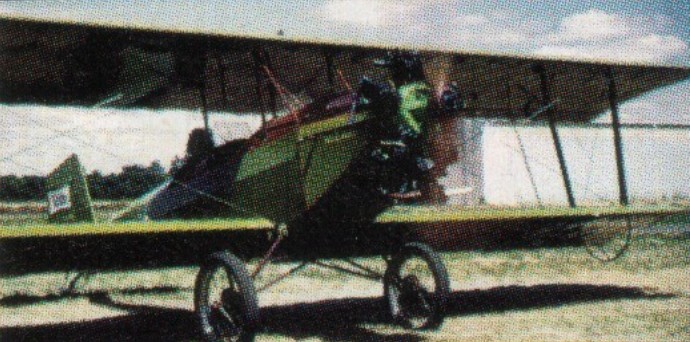
In 1958 Mr K.C.Desmond St.Cyrien started construction of a Sopwith Pup replica at his home in Horley. He secured the registration G-APUP for it. Much later it was allocated the PFA number 1582.
After having started this replica St.Cyrien ‘acquired’ bit by bit, Pup serial N5182 from a store of a French aviation collection. Parts of the replica were disposed of to G.Neale of Canada and others went to the USA.
The original Pup was then put under an intensive period of restoration at Luton and then at Horley. It was completed at Fairoaks with an original Le Rhone engine. It first flew on 11 August 1973, from Fairoaks, as N5182 ‘Shiels’, for ultimate donation to the RAF Museum.
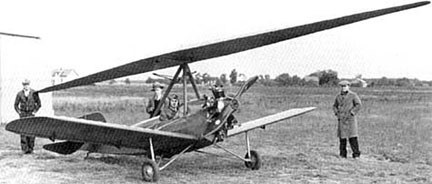
In 1939 O L Stauffer of Elkhart IN., USA, built a single-place gyrocopter on which the revolving upper wing locked in place to convert the aircraft into a biplane.
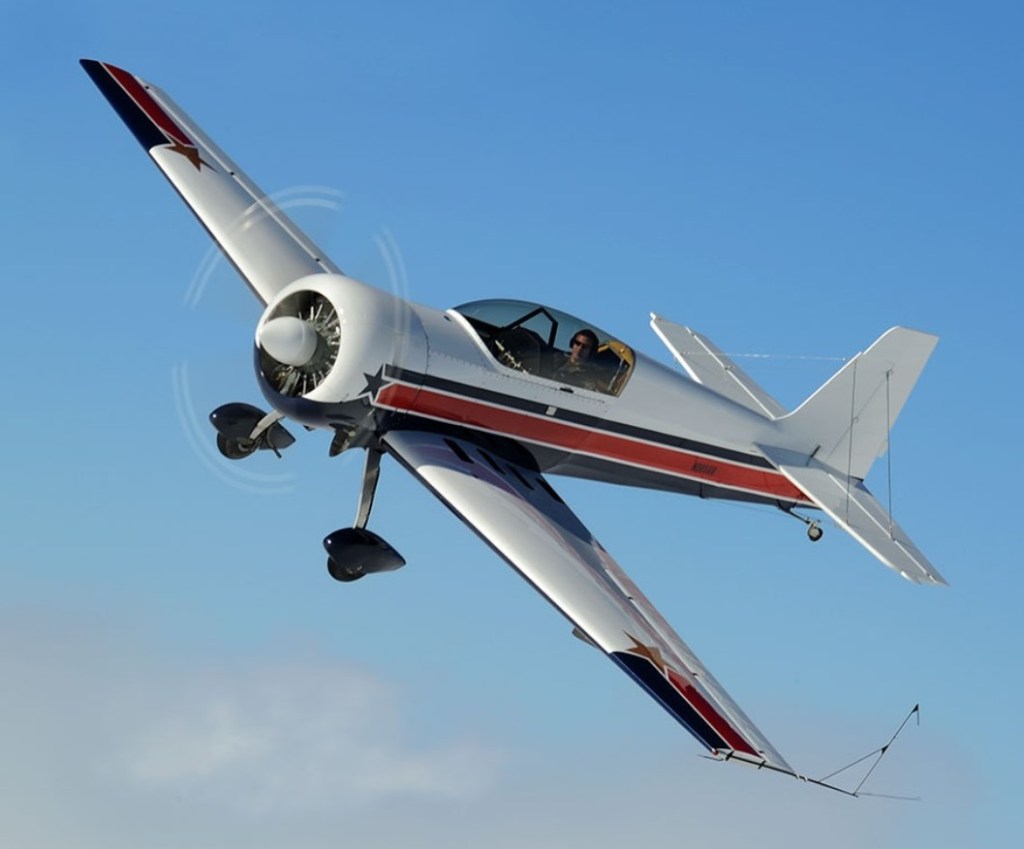
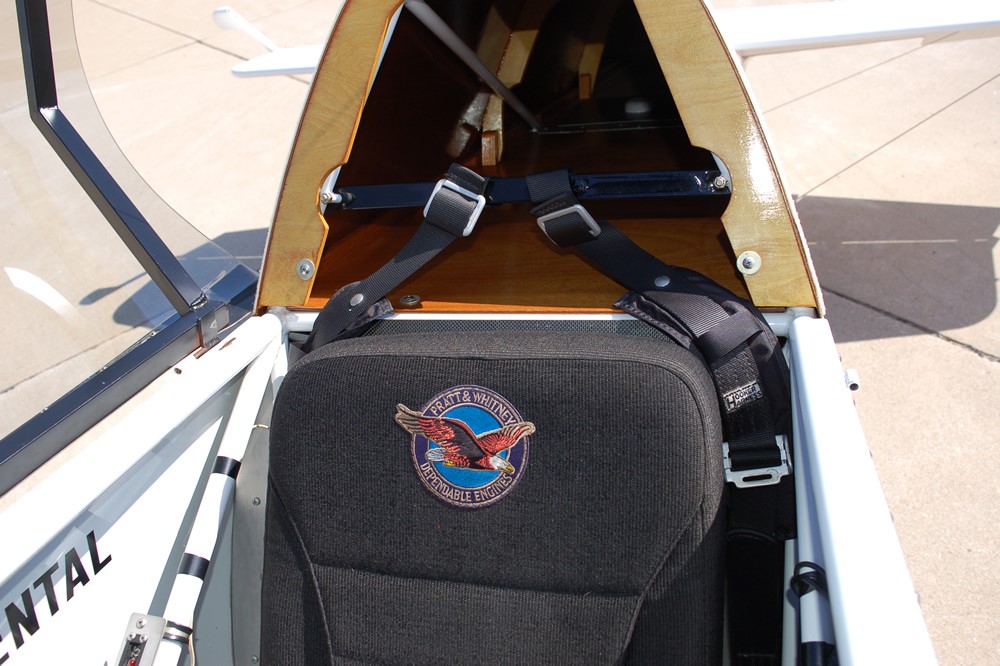
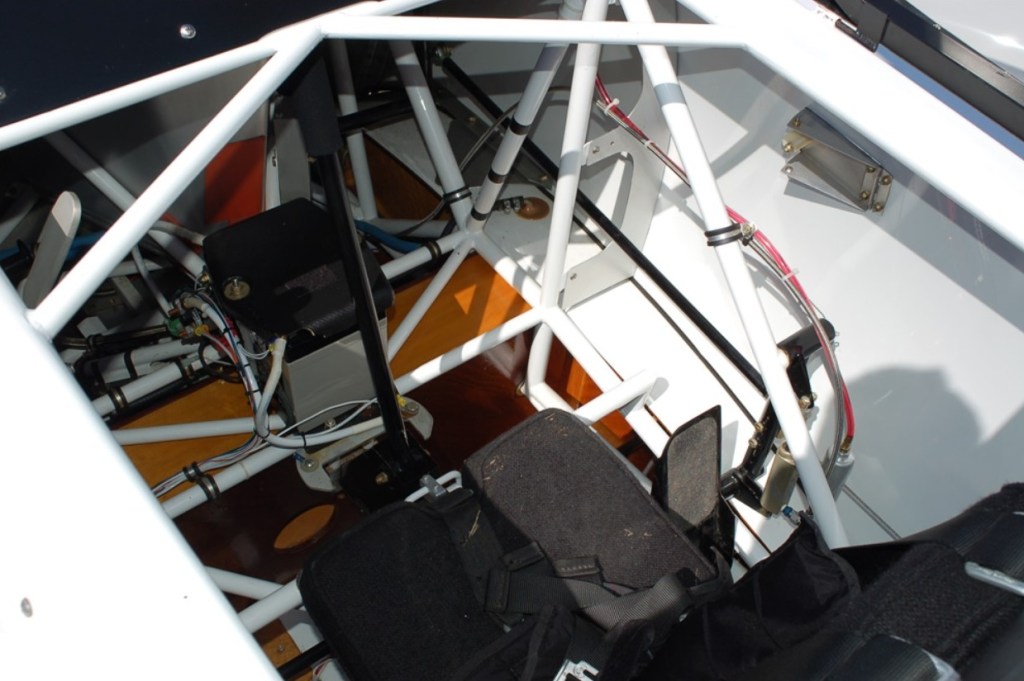
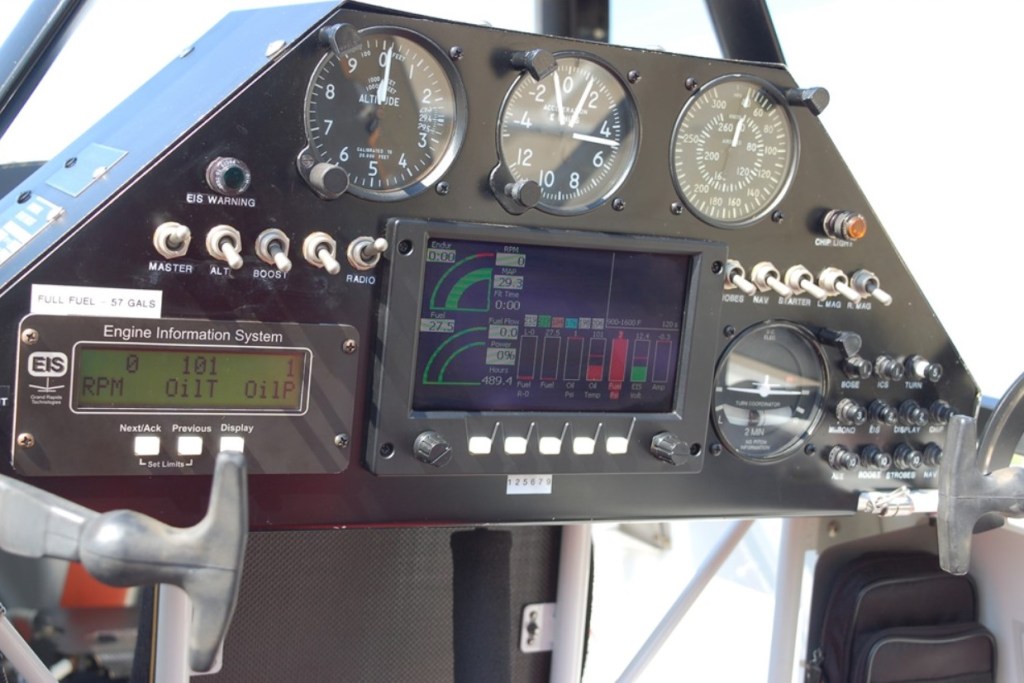
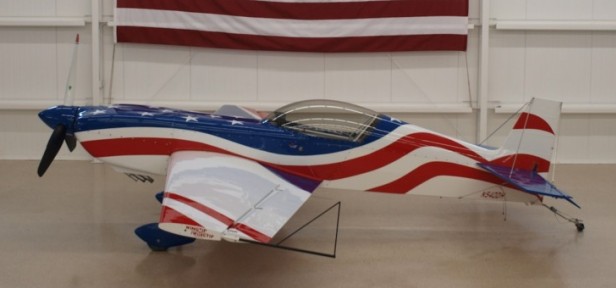
The only Staudacher 985 aircraft in existence, the 1994 built model is powered by a P&W R-985 engine and is an aerobatic experimental aircraft.
In 1997 it received the Oshkosh Reserve Grand Champion for an experimental “Plans Built” aircraft. This fully aerobatic aircraft has inverted capability, a second seat in front of the main pilot seat (full controls, no brakes).
In 2020 N985SB S/N: 17 was for sale for USD$219,000. It was located at Sugar Grove, Illinois, USA, and had 489 hours total time engine & prop.