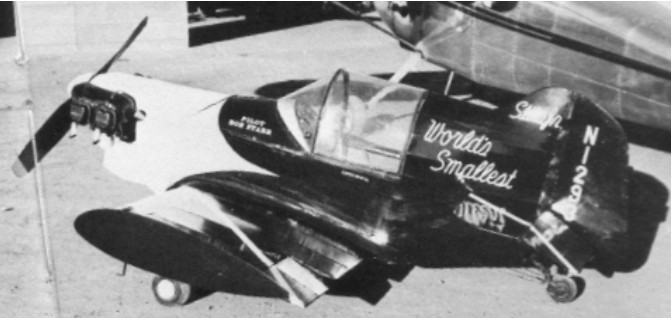
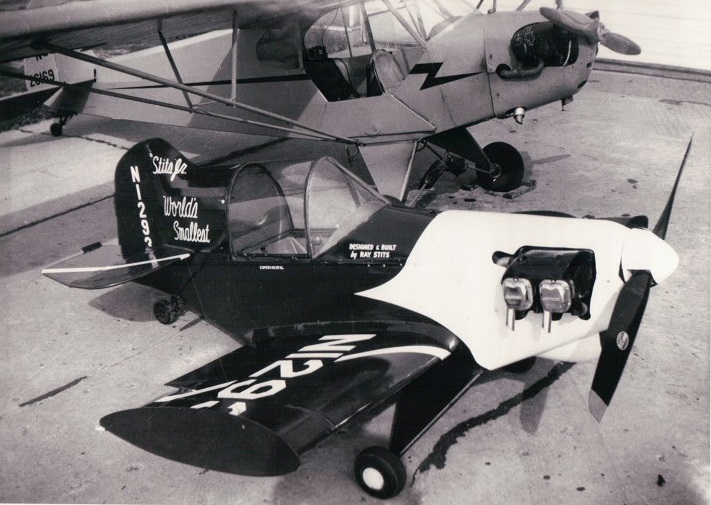
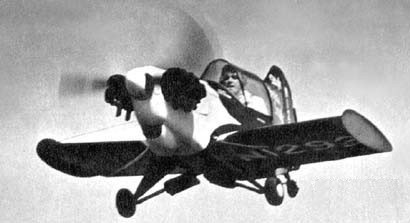
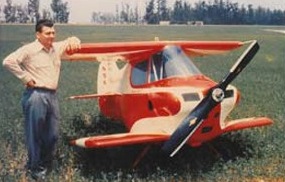
Ray Stits built his first small plane in 1948, the Junior. The incentive to build “Junior”, the monoplane, came from a discussion about the world’s smallest airplane. Someone mentioned Steve Wittman’s little racer with a 13’ span and Ray Stits queried whether or not he could fly something with a 10’10” wingspan. One of the participants in that conversation said it wouldn’t be possible and that was all it took. Ray started building. He’d actually been thinking about it for a long time and proceeded with a 40hp engine from an Aeronca. That got changed to a 65 hp Continental. The plane was a handful and after the third crash on the fifth test flight, Ray shortened the wings to 8’10” and attached tip gates to generate more lift and better aileron control. He found a new pilot, Bob Starr, a former P-51 pilot. In 1950, Junior was a big hit in airshows. He began thinking about a larger sport plane that would be easy to build and fly, but he got side-tracked with another design: his quest to create the world’s smallest biplane.
SA1A Junior Courtesy Don Stits
Junior wound up on a scrap heap after an off airport landing.
Engine: 65 hp Wingspan: 8 ft 10 in Length: 11 ft 4 in Empty weight: 393 lb
Ray Stits developed the Stits covering and coatings process, now known as Poly-Fiber. He eventually sold the Poly-Fiber business to Alexander Aeroplane Company, owned by Ron Alexander at the time.
Stits established EAA Chapter One at Flabob Airport in Riverside, California. In 1962, he received the August Raspet Memorial Award and in 1994, he was inducted into the EAA Homebuilders Hall of Fame.
Between 1948 and 1965, he designed and built 15 airplanes. Except for the first two designs, he test flew them all. The reason for not flying the first two relates to the nature of the aircraft: they were the world’s smallest monoplane and then the world’s smallest biplane. Ray was too big/heavy to fit into them.
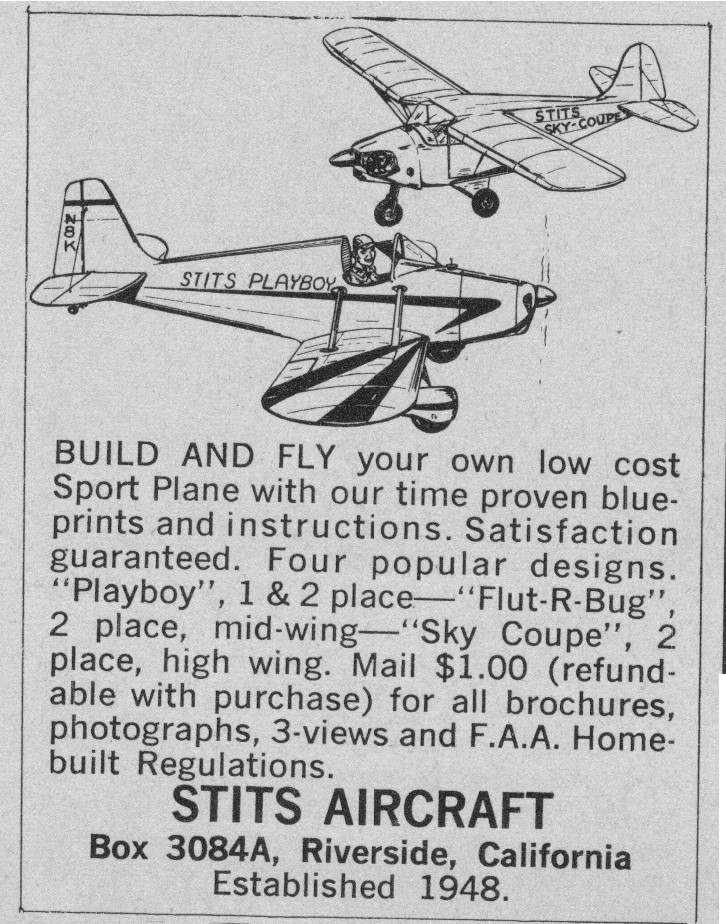
In May of 1952, he introduced the Stits Sky Baby, a biplane with a 7’2” wingspan. Once again he drew tremendous response from newspapers, magazines and the newsreel companies. And once again he got busy on the airshow circuit…but not for long. After one season, and 25 hours of flying time, the Sky Baby was given to the Smithsonian Institute. In 1963 it was sent to the Experimental Aircraft Association’s museum where it remains on long term loan. Requests were pouring in for plans for both of his midget aircraft, but Ray knew most people couldn’t handle the complexities of construction or the flying limitations of the two designs. Not being one to pass up an opportunity, however, he designed, built and test flew the Stits Playboy. It was a single seat, low wing, strut braced, aerobatic airframe that was designed to fly with 85 hp to 160hp engines.
Capitalizing on his fame for the miniature, Ray began selling plans. Realizing that a lot of builders were having problems securing aircraft grade materials, he started stocking and selling materials. He was into his second decade as an aircraft mechanic when the homebuilt movement began to take off and he slowly transitioned into an early version of Aircraft Spruce & Specialty.
In 1953, Ray got a letter from a man named Poberezny. The letter sat in an office at the airport for six weeks before someone finally delivered it to Ray. Paul Poberezny had heard of Ray’s work with homebuilts and had written to invite him to join a new organization he’d founded called the Experimental Aircraft Association.
Ray liked the concept and suggested to Paul that he be allowed to establish a Chapter of the EAA at Flabob. A couple months later, EAA had amended their bylaws to allow for Chapters and Ray was authorized to set up the first one. He got a dozen friends together and founded Chapter One. It’s still very active and leads all the other chapters in the number of Young Eagles they fly annually.
Around 1961, Ray went out to the back of his shop to dispose of some scrap aircraft covering that had been removed from an airplane. Disposal in those days was done with a match. But when he bent over to torch the nitric dope covered fabric, the stuff blew up in his face. The flammability of the covering got him thinking and he began a course of study that made him a chemist, leading over several years to the creation of a new covering material and a form of paint that was fire-resistant. Stits Polyfiber was born and it became such a hit in the homebuilt and restoration communities that Ray stopped selling all other forms of aircraft materials and by 1969, he removed all of his aircraft plans from the market. He spent the next couple of decades selling fabric and paint of his own creation. Ray retired and Jon Goldenbaum runs Polyfiber, which is still based on the famous “Stits Process”.
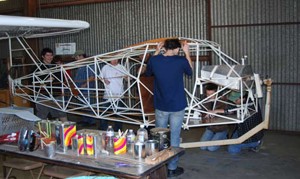
Ray Stits went on to become recognized as a Master Mechanic and became one of a handful of people who has also earned the title of Master Pilot. He still flies an LSA and stays involved with events going on at Flabob Airport. His latest gesture was an offer to install a 12,000 gallon fuel tank on the airport’s fuel farm so that Flabob can become the first airport in the state of California to offer mogas to homebuilders and those who own a certificated aircraft with the proper STC. He’s also involved in working with students at the Flabob Airport Preparatory Academy who are rebuilding a Stits Skycoupe.
At the age of 90, he was still going strong as a pilot, mentor, and founding member of EAA Chapter One at historic Flabob Airport. Ray
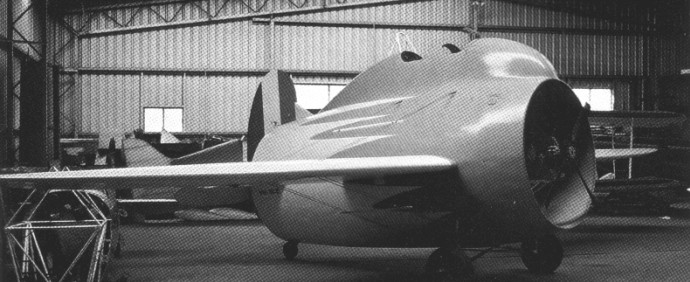
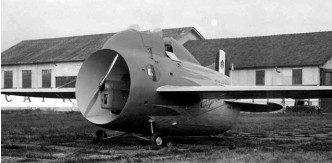
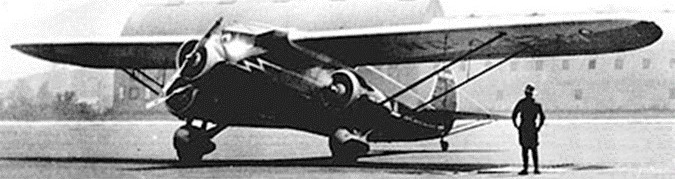
In 1933 Caproni was testing a new monoplane, call ed the “Flying Barel”, the standard fuselage was replaced with a hollow barel-shaped body that was intended to reduce drag.
The Flying Barel has a 47 t wingspan and wing area of 205 sq.ft.
The 1919 Stout Cootie was a single-place open cockpit, mid-wing monoplane with a thick cantilever wing. The wingspan was about 18 feet. Taken to Morrow Field in Detroit for testing in March 1919, but the 38hp two-cycle Sperry-Wills engine refused to run and the aircraft never flew.
The Stinson R / R-1 (ATC 457) of 1932 was designed by Robert Ayer and C R Irvine as a four-place cabin high wing monoplane. A deluxe Junior, and forerunner of Reliant, powered by a 215hp Lycoming R-680 engine, the R-1 was to have a retractable gear added, but was never built.
Thirty R-1 were sold, priced at $5,595, including NC436M/440M, NC446M/448M, NC479M, NC10861, NC10874, NC10876, NC12134, NC12139, NC12147/12156, prototype NC12178, NC12189, and NC12197.
Stinson R NC12153
Eddie Stinson was fatally injured in a crash landing of the prototype R on 25 January 1932.
The 1932 R-2 (ATC 489), powered with a 240hp Lycoming R-680 engine, was advertised for $6,497 with retractable gear modification, but none was produced as such. Three were built; NS40, NX447M, and NX12178 modified from R, and possibly one other.
Stinson R-3 NC12187
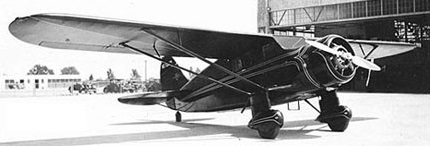
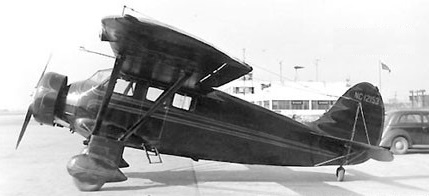
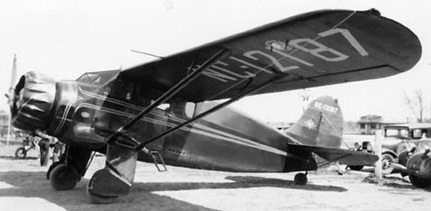
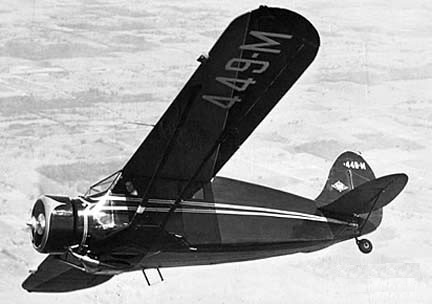
The 1933 R-3 (ATC 493) was the same as the R-2, but with fixed, non-operating prototypical retracting gear. Three were built; NC449M, NC12131, and NC12187, priced at $5,995. Only one was so modified to operating retractable gear as R-3S
The 1934 R-3S (ATC 539) conversion from R-3 NC449M featured a 245hp Lycoming R-680 engine, controllable prop and other improvements.
The 1931 Stinson S Junior (ATC 423) was a four-place cabin, high wing monoplane. Initially priced at $4,995, rising to $4,595 in 1932, about 35 were built.
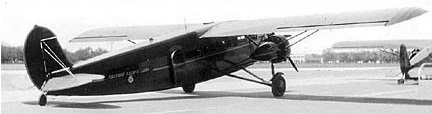
The 1932 Stinson Model U (ATC 484) was a 10-12 seat cabin monoplane, designed by Art Saxon. Almost a sesquiplane with its stub wings on the undercarriage, they were priced at $19,500.
Twenty-three were built for American Airways, including one for competition (NR/NC12127), and one experimental model, NX12132, that crashed on 2 August 1933.
Stinson U Prototype NC432M
ATC 2-413 was for a weight adjustment for prototype X/NC432M c/n 9000.
The 1933 U-1 (ATC 2-437) was an 11 seat Model U with three 285hp Wright R-760 engines. One was built for Eastern Air Transport, NX12129 c/n 9014.
U Engines: three 240hp Lycoming R-680BA Wingspan: 66’2″ (stub-wing 14’3″) Length: 45’3″ Useful load: 3100 lb Max speed: 145 mph Cruise: 123 mph Stall: 60 mph Range: 450-500 mi Ceiling: 14,000′ Seats: 10-12
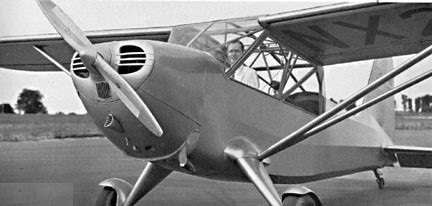
The Stinson 76 Sentinel of 1940, designed by A P Fontaine, featured full-span slots, which created a problem during testing with near-fatal results. It first flew on 28 June 1941, powered by a 175hp Lycoming, and piloted by Al Schramm. With modification to half-span slots and enlarged tail surfaces it became final prototype for L-5.