Sweden
In early/mid-1930s, at Linkoping, built Viking three-seat cabin monoplane with wheel or float landing gear, developed later into Viking II four-seater; also Type 2 light multipurpose aircraft; and produced under license Raab-Katzenstein Tigerschwalbe trainers for Swedish Air Force. In 1939 company’s Aircraft Division amalgamated with Svenska Aeroplan AB., helping to form SAAB.
Aircraft
Svardala Bullet
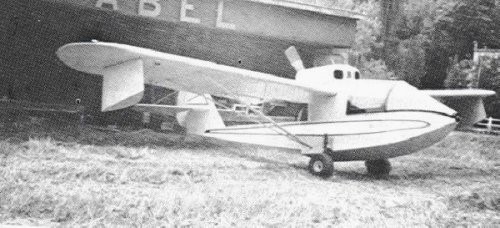
Before September 1964, Svardala built the prototype Svardala Bullet, 2-seater, side-by-side, flying-boat. The (plywood) hull, landing gear, (fabric-covered) wings, (fabric-covered) empennage and tip floats were similar to contemporary Volmer Sportsman and Anderson Kingfisher. The greatest difference was in in the aft cabin, which vaguely resembled a Republic Seabee. The most striking difference was the short pylon supporting the engine (Continental or Lycoming) and propeller. Because the crankshaft was only a short distance above the (flat) aft fuselage, Svardala installed a 2-bladed, wooden propeller with broad, curved blades.
The Svardala Bullet was sold during the early 1970s and moved to Sherbrooke, Quebec. The new owner complained about poor climb performance. He installed a blown Plexiglas windshield, taller engine pylon and larger diameter propeller.
Apparently, several registrations (most non-official) were tied to the Bullet, including CF-PUY, CF-SYF, CF-PUH, CF-PHU, the latter possibly being the X-1).
Svardala, John
Designer/builder John Svardala immigrated to Canada after World War 2. He settled in Wellandport, Ontario and flew for fun. In 1946, Svardala imported an X-1 airplane and it flew at Hawkesbury, Ontario during the 1979s.
Before September 1964, Svardala built the prototype Svardala Bullet, 2-seater, side-by-side, flying-boat.
SV Aircraft SV X1 Famate-Mantis / Mantis
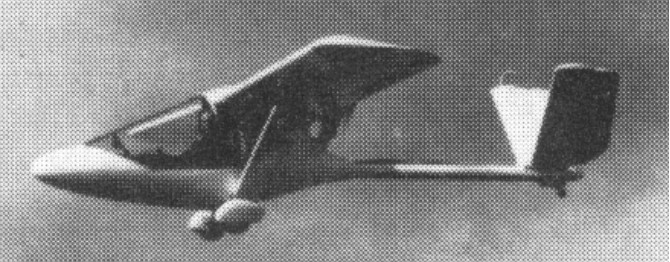
The SV Xl takes on the sleek lines of the SV series of aircraft from the Veenstra factory. The approach this time is to cater for people who admire the glider lines but would prefer conventional performances. The Xl will have sprung main wheels and a V tail. The owner will have the option to purchase the SV Xl without the sleek cockpit and fly in the breezy aluminium frame that is hidden under the fibreglass skin. Aircraft marketed as Mantis in New South Wales, Australia.
Engine: Fuji Robin 244
Prop: 81 cm x 46cm pitch
Wingspan: 8m
Length: 5m
Weight: 265kgs
Fuel capacity: 27 ltr
Cruise speed: 48 kts
Stall: 30kts
SV Aircraft SV 8 Bandit
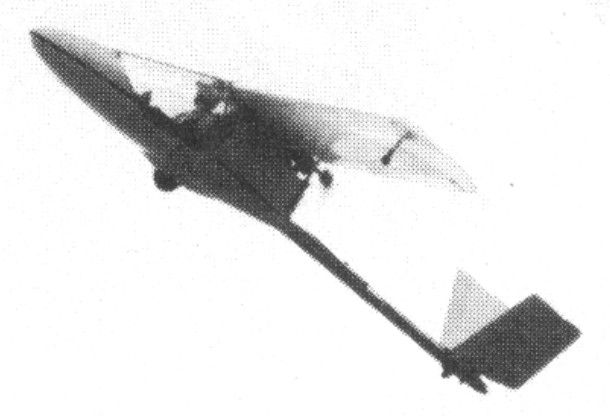
The SV 8 is a cantilever high wing pusher and takes on the lines of a clipped wing sail plane, constructed of foam aluminium and fibreglass, the aircraft has a fully enclosed cockpit, full span flaperons and V tail mounted on the tail boom. The single wheel undercar¬riage comes with brake as standard and the tip wheels aid ground handling. The wing unbolts from either side of the fuselage for trailering.
Engine: Fuji Robin 244 cc
Prop: 76 cm x 46 cm pitch
Wingspan: 8m
Length: 5m
Weight: 225 kgs
Fuel capacity: 27 Lt
Econ cruise speed: 56 kts
Stall: 30 kts
Svachulay Kolibri
The 1909 Svachulay Kolibri I monoplane was designed and built by Sandor Svachulay in Hungary.
It managed just a few hops, but it was a start for later success.
The Kolibri II was built in 1911.
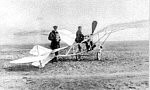
Kolibri I
Span: 23′
Length: 16’5″
Take-off Weight: 375 lb
Speed: 44 mph
Kolibri II
SSpan: 21’4″
Length: 18′
Take-off Weight: 485 lb
1913 Kolibri IV
Span: 19’8″
Length: 16’5″
Take-off Weight: 440 lb
Speed: 78 mph
SVA No.3 monoplane
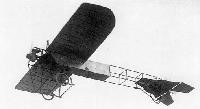
The third SVA, with a 6-legged undercarriage.
SVA 1911 Minimum
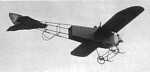
Designed and built by Dajoigny and Beaussart in France in 1911.
Dajoigny’s and Beaussart’s second design, put out under their firm name SVA (Societe des Vehicules Aeriennes). Note 4-legged undercarriage.
Span: 19’8″
SVA / Societe des Vehicules Aeriennes / Dajoigny and Beaussart
Dajoigny and Beaussart produced their second and third design under their firm name SVA (Societe des Vehicules Aeriennes).
Sutro 1913 Hydroaeroplane
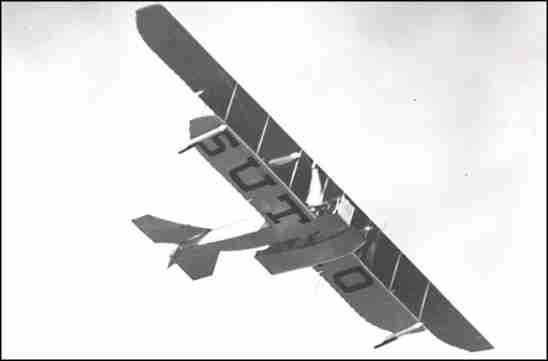
Assisted by Waldo Waterman, California millionaire Adolf Gilbert Sutro designed and built this machine in San Francisco, and, powered by a Hall-Scott 60 hp engine, it flew quite successfully.
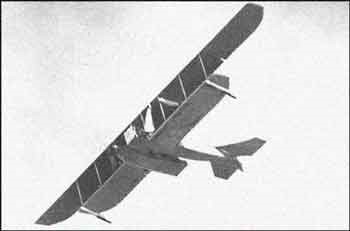
Reportedly it was used to set several international records, including a speed record of 51 mph in 1913.
Engine: Hall-Scott 60 hp
Upper span: 45 ft
Lower span: 33 ft
Length: 25 ft

