Taylor 1909 Glider / Aerial League 1909 Glider

George Taylor at Narrabeen

In 1909 Mr. George Taylor, secretary of the Aerial League, took a biplane,18ft long, with 4ft planes, and box-kite tail balance, to Narrabeen, NSW, Australian-built glider. The trials at gliding were held, Mr. Taylor himself acting as demonstrator. The scene of the flights was at Narrabeen Heads, in the presence of about one hundred visitors, the wide stretch of sand rendering any possible fall a matter of some safety. At the beginning of the experiments the wind came from the south-east at 10 miles an hour. The machine was carried to a sand knoll, and brought face on to the wind. Messrs. Schultz, Le Clerc, and Gibbons, of Narrabeen, required all their strength to hold it down. For the preliminary flights the corners were held by guide ropes 15ft in length to prevent the machine from getting out of control before the experimentor was properly tuned to automatic balancing.

At the commencement of the latest flights the wind came from the north-east at a pace of only three knots, hardly sufficient to give the necessary lift to the machine. A few attempts were made, but they wore too short and too close to the ground. The wind, however, increased in volume, and at 6 o’clock a 15-knot breeze was coming from the north-east. As the machine was wheeled face on, it shot up with Mr. Taylor to a height of 25ft, and soared the full length of the course. The demonstrator, by means of the-elevating plane, brought the machine rather sharply to the ground at the water’s edge. Tho second flight was even more successful, the machine during its course actually poising for about 10 seconds, owing to its being tilted at an angle that for a short time allowed the wind to counterbalance the soaring tendency.

At the signal to let go the machine was well lifted by the wind, and by careful manipulation on the part of Mr. Taylor it shot towards the ocean 98 yards away in a series of curves from 3ft to 15ft above the ground, dragging its guides, who, however, pulled it to the ground at the water’s edge. Twenty-nine successful flights were made by Mr. Taylor and Mr. Hallstrom, an enthusiastic member of the Aerial League. As the afternoon wore on the flights improved on account of the wind freshening to 15 miles an hour, and coming directly from the east so much so that the last flight of the day was notable.

At “let go” the wind immediately lifted the machine to the full length of the guide ropes, and dragged the operators so fast to the ocean that two let go; the machine now soared to-wards the ocean, and at the water’s edge the remaining guide ropes were loosened, the machine making a leap upwards. Mr. Taylor by careful manoeuvring, kept the machine well under control, and dived it in the sea some little distance from the heads. The machine will be fitted with steering gear and other improvements for further flights. Mr. Taylor’s monoplane is now having its powerful engine fitted to it at Gibson and Son’s motor works at Balmain, and he hopes to have it in the air during Christmas week. If the flights are as successful as anticipated the machine will be placed at the disposal of the military authorities during the Kitchener camp and review.

Tatlin Letatlin

The “Letatlin” during a gliding parade in Moscow in 1933

The ornithopter designed by Vladimir Tatlin from 1929 to 1932 and Tatlin built three versions of his machine. The word Letatlin is formed from the verb letat (fly), associated with the name of its creator, Tatlin. In the Stalin years, Tatlin, one of the major artists of the constructivist movement of the Soviet revolutionary years, designed his ornithopter inspired from birds.

Tatlin had carried out a trial flight that hadn’t worked out.

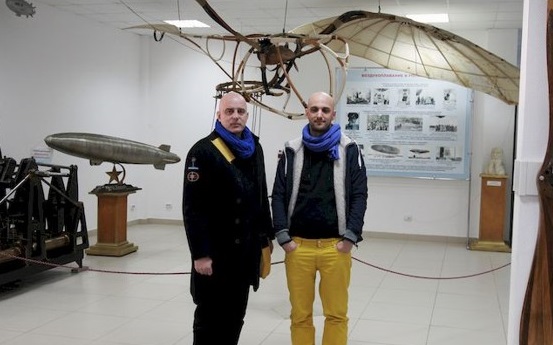
The ornithopter designed by Tatlin from 1929 to 1932 had disappeared. It had been more or less abandoned for twenty years in a warehouse belonging to the Molino Russian Federation Central Air force museum, next to Star City, the Youri-Gagarin cosmonaut training center fifty kilometers away from Moscow. It was the KSEVT, team, the space culture center in Slovenia, that by chance came across the machine in a precarious state during a protocol visit to the Monino museum in 2014. In February 2014, they were taken to the historical part of the Monino museum where one can see pioneers’ flying machines, since the Russians went into aeronautics very early. Miha Turšič, director of KSEVT until 2016, member of the collective Postgravityart, spotted the Letatlin in the corridors of the Monino museum in April 2014.

While the group was in discussion, Miha Turšič went ahead, getting a bit lost in the aisles of the museum, and suddenly I found myself face to face with a machine that looked like a plane but wasn’t one. He knew of the Letatlin and there it was right in front of him. We immediately asked if they knew what they had there, one of the most iconic works of 20th century art. They told us: “Yes, it’s an old Russian artist who built sort of flying machines rather like Leonardo de Vinci.” They had no idea of the importance of the piece. They considered it as best as an experimental flying machine that had never flown. Tatlin was mentioned, but with no context.

It was Letatlin n°3 that was found. It would have reached Monino in 1996 after being damaged on the way back from a presentation in an exhibition in Athens and was left there, abandoned in the context of complicated years following the collapse of the USSR.

Restoration of the “Letatlin”

The Molino Air force museum had just retrieved it a year earlier from the museum storeroom where it lay in bits in a corner, deteriorated, really damaged, and they had reassembled it to hang it in their museum.

The “Letatlin” restored in the Tretiakov gallery in Moscow

It was obvious that a renovation was necessary for the Letatlin. The Monino museum and the Tretiakov gallery finally found an agreement for its renovation. Turšič went to Moscow at the end of December 2017 to meet the curator of the museum and saw it displayed in the 20th century art collection.

Dragan Živadinov and Miha Turšič in front of the “Letatlin” at the Monino museum on April 11, 2014.

The Letatlin finally found the perfect place for its presentation to the public.

Tatin, Victor

Frenchman, Victor Tatin (1843-1913)

Friend of Pénaud, Victor Tatin presents in 1874 to the French Society of Air Navigation, a mechanical bird of very small size with a wingspan of 24cm and a weight of less than 6 g which could walk about twenty meters without impulse of departure.

Victor Tatin Article

After numerous tests with wing-wing appliances, some of which were steam-powered, Victor Tatin built a small airplane powered by compressed air, which made its circular flight tests at Chalais-Meudon in 1879.

Victor Tatin (1843-1913) built a model in 1879 with a fuselage that acted as a tank for the compressed air that drove a small engine linked to two tractor propellers.

A series of experiments, tried by an able mechanician, which almost demonstrate that artificial flight is accessible to man, with motors that have been developed within two years. These experiments were carried on by M. V. Tatin, who was then Professor Marey’s mechanical assistant.

Continuing his work with Professor Charles Richet, Victor Tatin presents in 1890 a large steam airplane, monoplane 33 kg, a span of 6.6 m, powered by two propellers in tandem. The steam engine weighed 11 kg and gave 1 hp.

This device, which can be seen at the Museum of Air and Space, has a wingspan of one meter ninety and weighs 1.8 kg (with its full tank of air). The tapered tank is formed of a spirally wound steel ribbon fixed by 1300 rivets, it contains the compressed air which feeds an oscillating cylinder actuating by translation two four-blade propellers.

Task Vantage / Sneeky Pete

This single pilot manned test-bed was built by Jim Kern’s TASK Research Inc. of Santa Paula, California in 1982, which supplied many composite structures/components for the Rutan designed Long-EZ, Defiant, and Voyager aircraft during the early to mid-1980’s under contract to Northrop’s Electric Mechanical Division in the late 1980s to test early avionics/electronic equipment for remotely piloted vehicles.

The Vantage was a single-seat pusher canard which resembled a Rutan Long-EZ, but was slightly larger with more rounded fuselage sides, a large bulbous two piece canopy. The craft also incorporated an extra long pitot tube in the front. Power was supplied by a single Lycoming O-360 (180 HP) engine turning a variable pitch wood or composite propeller. The aircraft incorporated a retractable nose gear which was powered by an electric motor. The wing root to fuselage joint was blended/contoured and flowed seamlessly into the cockpit. Nicknamed “Sneeky Pete” by its pilots, the undesignated aircraft was outfitted with various special avionics depending on the specific mission requirement. The exterior was painted white, with the name “Sneeky Pete” written along the side of the fuselage, though this is not apparent in the one picture that was released.

Although the maiden flight of “Sneeky Pete” took place at Mojave Airport on July 18th, 1982 with Dick Rutan at the controls (Mike Melvill, along with many others served as test pilots for this aircraft), Rutan Aircraft Factory or Scaled Composites apparently were not involved in the elaboration and building process of the aircraft. It is believed that the flight test program for “Sneeky Pete” first took place at the remote Groom Lake test site in Nevada widely known as “Area 51” (AFFTC DET. 3) in late 1982. The aircraft was periodically tested over the years with various equipment, put into seclusion at various times, but has never been officially retired. During its “down time”, “Sneeky Pete” was most likely stored in a top-secret facility known as “Dyson’s Dock” at Groom Lake which was also the location of the Northrop “Tacit Blue” technology demonstrator after it was retired in 1985.

In 1993, “Sneeky Pete” was acquired and rebuilt by Scaled Composites and experimentally fitted with a Williams FJ107 jet engine, a small turbofan engine designed to power cruise missiles and developed by the Williams International company from their WR19.The FJ107 was notably the powerplant for the AGM-86 ALCM, BGM-109 Tomahawk, and AGM-129 ACM, as well as the experimental Williams X-Jet flying platform. In its jet-powered form, the aircraft was first tested in August 1993 and was known at Scaled Composites as the Jet LEZ Vantage or Model 61-B. A striking feature of the revised aircraft was a square, flat section, as seen from below, added at the back of the aircraft. The section wasn’t as wide as the strakes at the front wing roots but was longer along the fuselage, in comparison.

Jet LEZ Vantage

Only one airframe was ever constructed. The data gathered throughout the “Sneeky Pete” program contributed to today’s advanced UAVs such as the Northrop/Grumman Global Hawk, General Atomics Predator, Boeing X-45, Northrop/Grumman X-47 Pegasus. The aircraft was returned to a more conventional configuration and still appears on the civil register as being owned by Scaled Composites, but its current whereabouts are unknown, and, like many experimental variants of the Long-EZ, it is not properly documented, due to its classified use by the military.

N3142B c/n 1
Powerplant:1 x Lycoming O-360 (180 hp) / 1 x Williams FJ107 / 1 x Lycoming IO-320 (150 hp)
Wingspan: 28 ft.
Overall length: 17ft. (approximate)
Weight: up to 12,499 lb. (with Lycoming engine)
Crew/passengers: 2

Tarrant Tabor

One patriot who felt he could fill this gap and strike a blow at the Kaiser was a Surrey building contractor, W. G. Tarrant, whose company had been involved in wartime contract work manufacturing wooden aircraft components. Tarrant hired Walter Henry Barling to design the aircraft, which was to be a ‘bloody paralyzer’ of a triplane made entirely of home-grown timber and constructed using a largely female work force, according to the terms of the contract issued by the Ministry of Munitions. The massive Tabor triplane was the first and last aeroplane built by W. G. Tarrant Ltd of Byfleet, Surrey. Designed in an attempt to enable Berlin to be bombed from bases in England, and assembled at RAE Farnborough, the aircraft was not completed until 1919.

When it appeared, too late for its intended purpose, it spanned 40m (131 ft 3 in) from tip to tip of its middle wing, and had a 22.25m (131 ft 3 in) fuselage of monocoque construction formed from ply skinning over Warren-girder type circular formers. Serialled F1765, the one and only completed Tabor was powered by a total of six 450 h.p. Napier Lion engines: two pairs in push-pull tandem between lower and middle wings, and another two tractor engines between middle and top planes. The fuselage was of finely streamlined monocoque construction, while the tail consisted of a biplane unit with twin fins and rudders.

The Tabor stood as high as a four-storey house, and its height, and particularly the location of its upper engines, brought about its speedy demise. On 26 May 1919 the giant Tabor was winched out of the balloon shed at the Royal Aircraft Establishment at Farnborough along a specially built railway track. Some 508 kg (1120 lb) of lead was loaded into the nose at the last moment when some final calculations showed that the aircraft might be tail heavy, and the long, wearisome process of hand-starting the six Napier Lions began. With all engines running the pilot, Captain F. G. Dunn, and his co-pilot, Captain P. T. Rawlings, began taxi trials. Also aboard were a technical observer from Tarrant’s, a fitter, an engineer officer, and two foremen from the RAE. When Dunn opened up the top engines, which had previously been throttled back, and the sudden extra thrust so far above the aircraft’s centreline caused it to nose-over and bury its forward fuselage in the earth just as it was about to leave the ground. The two pilots died shortly afterwards of their injuries and Tarrant, perhaps fortunately for other aviators, never again dabbled with aviation.

Construction of a second Tabor was abandoned.

Engines: 6 x Napier Lion, 450 hp
Wingspan: 40m (131 ft 3 in)
Fuselage length: 22.25m (131 ft 3 in)
Weight: 45,000 lb

Tarrant, W.G.

UK
Building contractor of Byfleet, near Brooklands, Surrey, which undertook aircraft component manufacture during First World War. Only aircraft produced was Tabor long range bomber, designed with collaboration from Royal Aircraft Establishment; this six-engined triplane nosed-over and was wrecked in its first attempt to take off in May 1919.

Taris No.2 monoplane / Monoplan de course Paul de Lesseps

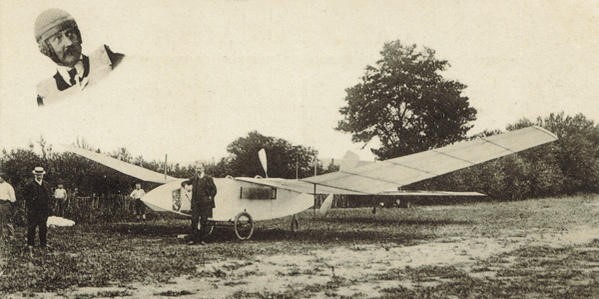
This peculiar monoplane, also known as the “Monoplan de course Paul de Lesseps”, was designed and built in 1910 by Taris, a Polytechnique graduate that taught aerodynamics at the Ligue Nationale Aérienne. A characteristic feature was its intricate triangular fuselage, uncovered and the front and covered at the rear and with a triangular cockpit floor breaking the lines. It was powered by a 50 hp Gnôme driving a ground-adjustable four-bladed propeller. It crashed in 1911.