Taylorcraft Chummy / Arrowing Chummy / A-2 Chummy

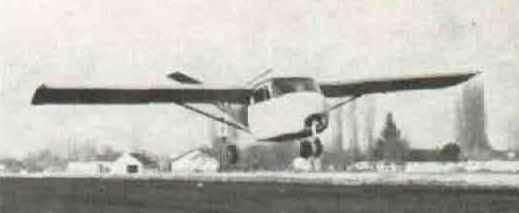
Arrowing Chummy NX4203

The Taylor Brothers Company had produced two two-place, side by side, high wing monoplanes called the Chummy. Designed by C G Taylor it was a fabric covered high wing airplane with a price tag of $3,985 during the Depression. The planes were first known only as Chummy or Arrowing Chummy; numeric designations came in 1930.

First flown in December 1927 piloted by Gordon Taylor. The two built were NX4203 and N4901 c/ns 3 and 4, powered by 90hp Anzani and 125hp Siemens-Halske SH-12 engines.

Wingspan: 34’0″
Length: 22’0″
Max speed: 110 mph
Cruise speed: 100 mph
Stall: 38 mph
Range: 500 mi

Taylorcraft Aviation Corporation / Taylorcraft / Taylor Brothers Aircraft Corp

Taylor Aircraft Company
Taylorcraft Aviation Company
Taylor-Young Airplane Company
Taylorcraft Aviation Corporation

C. Gilbert Taylor and his brother had first established the Taylor Brothers Aviation Corporation- slogan; “Buy Your Airplane Taylor Made” – in Rochester, New York, in 1926 to market the Taylor Chummy lightplane, a two-seat high-winged monoplane, priced at $4,000.

The Chummy failed to sell, and after Gordon died flying another Taylor design in 1928, Clarence moved to Bradford, Pennsylvania, where the townsfolk had offered him a new factory at the local airfield plus $50,000 to invest in the company. One of the investors was William Thomas Piper, who had made his money from oil wells.

More concerned about solvency than perpetuating his name, he re-organized the assets into the Taylor Aircraft Com¬pany, giving C. Gilbert Taylor half inter¬est in the new enterprise as an induce¬ment to stay on board. Piper handled the finances as the firm’s secretary and trea¬surer, while Taylor served as president and chief engineer.

After continuing with the Chummy for a time, Taylor abandoned the design and began work on a new inexpensive aircraft to compete with the heavier craft common at the time. A battle between engineer and businessman caused a rift between the two. Piper took advantage of Taylor’s absence during an illness, and instructed Taylor’s junior engineer Walter Jamouneau to modify the Cub, in Models E-2 and F-2, to be more attractive and marketable. Taylor returned from his illness and left the company in 1936; and Walter Jamouneau took over as chief engineer.

A disastrous factory fire brought production of the Cub J-2 to a halt. When the company ran into financial difficulties, manufacturing and marketing rights for the Taylor Cub, which had first flown in September 1930, were acquired by W. T. Piper in 1935 for $761, who in 1937, formed Piper Aircraft Corporation to continue production of this aircraft. It was placed back in production as the Piper J-3 Cub.

Taylor vowed to build a personal aircraft superior to the Cub. Taylor formed his own company in 1935 as Taylor Aircraft Company at Alliance, Ohio, renamed Taylor-Young Airplane Company, then Taylorcraft Aviation Corporation in 1940. In 1936 Taylor rented facilities at Pittsburgh-Butler Airport and first manufactured the “Taylorcraft” plane. Main pre-war lightplanes were Models B, C and D, of which C and D formed basis for formation of Taylorcraft Aeroplanes (England) Ltd. Taylor gave his airplane a closed cabin with doors and a control wheel instead of a stick. The fat, side by side T Craft was faster than a tandem Cub. It set speed, distance and altitude records for light airplanes. No Taylorcraft has a number below 25. They figured nobody would want an airplane from a company that had built only three or four.

During WWII, light aircraft were used for training, liaison, and observation purposes. Taylorcraft’s DCO-65 model was called the L-2 by the United States Army Air Forces and served alongside the military version of the Piper Cub in WW2. Built over 1,900 similar L-2 Grasshoppers for USAAF, TG-6 training gliders based on L-2, and components for Consolidated PBY, Curtiss C-46 and Douglas A-26.

In November 1938 the company established its Taylorcraft Aeroplanes (England) Ltd as its British subsidiary, based in Thurmaston, Leicestershire, England. British production was mainly of the Plus C and Plus D models, and in 1939 the Royal Air Force impressed 24 of the 32 aircraft for evaluation as observation and artillery spotter aircraft. The evaluation confirmed the soundness of the concept, and a derivative of the Plus D was ordered into production as the Auster Mk 1. This entered service in August 1942. The military chose the name “Auster”, which translates as a warm or gentle breeze, possibly from the south. Thus Taylorcraft Plus D built for the army became Auster Mk 1. After the war, Auster Aircraft Ltd was formed and commenced a series of variations on the basic theme until 1960 when it was absorbed into Beagle Aircraft Ltd.

Taylorcraft Aeroplanes Ltd developed the Taylorcraft Model ‘D’ and the Auster Mk. I through Mk. V, which became the backbone aircraft of the British AOP (Air Observation Post) and the three Canadian AOP squadrons, No. 664 Squadron RCAF, No. 665 Squadron RCAF, and No. 666 Squadron RCAF.

Built some 2,800 Model B-12Bs in 1945-1946, but in the fall of 1946 production was halted following a fire in the Taylorcraft factory at Alliance, Ohio and the company went into bankruptcy. Re-formed in 1947 as Taylorcraft Inc, producing models BC-12D, Ace, Traveler, Topper, Ranch, Wagon, Tourist, Sportsman and Special de Luxe.

In 1949 C.G. Taylor bought the assets from the former company, and started a new company Taylorcraft, Inc. at Conway, Pennsylvania. The company restarted production of the BC-12D Traveller and the BC-12-85D Sportsman. The company produced few aircraft and the type certificates were sold to Univair and production was halted.

The factory moved to Pittsburgh in 1954 but then ceased manufacture four years later. It was re-formed again in April 1968 as Taylorcraft Aviation Corporation, and from 1973 resumed production of an updated two-seat Sportsman 100.

In 1971 the Taylorcraft Aviation Corporation, owned by Charles Feris put the Model 19 back into production as the F-19 Sportsman and added the F-21 model. Feris died in 1976 and the production continued at a low rate until 1985. Charles Ruckle bought the company in 1985 and he moved the operation to Lock Haven, Pennsylvania, where the company produced 16 aircraft before it went bankrupt in 1986 and the company was offered for sale.

Company ceased trading 1986, and in 1989 was purchased by West Virginia based Aircraft Acquisition Corporation, developed a series of two/three-seat lightplanes under the F22 designation. From 1992 operated independently of AAC and took name of Taylorcraft Aircraft. The assets were sold to key investor East Kent Capitol.

1990: Taylorcraft Aircraft corporation, PO Drawer 3350, Morgantown, WV 26505, USA.

John Polychron, former CEO of Del Monte Foods purchased Taylorcraft and operated it for approximately one year until he sold it to Philadelphia Attorney Phillip O’Rielly. O’Rielly never reopened and the company became deeply in debt resulting in a Sheriff’s sale in 1996.

Taylorcraft was saved from extinction by Lee Booth, a former Marine and an engineer from Seaford Delaware. Booth renamed the Company Booth-Taylorcraft Aerospace, Inc. Booth-Taylorcraft Aerospace paid all creditors in full and relocated the entire company in 88 53 ft long truck trailers to Greensboro, North Carolina.

Booth, as Chairman and President, directed the Corporation through an extensive recertification of all type certificates, engineering, FAA audits up to the Aircraft Certification Office level, production procedures, complete re-tooling and certification of tooling and work processes. Booth enlisted the assistance of Darrell C. Romick, former Chief Engineer of Taylorcraft Airplane Company and of BF Goodrich. Romick was a close associate of Wernher von Braun and worked for Goodyear Aircraft in the 1950s.

Booth-Taylorcraft Aerospace, Inc became a contractor to numerous governments for military aircraft, weapons systems and firearms. Booth was the first Taylorcraft owner in the company’s history to keep the company debt free the entire time he operated it. In March 2000, Booth formed a strategic partnership by selling half of the Civil Aircraft Division to Harvey Patrick of Pats, Inc. Booth retained all military items, UAVs, several type certificates, designs and patents. The Small Aircraft Division was moved to Georgetown, Delaware at the Sussex County Airport. Booth and Patrick then formed Taylorcraft 2000, LLC and served as Co-chairmen. Booth eventually sold his half to Harvey Patrick and Taylorcraft 2000, LLC was owned by the Harvey and Vera Patrick Foundation. In 2003 The Harvey and Vera Patrick Foundation sold the company to Harry Ingram, with 100% financing.

Harry Ingram, moved the plant to La Grange, Texas in 2003 and on April 25, 2005 it was announced that the factory was moving again to Brownsville, Texas and outsourcing the labour.

On February 21, 2008 the company was repossessed by its former owner, Taylorcraft 2000 LLC. The previous owners had taken orders for new struts for existing aircraft to alleviate a repetitive inspection Airworthiness Directive and was delivering struts to customers. The design’s type certificates, drawings, jigs, templates and parts were put up for sale.

Taylor Bullet

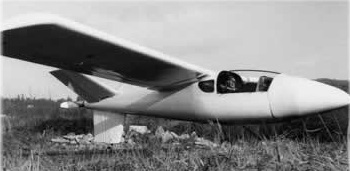
The 1982 Taylor Bullet was a two-seat counterpart of Micro-IMP. With retractable undercarriage, power was a 2100cc Revmaster pusher. He used the best features of his earlier designs, including the GA(PC)-1 airfoil with full length flaperons and optimal adaptations of TPG. With significant assistance from Jerry Holcomb, Molt wound up with a contoured fiberglass shell that gave no impediments to the smooth passage of air over it. The wings had a high angle of attack, allowing it to get in and out of small airstrips. Molt kept the nose low (tail high) for maximal forward visibility during low-speed take-offs and landings. This allowed him to mount the propeller on the tail and give clean airflow over the fuselage and wings. Its reverse pitch capability shortened the ground run after landing. By sweeping the wings forward and placing the Revmaster engine at the front of the plane, Molt assured that variations in pilot/passenger weight would not disturb the Bullet’s center of gravity.

As with most prototypes, there were some annoying glitches, such as difficulties with the long Flexidyne coupling between the engine in front and the propeller at the tail, and some trouble retracting the main gear, which were left extended during the 50 hours of flight-testing. Eventually the owner, Jim Berry, donated his Bullet to the Oregon Air Museum in Eugene, where it remains on display.

Engine: Revmaster 2100cc, 70 hp
Wingspan: 31’0″
Length: 18’9″
Useful load: 550 lb
Max speed: 150 mph
Stall: 50 mph
Range: 500 mi
Seats: 2

Taylor Mini-Imp

During the energy crisis of the mid 1970’s Moulton B. (Molt) Taylor decided to turn to a small, easy-to-build, light plane which focused on maximum cruise speed and efficiency. The result is the Taylor Mini-IMP.

Taylor Mini-Imp Article

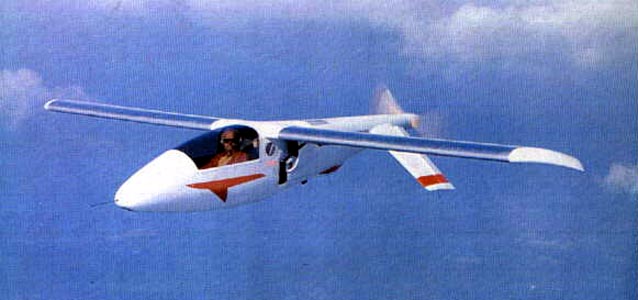
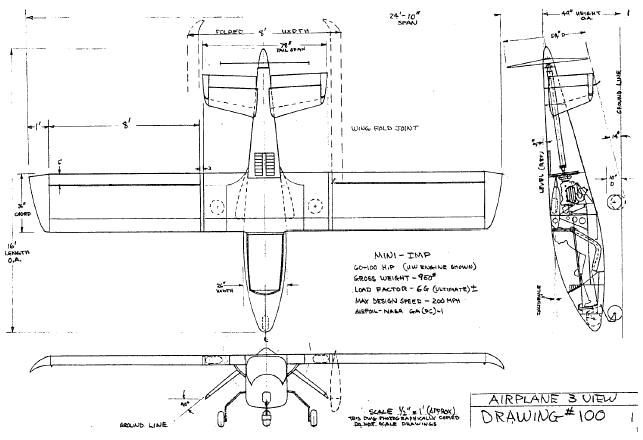
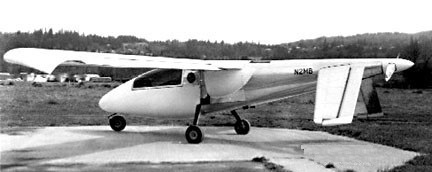
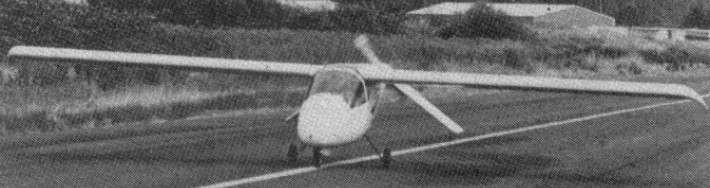
The Mini-Imp is a two-seat version of the single-seat Imp designed in 1975. It features an unusual configuration with a pusher prop aft of an inverted V-type tail assembly and cantilevered high wing that folds back for towing and storage. The wing is the latest NASA design with spoiler and flaps. The retractable gear is the tricycle spring-legged type. A controllable propeller is available. Power is provided by any engine from 60 to 115 hp with the 60-hp Franklin, 60-hp Limbach VW, 70-hp Turbo Revmaster VW, 100-hp Continental or 115-hp Avco Lycoming modification being the most common. The aluminum and fiberglass Mini-Imp requires a minimum of tools to construct, and all hard-to-build parts are available. It offers unequalled safe flyability and stability, positive spiral stability, limited acrobatic capability (stressed to 9 Gs), and good fuel economy (3 1/2 gph).

The O-200 powered price in 1982: $10,000 (Includes complete kit). All metal construction. Year. Units delivered to June 1982: 50.

The Model “C” version of the Mini-IMP is the long nose version which was developed after the prototype was flown with the Limbach converted VW engine. The Model “C” is powered with the Continental O-200 engine (100 HP at sea level at full throttle). The Model “C” also incorporates a larger baggage compartment and the nose is lengthened 12 inches so that the pilot sits one foot further forward of the main bulkhead. This lengthening of the nose required the installation of an additional vertical fin on tip of the tail boom giving the “long nose” Mini-IMP an inverted “Y” tail configuration. This addition was used instead of lengthening the tail boom to accommodate the longer nose length of the design rather than lengthen the shaft and to accommodate the further aft placement of the propeller (with its weight effect on the CG).

The O-200 powered Mini-IMP requires the use of a different propeller and due to the increased weight of the engine a heavier landing gear is used. The drawings indicate several other areas of change for the Model “C” needed to accommodate the higher power and resulting performance increases. These include heavier side frame members and a different nosewheel installation. When ordering “kits” be sure to advise of your preference in this regard. The same set of drawings is used to cover either version of the Mini-IMP (the long nose or the short nose).
It is practical to use the long nose version with the big baggage compartment if the builder intends to use the turbocharged Revmaster engine and controllable propeller. However, if the normally aspirated Revmaster engine and a fixed pitch propeller (or other such VW conversion) is to be used, the short nose configuration should be used.

A prototype of the Model “C” has been flown extensively and its improved performance with the higher power is evident. Flight tests of the O-200 powered Mini-IMP “C” have shown a cruise speed of approximately 175 MPH at 4000 foot altitude at 75% rated power. Climb speeds of better than 1500 FPM are initially available at full throttle. These performances are obtained at approximately 1000 pounds gross weight. Exact performance to be obtained with any engine combination is of course dependent on the power level the builder wants to pull from his engine/propeller installation. The O-200 Model “C” requires approximately the same takeoff and landing run as the VW versions, with exact performance dependent on temperature, altitude, and gross weight.

Following Taylor’s death, the plans and licensing for the Mini-IMP have been marketed by the Mini-IMP Aircraft Company of Weatherford, Texas. The Mini-IMP Aircraft Company was formed to provide builder support and to further promote the design.

Gallery

Engine: Continental O-200, 100 hp
Hp range: 8-125
Speed max: 200 mph
Cruise: 170 mph
Range: 500 sm
Stall: 45 mph
ROC: 1500 fpm
Take-off dist: 600 ft
Landing dist: 600 ft
Service ceiling: 20,000 ft
Fuel cap: 13 USG
Weight empty: 700 lb
Gross: 1000 lb
Height: 4 ft
Length: 16 ft
Wing span: 27 ft
Seats: 1
Cockpit with: 26 in
Landing gear: retractable nose wheel

Engine: 60-hp
Gross Wt. 800 lbs
Empty Wt. 500 lbs
Fuel capacity 12+ USG
Wingspan 25’
Length 16’
Cruise 150+ mph
Stall 48 mph
Climb rate 1200 fpm
Takeoff run 800 ft
Range 500 sm

Taylor Imp

The Mini-IMP is a “second generation” version of the original, 2+2 place, Taylor IMP (an acronym for Independently Made Plane) homebuilt aircraft. This original version proved to be too complicated and too costly to build for the “average” homebuilder.

Design work began in 1973 for all-metal construction with a two-blade controllable-pitch prop aft of the negative-dihedral V-tail.

Engine: Limbach, later 200hp Franklin 4R pusher
Wingspan: 29’0″
Length: 22’0″
Useful load: 450 lb
Max speed: 150 mph
Stall: 50 ph
Seats: 4

Taylor Micro-Imp

In 1978, with the success of the Mini-IMP program, Molt Taylor and his friend, Jerry Holcomb began construction of the prototype Micro-IMP aircraft. It was intended as an alternative to the then-new “Quickie” aircraft, a Burt Rutan design, which was being offered by Quickie Aircraft Company of Mojave, CA. Like the Quickie, the Micro-IMP was intended to be a very light-weight, low-power and low cost sport plane. Molt and Jerry chose to use a new building material that they had developed for the primary structure, a special resin-impregnated, fiberglass-reinforced paper that they called TPG (Taylor-Paper-Glass).

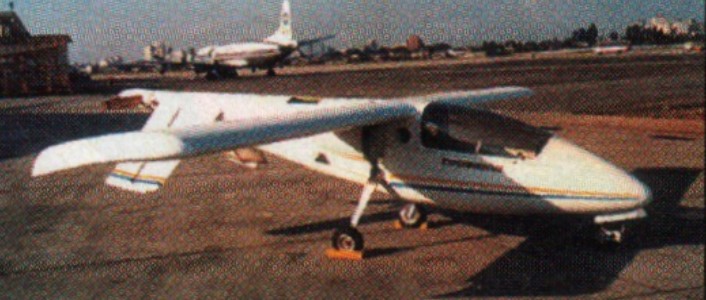
The Micro-IMP was basically a smaller, lighter version of the Mini-IMP and embodied most of the Mini-IMP features and design ideas. It featured a fully retractable tri-cycle landing gear, full span, reflexing flaperons, a NASA GA-PC(1) airfoil, a unique two-position propeller and a fully trimmable inverted “V” tail.

Molt had intended to have Wicks Aircraft Company, a leading supplier of materials for experimental aircraft builders, provide complete kits for the Micro-IMP, with all the parts pre-printed on the TPG paper stock, so that the builder would only have to cut out the pieces and laminate them with the cloth. The kit would have included all instrumentation and materials to build the airplane. The engine which powered the prototype was a 25-hp Revmaster converted 620cc Citroen 2CV automobile engine which has been produce in the millions in Europe. The engine, which was intended to put out about 32-38 h.p. simply couldn’t be persuaded to put out more than about 16-18 h.p. and thus the prototype was severely underpowered. A planned 800 cc version of the engine never got produced.

The Citroen 2CV engine has been extensively modified to provide an excellent, low cost, durable, aircraft power plant and includes such features as solid state magneto, anti-reversion exhaust manifolding, injection carburetor, electric starting with alternator, etc.

The Micro-IMP was finished in 1981 and was last flown at a demonstration during Oshkosh 1982. At that time, the airframe was hung up in the rafters at Molt’s shop awaiting inspiration, time and money to install another, more powerful engine.

Due to other events, notably the Bullet 2100 project and Molt’s declining health, the Micro-IMP was not developed further. Jerry Holcomb went on however to develop, build and fly a refinement of the Micro-IMP design which he named the “Perigee”. Information packages were sold but plans and kits never materialized.

Prior to Molt’s death, the “hulk” of the Micro-IMP was sold to a teenager in the local area and its whereabouts at this time is unknown.

Designed in 1975, first built in 1976.

The limited tooling for the Micro-IMP and the production rights to the design were in the possession of the Mini-IMP Aircraft Company. A large collection of Molt’s original drawings and shop sketches for the Micro IMP have been found. These drawings along with a large number of B/W photographs were being made available on a compact disk. While there are no plans at this time for Mini-IMP Aircraft Co. to develop the design, they were interested in a joint venture with interested individuals or companies to further refine and market this aircraft.

Engine: 620cc Citroen 2CV, 25 hp
Gross Wt. 700 lb
Empty Wt. 360 lb
Fuel capaci¬ty 7 USG
Wingspan 27’
Length 15’
Max speed: 120 mph
Cruise 110 mph
Stall 45 mph
Climb rate 500 fpm
Takeoff run 800 ft
Range 500 miles
Undercarriage: retractable

Taylor Coot

Coot A

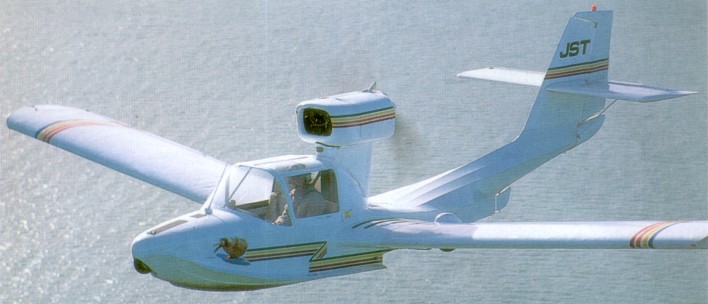
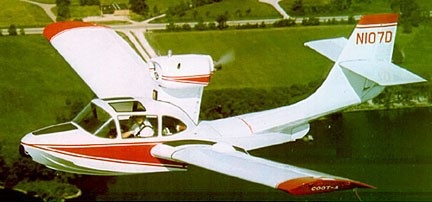
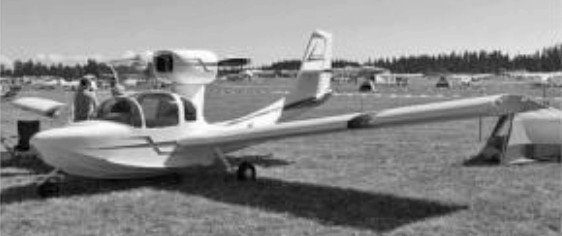
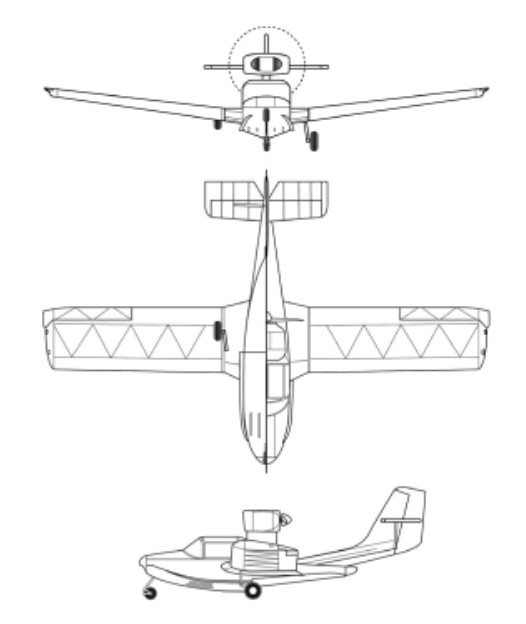
Molt Taylor developed his Coot Amphibian from a World War II Marine assault glider design that featured the unique low “Float-wing” common to both Coot A and Coot B models. The former features a fiberglass hull, the latter a twin-boom tail. Both prototypes have been flying for a number of years. The Coot Floatwing design eliminates the need for tip floats for lateral stability, provides a “deck” to step on for hand-cranking the propeller, protects the engine and propeller from spray, and provides ground-cushion effect for shorter takeoffs. Taylor considers the optimum engine to be the Franklin 180-hp Sport Six, which permits a smooth-water takeoff at 1950 pounds gross in six to eight seconds from a standing start though power can be supplied by any engine from 150 to 220 hp with a controllable propeller. A deep-V hull design permits rougher water operations than possible with twin-float designs, and a low thrust-line offers optimum elevator response for faster water liftoff. The Coot is a comfortable two-place ship with side-by-side seating and dual controls. The folding wings make road towing and home storage possible. With all his aircraft designs Molt Taylor emphasizes that performance and specification figures are greatly dependent on such variables as engine size, fuel capacity, etc.

Taylor Coot Article

The first Coot-A flew in 1969. Two prototypes were built, Coot A with a single tail, and Coot B with twin tail booms. Sooper-Coot Model A was a series version of the former.

Sooper-Coot A N1070

The Sooper-Coot-A two place amphibian price in 1982 was $12,000 (Excludes engine and instruments). Units delivered to June 1982: 100.

Coot A

Over 400 reportedly were being constructed by home-builders by 1977 with various 100-180hp engines.

Coot
1969
Engine: Franklin 335, 180hp
Wingspan: 36’0″
Length: 20’0″
Useful load: 850 lb
Max speed: 140 mph
Cruise speed: 130 mph
Stall: 56 mph
Seats: 2

Coot A
Engine: Franklin, 180 hp
HP range: 100-225
Construction: wood/fiberglass
Wingspan 36’-37’
Wing area: 180 sq.ft
Weight empty: 1450 lbs
Gross: 1950 lbs
Baggage 100 lb
Fuel capacity 24-50 USG
Height: 7 ft
Length: 22 ft
Seats: 2
Landing gear: retractable nose wheel
Speed max: 140 mph
Cruise 100-130 mph
Climb rate: 600-1250 fpm
Stall 45-50 mph
Takeoff run (land) 200-600 ft
Takeoff time (water) 10-12 seconds
Service ceiling: 15,000 ft
Range: 500 sm
Designed: 1967
First built: 1968

Coot A
Empty weight: 700 kg
Wing span: 11 m
Wing area: 14 sq.m
Fuel capacity: 151 lt
Engine: Lycoming/Continental
MAUW: 1043 kg
Seats: 2
Max speed: 190 kph
Cruise speed: 177 kph
Minimum speed: 97 kph
Climb rate: 5 m/s
Fuel consumption: 23 lt/hr
Plan price (1998): $205

Sooper-Coot-A
Gross weight: 1,950 lb
Empty weight: 1,250 lbs
Useful load: 700 lbs
Seats: 2