Lomita CA.
USA
Airplane builder circa 1952-61.
Lomita CA.
USA
Airplane builder circa 1952-61.
USA
Division of Kearney & Trecker Corporation which in early/mid-1960s assembled at Milwaukee, Wisconsin, Italian Piaggio P.136L-1 s and L-2s under names Trecker Gull and Super Gull.
Brian Heath
28 Jul 13
Kearney & Trecker Milling Machine Company was — probably still is — located in Milwaukee, Wisconsin. In the 1950’s and 60’s they leased 2 hangers on the west side of General Billy Mitchell Field in Milwaukee next to the Air National Guard with it’s F-86’s. The north hanger housed the business aviation division of the milling machine company. They had a DC-3, a Cessna 182, a Piaggio Royal Gull, and an aero-coupe. Hope I got the names right.
I was 10 years old in 1958 and my dad was the mechanic for the operation, co-pilot on the DC-3, and pilot on the others. They flew milling machine sales people and maintenance people around the eastern U.S. And they often flew the company owners and brass on vacations and fishing trips.
The south hanger housed Kearney & Trecker’s other business investment — a contract with Piaggio in Italy to assemble and sell Royal Gulls. Later the P-166 executive plane was added. My recollection is that the first P-166 at Mitchell Field was a prototype. It was the only one I ever saw, but I did ride in it several times. While the two businesses were legally separate, the mechanics/pilots often consulted with each other.
I recall being there one day when a lively discussion was held between 4 or 5 people about the length of the main forward hull that floats. Mid ship there was a step, and the rear part of the fuselage was not in the water. Some of them, including dad, thought the plane would take off and land better if the floating part of the hull extended back a foot or so. Not everyone agreed, but there was a consensus to try the idea by building a block (out of wood, I think) that would extend the floating hull back. They did that and tried it out. It worked and I think that Piaggio accepted the idea and modified the design.
I went to the airport with dad when there was a vague hope of getting a plane ride. Perhaps he was going to do a short test flight after doing some work. Or perhaps he was flying a low level company person that he knew would not mind a kid on the trip. Sometimes he had to deliver a milling machine part to a customer in, say, New York. On some of those trips I got the right hand seat — several times on the Gull.
I believe it was in the early 60’s that Kearney & Trecker sold a dozen or so of the Royal Gulls to Peru’s air force. They were looking for pilots to deliver the planes and for someone to teach Peru’s pilots and mechanics how to fly and maintain them. Dad volunteered and was selected to fly one plane from Milwaukee to Peru, and then spend a month or so teaching before returning. No, I was not invited. But I thought that what he did was cool. They bought the supercharged engines for going over mountain passes and landing on mountain lakes at over 12,000 feet. Neat planes. Sounds like Kearney & Trecker got out of the airplane business shortly after dad left.
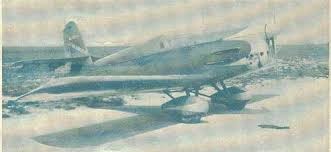
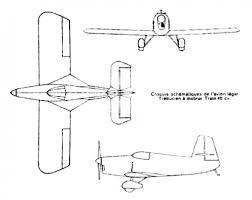
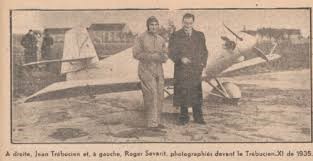
Built in France, the single-seat Trébucien Sport was a low wing monoplane of wood construction.
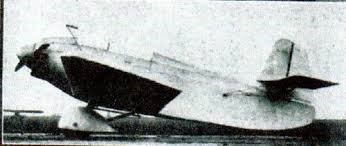
The Sport was built circa 1935.
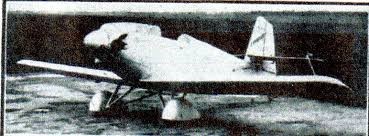
Engine: Train, 40 hp
Span: 6.60 m
Wing area: 7.50 m²
Length: 4.70 m
Maximum speed: 200 kph
Ceiling: 6000 m
Range: 600 km
Crew: 1
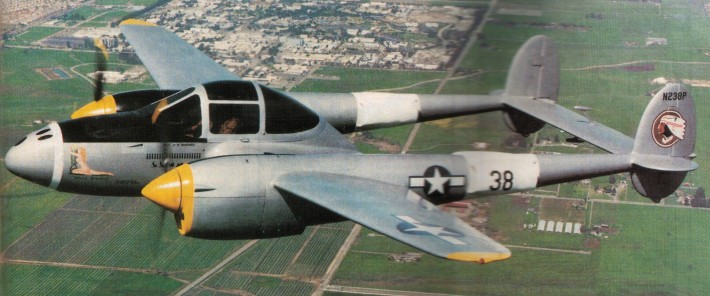
Walter Treadwell decided to design and build his own P-38 as a 55% scale replica. Treadwells is a P-38J.
Cooling the engines are four custon built copper radiators installed in the tail booms, made to form fit within the contours. Designed by Treadwell, the cores were fabricated by a Livermore radiator shop, and a friend, Norm Daniel braied the copper. Small, bullet shaped intakes provide airflow, where the supercharger air intake was on the original.
Contra-rotating was not feasible and each engine uses a 2.37-1 cogbelt PSRU reduction gearbox designed by Reductions Inc, and turns a 3 blade 66 in Warp Drive ground adjustable prop. Exhaust is through a single stack that exits below each engine nacelle.
Each part of the undercarriage was independently machined from solid stock. That included oleos, linkages and wheel forks, attachment fittings and retraction mechanism.
Although the replica is mostly composite construction, plywood was used to establish the cross sections, then stripped with foam that was then sanded into shape. Over this, fibreglass was laid, and when finished, the plywood formers removed, then replaced with bulkheads of honeycomb/glass that were glassed into the shell.
The twin booms are built the same way, but they are connected to wood stringers, then formed with foam, then wrapped with fibreglass.
The main spar is a box type built of Douglas fir in three sections. A centre section that connects the fuselage pod to each boom and the outer panels. All are covered, cap-stripped with carbon fibre, wrapped with fibreglass, then vacuum bagged. Ribs are traced from a CAD program onto full size templates, then each is individually cut from Bluefoam using hot wire. Each is then finished with ply cap strips. The aerofoil begins as an NACA 23015 at the root, then tapers into an NACA with washout at the tip of the entire wing, then covered with 1/16 inch plywood over which fibreglass cavering is applied. The control surfaces are statically balanced.
Primary controls are operated through a complex system of cables, pushrods and fittings that run from the fuselage and wings through the booms to move the ailerons, flaps, elevators, rudders and trimtabs. All this requires 34 sheaves out to the booms to accomplish this. The ailerons are controlled buy a series of bell cranks activated by cables and pushrods, and the same for the elevator. The rudders are cable controlled.
The landing gear is hydraulically operated.
The result is an airplane stressed to 9.9G. The landing gear has been drop tested for a 2000 lb landing weight.
The canopy frame is identical to the original P-38, complete with a flat forward panel, while the sides are molded. The canopy slides fore and aft to facilitate entry into the cockpit for two, and the top panel swings up and rearward.
Unlike the real P-38, Treadwell’s has a stick (topped off with an F-4 Phantom grip) to simplify linkages.
A major problem has been the engine/propeller combination with only 70% of the engine output being achived. Treadwell made the decision to ground the P-38 and replace the Suzuki engines with a pair of Walter Loms.
Engines: 2 x Suzuki 1.3 lt 4-cyl, 100 hp at 6400 rpm
Wingspan: 30.6 ft
Length: 21.9 ft
Wing area: 110 sq.ft
Empty weight: 1500 lb
Gross weight: 2000 lb
Cruise: 150 mph TAS
Top speed: 200 mph TAS
Service ceiling: 12,000 ft
Range: 525 sm
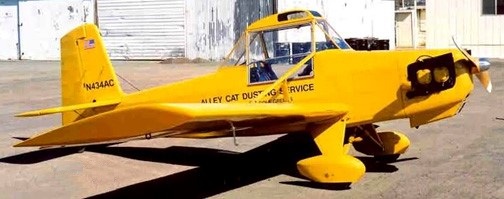
In 1999, Walter Treadwell built the single place, enclosed cockpit, low monoplane wing Alley Cat. Only one was built, registered N434AC, s/n 004.
Engine: Continental O-200
Walnut Creek
California
USA
Walter treadwell flew combat in New Guinea, Phillippines and Okinawa during World War 2 in the left seat of a B-25 with the 345th Bomb Group. He did manage a familiarisation flight in a P-38.
Two 1928 Huff-Daland (ATC 2-26) were contract-built by Travel Air as Louisiana crop dusters. They were single-place, open cockpit biplanes, powered by a 90hp Curtiss OX-5.
The 1930 A-4E NC479N was most likely an E-4000 with a 300hp Wright J-6 engine.
A-6A or Curtiss Wright CW-A-6A.
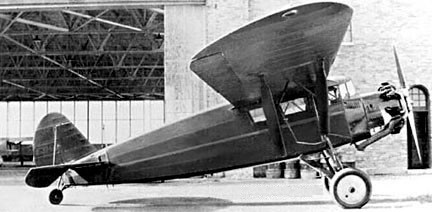
Fourteen of the 1926 Travel Air 5000 (ATC 2-27) were built. A five place cabin, high wng monoplane, eight wet to Natl Air Transport in 1927 with 200hp Wright J-5 engines.
Two were built with 220hp Wright J-5C engines for the 1927 Oakland-Hawaii Dole Race winner Woolaroc (piloted by Art Goebel, NX869), and entrant Oklahoma (piloted by Bennett Griffin, NX911).
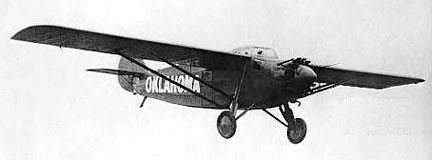
5000
Engine: 150hp Axelson
Wingspan: 50’5″
Length: 30’0″
Seats: 5
4 built
5000
Engine: 200hp Wright J-5
8 built
5000
Engine: 220hp Wright J-5C
Length: 30’8″
Useful load: 1440 lb
Max speed: 123 mph
Cruise speed: 105 mph
Stall: 55 mph
2 built, NX869 and NX911

The Travel Air 7000, or CH7000, of 1926 was a five place open cockpit and cabin biplane.
Probably only one was built, N4261 c/n 361.
The CW7000 was scheduled for a Wright J-4/-5 engine.
7000 / CH7000
Engine: Hisso E, 180hp
Wingspan: 34’8″
Seats: 5
 All Aero