USA
Bought some assets of Bellanca Aircraft Corporation 1982, and initially provided product support for Bellanca Viking, thereafter intending to put Viking back into production. Company became known as Bellanca Inc.
Aircraft
Viking Aircraft Dragonfly / Dart Industries Dragonfly
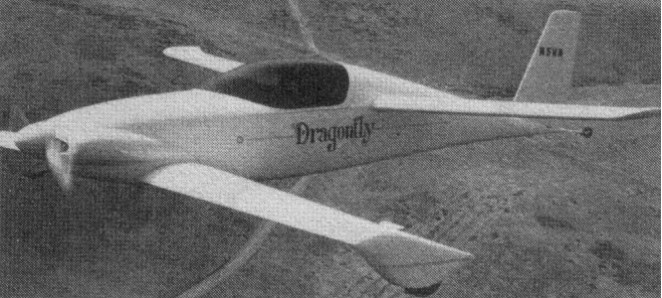
Designed by Robert J. Walters and winner of the Outstanding New Design Award at Oshkosh 1980, the Dragonfly is another canard-configured composite homebuilt in the same vein as the Quickie and VariEze. First flying on 16 June 1980 (N5WN) with two-place side-by-side seating under a bubble canopy, the Dragonfly is powered by a 56 hp 1600cc HAPI/VW engine. The intention of the aircraft is to provide builders with a project that is inexpensive to build and also inexpensive to operate on a readily available engine. The wing and canard are built as a single piece in a jig and the job can be accomplished in a normal two-car garage. The cockpit width is 43 inches, like that of a Cessna 172. A molded canopy was selected to avoid the soapbubble effect of a free-blown canopy. A typical 140-mph cruise burns gas at the rate of 45 mpg. The propeller used is a Great American, with a 40-inch pitch and 52-inch diameter.
Available in three under-carriage options as Mk.I, II or III.
By 1998, out of 2000 plans or kits that had been sold, about 500 were finished.
This 2 place composite design can be built from plans or can be quick built using pre-fab parts.
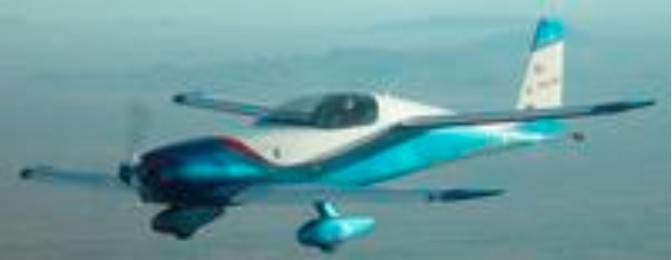
The DRAGONFLY, in 2008 was available from:
DART Industries
PO Box 223, Botha’s Hill
Kwazula Natal, So Africa 3660
Engine: VW
Wing span: 6.71 m
Wing area: 9.45 sq.m
MAUW: 522 kg
Empty weight: 277 kg
Fuel capacity: 57 lt
Max speed: 290 kph
Cruise speed: 265 kph
Minimum speed: 77 kph
Climb rate: 4 m/s
Seats: 2
Plan price (1998): $260
Kit price (1998): $8600
Engine 45-hp 1600 cc Volkswagen
Gross Wt. 1075 lb
Empty Wt. 805 lb
Fuel capacity 15 USG
Wingspan 22 ft
Wing area: 97 sq.ft
Top speed 150 mph
Cruise 155 mph
Climb rate 800 fpm solo
Ceiling 17,000 ft
Seats: 2
Dragonfly
Engine 56hp 1600 cc HAPI/Volkswagen
Wingspan 22 ft
Wing area: 97 sq.ft
Length: 19’0″
Gross Wt. 1075 lb
Empty Wt. 805 lb
Fuel capacity 15 USG
Top speed 168 mph
Cruise 140 mph
Stall: 45 mph
Climb rate 1050 fpm solo
Ceiling 18,500 ft
Range: 500 mi
Seats: 2
Engine: VW 1835cc
Speed max: 180 mph
Cruise: 165 mph
Range: 550 sm
ROC: 850 fpm
Take-off dist: 1200 ft
Landing dist: 2000 ft
Service ceiling: 18,500 ft
HP range: 60-82
Fuel cap: 15 USG
Weight empty: 610 lbs
Gross: 1150 lbs
Height: 4.2 ft
Length: 20 ft
Wing span: 22 ft
Wing area: 102.7 sq.ft
Seats: 2
Landing gear: tail wheel
Dart Industries Dragonfly
Stall: 58 kt / 67 mph / 107 kmh
Cruise: 145 kt / 167 mph / 269 kmh
VNE: 200 kt / 230 mph / 370 kmh
Empty Weight: 370 kg / 815 lbs
MTOW Weight: 551 kg / 1215 lbs
Climb Ratio: 600 ft/min / 3 m/s
Engine: 2180 70HP VW
Span: 22 ft
Length: 19 ft
Empty Weight: 600 lb
Useful Load: 545 lb
Wing Area: 92.2 sq. ft.
Seats: 2 side by side
Take Off Distance: 1200 ft
Stall: 48 mph
Cruise: 165 mph
Rate of Climb: 850 fpm
Viking Air
By 2007 Viking Air owned the rights to all early de Havilland Canada products from the Chipmunk through to Beaver, Otter, Caribou, Twin Otter and Dash 7.
Viking Air completed a ten-minute maiden flight of the first new-build DHC-6 Series 400 Twin Otter on February 16, 2010. The aircraft (c/n 845) flew from the company’s assembly facility at Calgary in Alberta. It has been assigned the registration C-FMJO and is configured with a commuter cabin and will be delivered to launch customer Zimex Aviation of Switzerland for use on oil and gas industry contracts throughout North Africa.
De Havilland Canada ended production of the Twin Otter in 1988 after c/n 844 was rolled out. Viking announced the re-launch of the type and in 2010 ten Twin Otter 400s were in various stages of assembly at Calgary with production ramping up to build one-and-a-half aircraft every four weeks.
Vijayan Red Falcon
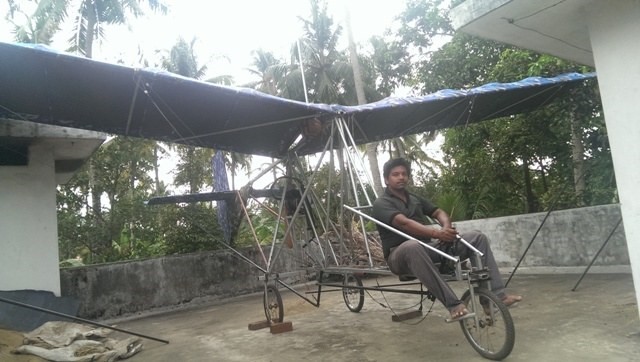
Arun Vijayan of Cochin, Kerala, India, designed and built his own microlight using galvanized and cold rolled steel pipes, mostly second hand. The engine is a converted Suzuki Samurai. Total cost was 36 000/-
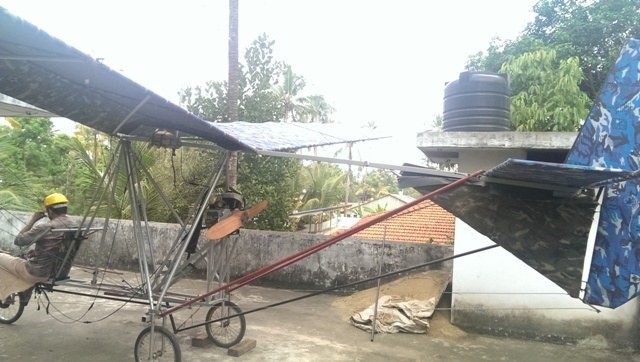
Engine: Suzuki modified
Wing span: 10 m
Total Weight: 137 kg
Length: 5.93 m
Height: 2.96 m

Vieweg B-1-A
Circa 1930, Otto C Vieweg built the B-1-A aircraft, N12786, powered by a LeBlond engine.
Vieweg, Otto C
Seattle WA.
USA
Vieweg was superintendant of Northwest Aircraft & Motor Corp (ex-Clifford Aircraft Corp), organized Trojan Glider Club and built several gliders, instructed in gliders at Boeing Field.
Built the Vieweg B-1-A aircraft circa 1930.
Vietnamese Air Force Institute TL-1 Tu luc

The TL-1 Tu luc was the first product studied, designed and successfully manufactured in 1984-1985 by Vietnamese Air Force Institute.
The TL-1 was tested successfully ten times totalling 102 minutes on the air.
Vidor Guiseppe
1998
Via Nazionale 38
I-31020 Tovena (TV)
Italy
Airplane builder
Vidervol-Szaraz VS-1 Daphne
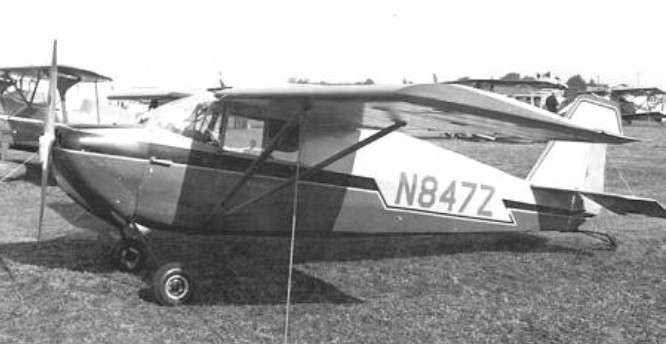
The Daphne was an original homebuilt design of Arpad ‘Art’ Szaraz and produced in association with James Vidervol. Development took four years and the construction of the prototype aircraft was carried out by Vidervol and Szaraz in Cleveland OH.
Registered N847Z (c/n 961) the aircraft made the first flight on October 4, 1961, fitted with an 85 hp Continental C85-8 engine, which was later replaced by a 90 hp Continental C90. Flown by Vidervol, it was prototype for Szaraz SDS-1A.
The aircraft was still on the register for 2013.
Developed into the Szaraz SDS-1A Daphne.
Vidervol-Szaraz VS-1
Engine: Continental C-85-8, 85hp
Wing span: 29’0″
Length: 21’0″
Useful load: 526 lb
Max speed: 130 mph
Cruise speed: 118 mph
Stall: 40 mph
Range: 450 miles
Seats: 2
Vidas NV-5 Nimfa
Built by Vidas Navickas (Lithuania) in 2004.
NV-5 Nimfa
Stall: 32 kt / 37 mph / 60 kmh
Cruise: 54 kt / 62 mph / 100 kmh
VNE: 86 kt / 99 mph / 160 kmh
Empty Weight: 150 kg / 331 lbs
MTOW Weight: 350 kg / 772 lbs
Climb Ratio: 800 ft/min / 4 m/s
Glide Ratio: 14
Take-off distance (50ft obstacle): 390 ft / 120 m
Landing distance (50ft obstacle): 660 ft / 200 m
 All Aero