von Hagan 1911 Aeroplane

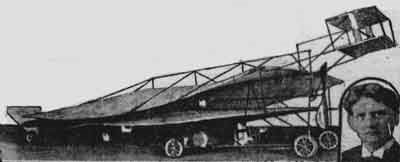
Built by German immigrant Alexander von Hagan in Seattle, Washington, the machine had two sets of silk wings, an aluminium framework, two motors and three propellers. It weighed 600 pounds without the operator. One propeller was in the front, the second three-quarters back, and the third at the rear. One 40 hp motor ran the two front propellers and a smaller one of 35 hp powered the rear. Von Hagan was born in 1859 and served in the German army for 14 years.

von Cosel 1930 monoplane

In 1930 Carl T von Cosel, of Key West FL. Built a two-place cabin, high-wing monoplane amphibian, registered N879Y and powered by a 180hp LeRhône rotary engine.

The wings were never attached, so the plane was never flown. Some reports claimed that von Cosel, an undertaker by trade, kept his dead wife in it for an unstated period of time.

When he left Key West in 1940, he took the plane with him and both disappeared.

Volpar-Spencer Drag-n-fly

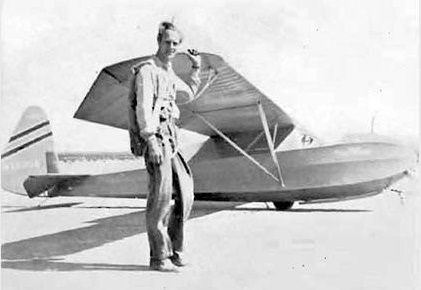
This single-seat waterborne biplane glider is designed to be towed in tethered flight behind a conventional motor boat. It was designed at the instigation of Volpar Inc. In February 1977 Volpar engaged Mr Percival H. Spencer, a pioneer pilot and amphibian designer, to design a small but fully manoeuvrable waterbased glider. This was to use modern plastics and foam materials for high strength and low cost, and to have simple controls that could be operated safely by an amateur or non-pilot.

Mr Spencer himself made the first flight of the prototype Drag-N-Fly, on 20 April 1977 (nearly 63 years after his first solo flight) and continued air and water trials have proved very satisfactory. Flight testing during 1978 resulted in the addition of a 1ft extension on each wing tip, to reduce the power requirements of the towing boat.

When in flight the tether can be disconnected by the pilot in an emergency, and will disconnect automatically if the glider tends to overrun the tow boat. The fuselage is hinged so that the Drag-N-Fly can be transported on a light road trailer without exceeding a width of 8ft 0in. The structure makes extensive use of stryrofoam and other lightweight materials; the strut-braced biplane wings are of constant chord and covered in glasscloth laminate, bonded with epoxy resin; there are spoilers on the outer panels of the upper wing. The wings themselves are built up of aerofoil shaped styrofoam blocks, with plywood spar caps bonded to styrofoam shear webs with epoxy resin. There are wooden blocks between the capstrips at each end to provide bolt attachments for joining the panels together. The fuselage and the twin floats which attach directly to the bottom of the lower wing are built up from plywood internal frames and bulkheads and are covered in polyester resin-bonded moulded glassfibre cloth laminate. The cantilever tail unit has a styrofoam core and glassfibre laminate covering; the vertical surfaces have wooden frame edges and the one-piece horizontal tail has plywood spar caps. The latter is hinged at the aft fuselage bulkhead and is statically balanced by means of a bob-weight; trim adjustment is by means of a bungee spring. There is a single open cockpit forward of the wings, an a water rudder is provided for control during towing, as well as the more conventional rudder.

Span: 17 ft 0 in
Length: 15 ft 11 in
Height: 5 ft 9 in
Wing area: 113.0 sqft
Aspect ratio: 2.56
Empty weight: 225 lb
Max weight : 425 lb
Max speed: 75 mph (in smooth air)
Required take-off speed: 40 mph
Volpar

Volpar Inc formed in 1960, Volpar marketed tricycle landing- gear kit for Beechcraft Model 18. Following merger with Volitan Aviation Inc, kits produced to convert Model 18 to turboprop power, designated Turbo 18. Lengthened-fuselage versions followed, Turboliner and Turboliner II; then came ‘Packaged Power’ units for Beech 18, de Havilland Dove and Beaver, Grumman Goose. Larger premises acquired February 1975 to increase production of Turboliner II.

From 1976 collaborated with Century Aircraft Corporation in producing turboprop conversions for Handley Page Jetstream. Produced programs to upgrade T-33 as T-33V and Falcon 20 as PW300-F20. As Volpar Aircraft Corporation, was acquired by Gaylord Holdings of Switzerland 1990.

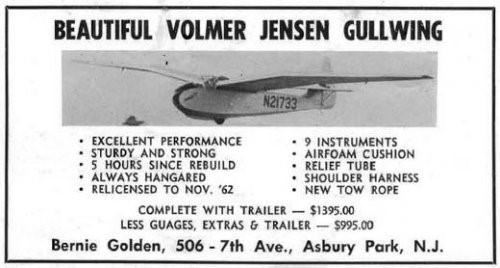
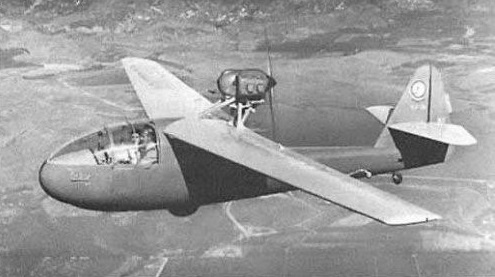
Volmer M-1 / Martin M-1

Jim Martin contracted Volmer Jensen to design and built him a glider for contest flying just before the Second World War.

The aircraft was constructed with a wooden structure and covered in doped aircraft fabric covering. The cantilever gull-style wing employed a NACA 4400 series airfoil. The tail was a conventional low-tail design and featured strut-bracing. The M-1 was registered as an Experimental – Amateur-built aircraft and was not type certified.

Jensen completed the aircraft in 1939.

Martin flew the aircraft in a number of US Nationals, as did a later owner of the M-1, Emil Lehecka. While Lehecka owned it the aircraft picked up the nickname of the Whatsit. By the 1970s the aircraft was owned by Francis Kalinowsky and was based at the Circle X airport in Florida. At that time it was reportedly in good repair and was well maintained.

The aircraft was removed from the Federal Aviation Administration registry and its whereabouts are unknown.

M-1
Wingspan: 48 ft 0 in (14.63 m)
Wing area: 180 sq ft (17 m2)
Aspect ratio: 12.8:1
Airfoil: NACA 4400 series
Empty weight: 438 lb (199 kg)
Gross weight: 631 lb (286 kg)
Maximum glide ratio: 28 at 50 mph (80 km/h)
Rate of sink: 132 ft/min (0.67 m/s) at 40 mph (64 km/h)
Crew: one

Volmer VJ-21 Jaybird

The Jarvis Jaybird design was acquired by Volmer Jensen as homebuilt project soon after World War II and became the VJ-21 Jaybird with retractable wheels and 75hp Continental A75 engine.

The 1947 Volmer Jaybird all-metal evolution features a pod nacelle with a pusher engine and has monowheel gear with outriggers on the wings. Reportedly more than 900 plans sold to builders through the 1960s.

A later owner (ca.1960) put a 125hp Continental C125 in, repositioned wings slightly lower and added small auxiliary fins.

VJ-21 Jaybird
Engine: 75hp Continental A-75
Wingspan: 45’0″
Length: 24’0″
Useful load: 500 lb
Max speed: 135 mph
Cruise speed: 110 mph
Stall: 35 mph
Range: 400 mi
Take-off run: 50′
Landing run: 150′
Seats: 2