Beaumont TX.
USA
In 1948 E B Votaw built the W-2V registered N17624.
Beaumont TX.
USA
In 1948 E B Votaw built the W-2V registered N17624.
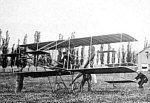
The 1909 Vosgiens biplane was designed and built by Atelier Vosgiens in France.
Atelier Vosgiens built aircraft in France circa 1909.
tandem two-seat military primary jet and electronic warfare trainer, also suited to other military tasks and for use as a civil sporting aircraft. Developed from the Bede Jet Corporation BD-10 prototype first flown July 1992, via the later Peregrine Flight International Peregrine PJ-2. Major design review undertaken, with original supersonic wing replaced by subsonic and simpler wing of greater strength and carrying more fuel.
USA
Founded 1997 and developing the Phoenix Jet-TJ tandem two-seat military primary jet and electronic warfare trainer, also suited to other military tasks and for use as a civil sporting aircraft. Developed from the Bede Jet Corporation BD-10 prototype first flown July 1992, via the later Peregrine Flight International Peregrine PJ-2. Major design review undertaken, with original supersonic wing replaced by subsonic and simpler wing of greater strength and carrying more fuel.
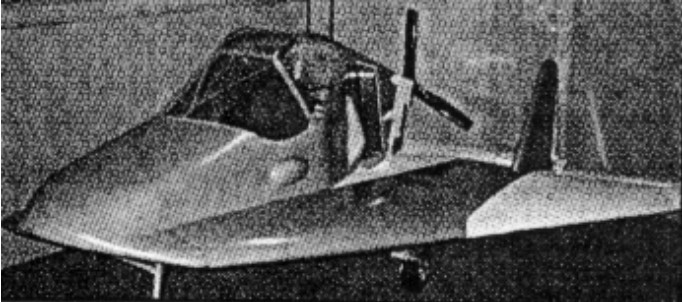
Composite construction.
Speed max: 110 mph
Cruise: 100 mph
Range: 300 sm
ROC: 800 fpm
Take-off dist: 400 ft
Landing dist: 75 ft
Service ceiling: 12,000 ft
Engine: Rotax 532, 42 hp
Fuel cap: 11 USG
Weight empty: 330 lbs
Gross: 600 lbs
Height: 5 ft
Length: 14.3 ft
Wing span: 13.7 ft
Wing area: 115 sq.ft
Seats: 1
Landing gear: nose wheel
1995: PO Box 642, Batavia, NY 14021, USA.
Airplane builder
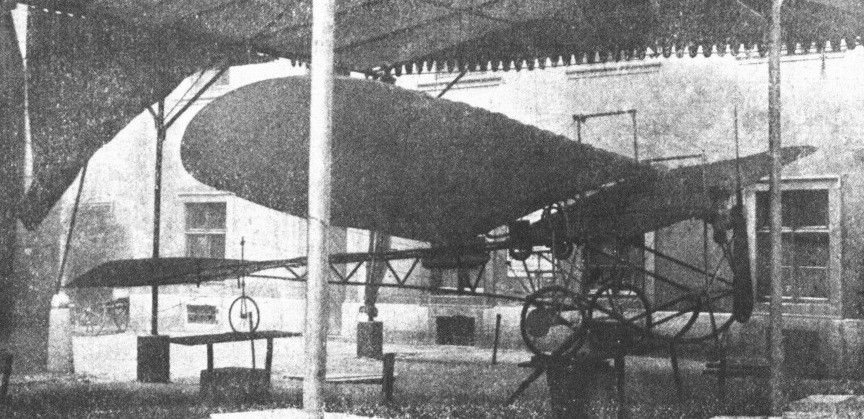
A monoplane with a variable geometry wing, designed by Hauptmann Rudolf Vorauer from Graz, in what is now Austria, in 1910. Vorauer had the rank of Artilleriehauptmann in the k.u.k. Armee.
In 1929 the Von Hoffman Aircraft Co of St Louis MO. Built the sole model TP, registered NX575E.
Designed by Von Hoffman and Gordon Israel, the TP was a two place open-cockpit biplane, powered by a 120hp Siemens-Halske engine.
The basic trainer project that fell victim to the stock market crash that year.
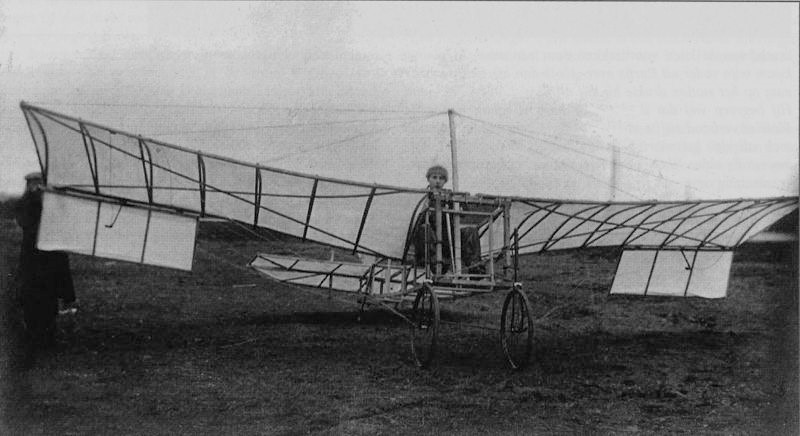
A glider built by Walton White Evans von Hemert. The machine was built in 1911 in a carpenter workshop in Amersfoort, Netherlands. Von Hemert (born 1894) was then 17 years of age. He made several flights with the glider, one of which was on 5 February 1911, as reported in the Dutch aviation magazine “De Luchtvaart”. The glider was towed by a car via a connecting line and the flight lasted about one minute at a height of around 10 meters. All of a sudden a gust of wind broke the left wing, crashing the machine. The wings were wrecked but the fuselage and the part where the pilot sat was intact. The rudder sported the identification “Aeroplane V. Hemert No. X”.
 All Aero