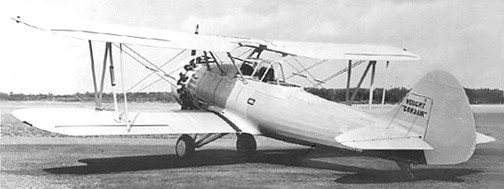
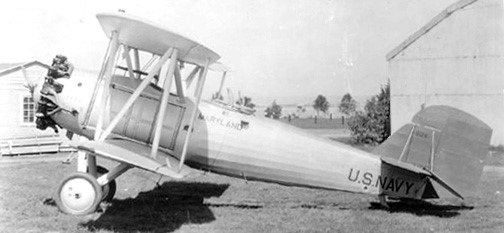
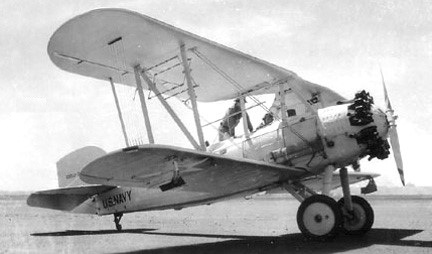
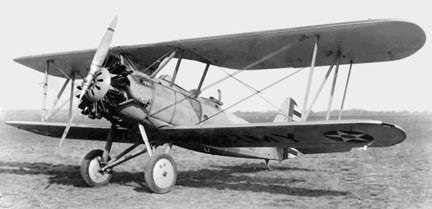
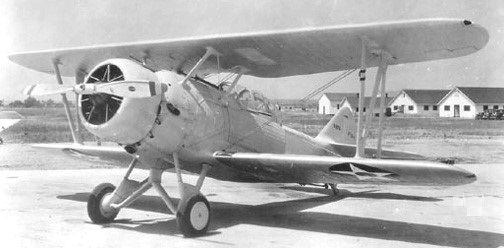
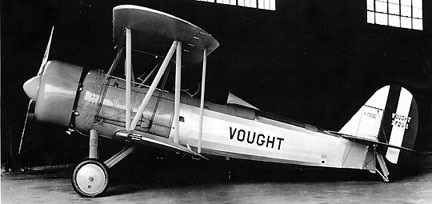
The 1933 V-90 Corsair was a two-place, open cockpit or cabin company demonstrator, similar to the O3U/SU. The one built, NX781N c/n 989, used various engines.
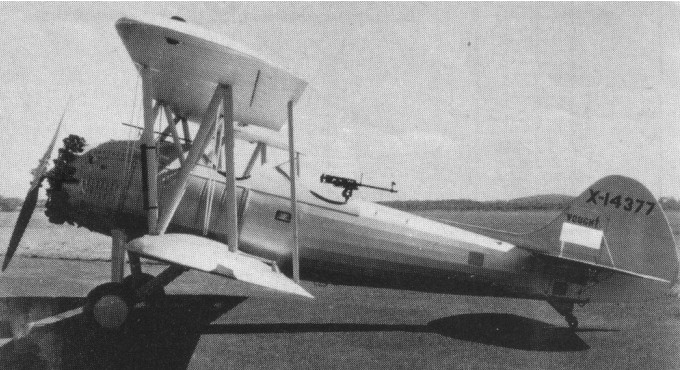
Twenty-one of the 1934 V-92 Corsair, similar to the SU-1, went to China.
The 1937 V-99 Corsair was similar to the O3U. One V 99M two seat fighter went to Mexico.
On 30 March 1933, twelve observation-attack Vought V-93S Corsairs were purchased and shipped to Siam (later Thailand, hence the ‘S’ in the designation) in 1934 where they were designated ‘Attacker Type 1’. Later the RTAF Directorate of Aeronautical Engineering was able to produce 150 Corsairs in 1936, 39 and 40. They were to become the first air combat fleet to serve in the Indochina conflict during October 1940-May 1941.
V-93S Engine: Pratt & Whitney S5E-SD, 725 hp Seats: 2
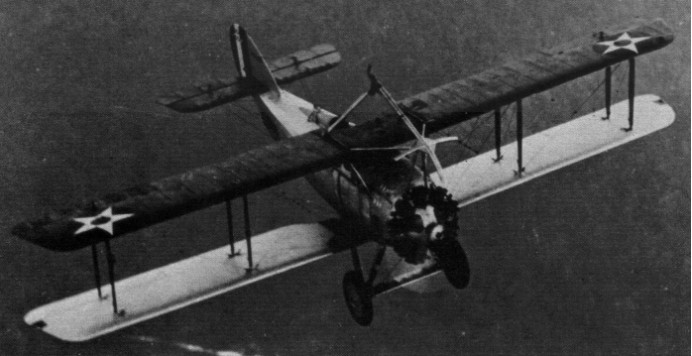
In 1922 the USN received eighteen UF-1 two-place scout-observation aircraft, A6482-6499, all re-designated to UO-1. One hundred and forty Vought UO-1 Aztec two seat biplane, were built from 1922, powered by 200hp Lawrance J-1 engines, as landplanes and seaplanes: A6482-6499 (converted from UF-1), A6546-6551, A6603-6615, A6706-6729, A6858-6877, A6984-7023, A7031-7050, of which one was converted by NAF to racer UO-2, and 13 to UO-5.
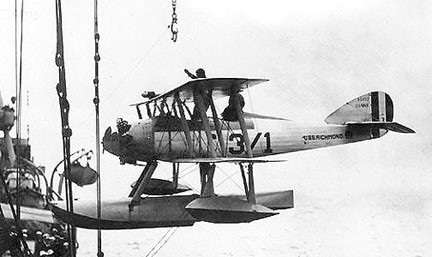
Vought UO-1 A-6493 hoisting aboard USS Richmond
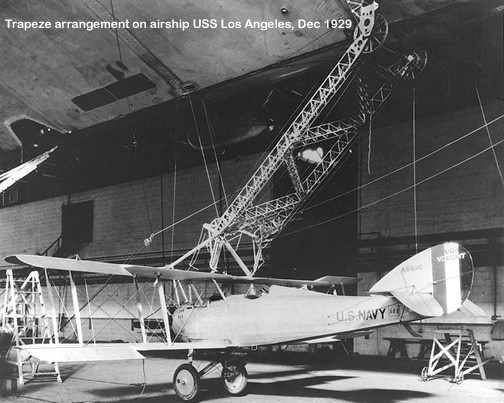
The UO-1 model was used in trials as hook-on scout/fighters with airships.
Vought UO-1 ‘Skyhook’ A-6615
The two 1928 UO-1C (A7007 and one other) were a wheeled trainer version for USN Reserve. Possibly other conversions as the designation was also used for planes modified for catapult launching, regardless of floats or wheels.
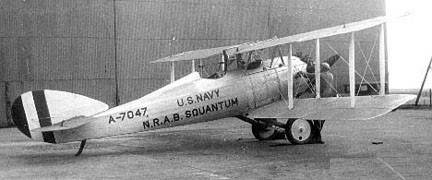
Vought UO-1 A-7047
Vought UO-1 Cockpit
In 1922 NAF modified, wheeled UO-1 A6546 for 1922 Curtiss Marine Trophy competition. It was damaged in ground handling and did not race.
The UO-3 was re-designated as FU-1.
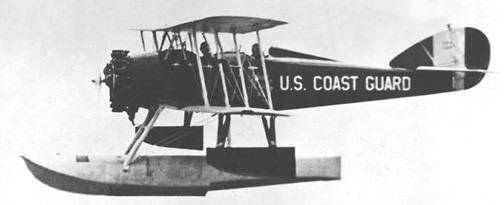
Two UO-4 were built in 1935 for the USCG with a single float; 404=V104, 405=V105.
Vought UO-4
The UO-5 were modification of UO-1 with 220hp Wright R-790 engines. Thirteen were built; A6729, A6860, A6866, A6988, A6997, A6999, A7005, A7010-7012, A7016, A7035, and A7038.
One-hundred and thirty-two of the 1927 O2U-1 were built (A7221-7222, A7567-7586, A7796-7831, and A7900-7940).
The 1927 O2U-2 was priced at $12,890 and thirty-seven were built (A8091-8127) of which six went to the USMC.
Vought O2U-2
Eighty of the 1929 O2U-3 were built (A8193-8272), including one to the Army as XO-28.
Vought O2U-3
Forty-two of the 1930 O2U-4 were built (A8315-8356) priced at $17,203-18,065.
Vought O2U-4 A-8338
Corsarios Azcarate were Mexican licence built Vought O2U¬-2M.
One USN O2U was used for evaluation by the Army in 1929, 29-323, as the O-28 Corsair.
Vought XO-28 29-232
The O24-2 was a civil version of the O2U-1 Corsair. In 1928 one was civil licensed for F B Rentschler, pres of Pratt & Whitney Corp, NX7014. Some other ex-military noted were N61E, N111N, N367H, and N833H.
The XF3U-1 was ordered by USN for testing as a replacement for the Helldiver. One was built (9746), first flying on 22 June 1933 and later rebuilt and modified as the prototype XSBU-1.
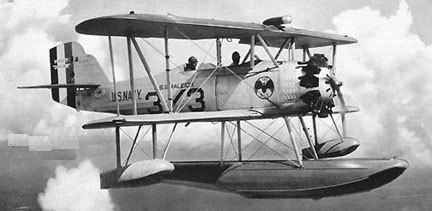
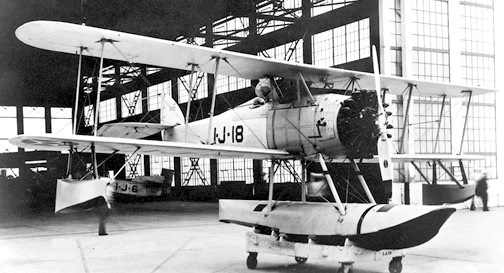
In January 1927 the Chance Vought company produced a single seat fighter version of its mass produced VO 1 shipboard observation aircraft. A two bay biplane, the VO 1 was not entirely suitable as the basis for a competitive fighter, and with only the same engine as before, the 200 hp Wright R 1790 Whirlwind, performance was inadequate. Nevertheless, 20 FU 1 fighters were converted from UO-3 for the US Navy, most of them being central float seaplanes (at least two were fitted with wheels for airfield use).
Despite being pleasant to fly, the FU was really only suitable for training. In their first year, ending in the winter 1928 29, the FU 1s equipped fighter squadron VF 2B aboard the carrier Langley. Thereafter the 18 that survived were converted into FU 2 trainers, still with a fixed Marlin machine gun. They remained in use as trainers and general-purpose aircraft into the 1930s.
Equipped for catapult launch, they were the last fighter so equipped.
FU Engine: 220hp Wright J-5 (supercharged R-1790) Span: 10.46 m (34 ft 4 in) Length: 7.44 m (24 ft 5 in) Gross weight: 1093 kg (2400 lb) Useful load: 694 lb Maximum speed: 236 km/h (147 mph) Stall: 53 mph Range: 430 mi Seats: 1-2
In January 1927 the Chance Vought company produced a single seat fighter version of its mass produced VO 1 shipboard observation aircraft. A two bay biplane, the VO 1 was not entirely suitable as the basis for a competitive fighter, and with only the same engine as before, the 200 hp Wright R 1790 Whirlwind, performance was inadequate. Nevertheless, 20 FU 1 fighters were built for the US Navy.


 All Aero