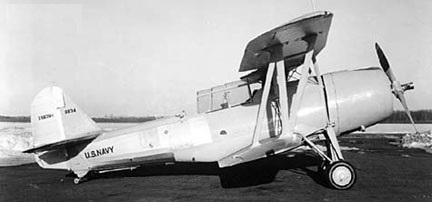
The 1936 Vought XSB3U-1 was an SBU development with a rearward-retracting gear. Only one was built, 9834.
The 1936 Vought XSB3U-1 was an SBU development with a rearward-retracting gear. Only one was built, 9834.
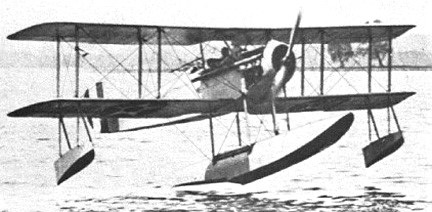
In 1921 Vought built two VE-9, AS64310 and AS64316, for the Army. They were effectively VE-7 with a 180hp Wright E-3 engine.

In 1927 twenty-two were built foe the Army, 22-379 – 22-400, and seventeen to the USN, A6465-6481. The Army used same designation as USN.
Four VE-9H were built in 1927 for the USN, A6461-6464.
The VE-9W was cancelled.
1921 VE-9
Engine: 180hp Wright E-3
1927 VE-9
Wingspan: 34’2″
Length: 24’2″
Useful load: 536 lb
Speed: 119 mph
Ceiling: 18,840′
The VE-8 was a 1918 two-place, open cockpit biplane.
Two Vought VE-8 were ordered by the Army on 11 October 1918, 40099 and 63266, and three more were cancelled, 40100-40102.
VE-8
Engine: 340hp Hispano H
Wingspan: 31’9″
Length: 21’4″
Seats: 2

The two-place Lewis & Vought VE-7 Bluebird of 1917 was advertised post-WW1 as a sport and training plane. One prototype was built. The wings and tail of the prototype were located in a hangar after WW2, and rebuilt into Waterman Pusher).
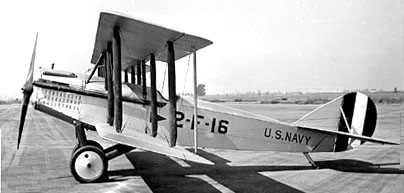
The VE-7 was built in 1918 (The first production aircraft of Chance Vought) as an advanced military trainer, observer, and fighter. Fourteen went to the USAS including AS19898-19902 and AS40072 (One of two known to have been built at McCook Field). Reportedly four more were built by Springfield Co and possibly never assigned s/ns.) There were conversions to VE-7G, 7GS, and -7S.
The USN received twenty VE-7, A5661-5680, plus 39 built by NAF, A5942-5969, A5971, and A6011-6020.

Forty of the 1921 VE-7F were built, A5912-5941, and A6021-6030, plus 29, A5943-5971, by NAF. They were powered by 180hp Wright E-3 engines.
In 1921 twenty-three VE-7, A5681-5700 were converted to VE-7G by NAF with 180hp Hispano E engines and one was modified, A5685, as a VE-7GF.
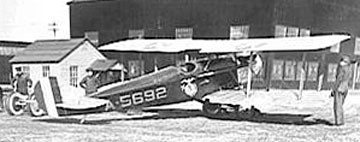
NAF built nine VE-7H, A6436/6444, with 180hp Hispano E engines for the USN in 1924.
In 1925 forty VE-7S were built for the AAF plus eleven to the USN, A5942 and A6011-6020, as VE-7SF, and one, A5680, as VE-7S converted from a VE-7 by NAF.
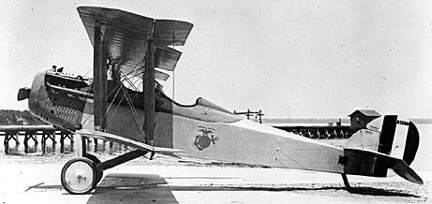
A VE-7 was the first aircraft to fly from an aircraft carrier.
A scratch-built replica of the Bluebird was completed in early 2007 by volunteers of the Vought Aircraft Heritage Foundation.
VE-7 Bluebird prototype
Engine: 150hp Wright-Hispano A
Wingspan: 34’2″
Length: 24’6″
Useful load: 536 lb
Speed: 114 mph
Seats: 2
VE-7F
Engine: 180hp Wright E-3
Wingspan: 34’1″
Length: 24’5″
Speed: 119 mph
Ceiling: 19,200′
VE-7G
Engine: 180hp Hispano E
VE-7GF
Engine: 180hp Hispano E
VE-7H
Engine: 180hp Hispano E
Length: 31’1″
Speed: 110 mph
Ceiling: 14,800′
VE-7S
Engine: 180hp Hispano E
Length: 24’5″
Speed: 117 mph
Range: 290 mi
Ceiling: 15,000′
Seats: 1
VE-7SF
Engine: 180hp Hispano E
Length: 24’5″
Speed: 117 mph
Range: 290 mi
Ceiling: 15,000′
Seats: 1

The Vought V-85G Kurier of 1934 was a commercial seaborne catapult mailplane. Six went to Germany.
Engine: 700hp P&W R-1690
Wingspan: 36’0″
Length: 30’9″
Speed: 200 mph
Seats: 1

The 1933 V-80 and V-80P Corsair were single place, with an enclosed cockpit, and interchangeable wheels and floats.
One V-80 went to Argentina and a number of V-80P to Peru.
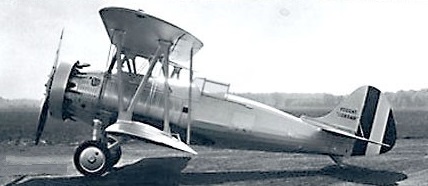
Engine: 675hp P&W R-1690
Wingspan: 36’0″
Length: 27’7″
Speed: 197 mph
Range: 760 mi
Ceiling: 27,800′.
Seats: 1

The 1931 V-50 Corsair was a two-place company demonstrator based on the O3U. The only one built, NX840W, was powered by a 635hp P&W R-1690 engine, at some time with a four-blade propeller. It was capable of 190 mph.


A single XO5U-1 was built (9399), featuring folding wings and amphibious floats, in 1934.
Engine: P&W R-1340
Wingspan: 36’0″
Length: 32’6″
Speed: 155
Ceiling: 15,100′
Seats: 2
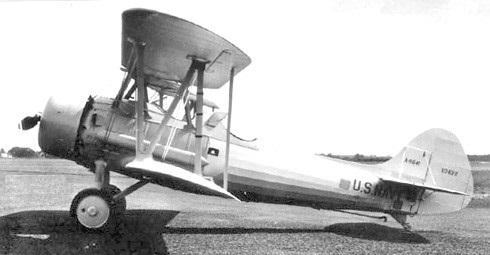
The XO4U-1 A8641 was built in 1931 with a shoulder-wing and powered by a 500hp P&W R-1340D engine. It crashed during testing and was rebuilt in 1932 as the XO4U-2 with a conventional wing placement and 625hp R-1535 engine.
XO4U-1
Engine: 500hp P&W R-1340D
Wingspan: 37’0
Length: 27’9″
Speed: 143 mph
Ceiling: 21,200′
Seats: 2
XO4U-2
Engine: 625hp R-1535
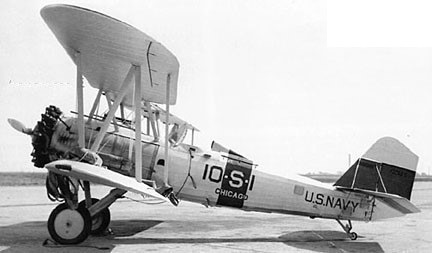
The Vought O3U was a two-place scout for the US Navy and US Marine Corp. The O3U operated on wheels and amphibious floats, and later became the SBU series.
Ninety-seven of the 1930 O3U-1 were built (A8547-8582, A8810-8839, and A8851-8871). They were priced at $10,607-12,653.
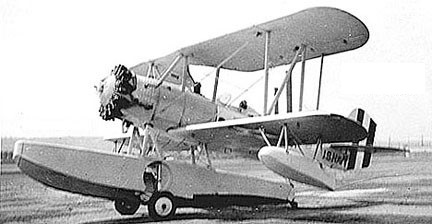
Fifteen of the 1930 O3U-2 were built, priced at $14,500.
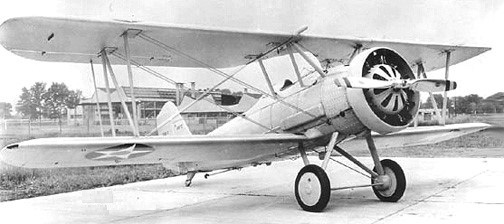
Seventy-five of the 1933 O3U-3 were built (A9142-9169, and 9283-93300), the last one modified as the XO3U-6.
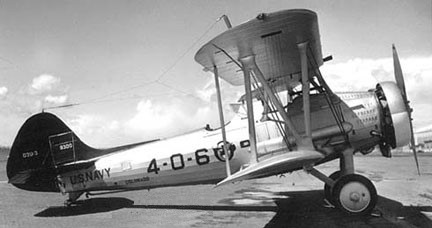
Sixty-five of the 1932 O3U-4 (A9077-9141) priced at $13,500-14,000. They became the SU model.
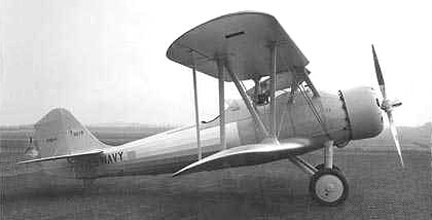
One O3U-4, A9078, was modified as XO3U-5 in 1934.
In 1934 O3U-3 9729 was modified to become the O3U-6 prototype.
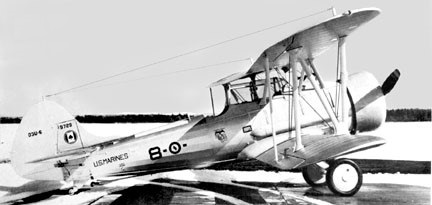
Thirty-one of the 1935 O3U-6 were built (9729-9744 and 0001-0016), the last one, 0016, temporarily as XOSU-1 scout version for testing. It later reverted to O3U-6.
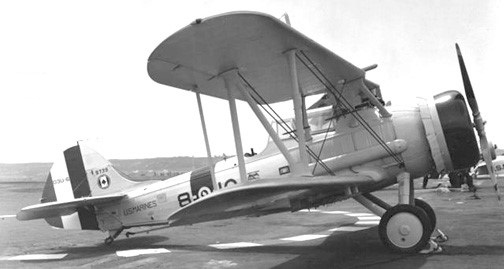
The SU re-designated from O3U was two seat and powered by a 600hp P&W R-1690C.
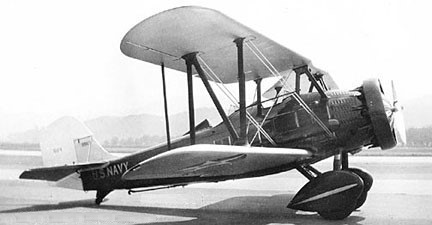
Twenty-eight SU-1 were built in 1933: A8872-8875, A8928-8937, and A9062-9076.
Fifty-three SU-2 were built in 1933; A9077, A9079-9108, and A9110-9121.
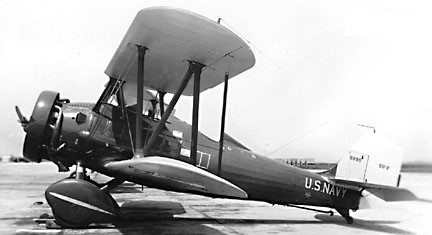
Twenty SU-3 were built in 1933; A9122-9141.
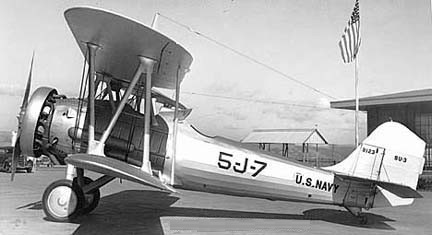
The one example of the XSU-4, A9109, was built in 1934.
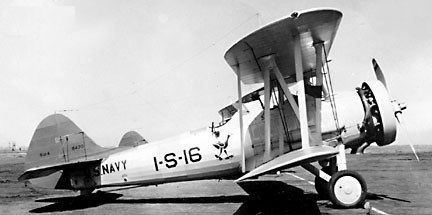
Forty SU-4 were built in 1934; 9379-9398, 9414-9433.
The 1933 V-65 and V-66 Corsair were export version of the SU-2.
V-65: 35 to Brazil, 46 to China, 12 to Argentina;
V-66: 8 to Brazil, 1 to Argentina, 1 to Britain.
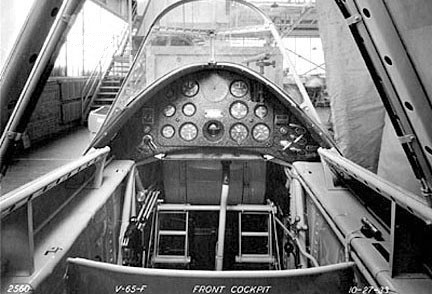
O3U
Engine: P&W R-1340, 450hp
Wingspan: 36’0″
Length: 26’1″
Speed: 141 mph
Ceiling: 16,100′
Seats: 2
Undercarriage: wheels
O3U
Engine: P&W R-1340, 450hp
Wingspan: 36’0″
Length: 26’1″
Speed: 137 mph
Ceiling: 15,000′
Seats: 2
Undercarriage: single-float
O3U
Engine: P&W R-1340, 450hp
Wingspan: 36’0″
Length: 26’1″
Speed: 132 mph
Ceiling: 15,000′
Seats: 2
Undercarriage: Amphibious
SU
Engine: 600hp P&W R-1690C
Wingspan: 36’0″
Length: 26’3″
Speed: 170 mph
Ceiling: 19,900′
Seats: 2
SU-4
Engine: 600hp P&W R-1690C
Length: 27’11”
Speed: 168 mph
Ceiling: 18,600′
 All Aero