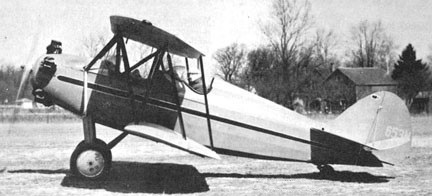
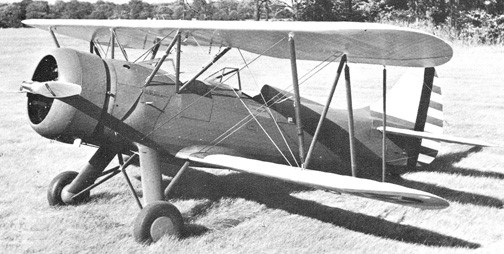
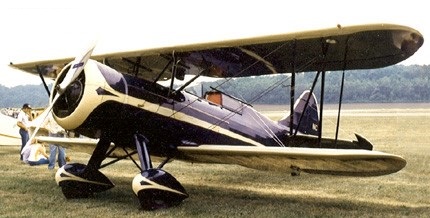
The Waco ‘F’ series of biplanes supplanted and then replaced the earlier ‘O’ series of 1927/33. The ‘F’ series had an airframe which was smaller and about 450 pounds (200 kg) lighter than the ‘O’ series, while continuing to provide accommodation for three persons in tandem open cockpits. A similar performance to the earlier model was obtained on the power of smaller and more economical engines.
The initial models were the INF (125 hp / 93 kW Kinner engine) with around 50 built, KNF (100 hp / 75 kW Kinner, about 20 built, ATC 313, at $3,630) and the RNF (110 hp / 82 kW Warner Scarab, nearly 150 built), all of which had externally braced tailwheel undercarriages. Many further sub-models followed with more powerful engines of up to 225 hp / 168 kW. The most powerful in the range was the ZPF of 1936/37, intended for executive use.
Waco KNF NX653N
Only four 1931 MNF’s (ATC 393) were built; NC11213, NC11222, NC11239 and NC11246, priced at $4,475.
MNF
Al Menasco used the MNF to help promote his engines. A Heywood air-operated starter, caster action tail wheel, compass, navigation lights, first-aid kit and fire extinguisher were standard equipment on the MNF. NC11213 has the optional, Hamilton Standard ground adjustable prop. Brakes were optional.
The first QCF was finished on May 12, 1931. Thirty-one were built in 1932.
QCF-2
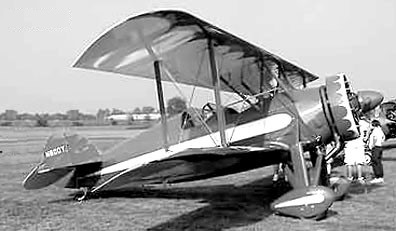
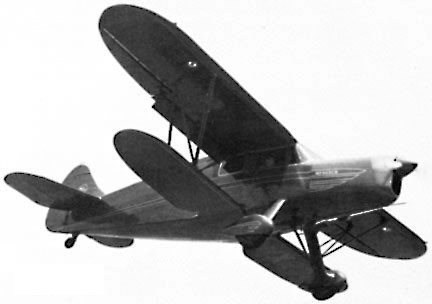
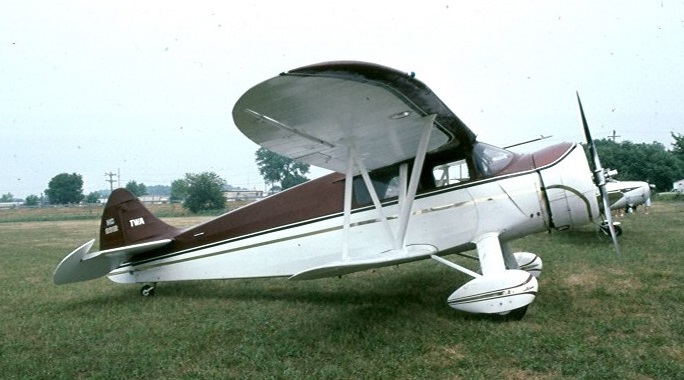
The ‘F’ series was popular with private owner pilots for sporting and other uses and continued in production through the late 1930s. The tandem cockpit UPF-7 was adopted by the Civilian Pilot Training Program and continued in production until 1942 by which time over 600 had been built.
One EPF-6 was built in 1936 and test-flown.
The 1936 VPF-6 was similar to the VPF-7 but with narrower landing gear and smaller wing cut-out. It was advertised as available, but none was produced. The 1937 VPF-7 (ATC 642) was the export version of the UPF-7. Priced at $9,500, six went to Guatemala, all of which returned to the US in 1959.
Waco VPF-7 NC78435
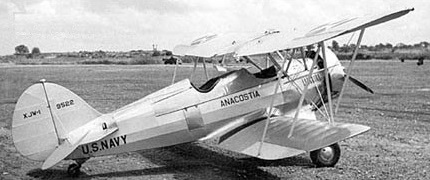
Waco XJW-1 9522
Two, 9521/9522, XJW-1 of 1934 were a USN version of the UBF as hook-up trainer and mail shuttle for the dirigible Macon.
Waco XJW-1 9522
In 1937 Waco introduced its Model UPF-7 as an open-cockpit biplane with a 164-kW (220-hp) Continental W-670-K radial engine and seating for two or three. The type was intended for training and sport use. A single example was evaluated by the USAAC as a primary trainer during 1939 with the designation XPT-14.
Waco XPT-14 39-702
The 1939 XPT-14 39-702 crashed in testing on 11 October 1939.
Then followed 13 YPT-14 service trials aircraft, which were later re-designated PT-14.
Waco YPT-14
A single civil 1937 Model UPF-7 (ATC 642) was impressed in 1941 with the designation PT-14A. However, another 600 aircraft of the same basic type were ordered, priced at $9,500, with three engine types for the Civilian Pilot Training Program that undertook pilot training at educational institutions to provide a pool of trained pilots in the event of war. Another 31 similar aircraft were bought by the Civil Aeronautics Authority for its own flying unit, and 14 to the USAAF as YPT-14.
Waco UPF-7 1941
One QNF model was built. It flew, but presented nose-heaviness problems.
The three place YPF-6 and YPF-7 OF 1935 (ATC 586) featured a sliding canopy and unit price of $8,395. Five were built as YPF-6 (NC15700, NC15606, NC15711, NC16579, NC17470) and three re-designated in 1937 as YPF-7 (NC17710, NC17715, NC20907).
Waco YPF-6 NC16579
Waco YPF-7
Three ZPF-6 (ATC 586) were built in 1936, NC15707, NC16579, and NC17470, featuring a sliding canopy. The price was $7,385.
Two ZPF-7 were built in 1938, NC17710 and NC17715.
Waco ZPF-7 N29962
Approximately 600 came out of the Troy, Ohio factory between 1937 and 1942.
The WACO Aircraft Company of Ohio Inc had built three replicas by December 2011, which they designated MF.
Military operators
The Guatemalan Air Force received at least 1 Waco YMF-7 in 1934, which was still in airworthy condition in 1998.
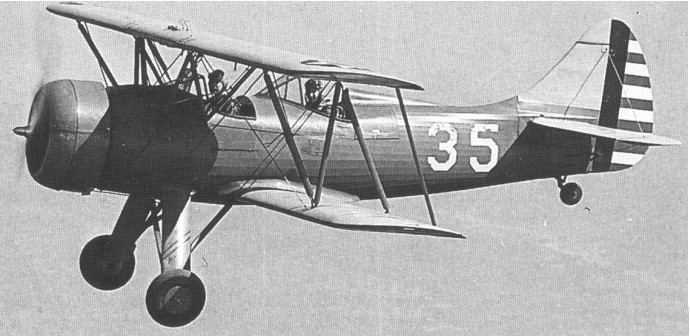
The United States Army Air Corps adopted the UPF-7 as the PT-14, with one XPT-14 and 13 YPT-14s being purchased, with an additional UPF-7 impressed in 1942 as a PT-14A. Some were operated by the United States Navy.
PT-14
Waco CPF of Brazilian navy
The 1932 PBF (ATC 491) was priced at $4,415. Basically the same as PCF with modified ‘B’ wings. Four were built; NC13029, NC13049, NC13428, and NC13446.
Waco PBF NC13029
Three 1931 PCF (ATC 453) were built; NC11476, NC11483, and NS12439, priced at $4,415. The PCF-2 (Certified ATC#473 2 October 1931) featured a new cross-braced undercarriage.
Waco PCF NS12439
177 1930 Waco RNF were built (ATC 311, and 2-255 and 2-311) for weight changes. They were priced at $4,195-4,320, or $4,450 with an optional 125hp Warner engine.
Waco RNF NC853V
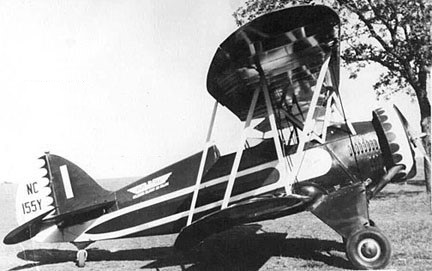
Waco UBF NC155Y
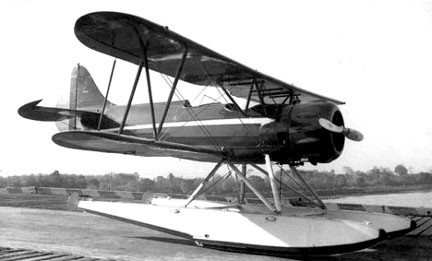
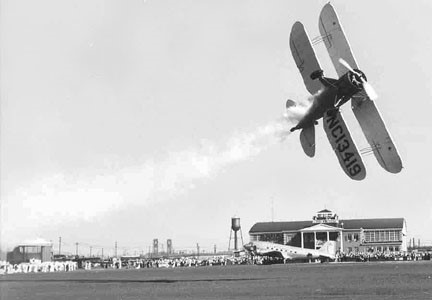
Priced at $5,025, about 11 1932 Waco UBF and UBF-2 (ATC 473) were built, of which 2 went to the USN as XJW-1 dirigible “skyhooks”, and one was fitted with EDO floats in 1933; NC13074.
Waco UBF-2 NC13419
Eighteen of the 1934 UMF-3 and -5 (ATC 546) were built at $6,530, of which 4 went to Guatemala, and 3 to the Cuban Navy. They were the forerunner of the UPF-7.
Waco UMF-3 NC14041
The YMF-3 (ATC 542) of 1934 was powered by a 225hp Jacobs L-4. Powered by a 245hp Jacobs L-4, the YMF-5 appeared in 1935 for $6,795. Eighteen were built.
The design was revived around.1990 by Classic Aircraft Corp of Lansing MI as the YMF-5 Super.
Waco YMF-5 NC14067
Considerable numbers of ‘F’ series biplanes, both original and newly built, remained in service in mid-2009.
INF Certified ATC#345 2 August 1930 Engine: Kinner B-5, 125 hp (93 kW) Span: 29 ft 7 in (9.1 m) Length: 20 ft 10 in (7 m) Height: 8 ft 5 in (2.5 m) Wing area: 244 sq ft (22.7 sq m) Empty weight: 1870 lb (848 kg) Loaded weight: 2650 lb (1202 kg) Maximum speed: 128 mph (206 km/h) Cruise speed: 96 mph Stall: 40 mph Range: 370 mi Seats: 3 Price: $4,110 50 built
KNF Certified ATC#313 12 April 1930 Engine: Kinner K-5, 100 hp (75 kW) Wingspan: 29’7″ Length: 21’4″ Useful load: 776 lb Max speed: 100 mph Cruise speed: 85 mph Stall: 40 mph Range: 430 mi Seats: 3 20 built
PCF Engine: Jacobs LA-1, 170 hp (127 kW) Wingspan: 29’7″ Length: 20’10” Useful load: 972 lb Max speed: 119 mph Cruise speed: 101 mph Stall: 42 mph Range: 430 mi Seats: 3 3 built
PCF-2 Certified ATC#473 2 October 1931 Engine: Jacobs LA-1, 170 hp (127 kW) new cross-braced undercarriage
QCF QCF-2 Certified ATC#416 9 April 1931 Engine: Continental A70, 165 hp (123 kW) Wingspan: 29’7″ Length: 20’4″ Useful load: 864 lb Top speed: 125 mph Cruise: 108mph Stall: 45 mph Range: 430 mi Seats: 3 31 built Prototype NC11241
UBF / UBF-2 / XJW-1 Engine: Continental R-670, 210 hp (157 kW) Wingspan: 29’6″ Length: 20’9″ Useful load: 920 lb Max speed: 132 mph Cruise speed: 116 mph Stall: 42 mph Range: 400 mi Seats: 3 Two UBF designated XJW-1 were used by the US Navy as hook-up trainers for the Curtiss F9C Sparrowhawk airship-borne fighters. Around 11 built
1932 UBF
UMF / UMF-3 / UMF-5 Engine: Continental R-670A, 210 hp (157 kW) Wingspan: 30’0″ Length: 23’2″ Useful load: 1015 lb Max speed: 143 mph Cruise: 128 mph Stall: 47 mph Range: 460 mi Seats: 3 longer wider fuselage and larger vertical fin 18 built
Waco UPF-6 Engine: Continental R-670, 210 hp (157 kW) Seats: 2-3 Prototype for UPF-7
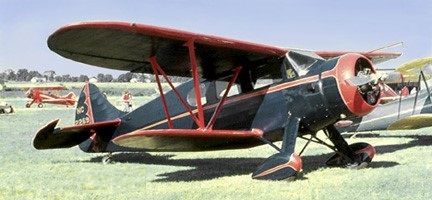
UPF-7 / PT-14 tandem training version with wider-track undercarriage (USAAC) Engine: l x Continental R-670-3 or W-670-6A, 164kW (220 hp) or Continental R-670-6, 220 hp Wingspan: 30 ft 0 in (9.14 m) Wing area: 244 sq.ft (22.67 sq.m) Length: 23 ft 1 in (7.04 m) Height: 8 ft 5 in (2.57 m) Max TO weight: 2,650 lb (1202.02 kg) Empty weight: 1,870 lb (848.22 kg) Maximum speed: 128 mph (207 km/h) Cruise speed: 114 mph (185 km/h) Stall: 50 mph Range: 400 miles (644 km) Service ceiling: 14,800 ft (4,511 m) Armament: none Seats: 2-3 14 became YPT-14 trainers 40-014 – 40-026 over 600 built
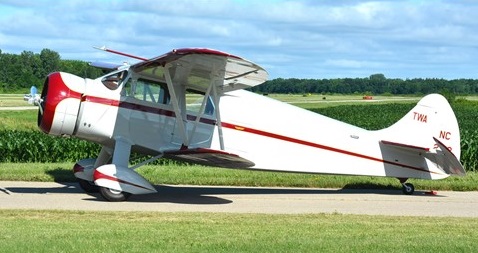
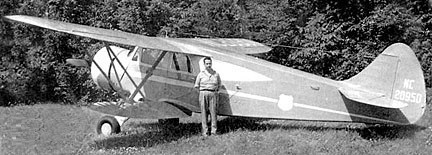
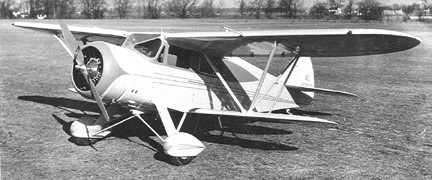
Seventeen 1937 AGC-8 (ATC 664) were built at a $9,895 price. Two were impressed by the USAAF as UC-72P (NC20905 and NC20909) in 1942, two were exported, and two were later modified as EGC-8 (X=NC2334 and NC19364).
Waco AGC-8 NC20950
The EGC-7 Custom Cabin of 1937 (ATC 639) sold for $10,390. Thirty-eight were built, of which 30 went to Brazil, and 3 to the USN/USCG as J2W. Seven were civil (NC1312, NC2209, NC2239, NC2241, NC17706, NC17724, and NC17749). Manufacturing rights were granted to the Brazilian government in 1939, but it is unknown if any were produced there.
Waco EGC-7 NC2269
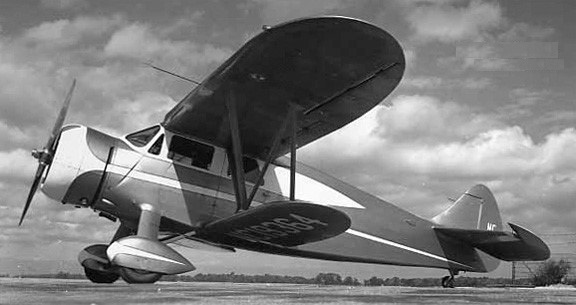
Seven EGC-8 (ATC 665) were built from 1937; NC2279. NC2329, NC19354, NC19357, NS19365, NC19382, and NC19375, plus 2 conversions from AGC-8 (NC2334 and NC19364) selling for $12,680. Four were impressed by the USAAF as UC-72B.
Waco EGC-8 AGC-8 conversion NC19364
One, NX2334, was tested with a 260hp Menasco D-6 for the MGC-8.
Waco EGC-8 NX2334 with Menasco D-6
Most military operators operated either a single example, or a very small number. Military operators included Exército Brasileiro of Brazil (30 EGC-7), the Royal Netherlands Air Force possibly impressed an EGC-7, Nicaraguan Air Force (EGC-7), and the Royal Air Force impressed one ZVN-8 in 1942 as UC-72B and four ZGC-7 in 1942 as UC-72E.
1938 Waco AGC-8 NC2312
The 1937 built DGC-7 Custom Cabin (ATC 639) sold for $10,390. Two examples were built: NC2239 and NC17706.
No one ever ordered the 1937 YGC-7 and the 1938 YGC-8 had new flaps.
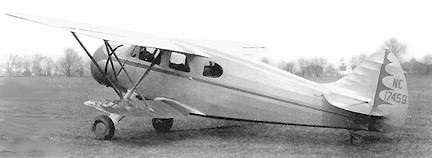
Twenty-eight 1937 ZGC-7 (ATC 627) were built at $8,935, of which 4 were impressed by the USAAF as UC-72E.
Waco ZGC-7 NC17459
Four 1937 ZGC-8 (ATC 664) were built at $10,495; NX=NC2272, NC19355, c/n 5053 to Argentina, NC19360, VT-AKD. The first one (prototype, c/n 5001) was later modified with an L-6 engine as an AGC-8.
AGC-8 / UC-72P Engine: Jacobs L-6, 300 hp (224 kW) Propeller: Hamilton Standard 2B20-9 Wingspan: 34’9″ Length: 27’7″ Useful load: 1472 lb Max speed: 164 mph Cruise speed: 145 mph Stall: 55 mph Range: 600 mi Seats: 4-5 17 built, two modified to EGC-8 Two impressed by USAAF as UC-72P
DGC-7 Engine: Wright R-760-E1, 285 hp (213 kW) Two built
Waco S3HD / S2HD Super Sport Engine: P & W Wasp Jr. TB, 400 hp (298 kW) Wingspan: 32’9″ Length: 25’1″ Useful load: 965 lb Max speed: 188 mph Cruise speed: 163 mph Stall: 60 mph Range: 500 mi Seats: 2 1 built
S2HD Engine: P & W Wasp SB, 450hp
S3HD-A Engine: P&W Wasp T, 320hp Useful load: 1458 lb Max speed: 173 mph Cruise speed: 151 mph Stall: 65 mph Range: 640 mi
Waco WHD Multipurpose Military Biplane with 420 hp (313 kW) Wright R-975 engine. Max speed: 191 mph Cruise speed: 166 mph Seats: 2
Waco CMD Multipurpose Military Biplane with 250 hp (186 kW) Wright J-6-7 variant of WHD. None built. Seats: 2
The Waco CG-15 (Waco designation NEU) was another development of the Waco CG-4 Hadrian standard glider. Waco had essentially developed an improved version of the CG-4A. The changes consisted of a reduction in the wing span from 83 ft 8 in to 62 ft 2 in, elimination of the wing spoilers, a revised nose shape, improved cantilever undercarriage and numerous internal fitment changes. The changes increased the normal gross weight by 500 lbs (227 kg) and the towing speed increased to 180 mph (290 km/h). 427 CG-15 gliders were originally delivered to the US military. Canada acquired a single example for evaluation purposes.
Waco CG-15 Span: 62 ft 2 in (25.50 m) Length: 48 ft 4 in (14.73 m) Height: 12 ft 7 in (3.84 m) Wing Area: sq ft Max Speed: 180 mph (290 km/h) Service Ceiling: 10,000 ft (3,345 m) Armament: None Crew/Passengers: two pilots and up to 13 troops or a variety of stores
The Waco PG-2A was a unique powered development of the Waco CG-4 Hadrian standard glider. In 1943, the US military had originally developed a prototype powered-version of the Hadrian with two Franklin flat-four piston engines in nacelles beneath the wings. The object of this conversion was to allow the glider to return under its own power after completing a mission. The idea was to use the glider normally and after landing attach the engines and fly it home. After tests with this prototype, a further ten conversions of the aircraft were ordered with Ranger L-440-7 piston engines. These production versions were then known by the PG-2A designation. The service trials were apparently of interest to the RCAF and one PG-2A was briefly trialled in Canada during the immediate post-war period.
There was one each XPG-1, XPG-2 and XPG-3 (Waco designation Model 2-YEU), two XPG-2A and ten PG-2A built.
The conversion to a PG was done by glider mechanic trainees under direction of Ernest LaSalle at Sheppard Field, Texas. LaSalle also added various instruments for flight testing and was allowed, under direction of CCAAF personnel, to pilot the glider from Texas to Ohio. The first was an XPG-2 built by Ridgefield in New Jersey which was converted to an XPG-2A by installing 200 horsepower engines at CCAAF. The “PIG” was the second of two XPG-2A gliders.
Both were used at CCAAF and remained there until the base closed in November 1945 in readying it for an All-Weather Flying base.
Waco XPG-3 44-90986
PG-2A Engines: two Ranger L-440-7 piston Span: 83 ft 8 in (25.50 m) Length: 48 ft 4 in (14.73 m) Height: 12 ft 7 in (3.84 m) Wing Area: 852 sq ft (79.15 sq m) Armament: None Crew/Passengers: two pilots and up to 13 troops
During 1942 the U.S. Navy let contracts for the development of several amphibious transport gliders. At the same lime as the requirement for a twelve seat glider was issued, the US Navy ordered a small number of Waco CG 4A (Hadrian) gliders under the designation LRW 1. At least thirteen Waco LRW-1s were delivered (BuAer Nos. 37639 481 44319, and 69990 1), and the Naval Aircraft Factory modified two further CG 4As under the designation XLRN 1 (BuAer Nos. 36431 2).
Because military planners did not want to divert scarce strategic resources and aircraft workers from powered aircraft production to build gliders, the CG-4A was built by hundreds of subcontractors with experience in woodworking, including employees of furniture companies. The only large production facility was Ford Motor Company’s wooden station wagon plant. The CG-4A was a front-loading glider de¬signed to carry a pilot, co-pilot and 13 fully equipped glider infantrymen or an equivalent load of equipment or munitions.
On the Sunday afternoon of August 1, 1943, St. Louis aircraft manufacturer William B. Robertson was hosting the first public demonstration of a new Waco CG-4 glider, built under sub-contract by his company. As a crowd of spectators watched at the Lambert St. Louis Airport, Mayor William Becker, Robertson, and other St. Louis luminaries boarded the glider that was towed along by a transport plane for a flight over the city. Immediately after the release of the towing cable, the right wing of the glider broke off, and it plummeted from an altitude of 1,500 feet, killing all ten persons on board.
August 1, 1943 demonstration for a new aircraft. As soon as it took off, its right wing broke, and all ten passengers were killed. This is the group pictured before takeoff.
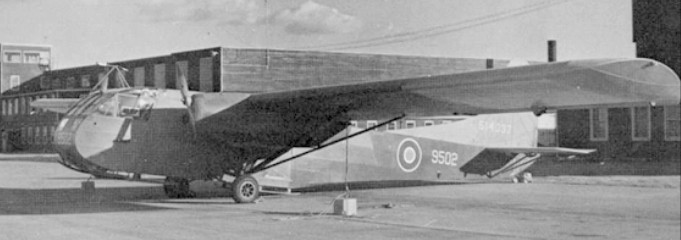
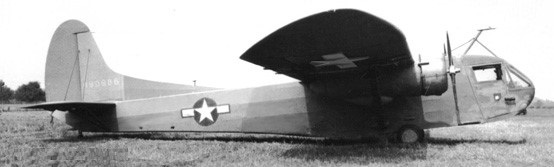
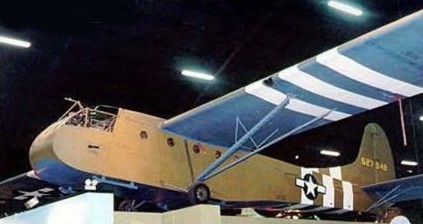
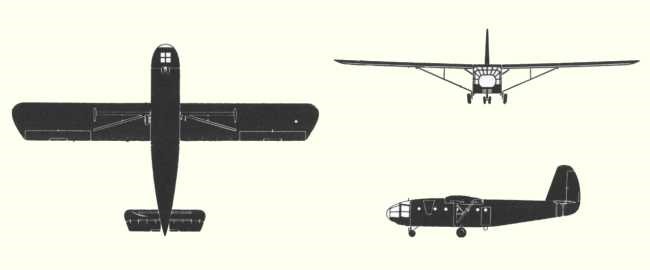
Including the two pilots in the hinged nose, it could carry 15 fully armed troops or a jeep with its crew, or an Army 75 mm howitzer with crew and ammunition. It could carry a total military load of around 3,500 lb and could land in a field 660 feet by 200 feet surrounded by 50 feet obstacles at a loaded stalling speed of 50-60 mph. The fuselage of the Hadrian was 6 feet 5 inches wide and made of a steel tubular framework covered with fabric on wooden formers with a wooden floor. The wingspan was 83 feet 8 inches and the wings and tail unit were made of wood with a plywood and fabric covering. The training undercarriage consisted of independent wheels, with shock absorbers and hydraulic brakes. The operational undercarriage could be jettisoned by parachute and was a simple cross axle with brake-less wheels. The glider then landed on skids.
Operation Husky, the Allied invasion of Sicily beginning 10 July 1943, involved 400 Dakota C-47 transport aircraft and 170 Waco CG-4A cargo gliders. The operation verged on failure. Ninety-seven of the British and US gliders released from their towropes too early plunged into the sea, and another 24 were reported missing: only 12 of the gliders, all British, landed in the target zone. Then strong anti-aircraft fire confused the paratroops in the Dakotas, so they jumped too soon and were scattered over almost 60 miles. Six of the Dakotas were shot down, and only 73 British paratroops reached their target, the Ponte Grande bridge.
In mid-June 1943, for the first time, a Dakota FD900 of the RAF Transport Command landed in Prestwick, Scotland, the end of the North Atlantic route, towing a glider. The two planes had taken off together twenty-four hours earlier from Dorval (Montreal). The glider – a Waco CG-4A Hadrian – had been built in a New York piano factory. It carried a full load of urgently needed vaccine and radio and engine parts for the Soviet Union. The pilots, Sqn.Ldr. Seys and Sqn.Ldr. Gobeil: ‘We could not take our eyes off the Dakota and the tow rope, which was especially difficult in clouds or at night. We had to stay the whole time in the same position in relation to the towplane, which kept disappearing from our field of vision. Thank God we had radio contact with our Dakota. Unfortunately, there was no heating in the glider, so our teeth chattered with cold during the night or during prolonged flight through cloud, whereas sunshine changed our cockpit into a hothouse’.
Several hundred CG-4A gliders were built in 1945 with a paper composition floor rather than the reinforced plywood box floor. The glider could carry 13 infantrymen or a Jeep. Because of the floor, a trailer or howitzer could not be carried. The floor was reinforced at the Jeep wheel locations but not reinforced where the trailer or howitzer wheels would normally be positioned.
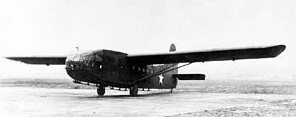
WACO CG-4A
It was named Hadrian when in service with the British forces, and was the only American built troop-carrying glider to be used by the allied forces in the airborne invasions of Sicily and France.
Ford produced the CG-4A. Approximately 14,000 were built.
The Waco CG-13 was an American military transport glider aircraft developed during World War II. Wright Field Glider Branch realized a need for a glider larger than the CG-4A and requested designs. The response by several companies produced designs for five larger gliders. One of these designs was the XCG-13 by Waco Aircraft Company of Troy, Ohio.
The XCG-13 (Waco designation NLB) contract was for a 30-place design with an 8,000 lb (3,600 kg) useful load capacity to fly 174 mph (280 km/h) at an altitude of 12,000 feet (3,700 m) altitude. Flight testing of the prototype was performed at Clinton County Army Air Field and the type was approved on 10 March 1943. Testing found that a tricycle landing gear should be used, and that a hydraulic system be incorporated to open the top-hinged nose opening. These features were incorporated into the second XCG-13.
XCG-13
Ford Motor Company at Kingsford, Michigan and Northwestern Aeronautical at St. Paul, Minnesota built YCG-13 models and were given contracts to build the production CG-13A. WACO was not given a production contract. Northwestern Aeronautical built 49 production articles. Ford built 48 as 30 place and 37 as 42 place by adding a bench down the center of the cargo section. Between the two companies, 268 contracted articles were canceled in favor of producing more CG-4A gliders after 135 CG-13 were built.
The CG-13A glider maximum useful load was 10,200 lb (4,600 kg). The 79 mph (127 km/h) stall speed was 19 mph higher than specified. One CG-13A was flown in combat in the Appari Mission in the Philippines. The CG-13A gliders were not flown in combat in Europe but were used as transports in England and France.
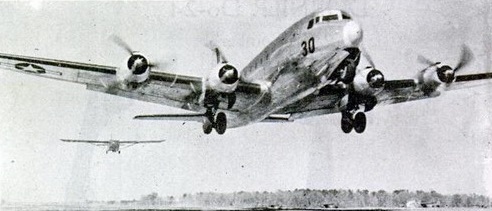
Waco CG-13 towed by a Douglas C-54A
CG-13A Wingspan: 85 ft 8 in (26.11 m) Length: 54 ft 4 in (16.56 m) Height: 20 ft 3 in (6.17 m) Wing area: 873 ft² (81.10 m²) Empty weight: 8,700 lb (3,946 kg) Loaded weight: 18,900 (8,572 kg) Useful load: 10,200 lb (4,626 kg) Maximum speed: 165 knots (190 mph, 306 km/h) (maximum towing speed) Stall speed: 79 mph (127 km/h) Wing loading: 21.65 lb/ft² (105.7 kg/m²) Crew: 2 pilots Capacity: 30 or 42 troops (including flight crew)




















 All Aero