Arado Ar.64

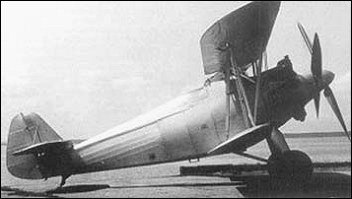
Developed from SD.II and SD.III prototypes that Walter Rethel produced at the request of Reichswehrministerium, the Ar 64 was a single-seat biplane fighter intended to succeed Fokker D.XIII. It was a traditional biplane with unequal wings of mixed construction, the aerofoil having a timber structure and the fuselage a metal tubular structure, both fabric covered. The landing gear was fixed, with a split axle.

Versions
Arado Ar 64a: First prototype, powered by a Bristol-built Jupiter VI, 530 hp licensed built by Siemens Halske and with a four-bladed wooden propeller.

Arado Ar 64b: The second and third prototypes, tested with Lipetsk in 1931, were powered by a 12 cylinders BMW VI 6,3 of 640 hp and were used for the development of the Ar 65.

Arado Ar 64c: The last prototype appeared in 1931, and was distinguished from the first by a reinforced structure and a four-bladed propeller of large diameter.

Arado Ar 64D: A production version powered by a Jupiter VI, identifiable with a modified landing gear and a two-bladed propeller. The armament was proposed to be 2 7,9 mm machine-guns but it is very probable that they were not fitted on the 19 aircraft of the DVS during 1934/1935. These aircraft were used as advanced trainer by civil and military pilots.

Arado Ar 64E: The last version, powered by a Jupiter VI. Used by Jagdstaffeln of Fliegergruppe Döberitz and Damm, along with Ar 65.

Users:
Germany:
30 Ar 64 were ordered by Luftwaffe clandestine between 1931 and 1934, including 12 to produce by Focke-Wulf. 6 Ar 64D and 5 Ar 64E were in account at April 1, 1933. The last specimens were delivered during 1934 and, in spite of the arrival of Ar 65, intended to succeed to him, 21 Ar 64 remained in service on July 1, 1936.

Soviet Union:
The first Ar 64 had been used briefly for tests powered by a Rolls-Royce engine before ordering 24 to be delivered at the beginning of 1933, but by April 1936 they had received only 19 planes.
Arado Flugzeugwerke Gmbh / Arado Handelsgesellschaft mbH

Arado originated in early 1917 with the creation of Werfte Warnemiinde der
Flugzeugbaus Friedrichshafen as a subsidiary of Flugzeugbau Friedrichshafen
GmbH. Aircraft work ceased in 1918, but the factory was acquired in 1921 by
Hugo Stinnes, and was briefly engaged in shipbuilding. In 1924 Walter Rethel
(formerly with Kondor and Fokker) joined as designer, and Stinnes created a
Yugoslav subsidiary named
Ikarus.

Arado Handelsgesellschaft mbH was established in 1925, and the SI trainer biplane was
flown that year, followed by other trainers, SD II and III fighters, and civil
aircraft, notably VI of 1928 (high-wing transport) and LII light cabin
monoplane. Walter Blume (formerly with Albatros) was appointed chief engineer
1932, and the name Arado Flugzeugwerke was adopted March 4, 1933.


Arab Organization For Industrialization

EGYPT
Established in November 1975. Has assembled Gazelle helicopters, and Tucano and Alpha Jet trainers. Also produced aircraft of original design, including the Gomhouria primary trainer and Helwan 2 and 3 lightplanes. Its engine factory assembles the Larzac and PT6A, and overhauls these and other engines. Further work includes manufacture of components for the Mirage 2000 and other aircraft, modification of aircraft for special missions, and weapons production. Work at the electronic factory, one of nine factories in the group, includes avionics and electronic subassemblies for French radars and missiles.

Aquafugh Aqua / W-6

Aqua I

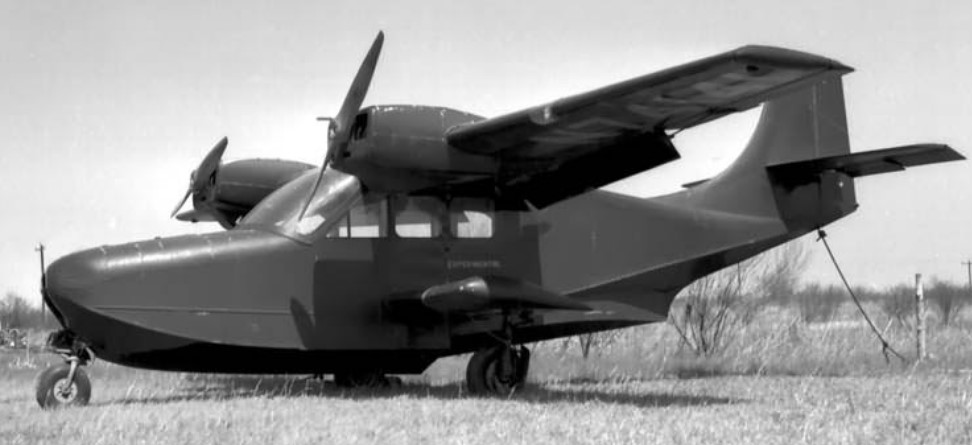
The Aqua was an original design developed by Aquaflight, Inc, a company founded in 1946 by Meredith C. Wardle. The type was only produced in prototype form and possibly the prototype was flown in two versions.

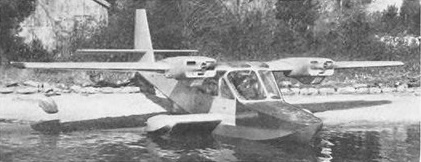
The W-6 Aqua I was the first version, a 4-6 seat utility flying boat which had two 125 hp Lycoming O-290-A series engines. Registered NX74141 it made the first flight during 1946 and was extensively tested at the Philadelphia Seaplane Base. Aqua I had an all metal fuselage, with a wooden hull and had a claimed cruise of 125 mph.

The W-6A Aqua II was possibly modified from the Aqua I, and had several major changes such as re-contoured nose section, a modified vertical tail and fin assembly and a tricycle landing gear, making it an amphibious flying boat. The Aqua II was powered by two 225 hp Lycoming O-435 engines and it made the first flight in 1949. No further work on either the Aqua I or II was undertaken.

Reports that later the boat hull of the Aqua II was used in the homebuilt Collins W-7 Dipper are incorrect.

The Aqua II was tested as landplane also.

W-6A Aqua II

W-6 Aqua I
Engines: 2 x Lycoming O-290, 125 hp (93 kW)
Wingspan: 36 ft 6 in (11.13 m)
Wing area: 215 sq ft (20.0 m2)
Airfoil: NACA 23012-16
Height (on land): 12 ft 0 in (3.66 m)
Length: 29 ft 6 in (8.99 m)
Empty weight: 2,200 lb (998 kg)
Gross weight: 3,600 lb (1,633 kg)
Fuel capacity: 100 US gal (83 imp gal; 380 L)
Max speed: 135 mph (217 kmh)
Cruise speed: 125 mph (201 km/h, 109 kn)
Stall speed: 40 mph (64 km/h, 35 kn) (half load)
Rate of climb: 1,250 ft/min (6.4 m/s)
Crew: one pilot
Capacity: 5 passengers

W-6A Aqua II
Engines: 2 x Lycoming O-360, 125 hp (93 kW)

Applegate Duck

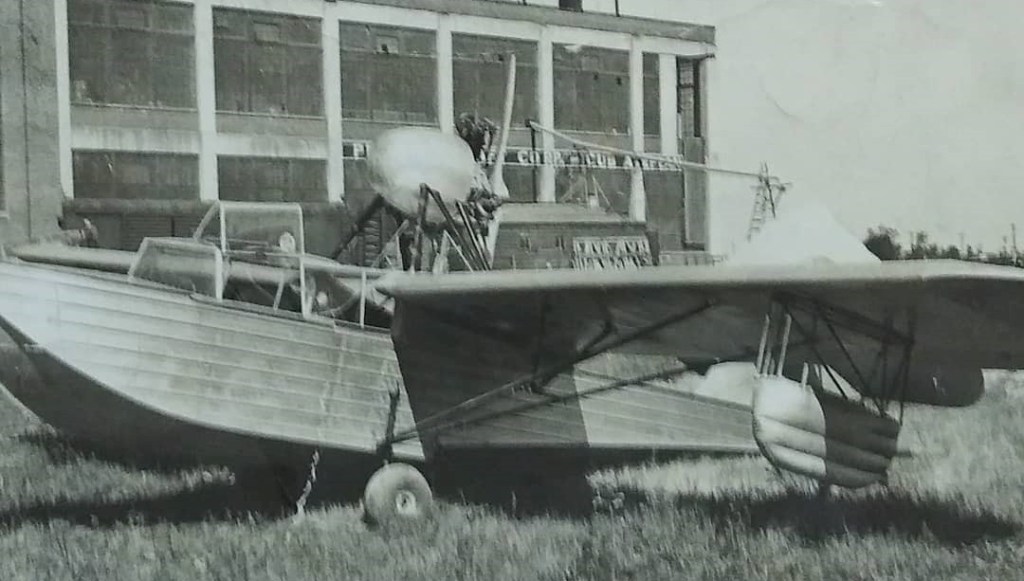
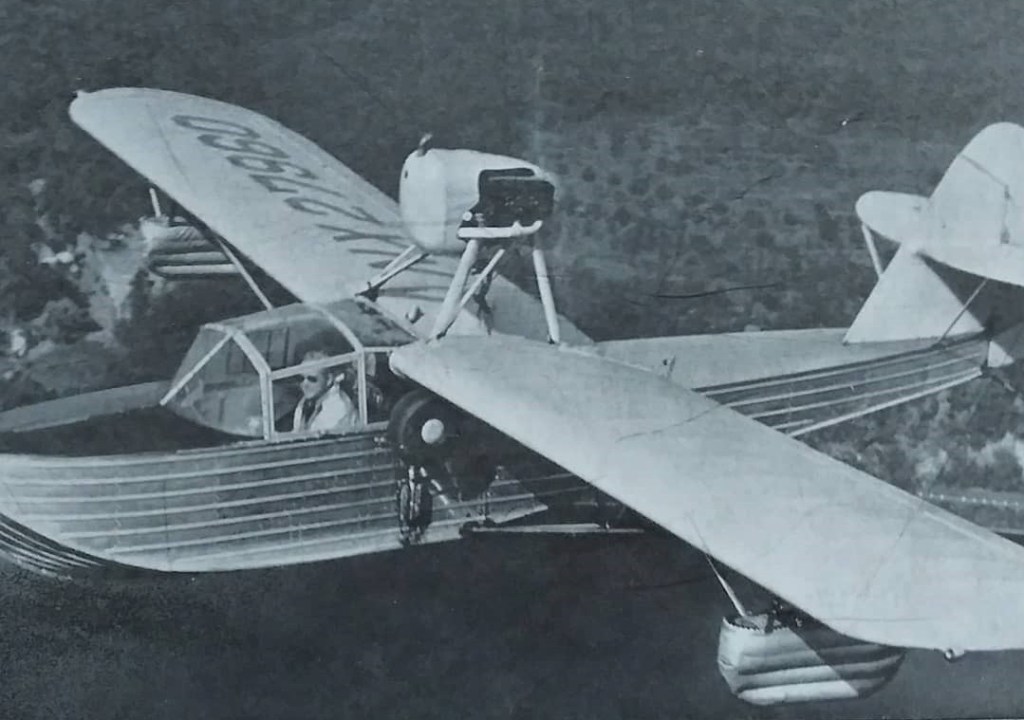
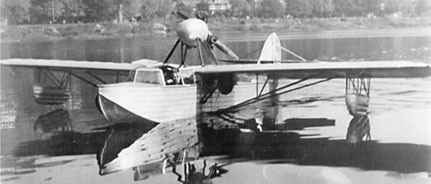
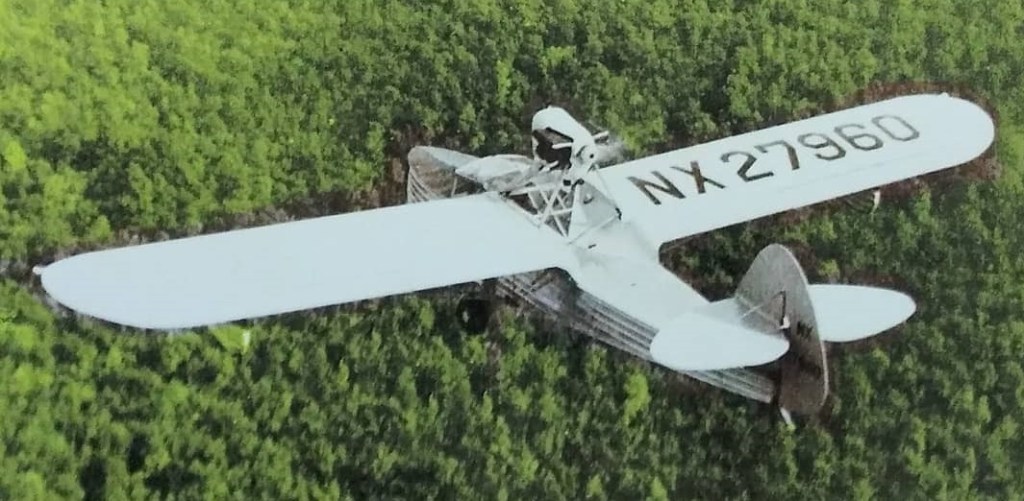
This is the Duck Amphibian that was created by Ray Applegate in 1937. He brought the Amphibian to Lock Haven in 1939 to see if Piper would be interested in manufacturing it. However the project was eventually dropped. Mainly due to WWII.

Designed by Ray Applegate, the 1937 amphibian, registered NX17866, used a Piper J-3 wing and was priced at $2,500±.

Applegate Duck NX17866

Only one was built, the name changed to Applegate 3 Clipper in 1947.

Walter Jamouneau recalled ‘The airplane didn’t fly very well. It made a lot of noise but didn’t go anywhere. The drag was spectacular”.

Engines: various 55-145hp
Wingspan: 34’5″
Length: 22’0″
Useful load: 650 lb
Cruise: 85 mph
Seats: 2

Applebay Mescalero

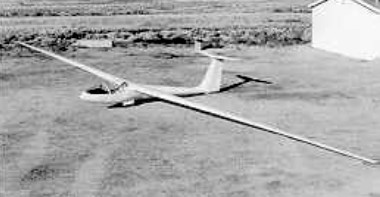
The Mescalero was designed by George Applebay in response to a 1970 sailplane design competition promoted by the Soaring Society of America and first flew in 1975. The controls are 100% mass balanced and connect automatically.

Wing span: 21.9m / 72ft
Wing area: 13.56sq.m / 146sq.ft
Empty Weight: 454kg / 1000lb
Payload: 227 kg / 500 lb
Gross Weight: 680 kg / 1500 lb
Wing Load: 50.15 kg/sq.m / 10.27 lb/sq.ft
Aspect ratio: 36
Airfoil: Wortmann
L/DMax: 44
No. of Seats: 1
Structure: fuselage and tail assembly, glass monocoque ; wing, composite metal-fiberglass.

Applebay Chiricahua GA-11

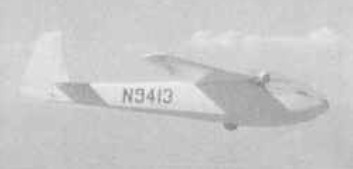
The Chiricahua was designed by George Applebay to comply with the Standard Class rules existing at the time construcion started, 1959, the first flew in 1970. It has a fixed main wheel and top surface Schempp-Hirth type airbrakes for approach control.

Wing span: 15m / 49.2ft
Wing area: 13.77sq.m / 148.2sq.ft
Empty Weight: 268kg / 590lb
Payload: 100kg / 220lb
Gross Weight: 368kg / 819lb
Wing Load: 26.73kg/sq.m / 5.47lb/sq.ft
No. of Seats: 1
Aspect ratio: 16.2
Airfoil: Gottingen 549
Structure: wood, plywood, ceconite