Armstrong Whitworth F.K.7 / F.K.8

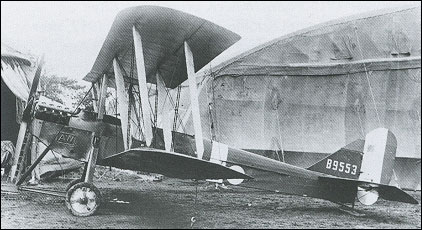
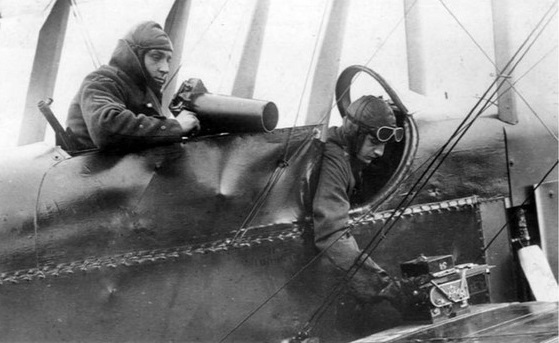
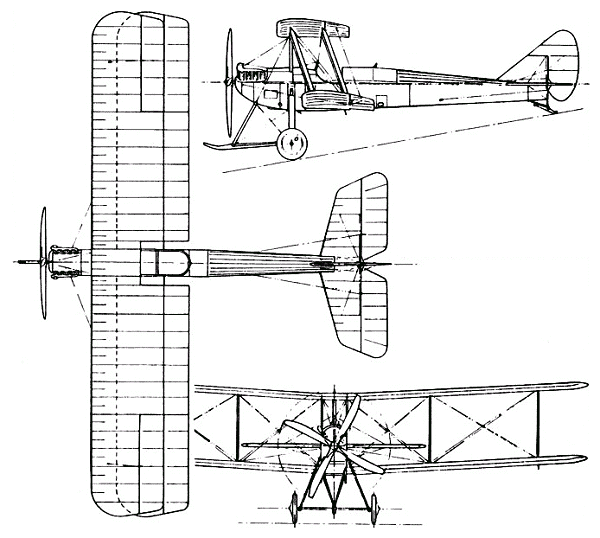
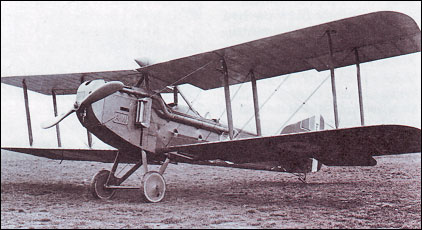
Designed by Frederik Koolhoven, the F.K.8 prototype first flew in May 1916, and was similar to its predecessor, the F.K.3 and intended to supersede the capabilities of the FK.3.

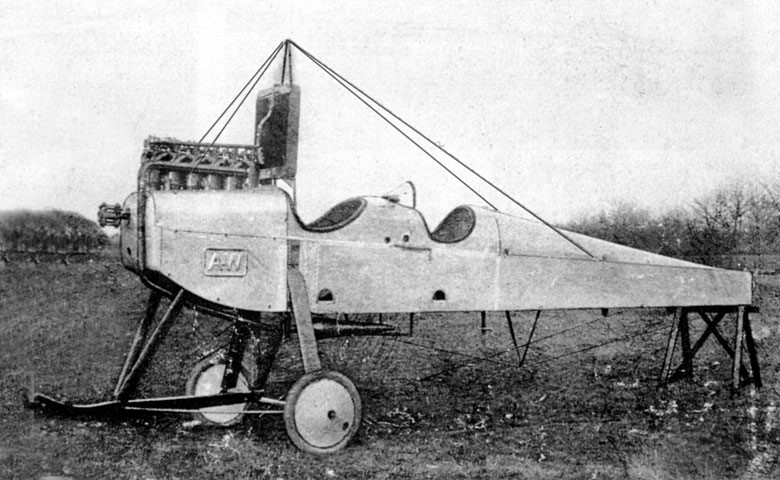
The standard production versions were powered by a 120 hp Beardmore engine and in the original form had an angular engine cowling and radiators which met in an inverted Vee in front of the top wing. After a time production aircraft were delivered with a more rounded cowling carrying a small box-like radiator on each side.

Early models had a Vee-skid in front of their wheels.

Later machines with a 160 hp Beardmore. All were fitted with a form of dual control so that the rear cockpit observer could partially fly the machine if his pilot was incapacitated.

Armament consisted of a single forward-firing fixed 7.62mm Vickers machine gun and a single 7.62mm trainable Lewis-type in the rear cockpit position. Provisions for bombs were also a part of the arsenal for the FK.8.
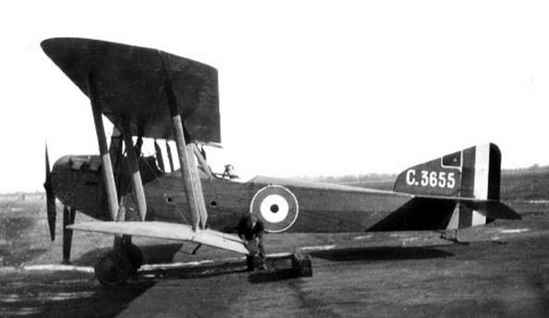
F.K.8

The first RFC unit to receive F.K.8s was 35 Squadron, which flew fully equipped to France on January 24, 1917. Number 2 Squadron began to re-equip in April 1917; 10 Squadron in July; 8 Squadron in August, and 82 Squadron, fully equipped with the type, arrived in France in November 1917. In the Middle East zone of operations, 17 and 47 Squadrons in Macedonia, and 142 Squadron in Palestine were equipped with F.K.8s by 1918, and continued to operate them until the end of the war. In England, several home defence units were partly equipped with the F.K.8, and one belonging to 50 Squadron was responsible for shooting down a Gotha bomber on July 7, 1917.

The F.K.8 first came into prominence during the German spring offensive of March 1918, being used primarily in a tactical low-level bombing and strafing role against German infantry.
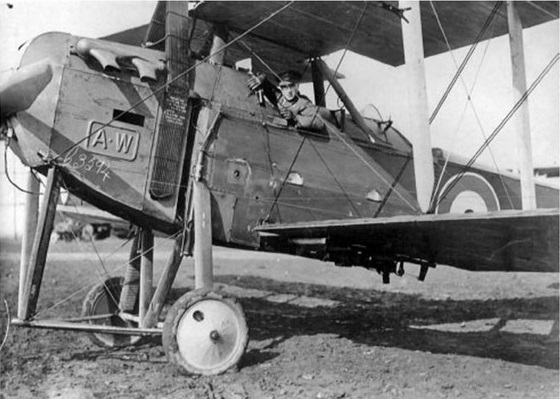
F.K.8

At least 1596 machines were built and delivered for service use. By October 31, 1918, a total of 694 F.K.8s were still on RAF charge, but at the end of 1919 few examples remained. Eight found their way onto the Civil Register, and two went to Australia where they helped to pioneer air travel from late 1922 onwards.
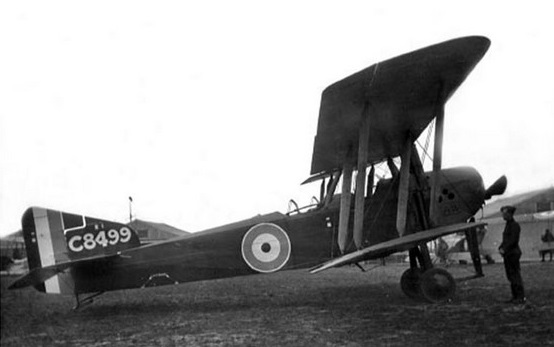
F.K.8

Gallery

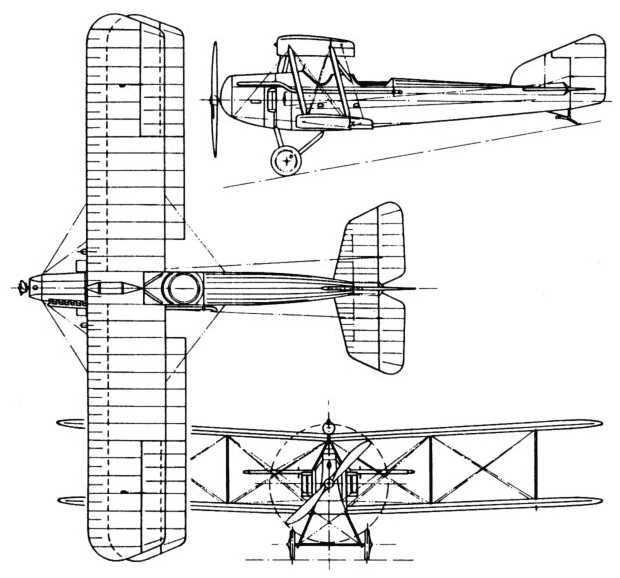
Armstrong Whitworth F.K.8
Engine: 1 x 120hp Beardmore
Wingspan: 13.26 m / 43 ft 6 in
Length: 9.58 m / 31 ft 5 in
Height: 3.33 m / 10 ft 11 in
Wing area: 540 sq.ft
Armament: 1 x 7.62mm Vickers mg, 1 x 7.62mm Lewis mg

Armstrong Whitworth F.K.8
Engine: 1 x 160hp Beardmore
Wingspan: 13.26 m / 43 ft 6 in
Length: 9.58 m / 31 ft 5 in
Height: 3.33 m / 10 ft 11 in
Wing area: 540 sq.ft
Max take-off weight: 1275 kg / 2811 lb
Empty Weight: 1,918 lbs (870kg)
Fuel capacity: 47.5 Imp.Gal
Max. speed: 153 km/h / 95 mph / 83kt
Service ceiling: 3690 m / 12100 ft
Endurance: 3 hr
Armament: 1 x 7.62mm Vickers mg, 1 x 7.62mm Lewis mg
Crew: 2
Hardpoints: 4
Armstrong Whitworth F.K.5 / F.K.6

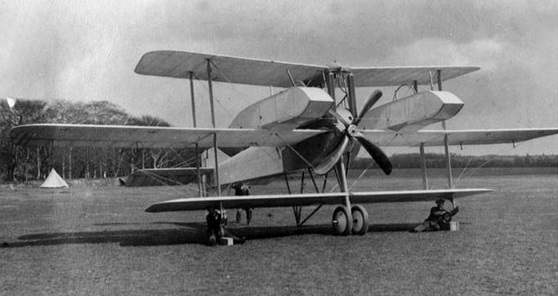
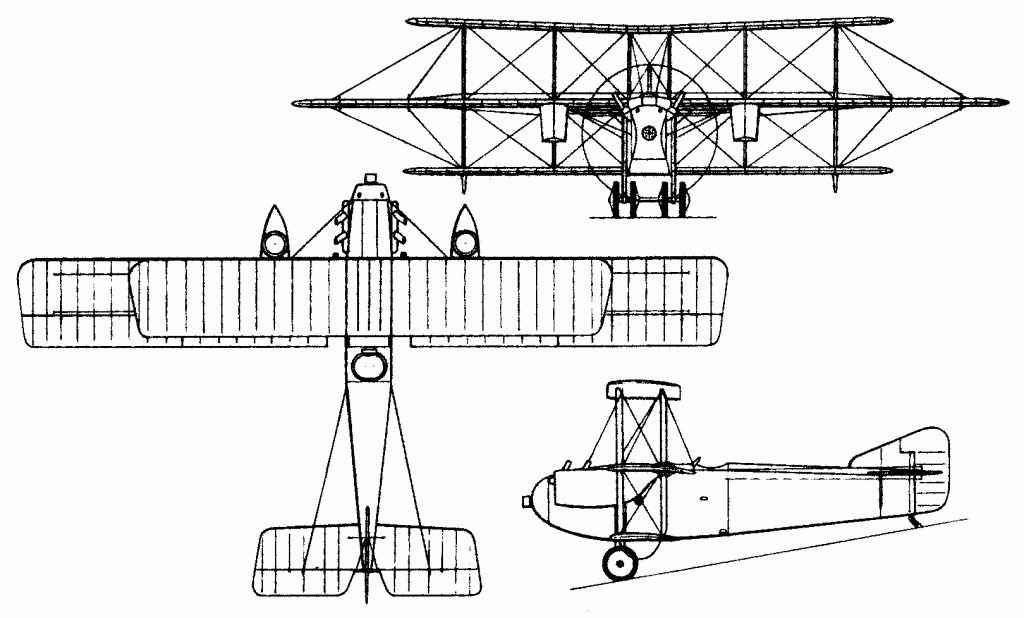
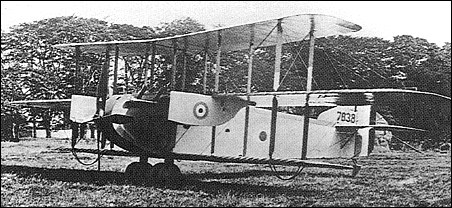
In 1915, Frederick Koolhoven, the chief designer of Sir W G Armstrong Whitworth & Co Ltd, initiated work on a three-seat triplane powered by a 250hp Rolls-Royce 12-cylinder water-cooled engine. It was intended to accommodate two gunners each with a 7.7mm machine gun in shallow nacelles mounted above the centre wing on each side of the fuselage, the gunners being seated ahead of the propeller plane of the tractor engine.

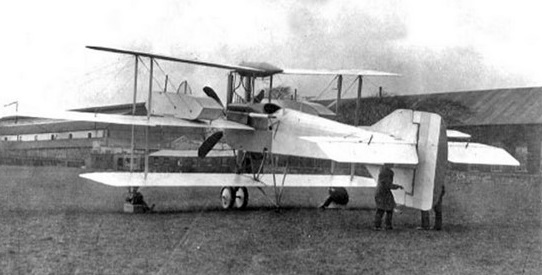
Although a prototype was completed and allegedly designated F.K.5, this was never flown, being extensively damaged as a result of a ground loop during its first take-off attempt. The design was extensively revised early in 1916 to meet an RFC requirement for an airship interceptor and long-range escort fighter. The revised design is believed to have been designated F.K.6 and four examples were ordered, two of these being intended for the RNAS. In the event, only one F.K.6 was built. The gunners’ nacelles were underslung on the central mainplane, armament remained two 7.7mm Lewis guns and the 250hp Rolls-Royce engine was retained. It is believed that relatively limited flight testing was undertaken. And no armament was actually fitted.

The middle wing was much longer than the others, but the other wings were equal span.

F.K.5

Engine: 1 x 250hp Rolls-Royce piston
Wingspan: 19.14 m / 62 ft 10 in
Length: 11.29 m / 37 ft 0 in
Height: 5.18 m / 16 ft 12 in
Max. speed: 160 km/h / 99 mph
Crew: 3

F.K.6

Armstrong Whitworth F.K.3

When W G Armstrong, Whitworth & Co received a contract in 1914 to build B.E.2 aircraft for the Royal Flying Corps and the Royal New Zealand Air Service, it offered to design and build a simpler but equally efficient two seat trainer aircraft instead. Similar in configuration to the B.E. in its initial state, with separated cockpits for pilot and observer, the Frederik Koolhoven designed F.K.3 construction started in August 1915.

Armstrong Whitworth F.K.3 Article

Production versions incorpo¬rated a tandem crew cockpit with the pilot seated forward and a more efficient tail design. The prototype F.K.3 had a 120 hp Austro Daimler engine, but most production models had the 90 hp RAF la, while a few had the 105 hp RAF lb.

Approximately 500 F.K.3s were ordered for RFC use, the bulk of which were allotted to training units where they gave service until the end of hostilities.

F.K.3

Only one RFC squadron used F.K.3s operationally; 47 Squadron in Macedonia, where they became a bomber and general reconnaissance machine from late 1916 until the Armistice. On October 31, 1918, the RAF had a total of 62 F.K.3s still on charge. At least four of these went onto the post 1918 Civil Register as G-¬EABY (ex 119629), G EABZ (ex-B9518), G EAEU (ex-B9612) and G EALK (ex-B9603).

Engine: RAF.1a, 90 hp or Beardmore, 120 hp
Span: 12.2 m (40 ft)
Length: 8.8 m (29 ft)
Height: 3.6 m (11 ft 10.75 in)
Empty weight: 762 kg / 1682 lb
Loaded weight: 932 kg / 2056 lb
Maximum speed: 142 km/h (88 mph) at 1980 m (6500 ft)
Service ceiling: 3962 m (13 000 ft)

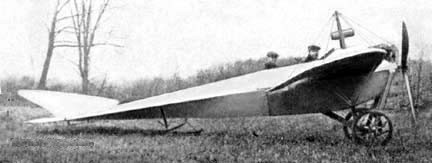
Armstrong Whitworth F.K.1 / F.K.2

F.K.1
Engine: Renault V-8, 70 hp
Wingspan: 40 ft 0 in
Length: 29 ft 0 in / 8.8 m
Height: 11 ft 10.5 in / 3.5 m
Empty weight: 1386 lb / 628 kg
Loaded weight: 2447 lb / 1109 kg
Max speed: 68 mph / 109 kph

F.K.2
Engine: RAF.1a, 90 hp
Wingspan: 40 ft 0 in / 12.1 m
Length: 29 ft 0 in / 8.8 m
Height: 11 ft 10.5 in / 3.5 m
Empty weight: 1386 lb / 628 kg
Loaded weight: 2447 lb / 1109 kg
Max speed: 78 mph / 125 kph

Armstrong Whitworth

Sir W G Armstrong Whitworth & Co Ltd was a major British manufacturing company of the early years of the 20th century. With headquarters in Elswick, Newcastle upon Tyne, Armstrong Whitworth engaged in the construction of armaments, ships, locomotives, automobiles, and aircraft.

In 1847, engineer William George Armstrong founded the Elswick works at Newcastle, to produce hydraulic machinery, cranes and bridges, soon to be followed by artillery, notably the Armstrong breech-loading gun, which re-equipped the British Army after the Crimean War. In 1882, it merged with the shipbuilding firm of Charles Mitchell to form Armstrong Mitchell & Company and at the time its works extended for over a mile (about 2 km) along the bank of the River Tyne. Armstrong Mitchell merged again with the engineering firm of Joseph Whitworth in 1897. The company expanded into the manufacture of cars and trucks in 1902, and created an “aerial department” in 1913, which became the Armstrong Whitworth Aircraft subsidiary in 1920.

In September 1914 built the unsuccessful F.K.1 single-seater. Later (during the war) the F.K.3 and F.K.8 two-seat observation aircraft were delivered in quantity, as improvements on the Government designed B.E.2c.

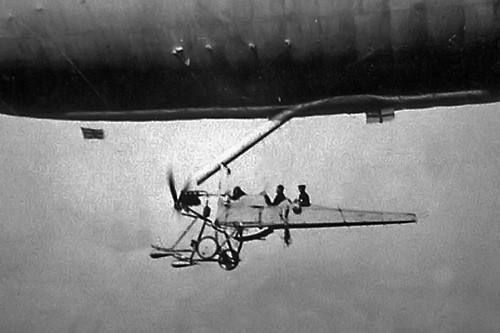
Armstrong-Whitworth built in 1914 a gondola for non-rigid naval airship HMA No.2 “Willows IV”. This was followed by gondolas for SS.40-49 airships in 1915, developed from F.K.3 fuselage, with 100 hp Green (probably 20 built as spares required), a gondola for SS.27 (also from an F.K.3 fuselage) but with a Renault engine.

SS Airships (B.E.2c car)

The F.K.15 is described as an airship gondola design for the Beta II, F.K.16 and F.K.17 as an airship gondola design for North Sea airships based on the F.K.3 fuselage.

F.K.4

Experimental First World War types included quadruplanes and Armadillo and Ara biplane single-seat fighters. The Airplane Department closed in late 1919, but a new company, named Armstrong Whitworth, was formed in 1920. Products between the wars were the Siskin single-seat fighter and Atlas army cooperaton aircraft for the RAF, both introducing some steel construction. The Scimitar fighter (1934) was among the world’s fastest with a radial engine, partly due to company’s associations with engine-builder Armstrong Siddeley.

By the end of 1924 Armstrong’s was virtually bankrupt. The bank of England discreetly moved in, and eventually brought pressure to force a merger with Vickers, using the Sun Insurance Company as their front to guarantee the new company, now called Vickers Armstrong. It was a condition of the rescue that the new company would restrict themselves to ship building, heavy engineering, and predominantly armaments.

In 1927, it merged with Vickers Limited to form Vickers-Armstrongs.

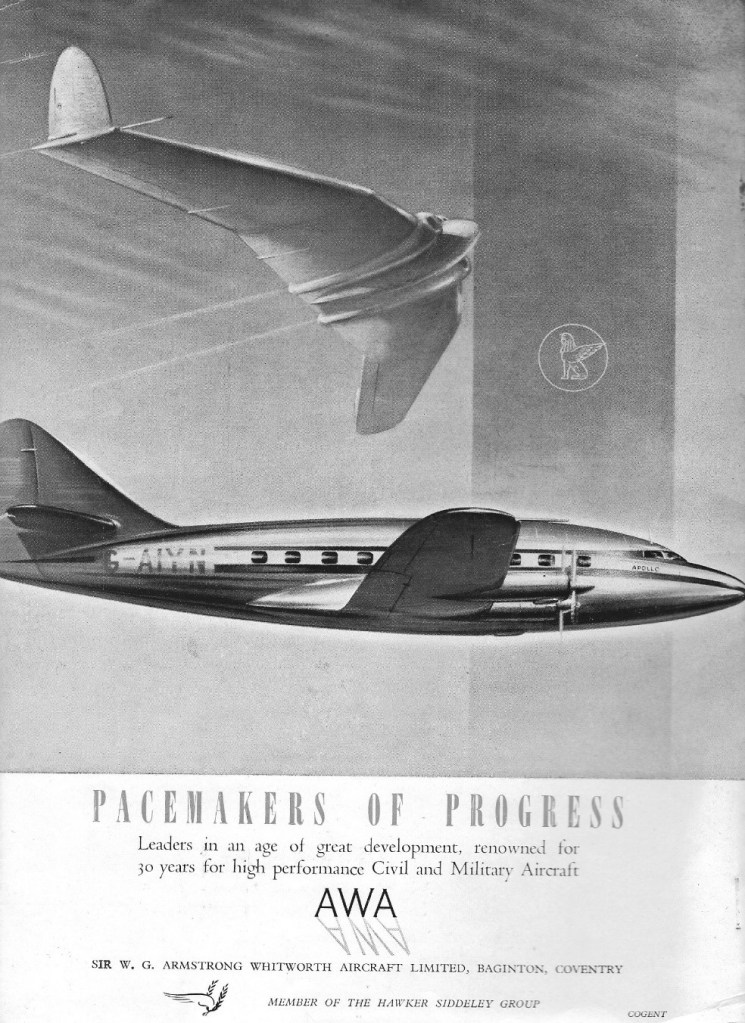
Notable airliners were the three-engined Argosy biplane (1926), four-engined Atalanta monoplane (1932), and the much larger Ensign (1938). The company’s most famous product was the Whitley twin-engined bomber of 1936, in which year Hawker Siddeley Group was formed, with Armstrong Whitworth as a member company. In July 1943 the 1,824th Whitley left the assembly line at Baginton, Coventry, the type having achieved several historic “firsts” in RAF service. The Albemarle (600 built) was used as glider-tug and transport, and Avro Lancaster bombers were built in dispersed factories. After the war, from the basic Gloster design, the company developed and produced in quantity Meteor two-seat nightfighters. When this type was well advanced they undertook development of the Hawker Sea Hawk naval fighter. Avro Lincolns, Hawker Hunters, and Gloster Javelins also produced. Experiments made with flying-wing aircraft and prone-pilot position were undertaken. The Apollo turboprop airliner (1949) had no commercial success, though the Argosy twin-boom four-turboprop freighter (1959) gained limited civil and military orders.

January 1951

Gloster, Armstrong Whitworth and Avro joined Hawker Siddeley Aviation in 1965.

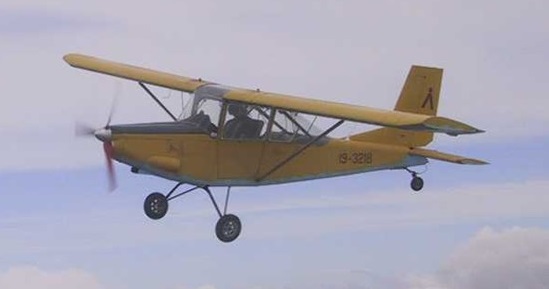
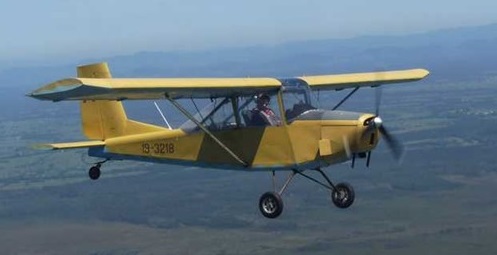
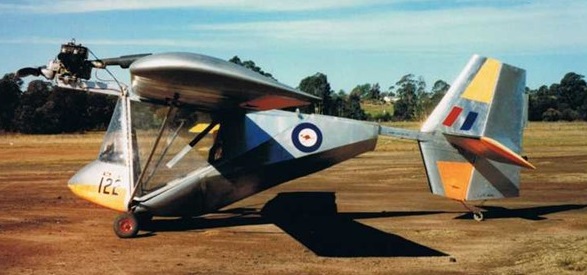
ArmourKraft Stolite

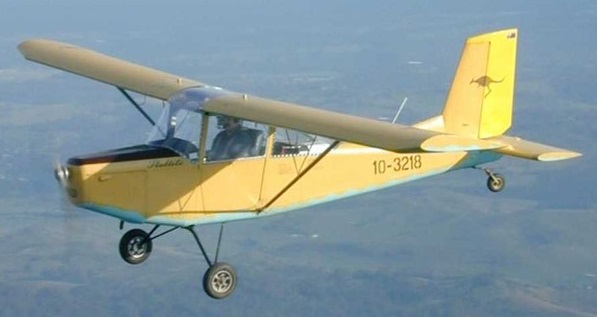
Stollite Mk1 single seat with R503

The ArmourKraft Stolite was a project designed by Arthur Armour to be built by his apprentice while he was building something else. It took three years to build, working two nights a week after work. The wings are from the ArmourKraft Super Cricket.

Design to fit Australian 95:10 class, MTOW 300kg (661lb), single seat, it was powered by a Rotax 503, registered 10-3218, and first flew in 1999 at The Oaks, NSW, Australia.

After a minor incident, aircraft was rebuilt in the next ‘class’ allowing more weight and two seats, and was fitted with a Rotax 582, and registered 19-3218.

Stollite Mk2, two seat with R582

Eventually the 582 failed, so an old Rotax 912 was fitted.

Stollite Mk3 now with Rotax 912

The 912 was required for another project and removed, to be replaced with a modified BMW R100 bike engine.

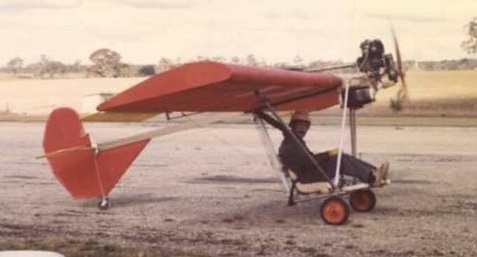
ArmourKraft Super Cricket

Original

The Super Cricket was the first ultralight Arthur Armour completed. It was rebuilt from a cloned machine bought to build up flying time.

Registered 10-0122 and originally powered by a modified Yamaha 350 bike engine, it would barely fly.

After the first rebuild, it still wouldn’t fly well, so a Rotax 503 was fitted. That made it fly.

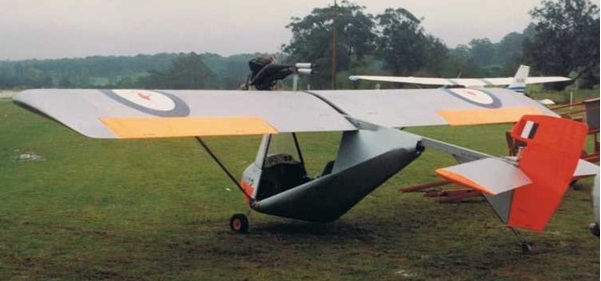
Rebuilt

It was slowly improved over a couple of years until blown over in a storm and parted out.

Final form

Engine: Rotax
Prop: Catto