The XLB-2 (officially prefixed Atlantic-Fokker or Atlantic (Fokker)) of 1927/28 was the first twin-engined US Air Corps monoplane bomber. The type not adopted despite Fokker’s experience with large civil monoplanes.
Aircraft
Atlantic Aircraft Corp AO-1
A two-seater of characteristic Fokker biplane form for artillery observation
Atlantic Aircraft Corp.
Fokker rented the Witteman-Lewis aircraft factory at Teterboro, together with the adjoining airfield at Hasbrouck Heights, New Jersey, USA. Beginning active operations in May 1923, remodeling 100 D.H.4s, and holding patent rights and license to build Fokker aircraft in USA. In May 1924 a new company was formed, the Atlantic Corporation, with Lorillard Spencer as President and Robert B. C. Noorduyn as General Manager.
Largely associated with Anthony Fokker, who went to USA in 1922 and played a part in founding the company at Hasbrouck Heights, NJ. Fokker was also design consultant to other American companies.
The AO-1 was a two-seater of characteristic Fokker biplane form for artillery observation. The XLB-2 (officially prefixed Atlantic-Fokker or Atlantic (Fokker)) of 1927/28 was first twin-engined US Air Corps monoplane bomber. The type not adopted despite Fokker’s experience with large civil monoplanes. The C-2 and C-2A of late 1920s also were typical Fokker-type high-wing cantilever monoplanes.
Atelier Dedalius Pegastol

The Pegastol is effectively a Zenair CH 701 STOL improved by fitting a longer wing equipped with auto-retracting leading edge slats and new flaperons. The lift coefficient measures 3.6.
Engine: Rotax 503, 52 hp
Empty weight: 225 kg
Wing span: 8.85 m
Wing area: 13 sq.m
Fuel capacity: 50 lt
Certification: Canada
MAUW: 453 kg
Seats: 2
Max speed: 160 kph
Cruise speed: 148 kph
Minimum speed: 32 kph
Climb rate: 4.4 m/s
Price (1998): Can$6500 wing only
LACAB GR.8
In 1934 the company began construction to official specifications of the LACAB GR.8 twin-engined multi-seat fighter sesquiplane.
The first flight of the LACAB GR.8 prototype Belgian twin-engined multi-role combat biplane aircraft took place on 2 June 1936. Only one was built.
LACAB T.7
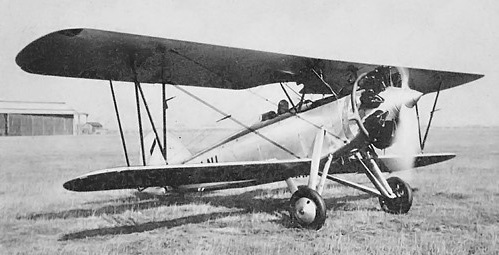
As the Air Force was looking for a new training aircraft, the “Ateliers de Construction Aéronautique Belges” (LACAB) created the T-7. The plane was presented to the authorities on October 17th, 1933, but it is the Avro 626 that won the challenge. In 1934, the LACAB T-7 was bought by the defense ministry and written off on May 31st, 1935. The unique T-7 disappeared completely.
Ateliers De Constructions Aeronautiques Belges / LACAB
Established in Brussels in 1933, the year the LACAB T.7 advanced trainer was entered for the Belgian Government competition, and in the 1934 company began construction to official specifications of the LACAB GR.8 twin-engined multi-seat fighter sesquiplane.
ACAZ C.2
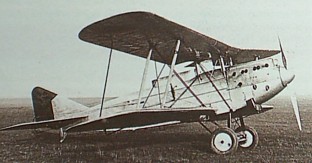
Constructed entirely from Duralumin, the ACAZ C.2 was a two seat fighter reconnaissance aircraft.
All four wings were identical and interchangeable.
The C.2 was evaluated by the Aeronautique Militaire Belge in early 1926.
On 9 March 1928 an attempt was made to fly it to the Belgian Congo.
The aircraft was written off on 25 January 1933.
The design was not put into production.
Engine: 1 x Hispano-Suiza 12.Ga, 450 hp / 336 kW
Wing span: 41 ft / 12.50m
Length: 27 ft / 8.25 m
Height: 11 ft 2 in / 3.40m
Wing area: 436.58 sq.ft / 40.56 sq.m
Empty weight: 2778 lb / 1260 kg
MTOW: 4563 lb / 2070 kg
Max level speed: 155 mph / 250 kph
Climb to 19,685 ft / 6000m: 35 min
Service ceiling; 24,606 ft / 7500m
Endurance: 3.5 hr
Armament: 1 x .303 Vickers mg & 2 x .303 Lewis mg
ACAZ T.2
Built in 1924-1925 the T,2 light two-seat cabin monoplane,
largely of duralumin, with cantilever wing and low-drag undercarriage.
ACAZ / Ateliers de Constructions Aeronautiques Zeebrugge
Belgium
Ateliers de Constructions Aeronautiques Zeebrugge was formed after the First World War. Built in 1924-1925 the T,2 light two-seat cabin monoplane, largely of duralumin, with cantilever wing and low-drag undercarriage. Began construction of a two-seat fighter in 1926.

