Founded 1991, has developed the Accord-201 seven-seat lightplane with twin piston engines on its high-mounted wing (first flown 1994). A four-seat business jet was under development as the Accord-Jet.
Aircraft
Avia LM-5 Aviastar / Lombardi LM-5 Aviastar

Designed by Pieraldo Mortara and first produced in 1945 by Azionaria Vercellese Industrie Aeronautiche / A.V.I.A., the LM-5 Aviastar two-seat light cabin monoplane was taken over in 1947 be Francis Lombardi & C.
The Aviastar is powered by a 60 hp C.N.A. D.4 engine, but a Continental C85 may be installed.
Engine: 60 hp C.N.A. D.4
Wingspan: 26 ft 5 in
Length: 20 ft 2 in
Height: 7 ft
Empty weight: 726 lb
Loaded weight: 1232 lb
Max speed: 118 mph
Cruise: 102.5 mph
Service ceiling: 16,400 ft
Range: 580 mi
Avia FL.3 / Lombardi FL-3

An all wood, side-by-side, enclosed cabin monoplane, of which more than 300 open cockpit derivatives had been built for the Regia Aeronautica under and Italian Government contract (by Francis Lombardi & Co of Vercelli).
Variation
Meteor F.L.53-54
Avia 10A
Circa 1929, the single-seat AVIA 10 A designed by Jarlaud at the Béchereau works.
Azionaria Vercellese Industrie Aeronautiche / Avia
Vercellese Industrie Aeronautiche
Azionaria Vercellese Industrie Aeronautiche / Avia
In 1929, Charles Fauvel participated in the creation of AVIA with Massenet, Auger and a few friends; this was a committee founded to promote the development of soaring. He then left the air force to join AVIA as sport director.
Azionaria Vercellese Industrie Aeronautiche; first flew F.L.3 two-seat cabin monoplane in 1939, and 400 built between 1939 and 1942.
Vercellese Industrie Aeronautiche was formed at Vercelli about 1940 to produce F.L.3 light tourer.
In 1946-1947 was renamed AVIA (Azionaria Vercellese Industrie Aeronautiche), continuing to develop F.L.3. Production resumed after the war, until the end of 1947, when company was absorbed by Francis Lombardi. Types known as Lombardi (AVIA) included L.M.5 Aviastar, first produced 1945.
Avia LD-40

The Avia LD-40, designed and built by the former Avia factory of the Czechslovak nationalised aircraft industry in 1954, is a four-seat cabin monoplane of all-metal construction and powered by a 105 hp Walter Minor 4-III engine. A feature is the reverse tricycle undercarriage, the normal nosewheel being replaced by a wheel mounted immediately aft of the wing trailing edge. The main wheels are mounted well forward below the wing and, on the gound, the Avia LD-40 remains in flying attitude.
The LD-40 accommodates four people on two side-by-side bench-type seats, and the cockpit canopy slides backwards.
Avia B-634
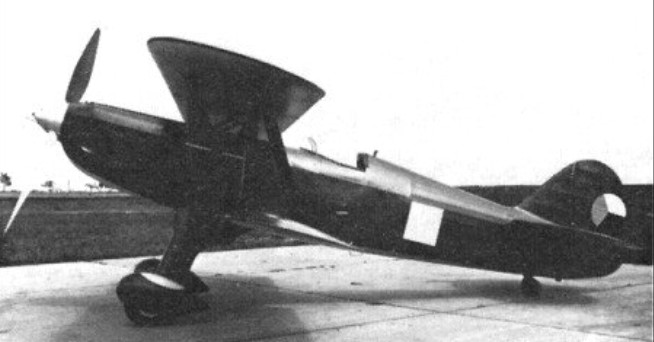
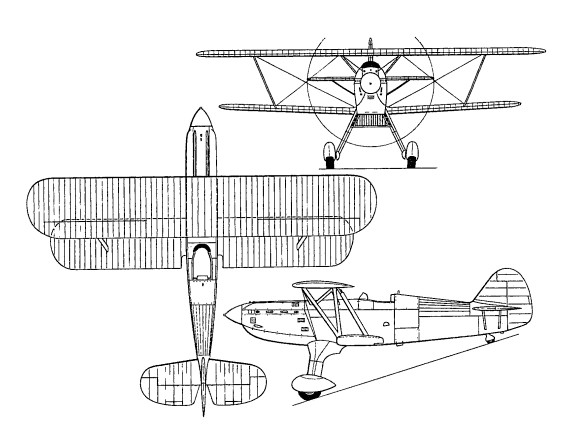
The B 634 represented the ultimate in the aerodynamic development of the basic B 34 single-seat fighter biplane design, and was to be numbered among the cleanest aircraft in its category ever flown. Tested in 1936, the B 634 was powered by an Avia-built HS 12Ycrs engine mounting a 20mm Oerlikon FFS cannon, two 7.7mm Model 30 machine guns being installed in the upper fuselage decking. There was virtually no commonality of components between the B 634 and the B 534.1 from which it was derived. By comparison with the earlier fighter, the upper wing of the B 634 featured increased chord while the lower wing had reduced chord, the wingtips were redesigned, the ailerons were broader, the gap was reduced (increasing the splay of the interplane struts), the stagger was greatly increased, and cut-outs were introduced on the lower wing roots. The curvature of the engine cowling and cockpit sill was refined, cantilever undercarriage legs were adopted and the radiator bath was faired cleanly between the leg roots. Despite a substantial reduction in drag, performance offered an insufficient improvement over that of the B 534 to warrant series production, the disappointing results provided by the B 634 being due primarily to a substantial increase in structural weight.
Two prototypes were built. The second had an enclosed canopy and different undercarriage. Both B-634 were pressed to service in 1938.
B.634
Engine: 1 x 850hp Avia-Hispano Suiza 12Ycrs
Wingspan: 9.40 m / 31 ft 10 in
Length: 8.35 m / 27 ft 5 in
Height: 3.06 m / 10 ft 0 in
Max take-off weight: 2340 kg / 5159 lb
Empty weight: 1710 kg / 3770 lb
Max. speed: 415 km/h / 258 mph
Cruise speed: 362 km/h / 225 mph
Ceiling: 11000 m / 36100 ft
Rate of climb: 960 m/min / 3150 ft/min
Range: 500 km / 311 miles
Armament: 1 x 20mm, 2 x 7.7mm
Crew: 1
Avia B-534

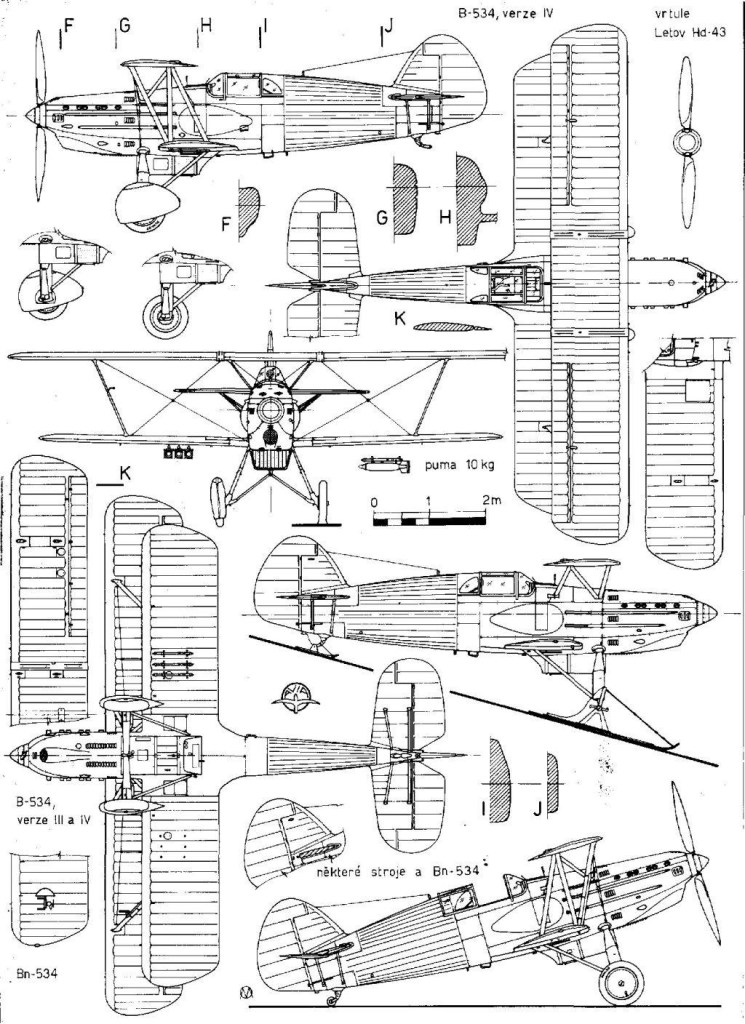
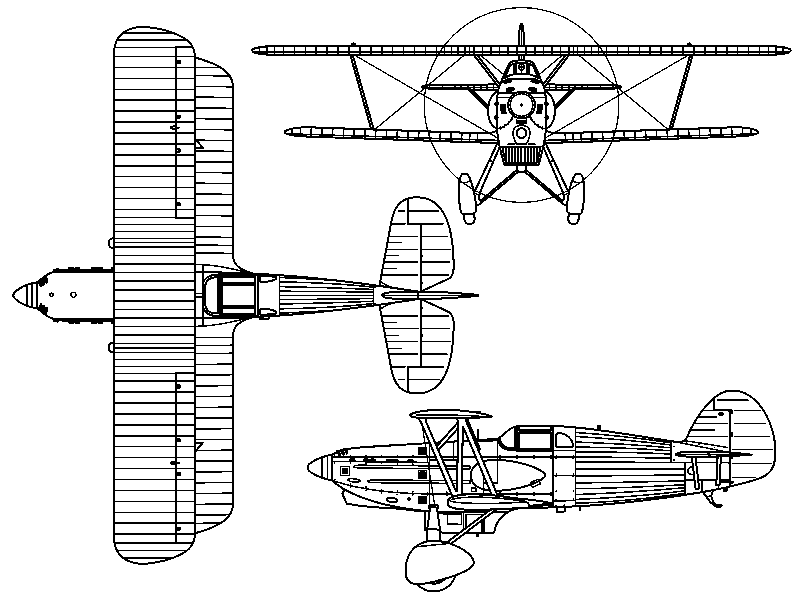
The B.534 featured a fixed undercarriage and biplane wings. Fuselage construction of the Avia B.534 was a mix of fabric-covered steel-structured wing assemblies. Armament was two or four 7.7mm synchronized machine guns and six 44lb bombs. Only some machines of the Nos I-II batches had a cockpit canopy.
The B-534 prototype was flight-tested in August 1933.
The operational flight ceiling was over 30,000 ft.

The Nos I-II batches being built from Feb 1935 were equipped by wooden propellers, the Nos III-IV batches with composite ones.
Two machine guns were typical for the first 100, in the lower wing they were mounted into both sides of the fuselage. The No IV batch cockpit was covered by a canopy and hooded wheels. Aircraft of all the batches were equipped by racks for small splinter bombs.
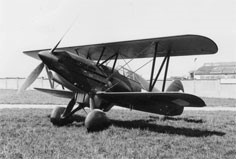
The 190th production B-534 fighter was the fourth one armed by four machine guns. In addition to two side-fuselage-mounted machine guns, the Bk-534 was armed also by a HS No 402 via propeller-axle shooting canon.
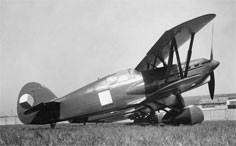
The B-534 turned out from 1936 were of higher empty as well as take-off weight, top speed, service ceiling and climb up to 5 000 m.
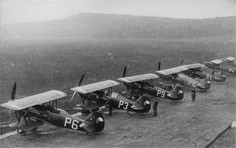
Because all three Aeroplane Works within a range of German bombers were, a new plant was built at the village of Kunovice in South Moravia. B-534s were turned out there in 1937.
Avia B.534’s would eventually see combat against the invading German forces, for the conquering German forces against the Soviet Union and ultimately phased out of service after completing several, less note-worthy, roles.
The Czechoslovakian Avia B.534 series of biplane was highly regarded. Such was the performance of the machine that the German Luftwaffe would briefly setup a fighter squadron utilizing captured B.534 aircraft.
A total of 445 were built.
Avia B-534
2nd batch
Engine: Avia HS 12 Ydrs 750 hp
Wingspan: 9.4 m
Length: 8.1 m
Empty weight 1385 kg
Take off weight: 1913 kg
Armament: two machine guns.
Avia B-534
Engine: Avia HS 12 Ycrs
Empty weight: 1631 kg
Loaded weight: 2222 kg
Top speed: 375 kph
Range: 500 km
Rate of climb: 15m/sec
Service ceiling: 9500 m
Avia B.534-IV
Engine: 1 x Hispano-Suiza HS 12Ydrs, 850hp.
Length: 26.90ft (8.2m)
Width: 30.84ft (9.40m)
Height: 10.17ft (3.10m)
Maximum Speed: 245mph (394kmh; 213kts)
Maximum Range: 360miles (580km)
Rate-of-Climb: 2,953ft/min (900m/min)
Service Ceiling: 34,777ft (10,600m)
Armament:
4 x 7.7mm synchronized machine guns
6 x 44lb bombs
Crew: 1
Hardpoints: 6
Empty Weight: 3,219lbs (1,460kg)
Maximum Take-Off Weight: 4,674lbs (2,120kg)
Avia B-234
A 1932 single-piston-engine one-seat biplane fighter (prototype only).
Avia B-158
A 1938 twin-engined medium bomber, prototype only

