A two-seat open-cockpit very light monoplane
Aircraft
Aviator Scientific-Production Enterprise
Produces M-9 Marathon as two-seat open-cockpit very light monoplane.
Aviator Enterprises Aviat Solo
Top speed: 105 mph
Cruise: 85 mph
Stall: 35 mph
Range: 450 nm
Rate of climb: 800 fpm
Takeoff dist: 500 ft
Landing dist: 300 ft
Engine: Walter Mikron III, 65 hp
HP range: 50-90
Fuel capacity: 18 USG
Empty weight: 540 lb
Gross weight: 900 lb
Height: 5.5 ft
Length: 18.5 ft
Wing span: 29 ft
Wing area: 116 sq.ft
Seats: 1
Landing gear: tailwheel
Aviaton Merkury
a four-seat general-purpose lightplane, the Merkury, with twin piston engines mounted on the high wing was first flown 1997.
Aviaton
Has developed a four-seat general-purpose lightplane, the Merkury, with twin piston engines mounted on the high wing. First flown 1997.
Aviation Trader ATL.98 Carvair
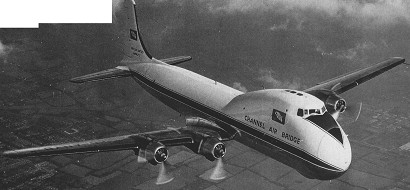
At Laker’s suggestion, A. C. Leftley, chief designer of Aviation Traders, designed a nose-loading car ferry conversion of the Douglas DC-4/C-54 after investigating a variety of other types as potential car ferries. With second-hand DC-4s and C-54s available for £40,000 and conversion costs of around £150,000 the Carvair (Car-via-air) was significantly cheaper than any new design. A new bulbous nose was fitted, with a much ¬raised cockpit. All the controls, most of which were mechanical, had to be re-routed from the new flight deck, but the ATL-98 Carvair, as it came to be known, proved easy to fly, and the bulbous nose reduced its speed by only four knots. The tail surfaces were increased in size to match those of the DC-7. DC-6 brakes were fitted to cope with the higher all-up weight of the Carvair, which could carry five full-size saloon cars and 23 passengers.
Aviation Trader ATL.98 Carvair Article
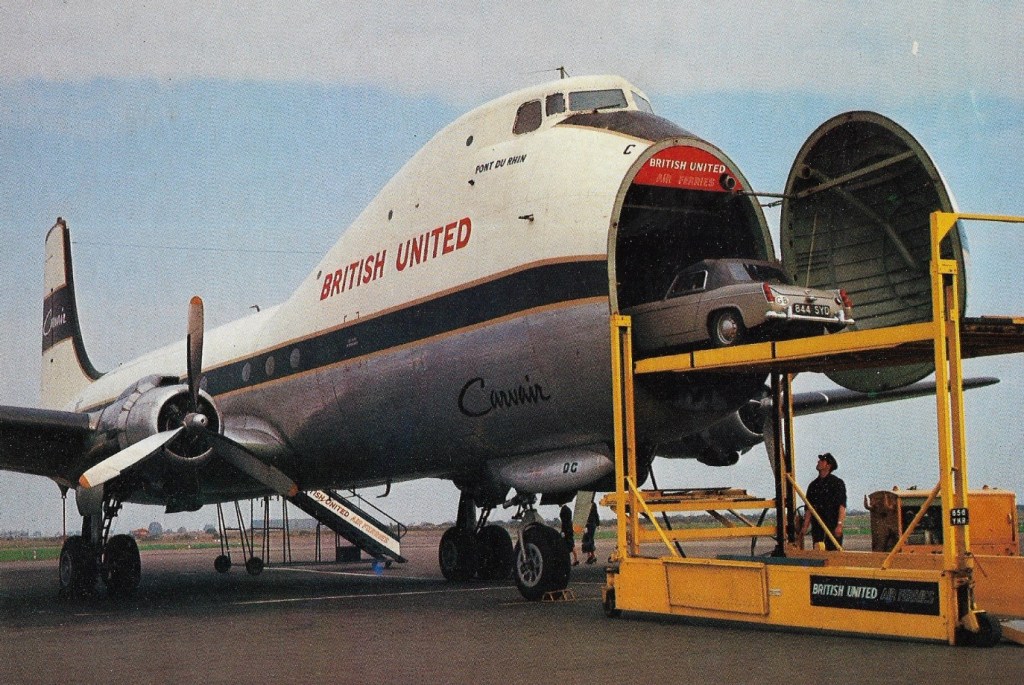
The prototype Carvair was based on an Air Charter DC-4 and first flew on 21 June 1961. Conversions of DC-4s lasted for eight years, from 1960 to 1968, and they continued to fly for British Air Ferries until 1 January 1977. Twenty-one Carvairs were eventually produced.
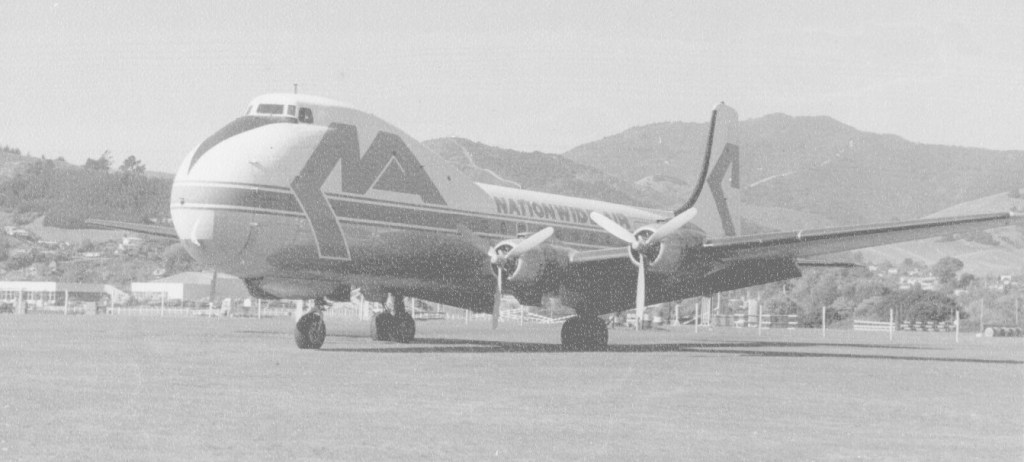
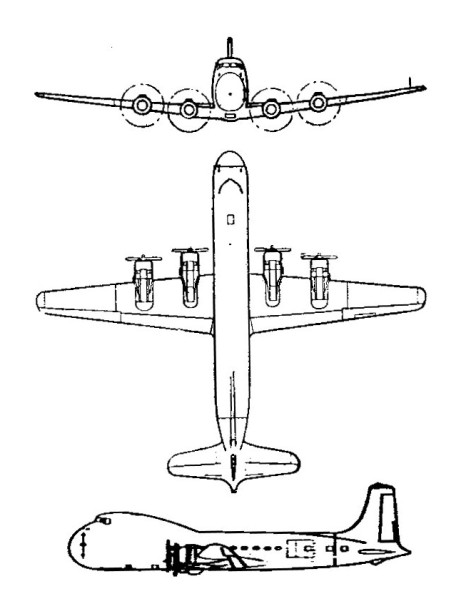
Powerplant: 4 x Pratt & Whitney R2000-7M2, 1450 shp take-off power 2700 rpm
Props: Hamilton Standard 3 blade 13 ft 1 in diameter
Span, 117 ft 6 in
Length, 102 ft 7 in
Height, 29 ft 10 in
Gross wing area, 1 462 sq.ft
Max. usable floor area, 665 sq.ft
Max. usable cabin volume, 4 630 cu.ft
Max. cabin length, 80 ft 2 in
Max. width, 9 ft 8 in
Max. height 6 ft 9 in.
Accommodation: 22 passengers in rear cabin or all-passenger version 85.
Basic operational, 42,465 lb
Total fuel, 17 208 lb
Max. take-off; 73 800 lb
Max. landing weight: 64,170 lb
Max. payload (weight limited), 18,035 lb
Max. zero fuel, 60,500 lb
Power loading (max. take-off weight), 12.7 lb/shp
Wing loading (max. take-off weight), 50.5 lb/sq.ft
Wing loading (max. landing weight) 43.9 lb/sq.ft
High-speed cruise, 191 kt. at 10,000 ft
Long-range -cruise, 175 kt. at 10,000 ft
Approach speed, 93 kt
Balanced field length, ISA at sea level, 4,200 ft
Landing field length, ISA at sea level, 4,470 ft
Range with no reserves, max. fuel, 14,867 lb payload, 3000 nm
Aviation Trader ATL-90 Accountant
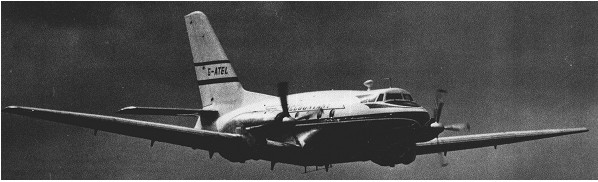
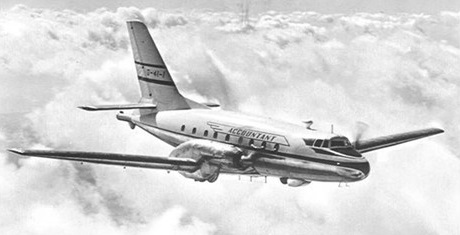
Designed as a 28-seater, 60ft long, with a wingspan of 82 ft, and powered by two Dart RDa6 Mk 510 turboprops, each of 1780 hp. Nobody knows why it was called the Accountant – but the Accountant paid for it out of Air Charter’s cash flow.
The Accountant design was partly based on the use of a segmented tensioned skin production method. The problem with the tension skin was that, in order to keep the metal evenly stressed, the curves of the fuselage had to come to a long, pointed end, which strictly limited the freight capacity of the aircraft. By the time it was built, the Accountant’s rear end was largely taken up with struts to support a large separate tail-section, while the upper half of the flight deck was stuck on the front.
First flown on 9 July 1957, the press was invited in July 1957 to first flight of the prototype, which The Aeroplane described as a “plump silver partridge”. The plane performed well enough, but Laker had already decided against the tension-skin construction, and plans were drawn for a conventional fuselage.
Unhappily, he could find no-one to go into partnership with him to build it. The Accountant was flown at the 1957 Farnborough Air Show, but there were already two rivals in the air: the Handley Page Herald, and the Fokker Friendship. The programmes was cancelled in January 1958, by which time the prototype had completed over 200 hrs. The engines and equipment were removed and the aircraft left in open storage.
Its optimum cruising altitude, powered by two Rolls Royce Dart 510 (R.Da.6) turboprops, would have been 30,000 ft. With S.B.A.C. reserves the Accountant would have carried a passenger pay¬load of 8,363 lb for 400 nautical miles, or 6,135 lb. for 1,000 n.m. and 2,422 lb. for 2,000 n.m. At a mean weight of 20,000 lb. in I.S.A. conditions the Accountant’s top cruising speed (13,600 r.p.m.) was expected to be 250 knots (290 m.p.h.).
It was scrapped in 1959.
Engines: 2 x Dart RDa6 Mk 510 turboprops, 1780 hp.
Pax cap: 28.
Length: 60ft.
Wingspan: 82 ft.
MAUW: 28,000 lb
Max cruise: 285 mph at 20,000 ft
Aviation Trader (Engineering) Ltd (ATL)
Formed at Bovingdon, Herts, UK, in 1947 to sell aircraft and spares. In 1949 acquired a base at Southend, Essex, to maintain aircraft on Berlin Airlift. During 1952-1955 ATL built Bristol Freighter center-sections. Sold about 20 civil Percival Prentices. Conversion of the 20-year-old Douglas DC-4 into a cheap car-ferry first considered January 1959; called Carvair, and the aircraft first flew in June 1961; 21 built. Less successful was company’s own medium-range airliner, the Accountant, with two Rolls-Royce Dart turboprops, flown July 1957 and backed by managing director F. A. Laker.
On 1 Sept 1966, this company has its headquarters at Southend Airport. Other operating bases were Stansted, Gatwick, Lydd and Croydon.
Aviation Traders was part of the Air Holdings complex and the chairman was Sir Miles Wyatt. Total employees were 2110, more than half of them being at Southend. Production facilities total 450,000 sq.ft, of which Southend was the largest with 170,000 sq.ft and Gatwick close to it at 127,500 sq.ft.
The main sources of revenue for this company was the maintenance and conversion of aircraft and overhaul of components for BUA, Caledonian Airways, Lloyd International Airways and Transglobe Airways, other work being done on an ad hoe basis. This accounted for about 90 per cent of the revenue; the balance coming from the manufacture of freight doors, cargo elevators and aircraft seats.
Going through the shops in 1966 was the 23rd-Carvair conversion. Development included the Mk. 12 Hylo cargo elevator which could be broken down for air carriage.
Aviation Normand Dube Aerocruiser

A side by side two seater with standard undercarriage and high wing, the Aerocruiser has a fuselage and wing of fabric covered aluminium Conversion to floats takes one hour.
Engine: Rotax 912, 80 hp
Wing span: 9.75 m
Wing area: 16 sq.m
MAUW: 479 kg
Empty weight: 239 kg
Fuel capacity: 41 lt
Max speed: 169 kph
Cruise speed: 135 kph
Minimum speed: 48 kph
Climb rate: 4.5 m/s
Fuel consumption: 10 lt/hr
Seats: 2
Certification: Canada
Price (1998): Can$43,500
Kit price (1998): Can$37,000
Aviation Industries of Iran Qaher 313
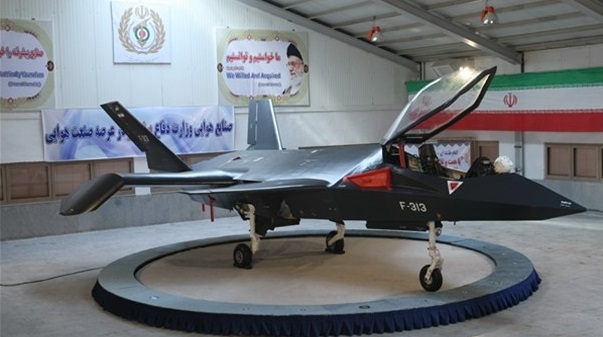
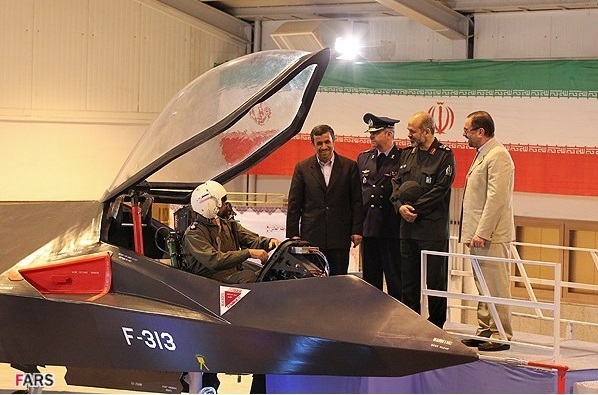
Unveiled on Feb. 2, 2013, the Qaher 313 was no more than a mock-up that will never fly unless it is almost completely redesigned. Iran insists its new home-made stealth fighter aircraft is “not a paper model” but an “aircraft designed by the Islamic Republic for anti-choppers missions.” Furthermore the F-313’s mission would be “protecting security in the Persian Gulf.” This is what a senior Iranian defense ministry official said on Apr. 16.
Addressing a group of Iranian soldiers, Deputy Defense Minister General Majid Bokayee explained that the Qaher 313, designed and developed at a cost of 2 to 3 million USD, has a “unique” structure, will be armed with home-made weapons and equipment and it will feature capabilities that will stun enemies on the battlefield.
According to the Iranian Defense Minister Brigadier General Ahmad Vahidi, the Qaher 313 is an advanced aircraft with a very small Radar Cross Section, capable of taking off from short runways and flying at low altitude like no other most advanced western plane.
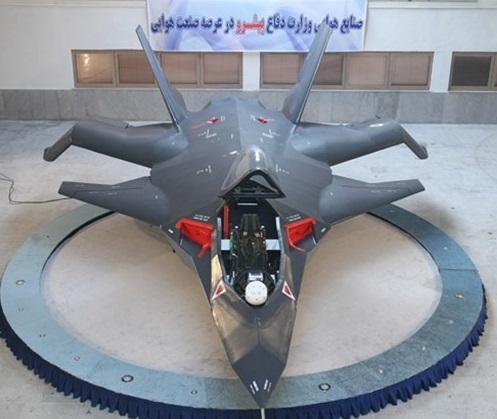
The prototype of the Q-313 (or F-313 according to the stencils applied to the aircraft), was presented to President Mahmoud Ahmadinejad and publicly displayed as part of the Ten-Day Dawn ceremonies held in Iran to celebrate the 1979’s victory of the Islamic Revolution.
In the previous days, the Iranian Defense Minister Brigadier General Ahmad Vahidi had said, “The aircraft will be different from the other fighter jets Iran has already made.”
The Q-313 has large, seemingly fixed canards, and little wings whose external section is canted downward.
The canopy material looks like plexiglass or something like that. The cockpit seems to be basic (note the lack of wirings behind the front panel and the presence of few instruments, some of those similar to those equipping small private planes…).

The nose section is so small almost no radar could fit in it. The air intakes are extremely small whereas the engine section lacks any kind of nozzle: engine afterburners could melt the entire jet. The aircraft is way too small, look at the image showing an Iranian officer sitting on the ejection seat in the cockpit.