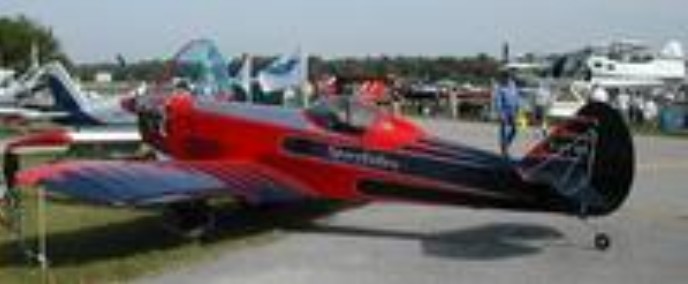
Made available plans and kits to build single-seat Revolution 1 and two-seat Revolution II low-wing monoplanes, based on former Country Air Space-Walker.
1995: 7801 N. Armenia Ave, Tampa, FL 33604-3824, USA. 1997: 9415 Laura Ct, Seminole, FL 33776-1625, USA.
The TLAR was a locally designed and built ultralight, conforming to NZ CAR Part 103. Of conventional controls, the TLAR first flew on 22 May 1997. First registered, ZK-TLR, to RJ Ward, Christchurch, New Zealand, on 4 June 1997.
In 2009 the registration was cancelled as the TLAR had been dismantled.
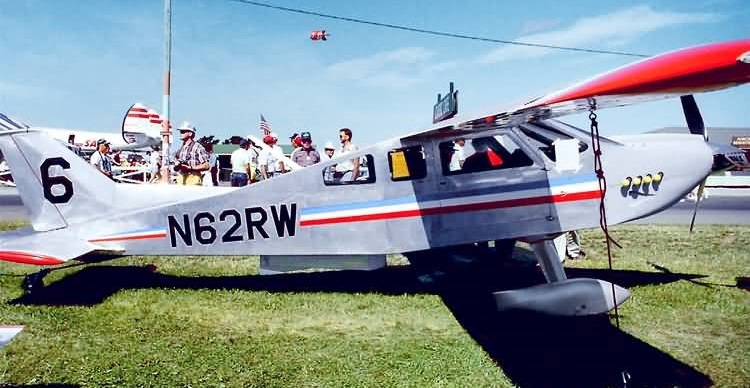
The Ward RA Super BD-4 N62RW c/n 99 was a hybrid of a Bede BD-4 fuselage, a Cessna 172’s undercarriage, and a Swearingen SX-200’s nose and engine. The cruise was about 220 mph.
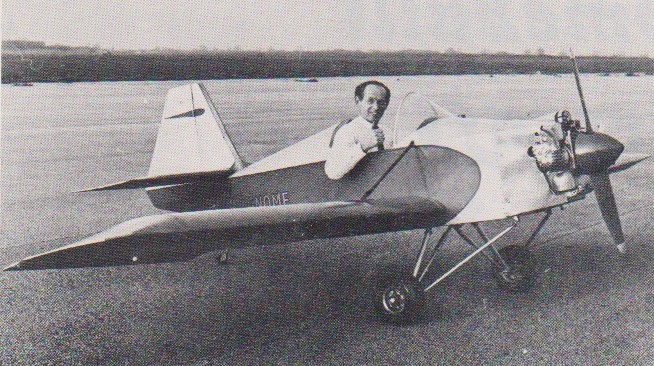
The Ward P.45 Gnome was designed and built by M. Ward at Scarle, Lincs, as the smallest aircraft in Britain.
All-wood construction, it was powered by a Douglas motor cycle engine conversion. First flown on 4 August 1967 at Wigsley, piloted by R.A.Fixter. Sold to R.A.Fixter in 1968, it was registered G-AXEI about 1968.
It later went on display at the Lincs Aviation Museum, Tattershall.
Engine: Douglas Wingspan: 15 ft 9 in Length: 11 ft 6 in
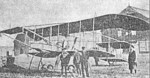
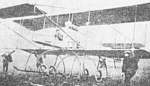
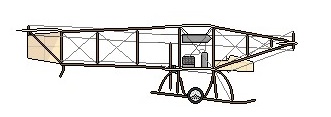
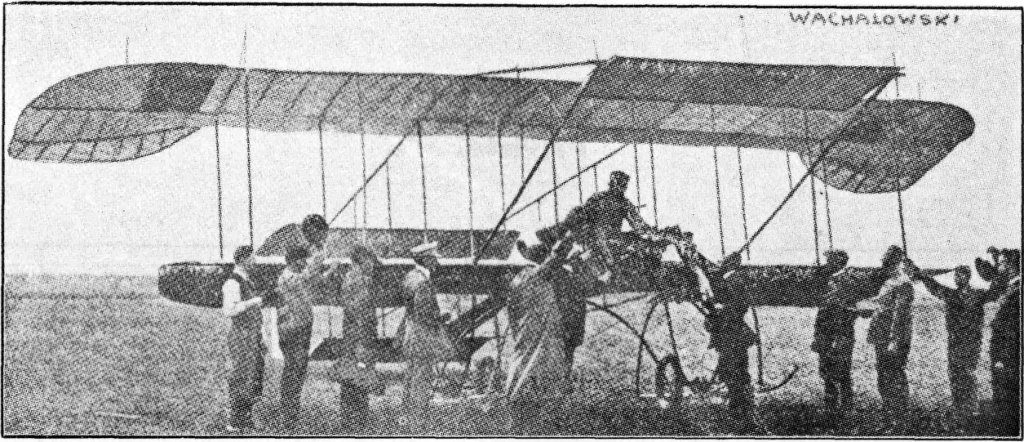
The Warchalowski V was built by Autoplan, Austria.
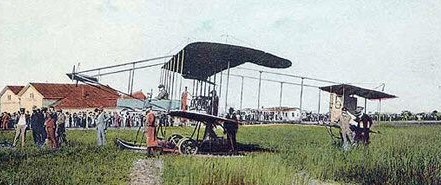
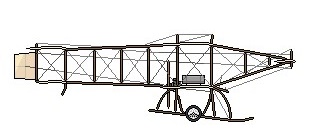
1911 Warchalowski V single-seater pusher biplane
From 1910 to 1912 Adolf Warchałowski started designing and building aircraft based roughly on Farman design. Within two years he built 15 aircraft that differed with various details. Warchłowski’s planes were highly succesful for a time and gained several records of Austria.
The Warchalowski V (“Vindobona Racer”), was flown by the constructor on June 7, 1911. It was a development of the Warchalowski IV and was reported to have a single rudder and a Gnôme engine. Examples were built. Two Warchalowski V aircraft took top positions in the Air Meeting in Wiener-Neustadt (11-18.06.1911). On 9.08.1911, a night flight over Vienna was made on a plane equipped with headlights. The VI version was reported to have a single horizontal tail was used and a Daimler inline engine. In August and September 1911, three examples were built. On this plane, in August and September 1911, the constructor participated in military exercises. One was broken down by J. Sablatnig on October 1, 1911, a second was crashed by Sablatnig on August 19, 1911 during a flight around lower Austria, where he reached a speed of 106 km/h.
From 1910 to 1912 Adolf Warchałowski started designing and building aircraft based roughly on Farman design. Within two years he built 15 aircraft that differed with various details. Warchłowski’s planes were highly succesful for a time and gained several records of Austria.
In 1910 Adolf Warchałowski, Austrian citizen of Polish origin, living in Vienna, started designing and building aircraft based roughly on Farman design. Within two years he built 15 aircraft that differed with various details. Warchłowski’s planes were highly succesful for a time and gained several records of Austria.
Karl Warchalowski, Autoplan Werke, Odoakergasse 35, Vienna XVI.
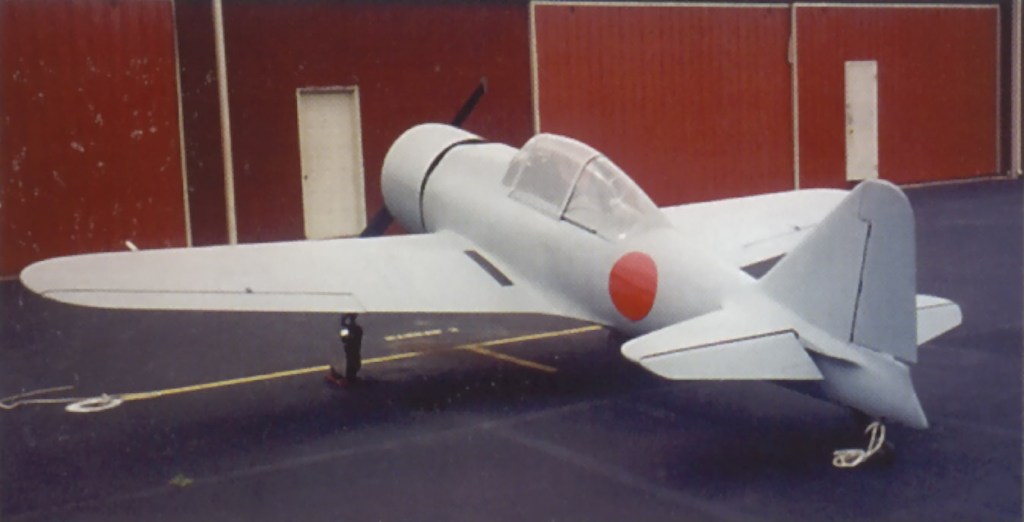
The scale Zero is built around a plywood box core and covered with styrofoam and fiberglass. Plans have been produced for this and two other ½-scale World War II replicas by War Aircraft Replicas. All use the same common wooden fuselage box and wing spar construction in order to duplicate the various fighter aircraft. Polyurethane foam is shaped and covered with high-strength fiberglass cloth and laminating epoxy resin to form a rigid, yet light structure. Landing gears are of air/oil oleo type, with either electrical or manual retract and have a built-in emergency release. Engines vary from 65 hp to 125 hp, which accounts for variations in perform¬ance. Authentic three and four bladed props are available. Features fully retractable landing gear, sliding canopy, and detachable wings.
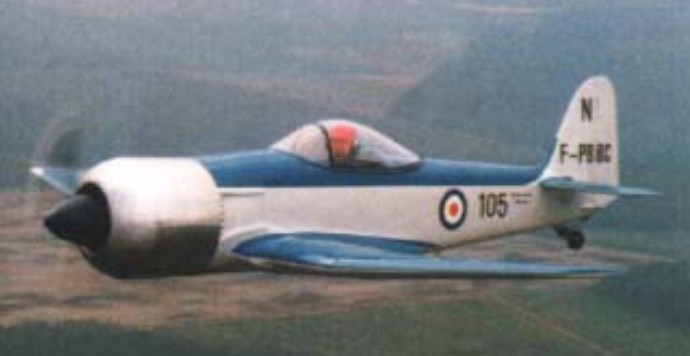
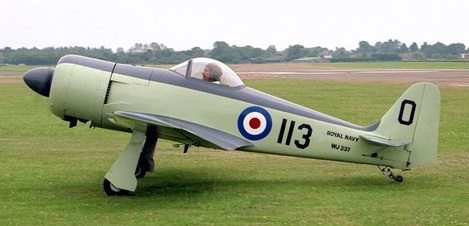
The scale Hawker Sea Fury is built around a plywood box core and covered with styrofoam and fiberglass. Plans have been produced for this and two other ½-scale World War II replicas by War Aircraft Replicas. All use the same common wooden fuselage box and wing spar construction in order to duplicate the various fighter aircraft. Polyurethane foam is shaped and covered with high-strength fiberglass cloth and laminating epoxy resin to form a rigid, yet light structure. Landing gears are of air/oil oleo type, with either electrical or manual retract and have a built-in emergency release. Engines vary from 65 hp to 125 hp, which accounts for variations in perform¬ance. Authentic three and four bladed props are available. Features fully retractable landing gear, sliding canopy, and detachable wings.
Wing twist 2 degree
The first, G-BLTG, flew on 24 February 1986.
Engine: Continental O-200, Lycoming 0-290-D, HCI 7 cylinder Radial Prop: 60″dia 3 or 4 blade ground adjustable Wingspan: 20’0″ Length: 16’0″ Footprint: 7’0″ Empty Weight: 600-620 lbs Max Gross Weight: 900-920 lbs Fuel capaci¬ty 15 USG Wing Loading: 12lbs/sq ft Cruise condition: 135 MPH @3.2 GPH Wide Open speed: 165 MPH Stall Speed: 55 MPH Approach & Pattern Speed: 70-75 MPH Take off Run: 800-1000 ft Landing roll 1200 ft Rate of Climb: 700 ft/min. Endurance: 3-4 Hrs: 400 miles Structural capability: Aerobatic (+/- 6 g’s)

 All Aero