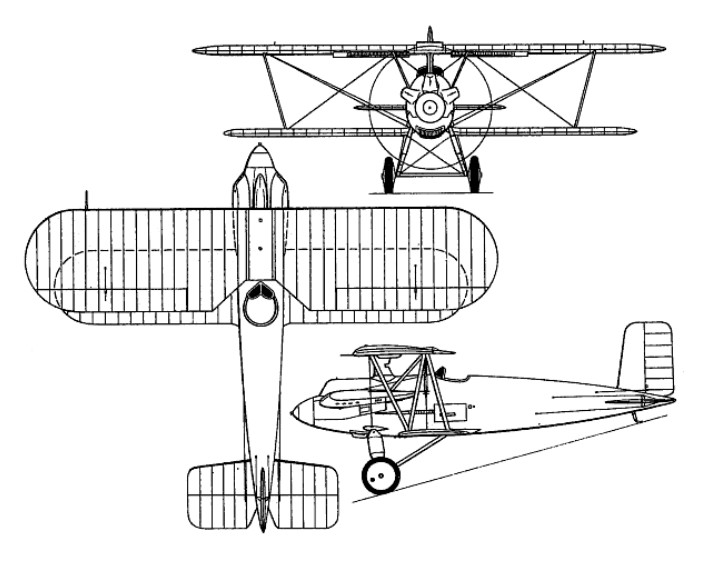
Avro 627 Mailplane

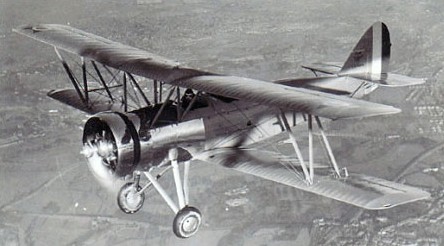
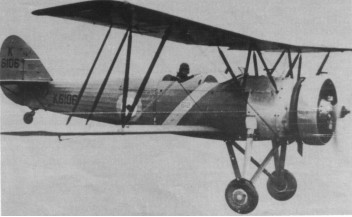
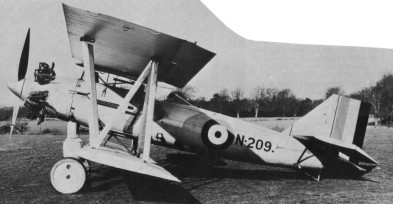
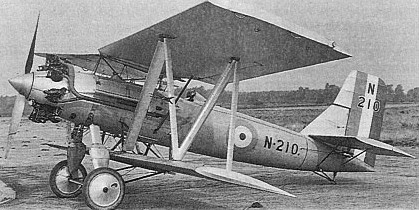
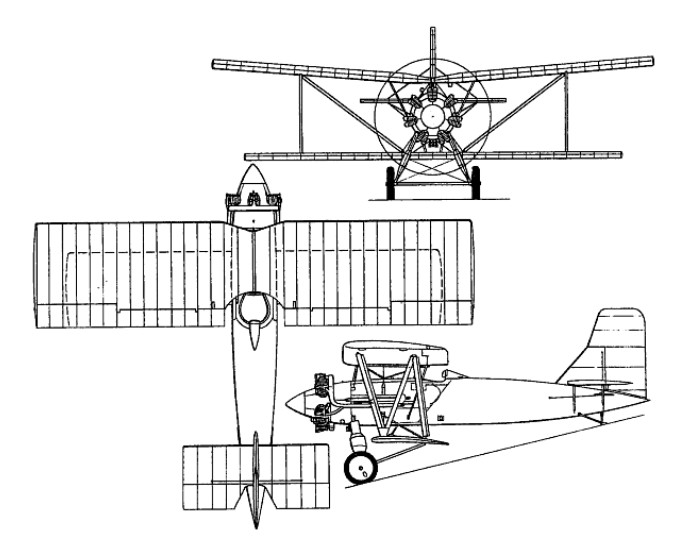
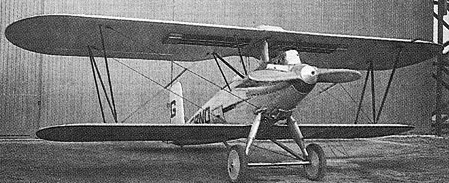
An unfinished Avro 608 Hawk was completed as the only Avro 627 Mailplane in 1933.

Avro 627
Engine: 1 x 525hp Armstrong Siddeley Panther IIA
Take-off weight: 2338 kg / 5154 lb
Empty weight: 1397 kg / 3080 lb
Wingspan: 10.97 m / 36 ft 0 in
Length: 9.40 m / 31 ft 10 in
Height: 3.30 m / 11 ft 10 in
Wing area: 35.40 sq.m / 381.04 sq ft
Max. speed: 274 km/h / 170 mph
Cruise speed: 237 km/h / 147 mph
Ceiling: 5791 m / 19000 ft
Range: 902 km / 560 miles

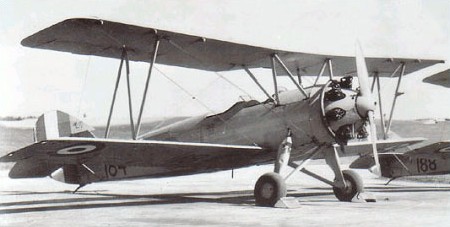
Avro 626 Prefect / Moravko-Slezka Vazovka Tatra T.126

The Tutor was redesigned as the more multi-purpose Avro 626 trainer. It was essentially still used as a two-seat aircraft, but a third cockpit was aged and had a gun ring fitted to it. This allowed the aircraft to be used for gunnery training.

1930
Moravko-Slezka Vazovka Tatra (Ringhoffer-Tatra) obtained licenses to build the Avro 626 as T.126, and the Bucker Bu 131 Jungmann as the T.131.

Gallery

Avro 626 Prefect
Engine: Armstrong Siddeley Lynx IV C, 237 hp
Length: 26.509 ft / 8.08 m
Height: 9.58 ft / 2.92 m
Wingspan: 33.99 ft / 10.36 m
Wing area: 299.993 sq.ft. / 27.87 sq.m
Max take off weight: 2749.6 lb / 1247.0 kg
Weight empty: 1766.2 lb / 801.0 kg
Max. speed: 97 kt / 180 km/h
Cruising speed: 83 kt / 153 km/h
Service ceiling: 14797 ft / 4510 m
Wing load: 9.23 lb/sq.ft / 45.0 kg/sq.m
Range: 191 nm / 354 km
Crew: 3

Engine: Armstrong Siddeley Cheetah Va, 285 hp.
Max speed: 130 mph.

Avro 626 landplane
Engine: 1 x 240hp Armstrong Siddeley Lynx IVC
Take-off weight: 1249 kg / 2754 lb
Empty weight: 801 kg / 1766 lb
Wingspan: 10.36 m / 34 ft 0 in
Length: 8.08 m / 27 ft 6 in
Height: 2.92 m / 10 ft 7 in
Wing area: 27.87 sq.m / 299.99 sq ft
Max. speed: 180 km/h / 112 mph
Cruise speed: 153 km/h / 95 mph
Ceiling: 4511 m / 14800 ft
Range: 386 km / 240 miles

Avro 624 Six

After the success of the Avro 618 Ten, it was decided at Avro to build a similar aircraft which, although smaller than the ten, but slightly larger than the Avro 619 Five should be.

Starting from the concept of the Five, a machine was constructed with the two pilots side-by-side and comfort for four passengers. This had more headroom and, at the rear of the airplane, a washing room.

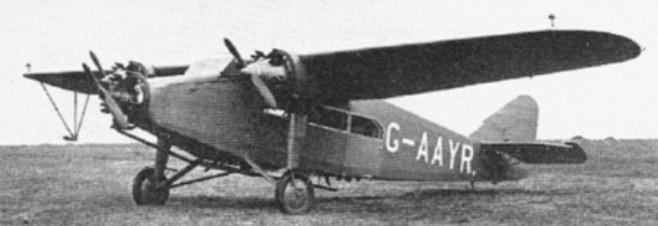
The fuselage consisted of a fabric-covered steel tube construction. One of the three engines had been installed in the fuselage nose, the other two engines were the first prototypes in the wings, with the following machine the outer engines were suspened under the wings. The non-retractable landing gear consisted of a two-sprung main gear and a fixed tailwheel.

The first prototype, with the registration G-AAYR, was seen for the first time in May 1930 during intensive flight tests at Woodford and Heston . After these tests, minor changes were made in the second machine. Thus, the outer engines were installed suspended from the wings. In addition, the original one-piece cockpit window was divided and beveled for better drainage of rain drops.

After a demonstration of this machine at the end of 1931 it was sold to the Far East Ltd Aviation.

A third Six was formed in 1933 through the conversion of an Avro 619 Five as a so-called “flying classroom” for navigator training for the private company Air Service Training Ltd., The machine was operated in the first days of the Second World War from the No. 11 Air Observers Navigation School (navigation school).

Other machines of this type were not built.

Engine: 3 x Armstrong Siddeley Genet Major, 105hp / 78 kW
Max take-off weight: 2270 kg / 5005 lb
Empty weight: 1388 kg / 3060 lb
Wingspan: 15.54 m / 51 ft 0 in
Length: 10.97 m / 36 ft 0 in
Height: 2.90 m / 10 ft 6 in
Wing area: 33.45 sq.m / 360.05 sq ft
Max. speed: 182 km/h / 113 mph
Cruise speed: 153 km/h / 95 mph
Ceiling: 4267 m / 14000 ft
Range: 644 km / 400 miles
Climb rate: 152.40 m / sec
Crew: 2
Passengers: 4

Avro 621 Trainer / 621 Tutor

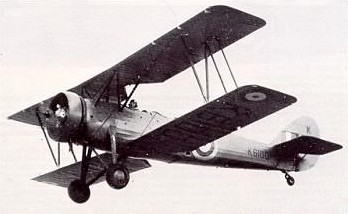
Designed as a replacement for the Avro 504N, the original Avro Trainer of 1929 featured a welded steel-tube structure and a 240-hp Armstrong Siddeley Lynx IVC radial engine. In 1930 the prototype Avro 621 Tutor made its first flight.

Design of the Avro 621 Tutor was of a basic biplane type with twin tandem seating for the student and instructor respectively in the tubular-shaped fuselage. Windscreens were afforded each seating position as were redundant control systems. The biplane structure was connected via a series of struts between them while the engine was fitted to the extreme forward portion of the design rotating a two-blade propeller. Landing gear were of the traditional World War 1 static design and a tail wheel was fitted at rear.

Twenty-two were built for the RAF and three for the Irish Army Air Corps.

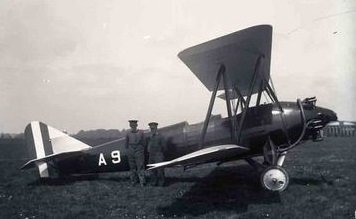
Avro 621 (serial A9). Avro A9 had been delivered to Baldonnel Aerodrome on 17 April 1930 and was crashed at Maynooth 26 November 1930 and written-off.

After evaluation Avro began mass production of the 621 for the RAF under the new name of Tutor. Some 200 Tutor trainers were still in operational use with British forces by the time of the Second World War. More than 390 were built, including 14 Sea Tutors with single-step Alclad floats and powered by a 160kW Lynx engine. The Sea Tutor was treated against corrosion by sea-water, and a metal propeller and hand-turning gear were also standard. The Sea Tutor was one of the few seaplanes that could not be converted into landplane form.

Tutors were delivered to Denmark, Greece, Poland and South Africa, plus others for civil use. Fifty-seven were built under licence in South Africa for the air force and a very small number in Denmark for the navy.

The UK line would stop production of the 621 by 1936 by which time some near 800 models would be in circulation. In total, 852 were built.

Gallery

Engine: 1 x Armstrong Siddeley Lynx IVC, 179kW / 237 hp
Take-off weight: 1115 kg / 2458 lb
Empty weight: 839 kg / 1850 lb
Wingspan: 10.36 m / 34 ft 0 in
Length: 8.08 m / 27 ft 6 in
Height: 2.92 m / 10 ft 7 in
Wing area: 27.96 sq.m / 300.96 sq ft
Wing load : 8.2 lb/sq.ft / 40.0 kg/sq.m
Max. speed: 196 km/h / 122 mph
Cruise speed: 169 km/h / 105 mph
Service ceiling: 4940 m / 16200 ft
Range: 402 km / 250 miles
Crew : 2

Avro 619 Five

In 1928 A.V. Roe and Co. Ltd. acquired a license to build the highly successful three-engined high-wing Fokker F.VIIB/3m transport for sale throughout the British Empire, excluding Canada. The British model was known as the Avro 618 Ten.

Powered by three 105 hp Armstrong Siddeley Genet Major five-cylinder radial engines, the Avro 619 Five was a scaled-down version for pilot and four passengers, and an entirely new design by Roy Chadwick.

At the “Olympia Aero Show” in London in July 1929 Wilson Airways Ltd of Nairobi ordered the three Armstrong Siddeley Genet Major engines equipped machine that. After a slight modification in accordance with the wishes of the buyer, the aircraft was transferred to Kenya in October 1929 and flew under the name of “King of the Grail”.

A second was delivered to Australia to the Queensland Air Navigation Co. Ltd, who had already taken Avro 618 Tens in operation.

The first of two Avro Fives to see service in the UK was the Avro demonstrator G-AASO (c/n 383), entered in the King’s Cup Race on July 5, 1930 by Sir Philip Sassoon and flown by Flight Lieutenant S.L.G. Pope. It was not a spectacular racer, and conveniently retired at its home base, Woodford.

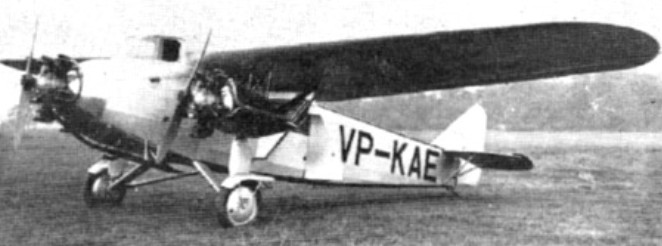
In September 1930 G-AASO was taken over by Wilson Airways Ltd. to replace their second machine VP-KAE ‘Knight of the Grail’, and although allotted the Kenya marks VP-KAH, these were never used. It flew as G-AASO on the African services until January 18, 1932, when it was damaged beyond repair in a forced landing 12 mls (19 km) from its destination while en route from Salisbury to Broken Hill.

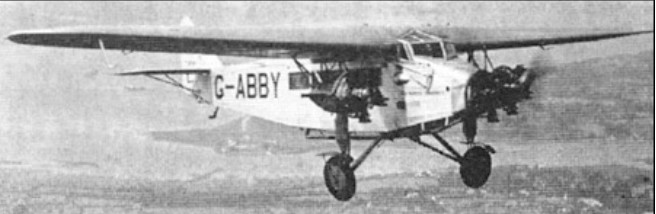
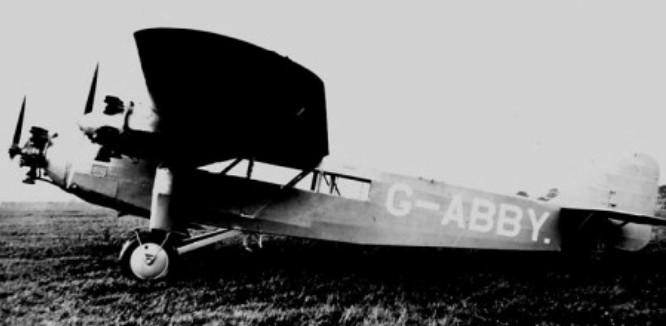
The other British Avro Five was G-ABBY, built in 1930, and taken over by Air Service Training Ltd., Ramble, as a navigational trainer at the end of 1933. Apart from a forced landing at Nuneaton on May 4, 1934, it serviced until scrapped during the war.

Avro 619 Five
Engines: 3 x Armstrong Siddeley Genet Major, 78 kW (106 hp)
Span: 47 ft 0 in (14.33 m)
Length: 35 ft 9 in (10.90 m)
Height: 9 ft 6 in (2.90 m)
Wing area: 333 sq.ft (30,95 sq.m)
Weight empty: 2,790 lb (1,266 kg)
Loaded weight: 4,420 lb (2,005 kg)
Max speed: 118 mph (190 kmh)
Cruise speed: 95 mph (153 kmh)
Climb: 750 ft (229 m)/min
Service ceiling: 15,000 ft (4,572 m)
Range: 400 mls (644 km)
Crew: 1
Passengers: 4
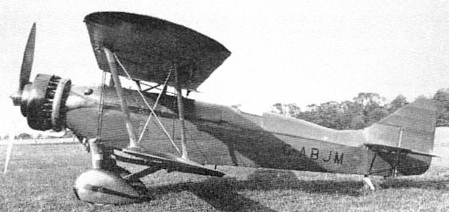
Avro 616

The 581 was replaced in production by the metal fuselage Avro 616 Avian IVM and Sports Avian variant in 1929. They were produced in small numbers in the UK, Canada and the USA. Only 16 of the Mk.IVM Sports Avians were built.
Two aircraft, named Southern Cross Junior and Minor, were used by Kingsford Smith for the UK-Australia-UK attempts during 1930-31.

Avro 616 Avian IVM – Engine: Cirrus Hermes, 108 hp.

Avro 604 Antelope

A two-seat bomber of 1928, but not ordered into production. One prototype was built, first flown in July 1928.

Engine: 1 x 480hp Rolls-Royce F.XIB
Take-off weight: 2060 kg / 4542 lb
Empty weight: 1298 kg / 2862 lb
Wingspan: 11.23 m / 37 ft 10 in
Length: 9.50 m / 31 ft 2 in
Height: 3.28 m / 11 ft 9 in
Wing area: 35.02 sq.m / 376.95 sq ft
Max. speed: 278 km/h / 173 mph
Ceiling: 6309 m / 20700 ft
Range: 837 km / 520 miles
Crew: 2
Armament: 2 x 7.7mm machine-guns, 2 x 110kg bombs

Avro 584 Avocet

The 584 Avocet was designed to Specification 17/25, issued in June 1926, for an all-metal stressed-skin shipboard fighter with interchangeable wheel and float undercarriages and powered by a 180hp Armstrong Siddeley Lynx IV nine-cylinder air-cooled radial engine.
Two prototypes were ordered, identical apart from the vertical tail surfaces. For manufacturer’s trials the first prototype was completed as a landplane and the second prototype as a twin-float seaplane, the first flying in December 1927 and the second in April 1928. The second prototype was also fitted with a land undercarriage in June 1928. Armament was two 7.7mm Vickers machine guns synchronised to fire through the propeller disc. Performance during evaluation at Martlesham was unspectacular and no production order was placed.

Engine: Armstrong Siddeley Lynx IV nine-cylinder air-cooled radial, 180 hp.
Take-off weight: 1132 kg / 2496 lb
Empty weight: 735 kg / 1620 lb
Wingspan: 8.84 m / 29 ft 0 in
Length: 7.46 m / 25 ft 6 in
Height: 3.56 m / 12 ft 8 in
Wing area: 28.61 sq.m / 307.96 sq ft
Max. speed: 214 km/h / 133 mph

Avro 581 Avian / 594 Avian

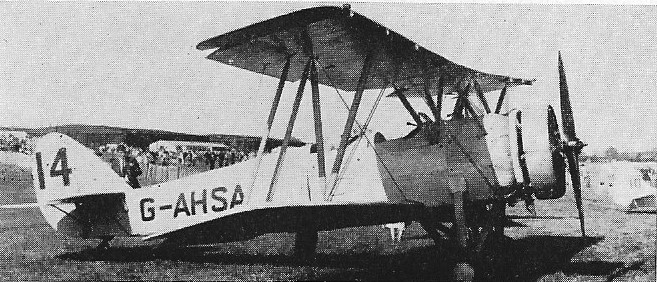
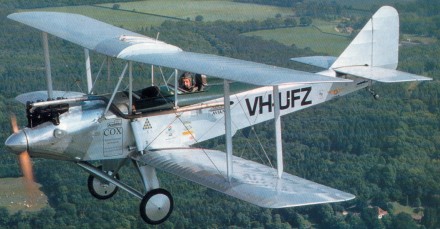
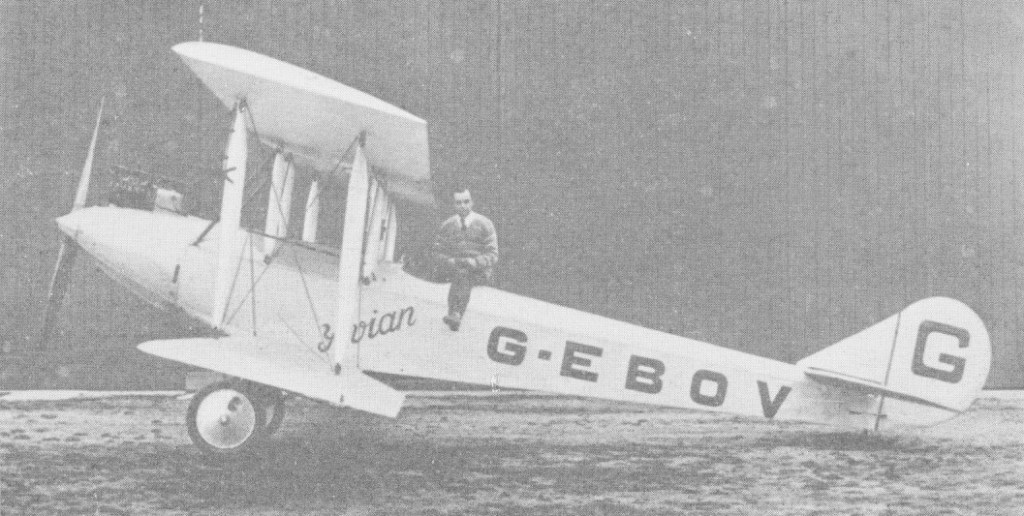
The original Avian was the Avro 581 G-EBOV which was first flown in 1926. Built for the Lympne Trials, the two-seat Avro 581 Avian was powered by a 52kW Armstrong Siddeley Genet engine. Its Armstrong Siddeley Genet engine was replaced by an ADC Cirrus I and with other modifications it became the Avro 581E in 1927.

From this the Avro 594 Avian I G-EBQN was developed and later in the same year the first Cirrus II powered Avian II G-EBTU was flown.

The 581E was powered by a 63kW Cirrus II engine, and used by H. J. L. Hinkler for the first solo flight to Australia in 1928.

Of wooden construction, the 581 was in production with various engines as the Avro 594 in the UK and USA between 1927 and 1929. The Avian continued in production until 1935 when the last Avian G-ADEO was built up from spare parts.

The 581 was replaced in production by the metal fuselage Avro 616 Avian IVM and Sports Avian variant in 1929.

Avro 594 Avian

The Avian IIIE featured upper wing slots.

In February 1928, H.J.L (Bert) Hinkler, and Australian, took off from London in an Avian. Less than three weeks later he was in Austrlia. Hinkler had flown from London to Australia in fifteen and a half days.

H.J.L. Hinkler and his Avro Avian
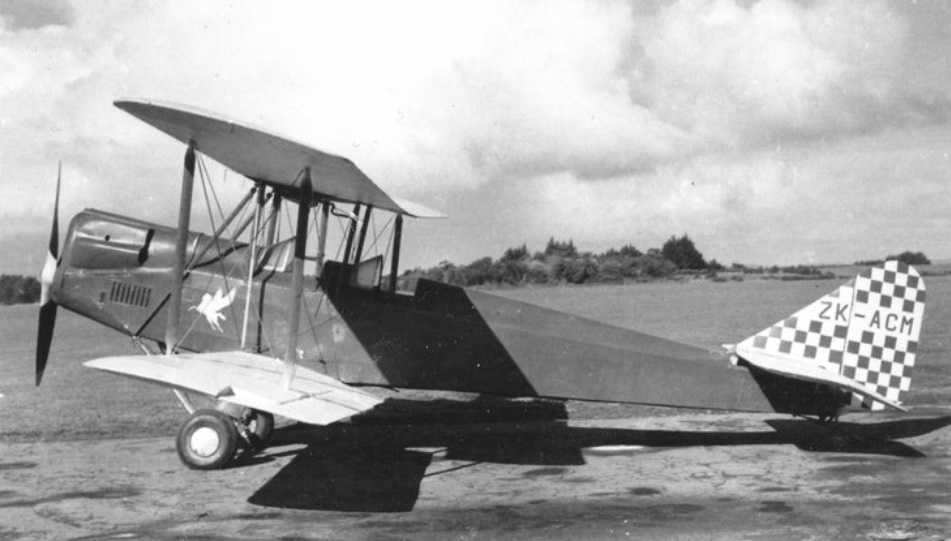
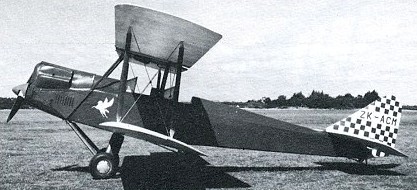
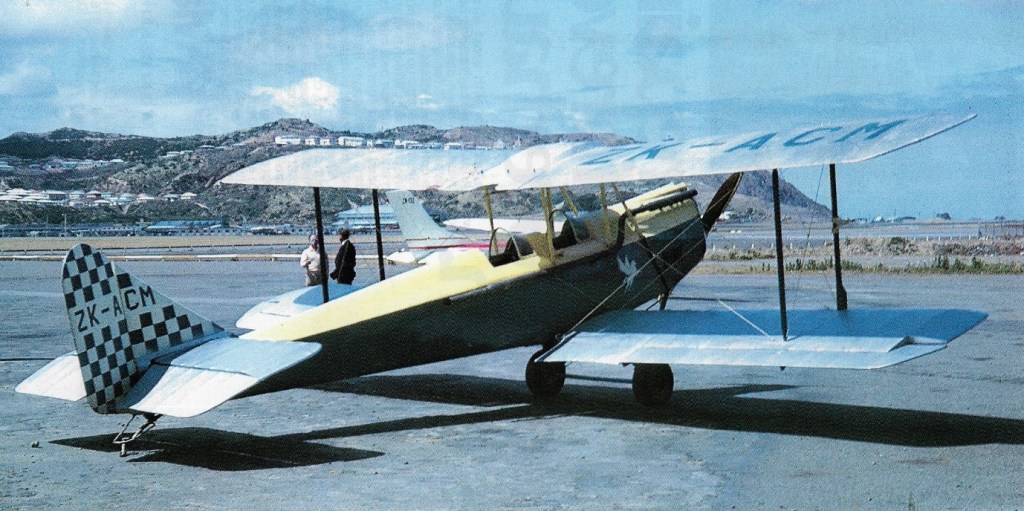
Avian Mk.IV ZK-ACM Rongotai, New Zealand 1963

Gallery

Avro 581
Engine: 1 x 70hp Armstrong Siddeley Genet
Take-off weight: 726 kg / 1601 lb
Empty weight: 316 kg / 697 lb
Wingspan: 9.75 m / 32 ft 0 in
Length: 7.39 m / 24 ft 3 in
Height: 2.51 m / 8 ft 3 in
Wing area: 27.31 sq.m / 293.96 sq ft
Max. speed: 113 km/h / 70 mph

Avro 594 Avian Mk. III
Length: 24.245 ft / 7.39 m
Wingspan : 27.986 ft / 8.53 m
Max take off weight : 1435.5 lb / 651.0 kg
Max. speed : 89 kts / 164 km/h
Range : 348 nm / 644 km
Engine : ADC Cirrus III, 95 hp

Avro 594 Avian IIIE
Engine: ADC Cirrus II, 85hp
Wingspan: 28 ft
Length: 24 ft 3 in
AUW: 1467 lb
Max speed: 98 mph

Avro 594 Avian IVM
Engine: de Havilland Gipsy II, 120 hp
Wingspan: 28 ft
Length: 24 ft 3 in
Height: 8 ft 6 in
Empty weight: 1005 lb
Loaded weight: 1523 lb
Max speed: 105 mph
Cruise: 90 mph

Avro 566 Avenger / 567 Avenger II

Designed as a private venture by Roy Chadwick, the Avenger fighter was first flown on 26 June 1926. Built of wood with fabric skinning, The Avenger was initially flown with a 525hp Napier Lion VIII engine, but no order was received.
In May 1928, the aircraft was modified for racing and redesignated the Avro 567 Avenger II. It was fitted with equi-span wings of 8.53m, streamlined I-type interplane struts, ailerons on both upper and lower wings, and a 553hp Lion IX engine. Various progressive developments were proposed but the Avenger was dismantled for use as an instructional airframe in 1931.

Avro 566 Avenger
Engine: 525hp Napier Lion VIII
Take-off weight: 1460 kg / 3219 lb
Empty weight: 1074 kg / 2368 lb
Wingspan: 9.75 m / 32 ft 0 in
Length: 7.77 m / 26 ft 6 in
Height: 3.12 m / 10 ft 3 in
Max. speed: 290 km/h / 180 mph

Avro 567 Avenger II
Engine: 553hp Lion IX