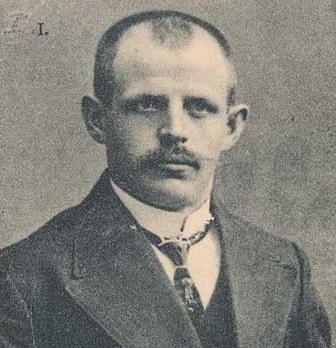
Anton Baltes
Buchhloz
Dusseldorf
Worthstr. 3
Germany
Designed an early biplane
Anton Baltes
Buchhloz
Dusseldorf
Worthstr. 3
Germany
Designed an early biplane
The Balsan monoplane was designed and built by Balsan in France circa 1911.
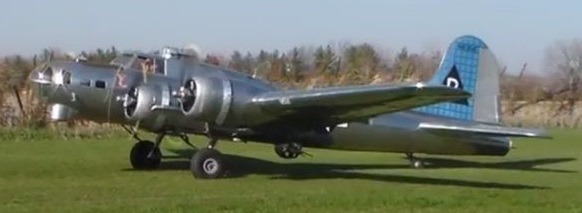
Bally’s Bomber is a ⅓ Scale B-17G aircraft built using 1/9 scale RC model aircraft plans, and carries a single pilot. It is powered by four Hirth 3002 4-cylinder 2-stroke engines, spans 34′ 7″ and weighs an estimated 1,800 lbs.
The unique aircraft received airworthiness certification in September 2016 following initial engine and taxi tests. The first flight was intended to be a high speed taxi test, but the machine was said to “just kind of [take] off”.
On 14 November 2016 Jack Bally`s 1/3 scale B-17 replica performed its maiden flight, departing from its home field in Illinois for a short flight to a local airport, where it was to undergo continued flight tests.
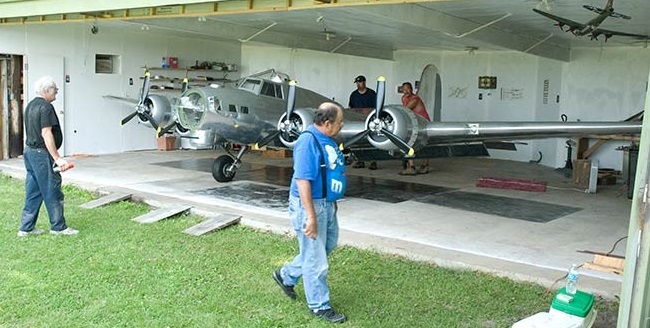
Power Plant: 4 x Hirth 3002, 60 hp
Wing Span: 34 ft. 7 in.
Length: 25 ft.
Tail Height: 6 ft. 10 in.
Fuel Capacity: 42 USgal.
Empty Weight: 1800 lbs. (Est.)
Cruising Speed: 110 kts. (Est.)
Crew: 1
Number Built: 1
Jack Allen Bally was born August 9, 1940, in Dixon, IL, the son of Lucian and Avis Justine (Atkinson) Bally. He married Carolyn Beckingham on December 31, 1977, in Oregon, IL. He served in the United States Army from 1962-1964. He enjoyed woodworking, traveling and flying planes. Jack had his instructor and private flying license. Jack worked for the Local Carpenter’s Union for many years prior to his retirement. He built many planes throughout his retirement, his latest being the Bally Bomber B17G 1/3 scale.
Jack Allen Bally, 79, of Dixon, EAA 348338, passed away Sunday, June 21, 2020, at Katherine Shaw Bethea Hospital, Dixon, IL.
USA
Developed JW-1 Jetwing blown-wing research single-seat jet, first flown 1977
USA
In 1988 (Gary) Baldwin Aircraft Intl first displayed the prototype composites-built and two-seat ASP-XJ armed surveillance and patrol experimental jet. A tailless delta with retractable undercarriage.
Engine: GE CJ610-8A, 2950 lb
Wingspan: 13’9″
Seats: 2
USA
Baldwin Aircraft Corporation acquired the plant and equipment of Ordnance Engineering Corporation to continue production of the Orenco designs.
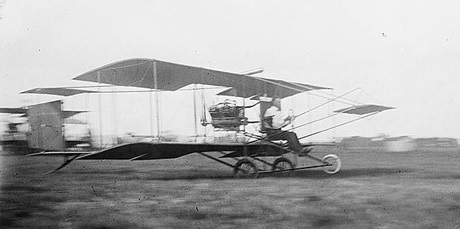
When Thomas S. Baldwin returned from the 1910 Pacific tour, he began testing a new airplane at Mineola, New York. The new aircraft was similar to the basic Curtiss Pusher design but was constructed of steel tubing instead of wood with cloth wings. The aircraft was constructed by C. and A. Wittemann of Staten Island, New York, and was powered by a 60 horsepower (45 kW), Hall-Scott V-8. It was capable of 60 mph (97 km/h). Baldwin named his new aircraft the “Red Devil III”, and thereafter each of his designs would be called a “Baldwin Red Devil”. Tony Jannus flew actress Julia Bruns in a Red Devil on October 12, 1913, in a New York Times Derby.
About half-a-dozen steel biplanes have been produced in 1911 by Captain Baldwin, and he and other aviators, Badger, Hammond, Miss Scott Mass, etc., have flown these at various exhibitions and meets.
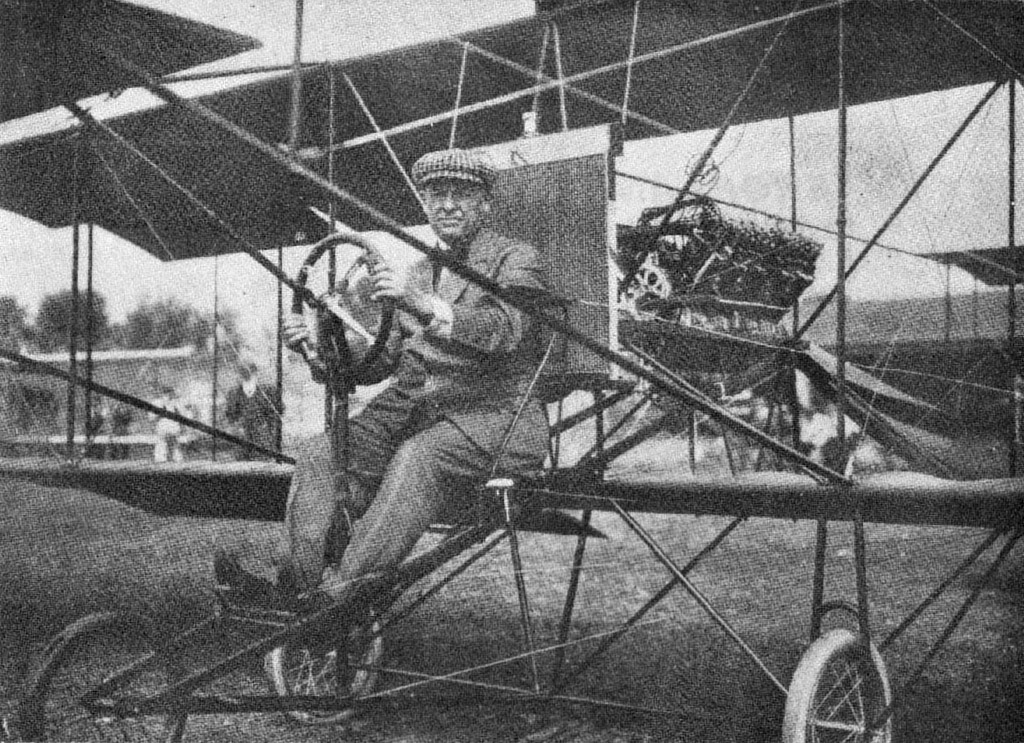
Three or four were built; one built for James C “Bud” Mars for his exhibition 1910-11 tours of the USA, Hawaii, and the Orient. Subsequent versions, built by Wittemann, had 60hp Hall-Scott or 75hp Rausie, wingspan of 31’3″ and 32’0″ length.
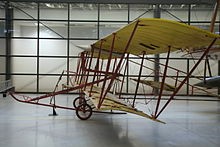
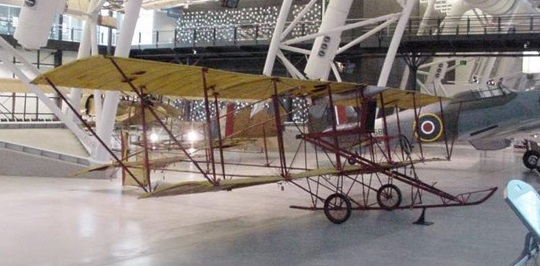
Baldwin Red Devil
Engine: Hall-Scott, 50-60 hp
Propeller: Requa-Gibson
Prop diameter: 7 ft / 2.13 m
Prop pitch: 6 feet / 1.82 m
Span: 28 ft 8 in / 8.75 m
Length: 28 ft 3 in / 8.60 m
Speed: 60 mph / 97 kph

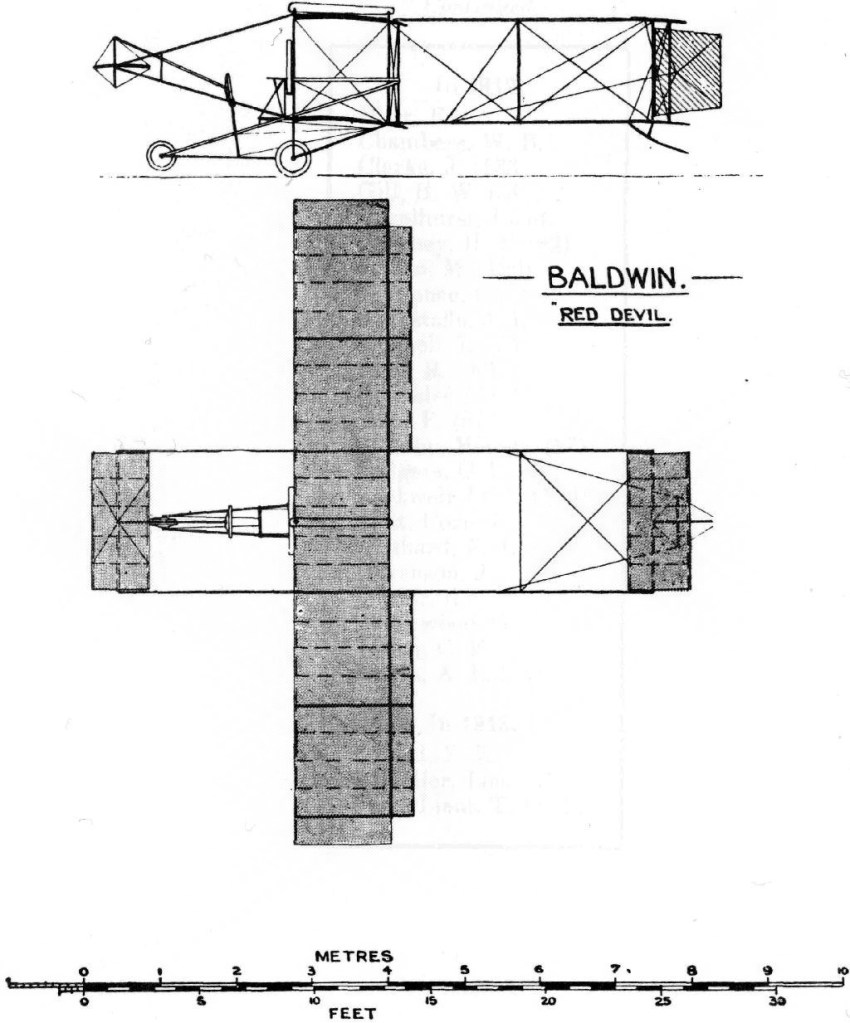
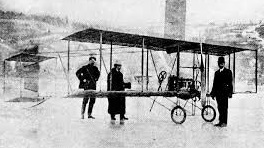
In 1910 Thomas Scott Baldwin designed his own airplane, and it was built by Glenn Hammond Curtiss. It used a 25 horsepower (19 kW), four-cylinder Curtiss engine that was later replaced by a Curtiss V-8 engine.
On September 10, 1910 Baldwin made history with the first airplane flight over the Mississippi River. The St. Louis flight started just east of Bellefontaine Cemetery. Baldwin and his Red Devil plane took off at 5:11 p.m. 200,000 citizens lined the riverfront on both sides to watch the red biplane fly from the north St. Louis field and land in Illinois across the river from Arsenal Street. On the return flight, the aviator astounded the crowds by flying under both the Eads and McKinley bridges at fifty miles per hour (80.5 km/hr). Baldwin landed at 6:05 back at his starting place.
Baldwin flew it at an air meet in Kansas City, Missouri, on October 7, 1910. He spoke to State University of Iowa engineering students on October 11, 1910 and flew demonstrations at the Iowa City, Iowa fairgrounds on October 12–13, 1910. The flight on October 12 was unsuccessful. On October 13, he flew two flights, one of which was photographed by Julius Robert Hecker. On the second flight he did not gain sufficient altitude and the plane was damaged on a barn but he was uninjured. He then took his airplane to Belmont, New York. He put together a company of aerial performers including J.C. “Bud” Mars and Tod Shriver in December 1910 and toured countries in Asia, making the first airplane flights in many of those locations. The troupe returned to the United States in the spring of 1911.
The Philippines can claim south-east Asia’s earliest encounter with manned powered flight, when American aviator James C. “Bud” Mars thrilled spectators in his Skylark pusher biplane (a modified Curtiss design) at the Manila Carnival on February 21, 1911. Mars was part of a Pacific Aviation Exhibition tour organised by fellow American Capt Thomas Baldwin, who followed Mars’s Skylark display at the Carnival with a demonstration of his own Baldwin Red Devil, the pair having arrived with their dismantled aircraft aboard a steamer from Hawaii ten days previously. The exhibition had not gone so well in Hawaii, where the locals had quickly established a principle that has caused headaches for airshow organisers ever since; why pay for a ticket to enter the showground when you can see an air display from any nearby vantage point? The Manila Carnival organisers must have found a way to sidestep this issue, as the pair of aviators made numerous flights during the week-long festival. Baldwin sold his machine before the duo moved on to complete the Pacific tour with visits to Thailand, Hong Kong and Japan.
The Red Devil was later used by the first flight school in the Philippines, opened by Lt Frank Lahm of the US Army Signal Corps in March 1912.
When he returned from the Pacific tour, Baldwin began testing a new airplane at Mineola, New York. The Red Devil III.
Span: 28’9″
Length: 28’3″

Thomas Scott Baldwin was born on June 30, 1854 to Jane and Samuel Yates Baldwin in Marion County, Missouri and orphaned as a young teenager. He worked as a brakeman on the Illinois railroad, then joined a circus working as an acrobat. In 1875, he started an act combining trapeze and a hot air balloon. He eventually turned to jumping from a balloon, getting credit for inventing the modern parachute in 1885.
Baldwin, holder of Dirigible Balloon Pilot license #1, is also credited with the invention of the first practical parachute, in 1885, although he never bothered to patent his idea. On January 30, 1885 he made one of the earliest recorded parachute jumps from a balloon. Baldwin repeated the feat on multiple occasions as a paid entertainer, netting $1500 from one dangerous jump over the water from 600 feet at Rockaway Beach in August 1887 marred by parachute difficulties.
c.1887: (Thomas Scott) Baldwin Airship Co (lighter-than-air),
Quincy IL;
USA
In 1900, Baldwin created a small pedal-motorized powered airship. It never served as anything more than a curiosity. In 1902-1903 he supervised the construction of the California Eagle based on the ideas of August Greth and financed by the American Aerial Navigation Company of San Francisco. It incorporated a French DeDion Bouton automotive engine and paddle propeller based on marine technology so prevalent in airship design in the period.
After collaborating with Greth and John J. Montgomery in 1903-1904, Baldwin acquired sufficient knowledge to begin his own independent airship project.
1902: San Jose CA
USA
In June and July, 1904 Baldwin built an aerodynamic cigar-shaped, hydrogen gas filled, balloon. He created the dirigible “California Arrow”, which incorporated a 7-HP Hercules motorcycle engine manufactured by Glenn H. Curtiss of Hammondsport, New York.
The Army bought it and designated its first dirigible “SC-I” (Signal Corps Dirigible Number 1). Baldwin picked up the sobriquet: “Father of the American Dirigible.” He received the Aero Club of America’s first balloon pilot certificate.
1906: Hammondsport NY.
USA
1909: Baldwin Aeroplanes (airplanes, and Eastern distributor of Hall-Scott motors).
In 1910 Baldwin designed his own airplane, and it was built by Glenn Hammond Curtiss. On September 10, 1910 Baldwin made history with the first airplane flight over the Mississippi River. The St. Louis flight started just east of Bellefontaine Cemetery. Baldwin and his Red Devil plane took off at 5:11 p.m. 200,000 citizens lined the riverfront on both sides to watch the red biplane fly from the north St. Louis field and land in Illinois across the river from Arsenal Street. On the return flight, the aviator astounded the crowds by flying under both the Eads and McKinley bridges at fifty miles per hour (80.5 km/hr). Baldwin landed at 6:05 back at his starting place.

Baldwin flew it at an air meet in Kansas City, Missouri, on October 7, 1910. He spoke to State University of Iowa engineering students on October 11, 1910 and flew demonstrations at the Iowa City, Iowa fairgrounds on October 12–13, 1910. The flight on October 12 was unsuccessful. On October 13, he flew two flights, one of which was photographed by Julius Robert Hecker. On the second flight he did not gain sufficient altitude and the plane was damaged on a barn but he was uninjured. He then took his airplane to Belmont, New York. He put together a company of aerial performers including J.C. “Bud” Mars and Tod Shriver in December 1910 and toured countries in Asia, making the first airplane flights in many of those locations. The troupe returned to the United States in the spring of 1911.
1911: Contract builders (C and A) Wittemann Aeronautical Engineers
Staten Island NY.
USA
In 1914 he returned to dirigible design and development, and built the U.S. Navy’s first successful dirigible, the DN-I. He began training airplane pilots and managed the Curtiss School at Newport News, Virginia. One of his students was Billy Mitchell, who would later become an advocate of American military air power.
1914: Merged with Connecticut Aircraft Co (lighter-than-air).
When the United States entered the World War I, Baldwin volunteered his services to the United States Army. He was commissioned a captain in the Aviation Section, U. S. Signal Corps and appointed Chief of Army Balloon Inspection and Production. Consequently, he personally inspected every lighter-than-air craft built for and used by the Army during the war. He was promoted to the rank of major during the war.
After the war, he joined the Goodyear Tire and Rubber Company in Akron, Ohio, as a designer and manufacturer of their airships.
Captain Thos. S. Baldwin, PO Box, 78, Madison Square, N.Y.
1921: T S Baldwin retirement.
1922: Acquired Orenco holdings (pres: William Bennett).
T.S. Baldwin died on May 17, 1923, in Buffalo, New York, at the age of 68. He was married to Cary Poole. He was buried in Arlington National Cemetery in Arlington, Virginia, with full military honors.
He held Aero Club of America licenses:
Balloon Pilot Certificate #1
Airship Pilot Certificate #9
Airplane Pilot Certificate #7
Baldwin was inducted into the National Aviation Hall of Fame in 1964.

