1984: Gordon Bedson and Associates, P.O. Box 6, Bundarra 2359, Australia.
LSA builder
1984: Gordon Bedson and Associates, P.O. Box 6, Bundarra 2359, Australia.
LSA builder
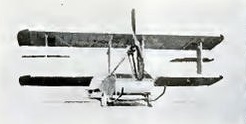
The Bédélia Flying Boat – built in 1912 – was a characteristic biplane with a very large and flat fuselage, acting probably as the floating hull. The wing struts were very large I-styles. Tractor propeller in the front is driven by an engine in the hull, which drives the propeller via a chain.
The machine was temporarily fitted on wheels, with skids. Ailerons were fitted in between the wings. Machine was exhibited on the Salon Paris 1912.
There are more versions of this machine, as the designers developed it further. In the end not very successful.
Developed the BD-10 two-seat supersonic jet for home construction from kits, first flown July 1992 and kit deliveries from August 1993.
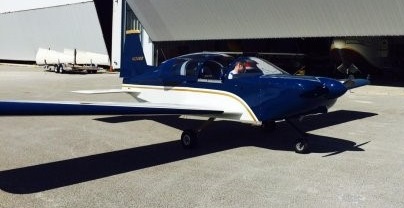
The BD-22 was a two-seat light sport version of the BD-17 with a 47 inch wide cockpit first shown in public in January 2015 as N224BD. Powered by Lycoming O-235 (118 hp) engine. Composite fuselage, metal wings and tricycle undercarriage.
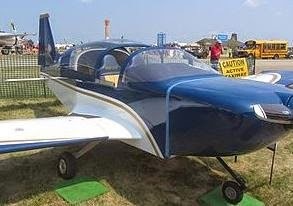
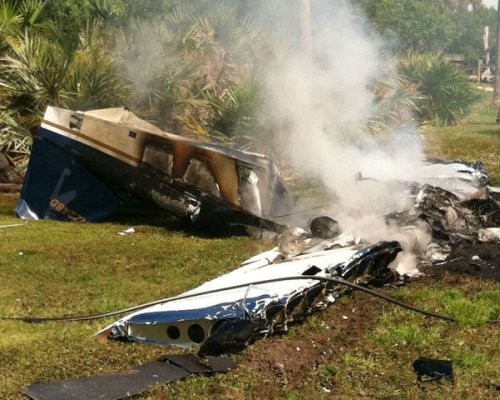
The first BD-22 example built was N224BD which first flew in March 2015. There was only one BD-22, and that was the BD-22L.
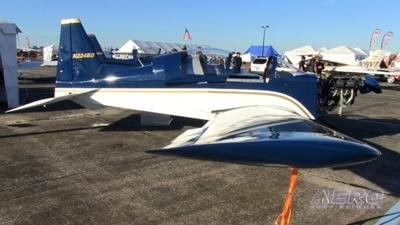
The BD-22L was involved in a fatal crash on 1 April 2015.

A wing from 1974 is made up of an aerial wing of inflatable material (Patent issued 1974). Partly inflated by lighter than air gas and the rest inflated by air during flight. Shroud lines are used to suspend a person beneath the aerofoil during flight. At least one was completed.
The Wing reportedly was apparently still in existence in 2009.
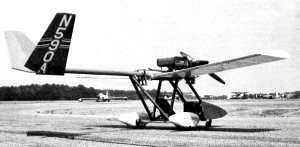
A single-seat sport plane, the Demoiselle N590A first flew in July 1966 and had a Continental A65 engine. Reportedly this aircraft was later briefly tested with an enclosed cabin (as the Super Demoiselle), the planned production model, but development was soon halted.
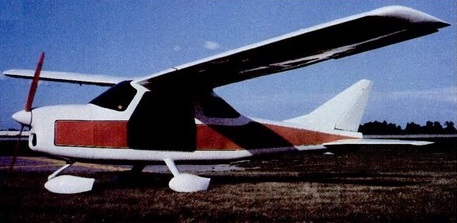
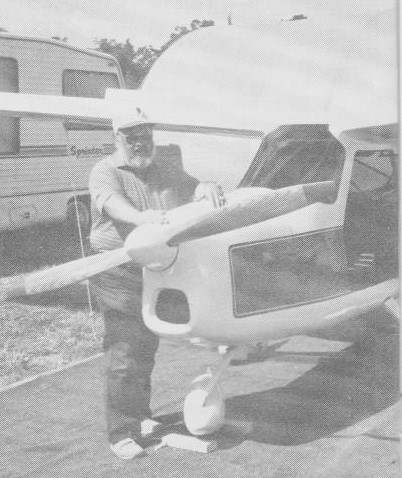
Designed by Jim Bede, the Dream was to be an affordable airplane.
The NAC Dream featured leading edge wing slots and spoilers for glidepath control, in addition to ailerons. The spoiler control lever is used by the same hand as the throttle. The ailerons had a 2-to-1 differential.
The fuel tank is mounted on the centre of gravity.
A prototype only was built in 1983 and in 1984 it was to be sold with a 35 hp Cuyuna 430-2UL engine at a target price of $7200 ready to fly.
Jim Bede was contracted by a development group and plans were to market the aircraft by a company named NAC under the name Dream.

The Bede XBD-2 was an experimental short takeoff and landing (STOL) aircraft, with structural use of glass-fibre and aluminium honeycomb, a suction boundary layer control (BLC) system and fuselage-mounted twin engines driving a pusher configuration, shrouded single propeller. The Bede XBD-2 was developed through a design study with the Department of Aerodynamics at the University of Maryland.
The boundary layer was controlled with a suction system via 160,0000 upper wing and aileron surface holes, with diameters ranging from 0.020 to 0.029 in (0.51 – 0.74 mm). Aluminium honeycombs were used throughout the fuselage as structural elements. The XBD-2 was powered by a pair of piston engines mounted inside the fuselage, driving a single pusher configuration propeller.
The wing of the XBD-2 had an aspect ratio of 9 and 5° of dihedral. It was built around an aluminium box spar, was aluminium skinned and carried sealed all-metal ailerons. A 14 in (356 mm) Joy blower pulled air through the pinholes in the surfaces, venting it in the fuselage to cool the engines. Sealed flaps smoothly changed the wing camber and increased its area by about 15% when extended.

Apart from its use of aluminium honeycomb, the front part of the flat-sided fuselage was conventional, with a cabin with space to seat four, though mostly filled with instrumentation. Aft, two 145 hp (108 kW) Continental O-300 engines were mounted one above the other. They drove the rear propeller shaft through ten V-belts via Sprag clutches to avoid engine speed synchronisation problems. The rear fuselage tapered to a vertical wedge with the propeller shaft emerging at its top. The circular shroud was attached to the fuselage by the fixed triangular fin mounted on the top of the fuselage, the triangular tailplane and a short boom at the bottom. The propeller rotated close to the shroud’s leading edge; the shroud was intended partly to reduce propeller tip losses and also to act in the place of conventional stabilizing surfaces. The fin resumed above the shroud and carried the top of a high aspect ratio rudder behind the shroud’s trailing edge, its bottom end attached to the tailboom, with a midpoint cutout to allow for elevator movement. The elevator was supported by tailplane extensions beyond the shroud, similar to that of the fin.
Structurally, the shroud was a glass-fibre shell surrounding an aluminium spar and filled with polyurethane foam. The control surfaces were conventionally constructed from aluminium sheet. The XBD-2 had a fixed tricycle undercarriage, with wheels enclosed in fairings. The main legs were glass-fibre cantilevers, unusual at the time.
After the XBD-2 first flew on 26 July 1961 it was flight tested and slightly modified to simplify future production. It was intended to lead to the BD-3, which would have been a six-seater with bigger engines, more use of honeycomb panels, retracting undercarriage and a laminar flow wing, but this was not built.
The sole XBD-2 is mounted on outdoor display at the entrance to Manitowoc County Airport.
Engines: 2 × Continental O-300-A, 145 hp (108 kW) each
Propeller: Hartzell constant speed
Wingspan: 37 ft 6 in (11.42 m)
Wing area: 150.0 sq ft (13.94 sq.m)
Airfoil: Göttingen 549
Length: 23 ft 8 in (7.22 m)
Height: 12 ft 5 in (3.78 m)
Max takeoff weight: 3,300 lb (1,497 kg)
Maximum speed: 204 mph (328 km/h, 177 kn) at sea level
Cruise speed: 179 mph (288 km/h, 156 kn) maximum at 65% power at 9,000ft (2,740 m)
Stall speed: 42 mph (68 km/h, 36 kn) with BLC.
Stall speed: Without BLC 64 mph (57 kn;106 km/h)
Service ceiling: 21,000 ft (6,400 m)
Rate of climb: 1,050 ft/min (5.3 m/s)
Take-off run: less than 300 ft (90 m)
Take-off distance to clear 50 ft (15.25 m): under 500 ft (152 m)
Landing distance from 50 ft (15.25 m): under 500 ft (152 m)
Seats: 4
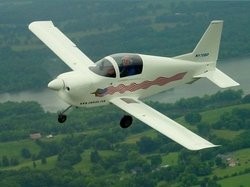
The Bede BD-17 Nugget is an American single-seat monoplane. designed by Bedecorp for amateur construction from a kit.
The Nugget was announced in June 2000 and was designed to be easy to build with a maximum of 110 parts. The first flight of the tricycle landing gear prototype (N624BD) was on 11 February 2001.
It is an all-metal low-wing constant-chord monoplane, it has optional folding wings and is available with fixed conventional landing gear with a tailwheel or a tricycle landing gear. Scotch ply main legs and differential braking. The prototype BD-17 has 5.00-5 mainwheel tyres and 25 cm (10 in) nosewheel tyre. It can be fitted with an engine between 45 and 80 hp (33.6 to 59.7 kW). The flying controls are conventional and manual. No flaps were fitted on the prototype BD-17 but production kits have flaps.
The prototype BD-17L N170BD had a 60 hp (45 kW) HKS 700E two-cylinder four-stroke engine. The pilot has an enclosed cockpit with a rearward-sliding canopy. The structure is all-metal honeycomb sandwich. Honeycomb fuselage covered with 5 mm (0.20 in) aluminium sheet and control surfaces are of urethane foam. Constant-chord wings have extruded tube spar.
The public debut was at Sun ‘n’ Fun, April 2001.
The BD-17L is a LSA version of the original BD-17. The BD-17L sold as a kit,meets the 51% rule.
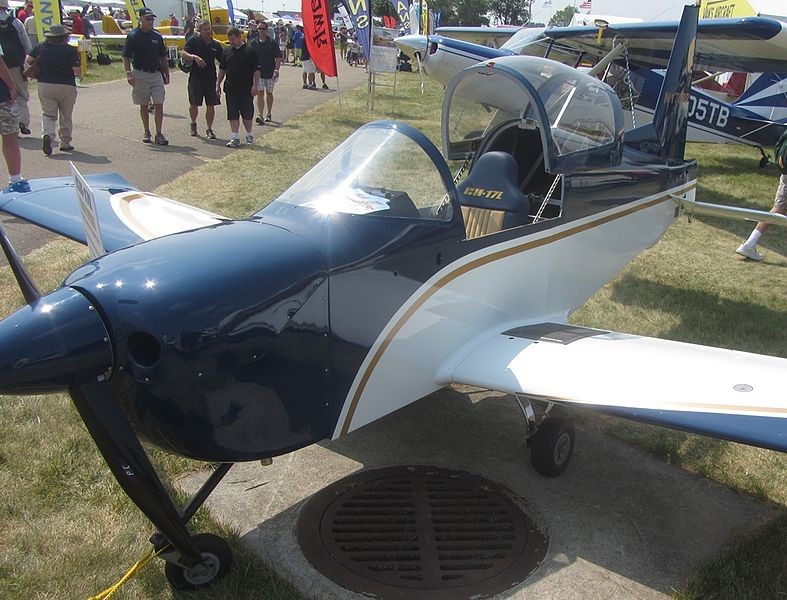
The BD-17L uses a half inch honeycomb sandwich panels. They are chemically welded with gussets to each other. This concept was originally used on the BD-1 and the Yankee. It is a honeycomb core with .020 skins bonded on each side. This creates an extremely light weight but strong panel.
The BD-17 wing spar is strong, light and simple, extruded aircraft-quality aluminum tube. Both wing spars slide over a center spar rigidly, fastened to the fuselage, providing exceptional load-carrying strength. Ribs are made of the same honeycomb aluminum that makes the fuselage 300% stronger than conventional construction. The BD-17′s wing spar has been tested to 11.2 Gs without failure in destructive testing. The honeycomb wing ribs form a series of sealed panels in each wing, capable of holding up to ten gallons of fuel in each with the option of an additional panel on each wing to store fuel.
The landing gear is one continuous hoop that is fastened to the center section with two pins. The actual assembly to the center section takes approx. 15 minutes. The landing gear is bullet drilled for the brake lines. Fittings are attached at the top and bottom of the hoop. The main landing gear takes approximately 3 hours to build including wheels and brakes.
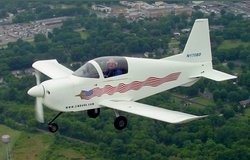
The BD-17 Nugget possesses exceptional flying qualities. Being small and lightweight, it utilizes the side stick control first adopted on the BD-5. The basic stability in all three axes are positive, both in static and dynamic stability. Control harmony is smooth and even for all three surfaces. Roll response is smooth and positive even into stall buffet. Cockpit room is accommodating for both large and small pilots, and visibility is excellent throughout.
The cost of the BD-17 was US$19,990 less engine in 2003. Seven had been produced by 2011. At least 17 BD-17 kits sold and four aircraft registered by August 2003; three of which were completed by that time.
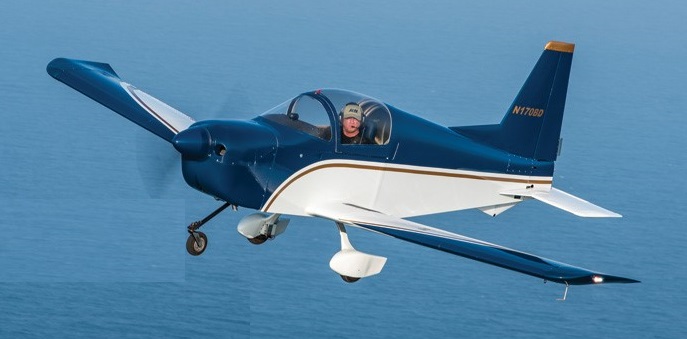
Bede BD-17 Nugget
Engine: HKS 700E, 60 hp (44.6 kW)
Wingspan: 21 ft 6 in (6.55 m)
Wing area: 53.5 sq ft (4.97 m2)
Wing chord, constant: 0.76 m (2 ft 6 in)
Wing aspect ratio: 8.6
Length: 17 ft 6 in (5.33 m)
Height: 7 ft 9 in (2.36 m)
Empty weight: 450 lb (204 kg)
Gross weight: 850 lb (386 kg)
Fuel capacity: 20 USG / 76 lt / 16.7 Imp gallons
Maximum speed: 195 mph (313 km/h, 169 kn)
Cruise speed: 150 mph (241 km/h, 130 kn)
Stall speed: 52 mph (84 km/h, 45 kn)
Range: 702 mi (1,129 km, 610 nmi)
Rate of climb: 1,050 ft/min (5.3 m/s)
T-O run: 213 m (700 ft)
Landing run: 189 m (620 ft)
Cockpit max width: 1.17 m (3 ft 10 in)
Seats: 1
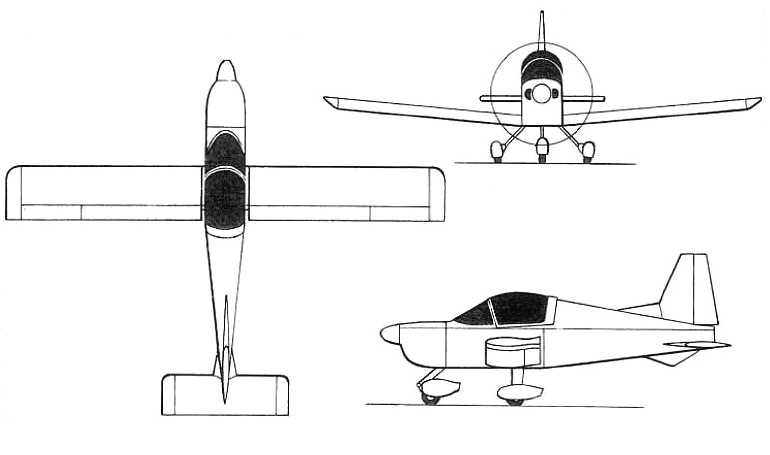

BD-12A
Engine: 80 hp
Speed max: 184 mph.
Cruise: 172 mph.
Range: 940 sm
Stall: 54 mph.
ROC: 1110 fpm.
Take-off dist: 850 ft
Landing dist: 900 ft.
Service ceiling: 18,000 ft.
Fuel cap: 24 USG
Weight empty: 590 lb
Gross: 1220 lbs.
Height: 7.83 ft
Length: 19.5 ft.
Wing span: 22 ft.
Wing area: 68.81 sq.ft
Seats: 2.
Landing gear: retractable nose wheel.
BD-12B
Engine: 100 hp
Fuel cap: 24 USG
Height: 7.83 ft.
Length: 19.5 ft
Wing span: 22 ft
Wing area: 68.81 sq.ft.
Seats: 2
Landing gear: retractable nose wheel.
BD-12C
Engine: Lycoming O-320, 150 hp.
Speed max: 215 mph.
Cruise: 200 mph
Range: 816 sm.
Stall: 54 mph
ROC: 1860 fpm.
Take-off dist: 700 ft
Landing dist: 800 ft.
Service ceiling: 21,000 ft
Fuel cap: 37.4 USG.
Weight empty: 680 lb
Gross: 1310 lbs.
Height: 7.83 ft.
Length: 21.5 ft.
Wing span: 23 ft
Wing area: 92.6 sq.ft.
Seats: 2
Landing gear: retractable nose wheel.

