Quincey
Massachusetts
USA
The Blackhawk Aircraft partners Slower and Rheinhardt created their first craft in 1929 as an all wood aircraft. It was completed but never flew.
The next was the Model M serial 2.
Quincey
Massachusetts
USA
The Blackhawk Aircraft partners Slower and Rheinhardt created their first craft in 1929 as an all wood aircraft. It was completed but never flew.
The next was the Model M serial 2.
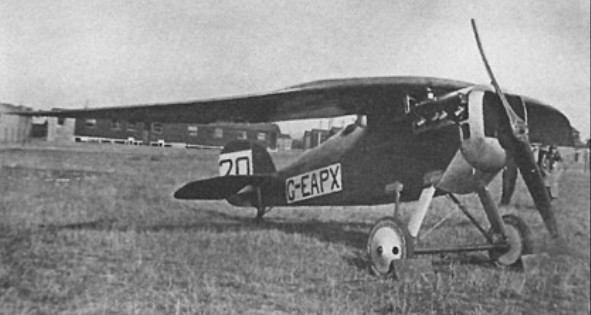
In 1921, one Martinsyde Semiquaver fuselage was fitted with the later Alula experimental wing.
A 1921 single-engine experimental wing conversion of a de Havilland DH.6
A 1934 single-engine single-seat biplane fighter, built but never flown.
A 1936 twin-engine twelve passenger low wing monoplane airliner, built but never flown.
A 1918 single-engine single seat biplane flying boat escort bomber. Construction was started but not finished and the aircraft never flew.
The Specification was known as the N.A.39 (its official number was M.148T) and Blackburn, once their tender was accepted, were given just under three years to get the first aircraft into the air, the target date for first flight being April 1958. To speed development, the Ministry of Supply ordered a large batch of twenty pre production aircraft, enough to carry out all the aerodynamic and engine development, the systems and weapons development and to equip the I.F.T.U. with the Navy.
Blackburn B.103 Buccaneer Article
Flight development brought about alterations as problems were encountered, and solved. A flutter problem was discovered in the high tailplane and fixed by the installation of inertia weights in the tailplane tips.
Originally the aircraft had been intended to have a retractable flight refuelling probe but this was found unsatisfactory and a re¬movable probe was standardised. On 30th April 1958 Derek Whitehead took XK486, the first Blackburn N.A.39, on its maiden flight from the R.A.E. airfield at Thurleigh, Beds. Initially the Buccaneer was powered by two D.H. Gyron Juniors.
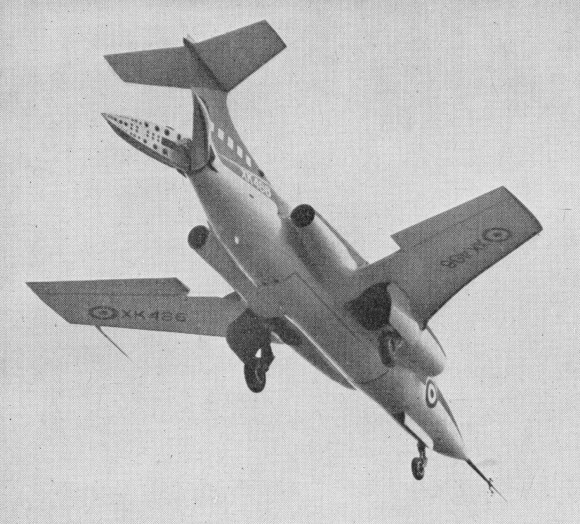
The twenty aircraft ordered and given the serial numbers XK486-XK491 and XK523 XK536 inclusive, and nine of these were to be used primarily by Blackburn’s for development of the whole weapons system, five were for Ministry of Supply trials work, and six for the Royal Navy for use by the Intensive Flying Trials Unit.
The first navalised Buccaneer appeared in January 1959, an interim naval aircraft, but with arrester hook and folding wings.
In September 1958 a production contract for forty Buccaneer S.1 aircraft was signed and they were allocated the serial numbers XN922 XN935, XN948-XN973.

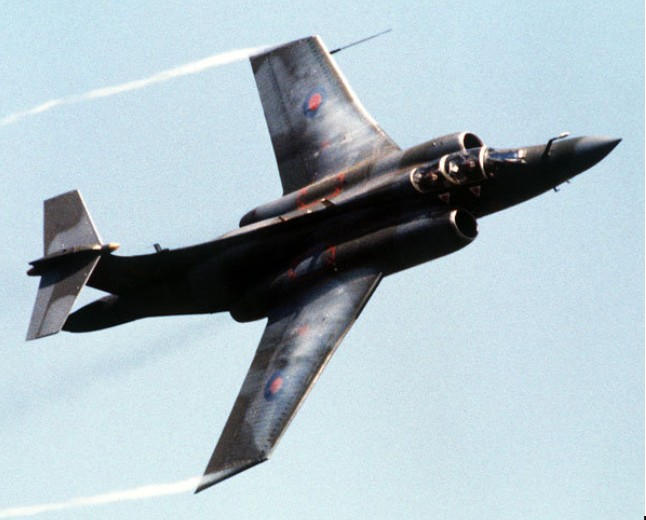
The Buccaneer features mid-set wings with compound sweepback, swept tail services, with tailplane mounted at the top of the fin. The ailerons droop to supplement flaps during landing. Air is blown over wings, ailerons, flaps and tailplane to reduce take-off and landing speeds. The tail-cone splits along the centreline to act as an airbrake. The outer wings fold upwards for stowage on board ships.
The whole production run came out of Brough between July 1962 and December 1963. The Buccaneer. S.1 entered operational service with the Royal Navy in July 1962. Able to carry an 8,000 lb (3,628 kg) load of conventional or nuclear weapons, distributed between internal stowage and underwing pylons, it was superseded by the more powerful Spey engined Buccaneer S.2 in October 1965.

Although the Buccaneer S.1 had proved reasonably satisfactory, certain drawbacks came to light during its service. These centred around the Gyron Junior engine. The first was that, with the possibility of an engine failure on take off or landing (when the full BLC blow was operating), the single engine performance of the aircraft was critical; the second disadvantage was lack of range.
Hawker Siddeley re engined the aircraft with Rolls Royce Speys. Two of the DB machines were returned from Ministry of Supply trials work for modification into the prototypes for the new Spey engined version, to be known as the Buccaneer S.2. These aircraft were XK526 and XK527; the former flew first in the new configuration on 17th May 1963, being followed by the second on 1 9th August 1963.
The first batch of ten production aircraft had by then been ordered and given he serials XN974 XN1983. The first of these was completed and flown a year later on 6th June 1964, by which time the first two prototypes were completing a satisfactory programme of development flying.
XN974 was the first production S.2 aircraft, making its first flight from the British Aerospace airfield at Holme-on-Spalding Moor on 5 June 1964. It went straight to the Royal Aeronautical Establishment, Bedford, for work trials and then to HMS Eagle for sea trials. In 1965 it went to the USA for hot weather testing and achieved a record on its return flight from Goose Bay to Lossiemouth by becoming the first Fleet Air Arm aircraft to fly the transatlantic route non-stop without refuelling; on 4 October 1965, completing the 1,950 miles (3,138 km) between Goose Bay, Labrador, and Lossiemouth, Scotland, in 4 hrs 16 mins.
Four of this batch went for R. & D. work, XN974, ‘975, ‘976 and ‘983. XN975 and XN974 flew the Boscombe trials, the former doing the deck landing trials in several stints aboard Ark Royal.
Eighty four production Buccaneer S.2s were built in the years that followed with the following serial allocations: XN974 to XN983; XT269 to XT288; XV152 to XV168; XV332 to XV361; and XV863 to XV869.
The first operational Buccaneer S.2 squadron was No. 801 which served aboard H.M.S. Victorious.
In August 1964 it was reported that South Africa, rebuffed by the US State Department in bid to buy Grumman Intruders because of its race policies, was buying British Buccaneers instead.
During the early 1970s the Buccaneer was acquired for the R.A.F. and was equipped to use the Martel air to surface missile. 43 new S.Mk 2Bs were built for the RAF, the last of them delivered in 1977. This development provided a spin off for the Royal Navy and in the mid 1970s the F.A.A.’s Buccaneers were re¬designated as S.2C (non Martel) and S.2D (Martel equipped). This gave the squadron a greatly enhanced anti ship capability and in September 1974 the squadron embarked for the first time in Ark Royal with a full complement of S.2Ds. The squadron began its last commission in April 1978. On 27th November 1978 No. 809 took off from Ark Royal for the last time, in the Mediterranean, flew its aircraft direct to the R.A.F. Maintenance Unit at St. Athan, and disbanded there.

It left FAA service with the decommissioning of HMS Ark Royal in 1978, with the remaining 62 examples being transferred to the RAF. The last squadrons were disbanded in 1993.
From 1972 two squadrons of Buccaneers served in RAF Germany until replaced by Tornados in 1984. Maritime strike/attack and reconnaissance then became the aircraft’s primary role, along with the secondary task of carrying laser designator equipment for precision attacks.
South Africa operated 16 of the S.50 version from 1965 to 1991.
A total of 144 aircraft were built for the Royal Navy.
Royal Air Force Buccaneers first saw combat during the 1990-91 Gulf War (Operation ‘Granby’), 22 years after entering service. Twelve Buccaneers were deployed at short notice to the Gulf during Operation ‘Granby’ to designate targets for Royal Air Force Tornados and Jaguars. Although the Buccaneer was seen in 1969 as an interim type pending the development of the Panavia Tornado, the last examples were not retired until March 1994.
S.1
Engines: 2 x de Havilland Gyron turbojet, 7100 lb.
Wing span: 44 ft 0 in (13.41 m).
Width wings folded: 20 ft
Length: 63 ft 5 in (19.33 m).
Height: 16 ft 3 in (4.95 m).
Max TO wt: 45,000 lb (20,412 kg).
Max level speed: 720 mph (1159 kph).
S.2
Wing span: 13.4m (44 ft). Hardpoints: 4.
Seats: 2
Engines: two Rolls-Royce RB Spey Mk.101 turbofans, 11,100 lb thrust.
Maximum speed at sea level: 690 mph (Mach 0.92)
Tactical radius: 500-600 miles
Range: 2000 miles.
S.Mk 2B
Engine: two 11,100 lb, 50.4kN thrust Rolls Royce RB 168 1A Spey Mk 101 turbofan.
Take-off weight: 20800 kg / 45856 lb
Wingspan: 13.0 m / 42 ft 8 in
Length: 19.0 m / 62 ft 4 in
Height: 4.9 m / 16 ft 1 in
Wing area: 46.5 sq.m / 500.52 sq ft
Max. speed: 1159 km/h / 720 mph
Cruise speed: 1038 km/h / 645 mph
Range w/max.fuel: 3456 nm / 6200 km / 3853 miles
Crew: 2
Max internal /external weapon load: 16,000 lb (7,257 kg).
S.50
Wing span: 13.4m (44 ft).
Hardpoints: 4.


General Aircraft Ltd was asked to build a prototype of its submission for C.3/46; the aircraft was designated GAL‑60 and based on the Hamilcar cargo glider built by General Aircraft, and named Universal Freighter in recognition of its civil and military potential. Work began at Feltham on the contracted prototype, and on a number of long‑lead items for an anticipated second aircraft. During 1948, discussions between General Aircraft Ltd and the Humberside firm of Blackburns led to a merger of the two companies under the joint name of Blackburn & General Aircraft Ltd. The new company was formed on 1 January 1949 and it was proposed that all work in progress at the various factories be completed as originally planned; assembly of the half‑finished Universal prototype was therefore continued at Feltham and work proceeded normally until its completion in October of that year. Only then was decided that Hanworth Aerodrome adjoining the Feltharn premises ‑ was totally unsuitable for the first flight of sue a massive aeroplane. As a result of this discovery, the whole thing was taken apart again and loaded on to lorries for the journey to Brough, where it was reassembled after considerable difficulty, and successfully flown as WF320 on 20 June 1950.
Blackburn B.101 Beverley Article

The aircraft was a big one; 28 tons of metal built on almost architectural principles concealed a main freight hold 36ft long, 15.5ft high and 10ft wide. The forward hold underneath the flight deck was 15ft long, with a headroom of nearly 7ft, and the tail boom provided a rabbit warren of individual compartments sloping down towards the main hold and punctuated by structural frames. The 162ft wing stood over 20ft from the ground and the tailplane span was 42ft. The single mainwheel tyres were over 6.5ft in diameter.
The aircraft was designed for a rough field environment, and the possibility of battle damage had been considered from the outset. At any time it could be called away from a convenient airfield servicing unit and flown into primitive, and perhaps hostile, areas with minimal maintenance facilities. Everything had to be kept as simple as possible: no pressurisation, no pneumatics, no retractable undercarriage or fancy structural techniques that could fall apart under the considerable stress of rough field operations at gross weights in excess of 100,000 lb.
Part of Spec C.3/46 called for a service ceiling of 18,000ft. This led to discussions with the Engine Division of The Bristol Aeroplane Company which agreed to develop a special Hercules unit with a two–speed supercharger and other refinements that would push its take off power to 2,040hp at 2,800rpm. The engines were mounted as self contained, un handed powerplants that were fully interchange¬able, each driving a 14ft diameter Rotol constant-speed propeller with feathering and reverse pitch facilities.

After the successful first flight, the company’s chief test pilot, ‘Tim’ Wood who had originally been with General Aircraft Ltd set about the initial handling trials with D. G. Brade as his co pilot. The simplicity of construction and the overall soundness of the design, made it possible to complete all the essential clearances in 21 flights.
The anticipated second prototype was ordered at the 1950 SBAC display, where WF320 had made every other exhibit look tiny. The new aircraft was to be significantly re designed around four 2,850hp Bristol Centaurus engines: the rear fuselage shape would be altered to accommodate removable clamshell doors and the tail boom would be enlarged and structurally re designed to provide seating for up to 42 passengers. At this time the manufacturers were still hopeful of civil sales and were quoting a fly away price of just under £400,000.
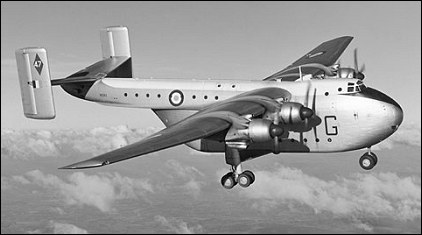
For nearly 18 months the first aircraft was used on a series of trials. The loading ramp and rear doors were removed, and the single mainwheels were replaced by four-wheel boogie units. Structural considerations prevented full modification of the tailboom but heavy dropping was done to look at possible load exit problems and aircraft trim changes during violent centre of gravity movement.
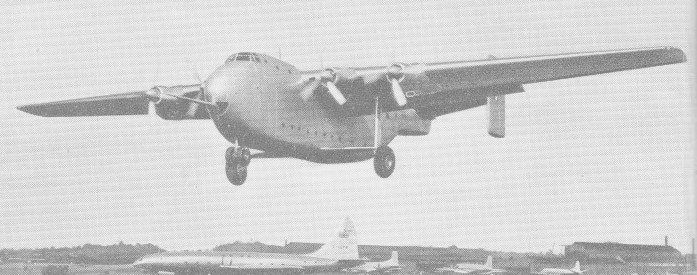
Permission to go ahead with construction of the second machine was given during the Spring of 1952. Although the new aircraft amounted to a major redesign of the original Universal Freighter, it was completed in 15 months. Many of the heavy components that were made at Feltharn during 1948 49, particularly for the wing and centre fuselage were virtually unchanged and could almost be used from stock, The Universal Mk2 (WZ889) made an uneventful first flight from Brough on 14 June 1953.
In September 1952 the Air Ministry, which was by then satisfied with the final re design, gave approval for an initial batch of 20 for the RAF under the type name Beverley CMkl. Production began almost immediately, with work being shared between the company’s factories at Dumbarton and Brough. Most of the important sub assemblies were manufactured at Dumbarton and then taken by road to the aircraft production line at Brough. By the time the first machine was recognisable as a Beverley under construction, the RAF’s commitment to the type had jumped to 47.
The second batch was ordered during May 1954 and it guaranteed continuous production until the summer of 1958.
The first two production Beverleys (X13259 and XB260) were flown during January and March 1955: they were retained for some time as development machines, as were the second pair (XB261 and XB262), both of which were delivered to Boscombe Down in July 1955 for the usual acceptance, handling and flight limitations programme. Squadron life for the Beverley began on 12 March 1956, when XB265 was delivered to the Abingdon based No 47 Squadron. By May 1958, three other squadrons (Nos 53, 30 and 84) had re equipped with the air¬craft, and a flight of four machines was attached to No 48 Squadron in Singapore. This flight was later to receive another aircraft and achieve full squadron status (as No 34 Squadron) in March 1959.

The aircraft’s withdrawal front the RAF took place in 1967 68 at the time of the RAF’s acquisition of the Lockheed C 130K Hercules.
The last Blackburn B-101 Beverley, XB259 had been part of the display at Fort Paull, a former gun battery and heritage centre on the Humber, since 2003 but the site’s closure threatened its future.
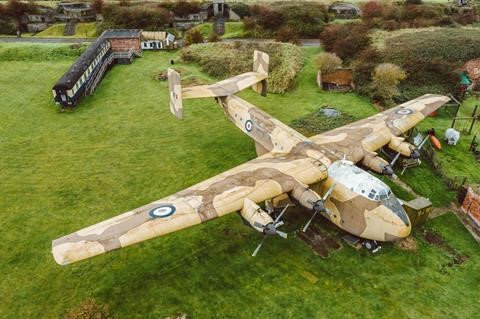
Forty-six years after its final flight Martyn Wiseman, managing director of Condor Aviation, with an anonymous colleague bought the four-engined Bristol Centaurus-powered aircraft, and needed to raise £100,000 ($132,000) to dismantle it and carry it to its new home, where it will be the center-piece of a larger exhibit at Birchwood Lodge, a private airfield in Yorkshire, close to the original factory.
Blackburn Beverley C.1
Engines: 4 x Bristol Centaurus 173
Wingspan 162 ft
Length 99 ft 2 in
Mauw 135,000 lb
Max speed: 238 mph at 5700 ft
Blackburn B-101 Beverly C.1
Engines: 4 x Bristol “Centaurus” 273, 2125kW, 2811 hp
Max Take-off weight: 64864 kg / 143001 lb
Empty weight: 35940 kg / 79235 lb
Hold capacity: 6,000 cu.ft
Payload: 22400kg / 49384 lb or 94 troops or 70 paratroopers
Wingspan: 49.38 m / 162 ft 0 in
Length: 30.3 m / 99 ft 5 in
Height: 11.81 m / 38 ft 9 in
Wing area: 270.9 sq.m / 2915.94 sq ft
Max. speed: 207 kts / 383 km/h / 238 mph
Cruise speed: 278 km/h / 173 mph
Service ceiling: 4875 m / 16000 ft
Range: 1129 nm / 2092 km / 1300 miles

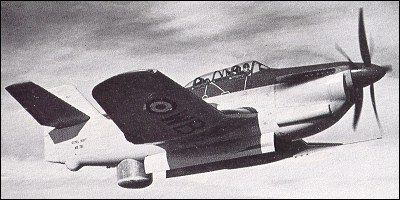
The first prototype, two-seat B-54 with the Rolls-Royce Griffon 56 piston engine and counterrotating propellers flew on 20 September, 1949. The second prototype with a crew of three flew on 3 May 1950. The third prototype was a turboprop-powered B-88 flown on 19 July 1950.

No series production followed.
B-88
Engine: 1 x Armstrong Siddeley Double Mamba, 2200kW
Take-Off Weight: 5938 kg / 13091 lb
Wingspan: 13.46 m / 44 ft 2 in
Length: 13.0 m / 42 ft 8 in
Height: 5.11 m / 16 ft 9 in
Max. Speed: 515 km/h / 320 mph
Crew: 3
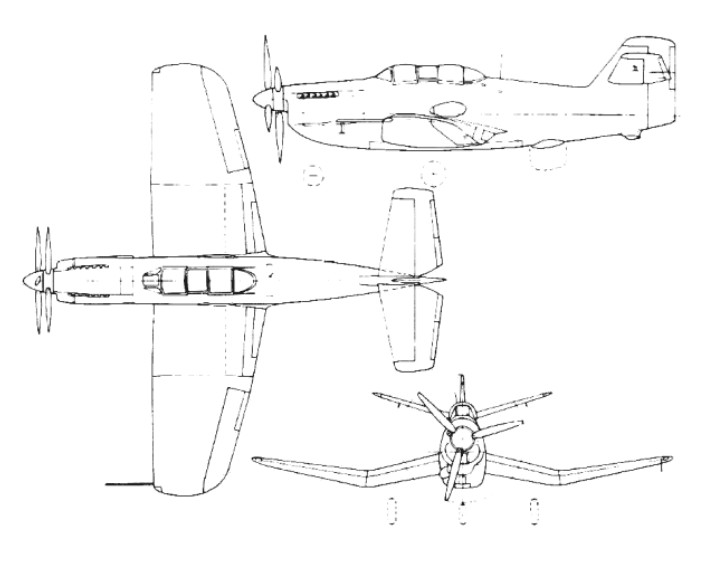
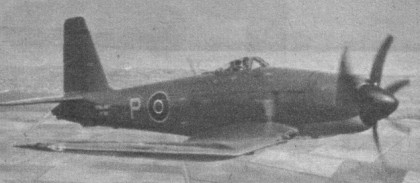
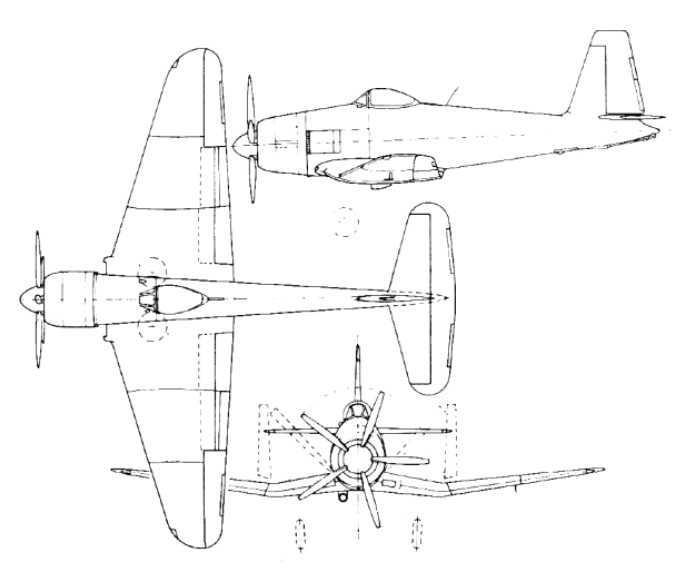
The Blackburn B.48, designed to specification S.28/43 as a potential successor to the Firebrand, and unofficially known as the Firecrest, was flown for the first time on April 1, 1947, although design work on this aircraft was actually initiated in October 1943. Three prototypes were built, the third of these (VF172) featuring power-operated ailerons and a reduction in dihedral angle (from nine to three degrees) on the outboard wing panels. Power was provided by a Bristol Centaurus 59 eighteen cylinder radial rated at 1,825 hp. (with water/methanol injection) for takeoff, and although no armament was actually installed, provision was made for two wing mounted 0.5in. (12.7 mm) machine guns, and a torpedo and two 500lb. (227 kg) bombs plus rocket projectiles could be carried beneath the fuselage and wings.
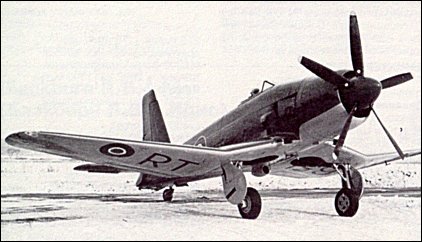
No production of the B.48 was undertaken, although before all development was abandoned versions were projected with the Bristol Proteus, the Armstrong Siddeley Python, and Rolls Royce Clyde turboprops.
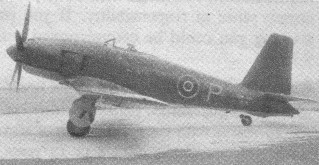
Engine: Bristol Centaurus 59, 1,825 hp
Wing span: 44ft 11.5in (13.7 m)
Length: 39 ft 3.5 in (12 m)
Height: 14 ft 6 in (4.42 m)
Wing area: 361.5 sq.ft (33.6 sq.m).
Empty wt: 10,513 lb (4773 kg)
Loaded weight with a 1,850 1b. (839 kg) torpedo: 15,183 lb (6 887 kg)
Max speeds: 323 mph (521 kph) at sea level
Max speed: 345 mph (556 kph) at 5,000 ft (1524 m)
Max speed: 382 mph (615 kph) at 19,000 ft (5791 m).
Cruising speed: 299 mph (482 kph) at 20,000 ft (6096 m)
Max range internal fuel: 518 mls (834km)
Max range three 100 Imp.G (455 lt) drop tanks: 1,440 mls (2 317 km)
Initial climb rate: 2,100 fpm (10.7 m/sec).