Bleriot

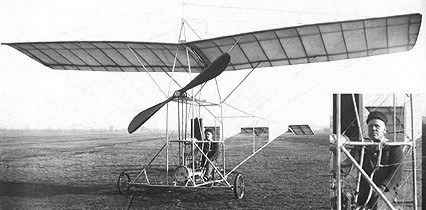
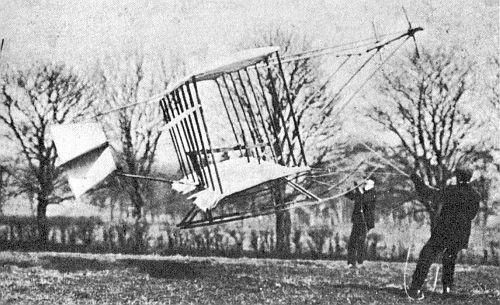
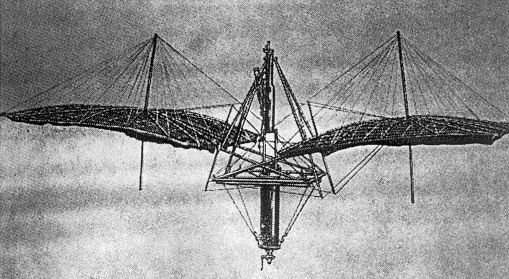
Louis Blériot built the I Ornithoptère model – datable to 1900-1901 and patented in 1901 – with a span of 1.5 m and powered it with a carbonic acid engine. In 1902 Blériot built another machine to size which he tried to fly (span 9 m, weight 70 kg), but despite the successive replacement of three chemical engines it was a failure.
Bleriot Article

The French aviation pioneer Louis Bleriot achieved a unique place in aviation history by making the first crossing of the English Channel in a powered aircraft (his Type XI monoplane) on July 25, 1909. This success resulted in the formation of the above company to produce the Type XI monoplane, and many significant flights were made with these aircraft.
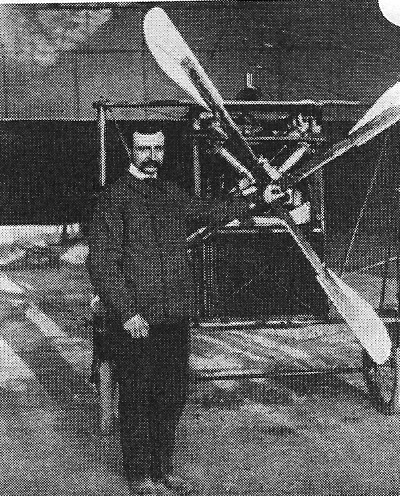
Louis Bleriot and his Type XI

Aircraft of this type, and derivatives served with the French forces, the RFC and RNAS at the beginning of the First World War, as well as with other air arms.

A Bleriot factory assembling SPADs during WW1

In post-war years Bleriot took over SPAD. The SPAD (Societe pour l’Aviation et ses Derives) concern, although headed by Louis Bleriot, operated as a separate organisation from the Societe Bleriot-Aeronautique until 1921, when SPAD was absorbed and the subsequent progeny of its design team became officially known by the title of Bleriot SPAD.
In France, the Socialist Government of the so called Popular Front brought all the companies building military aircraft, aero engines and armament under its control in 1936. The immediate result was the socialized oblivion of such established companies as Marcel Bloch, Bleriot, Nieuport, Potex, Dewoitine, Hanriot and Farman within half a dozen nationalized groups or Societies Nationales, named according to their geographical location (Nord, Ouest, Centre, Midi and so on).
After World War II, although four of the nationalized groups continued operating under state control, private companies were allowed to resume the design and manufacture of both civil and military aircraft. Some of the pioneering names of French aviation, such as Breguet and Morane Saulnier, returned to prominence.

In a 1934 visit to Newark Airport in the United States, Louis Bleriot predicted commercial overseas flights by 1938. Unfortunately, he would not see this come to fruition as his death from a heart attack took his life on August 2nd, 1936 in Paris, France – bring an end to this French hero’s legacy. The Louis Bleriot Medal, established in 1936, was aptly named in his honor and would be awarded to individuals involved in record-setting flights thereafter. The award is still handed out to this day.

Blavier GB.8C2

GB.8C2

The GB.8C2 is an all-wood design, covered in plywood, designed over a five year period.
Lavier first flew the one off aircraft in September 1996 at Toussus-le-Noble, near Versailles in Paris.
The design features a fixed maingear and retractable nose wheel.

Engine: Lycoming O-320, 160 hp
Prop: Constant speed
Max speed: 172 mph
Cruise: 160 mph
Stall: 63 mph
Endurance w/res: 3.5 hr
MTOW: 1760 lb
Seats: 2

Blanton V-6 STOL

The prototype was built from a salvaged PA-22.

Top speed: 135 mph
Cruise: 120 mph
Stall: 48 mph
Range: 600 nm
Rate of climb: 1700 fpm
Takeoff dist: 500 ft
Landing dist: 500 ft
Service ceiling: 18,000 ft
Engine: Ford V-6, 230 hp
HP range: 230-300 hp
Fuel capacity: 36 USG
Empty weight: 1250 lb
Gross weight: 2200 lb
Height: 7.2 ft
Length: 22.3 ft
Wing span: 32 ft
Wing area: 168 sq.ft
Seats: 4
Undercarriage: tailwheel

Blanton Sport Racer         

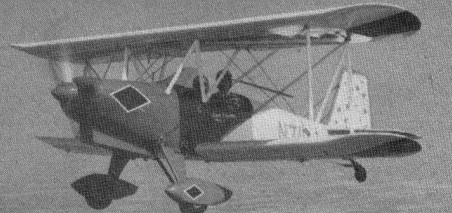
The Blanton Sport Racer N87SR first flew on 23 April 1988.

Top speed: 200 mph
Cruise: 175 mph
Stall: 62 mph
Range: 525 nm
Rate of climb: 900 fpm
Takeoff dist: 1600 ft
Landing dist: 1800 ft
Service ceiling: 18,000 ft
Engine: Ford Javelin , 230 hp
HP range: 150-260 hp
Fuel capacity: 30 USG
Empty weight: 1175 lb
Gross weight: 1825 lb
Height: 5.7 ft
Length: 21 ft
Wing span: 22 ft
Wing area: 81 sq.ft
Seats: 2

Blanton Wichawk

Designed by Dave Blanton, the Wichawk is structurally similar to the Boeing Stearman biplane and is stressed for up to 12g’s positive and six g’s negative. Standard seating is for two in a side-by-side or tandem configuration, which is rather unusual for a sport biplane of its type. Optional tandem or three-place seating is also available. Designed to take the Continental O-470-11 engine of 225 hp, the 180-hp Lycoming is most often used, and can be adapted to house various horizontally opposed or radial engines. The wings make use of wooden spars with light alloy ribs, while the fuselage is constructed from welded steel tubes.

Gallery

Engine: Lycoming O-360, 180 hp.
HP range: 160-300.
Length: 19 ft.
Wing span: 24 ft.
Wing area: 180 sq.ft.
Weight empty: 1281 lbs.
Gross: 2400 lbs.
Fuel cap: 40 USG.
Speed max: 140 mph.
Cruise: 127 mph.
Range: 500 sm.
Stall: 56 mph.
ROC: 1700 fpm.
Take-off dist: 150 ft.
Landing dist: 400 ft.
Service ceiling: 18,000 ft.
Seats: 2/3.
Landing gear: tail wheel.

Blaney 1911 monoplane

The Jethro. D. Blaney monoplane was a design with a high, frail-looking, cantilever wing attached to a pylon above the box-like undercarriage and engine. The Kirkham engine drove a chain-driven prop that was mounted midway between the undercarriage and engine, which gave it a low center of gravity. It was designed by Blaney with the mechanical engineering done by Chance Vought, who thought it was “two years behind the times.” It was tested at Cicero Flying Field in July 1911, but never left the ground. After it was given a few more failed trial runs, like a number of other unsuccessful experimental aeroplanes at Cicero Field, the Blaney Monoplane remained there and was later abandoned.

Bland Mayfly

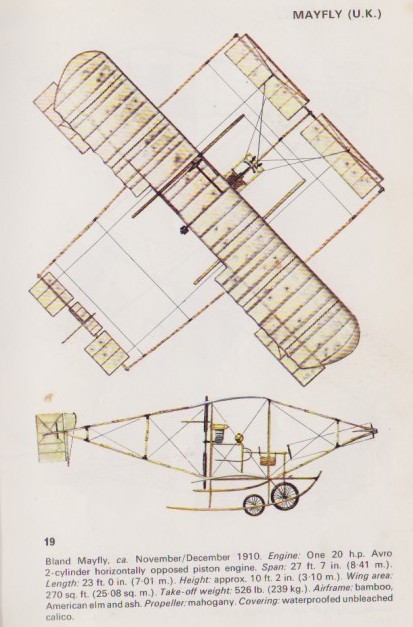
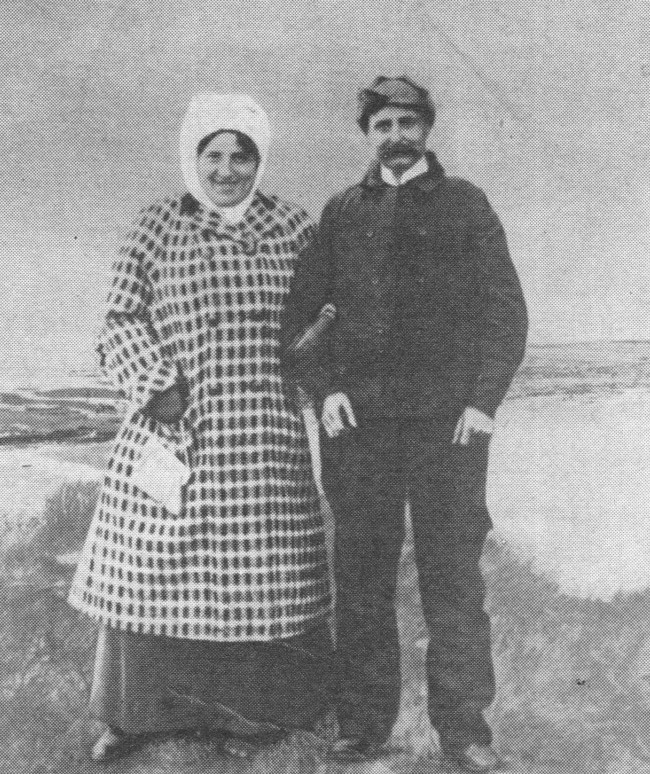
In the summer of 1910 A. V. Roe and Company declared its willingness to build aeroplanes to other people’s designs. Bolts, fittings and bracing wires were supplied to Miss Lilian Bland who built and flew the Mayfly biplane of her own design at Carnamony, Belfast. The first “Mayfly” of Lilian Bland was tested as a glider, probably during February 1910. It was built after the 1909 Blackpool meet and was an amalgam of the Farman and Wright types seen there. Its span was 8.40 m and constructed in less than three months.

Likely the first woman to build as well as fly her own aeroplane, Bland and S.Givvvany developed it empirically, testing and modifying it as a kite and glider before putting a 20 hp engine in it. This aircraft was fitted with one of the few examples of the 20 h.p. two cylinder, horizontally opposed, air cooled Avro engines. It was never given an Avro designation.

Lilian Bland couldn’t sell her constantly modified “Mayfly” and gave it to the Aero Club of Dublin before marrying and leaving for Canada.

Span: 27’7″
Length: 23′

Blanchard Brd.1

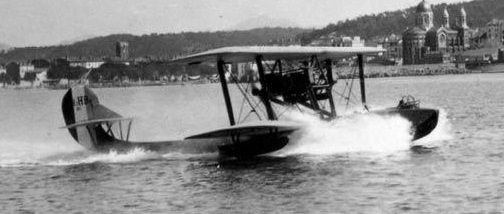
The Blanchard Brd.1 was a French reconnaissance flying boat used by the French navy in the 1920s. It was a large biplane with two engines mounted in the gap between the wings, each engine driving a pusher propeller.

First flown in 1922, twenty-four were built, primarily operated by the French Navy Aéronautique Maritime Escadrille 5R1 from 1923. They were retired in 1926.

In 1924, one Brd.1 was used to set several world altitude records for seaplanes.

Engines: 2 × Hispano-Suiza 8Fe, 205 kW (275 hp)
Wingspan: 19.00 m (62 ft 4 in)
Wing area: 85.0 m2 (914 ft2)
Length: 13.85 m (45 ft 5 in)
Height: 5.00 m (16 ft 5 in)
Empty weight: 2,465 kg (5,434 lb)
Gross weight: 3,930 kg (8,664 lb)
Maximum speed: 170 km/h (106 mph)
Service ceiling: 3,500 m (11,480 ft)
Crew: three, pilot, navigator, and gunner
Armament:
1 × 7.7 mm machine gun in flexible mount in bow
1 × 7.7 mm machine gun in flexible mount in rear fuselage
Bombload: 290 kg (640 lb)