A military version of the DB.70, designated A.B.20, had four engines.
Aircraft
Bordelaise DB.70
A twin-fuselage tri-motor design with accommodation for 20 passengers
Bordelaise
The naval dockyard Societe Anonyme de Travaux Dyle et Bacalan formed an aeronautical company in Paris in 1925 to develop an all-metal civil and military aircraft. Societe Aerienne Bordelaise was controlled by the Nieuport- Delage company. Production included the Bordelaise D.B.70, a twin-fuselage tri-motor design with accommodation for 20 passengers. A military version, designated A.B.20, had four engines.
Renamed Societe Aerienne Bordelaise in 1930.
Bonsall Mustang MkII

The single seat Bonsall Mustang MkII, often referred to as “The Pride of Yorkshire”, was built by D.C. Bonsall in the United Kingdom in 2011. The unique 8/10th scale replica of a P-51 Mustang aircraft has wooden frame/spars with fibreglass wings and skin, titanium fuel tanks and many titanium fittings.

It is a UK LAA Permit to Fly aircraft, maintained per UK LAA Maintenance Requirements.
Capable of 200 kts and powered by a 300 hp Lycoming IO-540 engine and McCauley 3-blade B3D36C431-B propeller it is registered G-BDWM S/N PFA 073-10200.
It was for sale in 2019 with an asking price of £120,000.

Bossi-Bonomi Pedaliente
Enea Bossi and Vittorio Bonomi’s Pedaliente had a wingspan of 17.6 m (57¼ ft) and had two chain driven contra-¬rotating propellers. Thanks to the Italian government’s ruling that all man powered aircraft contestants had to conform to conventional airworthiness standards, the Pedaliente was far too heavy, weighing nearly 100 kg (220 lb), and could manage only downhill glides even after a bungee launch.
A 1936 human-powered aircraft, designed by Enea Bossi. Built by Vittorio Bonomi, flown by cyclist Emilio Casco, 80 flights made.
Empty weight 97 kg (213 lbs)
Wingspan 17.7 m
Bonomi 25
Monoplane, 1929 two-seat cabin monoplane designed by Ing Ugo Abate
Bonomi
In 1929 Aeronautica Vittorio Bonomi built a two-seat cabin monoplane to the design of Ing Abate. This was developed subsequently by Captain Bonomi and produced as the Bonomi 25 Monoplane.
Most construction was carried out by Aeronautica Lombarda (aka AVIA) – hence the common use of Aeronautica Lombarda BS-28, etc.
Designer for Bonomi was Dr Ing Camillo Silva, explaining the BS-xx system used to designate Bonomi glider and sailplane designs. Most were assigned popular names as well.
Prior to becoming part of Aeronautica Lombarda, Bonomi built at least two other designs that are outside of his designation system – the 1929 Bonomi 25 Monoplano and the 1936 Bossi-Bonomi Pedaliante human-powered aircraft.
Bonney Gull

Leonard Bonney, an aviation pioneer and one-time First World War US Army and Navy flying instructor. Bonney became obsessed with the shape of a gull’s wing, which he believed to be the most efficient and capable wing form in nature. He set out to design an airplane that mimicked its qualities.
Through mechanical mechanisms he sought to be able to vary the wing’s incidence and sweep. The design, wind tunnel testing and fabrication of the Bonney Gull took him almost five years. At a time when a new airplane cost about $3,000, the Gull’s development cost was $83,000.
The aircraft had so many new features and looked so unpredictable that Bonney could not get a test pilot to take it up—so he did it himself. On 4 May 1928 at Curtiss Field, Long Island after a quick flight in another aircraft to refresh his skills, he took the Gull into the air on its first flight. At a height of about 50 feet, the porpoising aircraft nosed over and dove straight into Long Island. Leonard Bonney was killed.

Bonney, Leonard
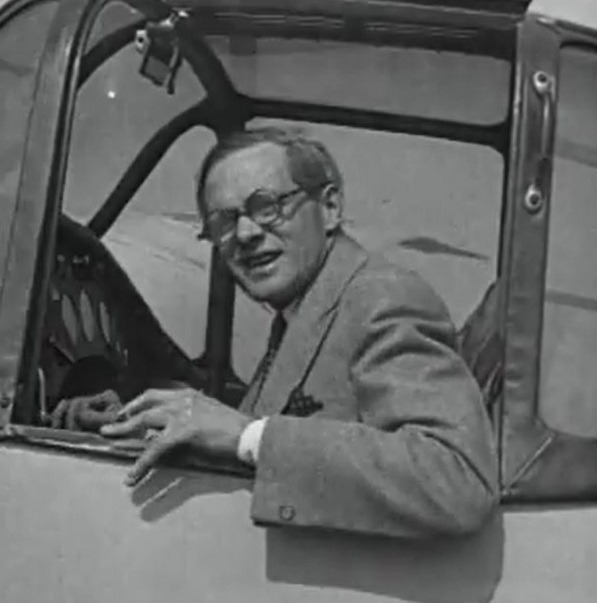
Leonard Bonney, an aviation pioneer and one-time First World War US Army and Navy flying instructor became obsessed with the shape of a gull’s wing, which he believed to be the most efficient and capable wing form in nature. The Bonney Gull was the result.
Bonnet-Labranche 1910 Monoplane
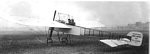
The Bonnet-Labranche 2-seater monoplane racer was designed and built by A and E Bonnet-Labranche about 1911, in France.
No. 6 School
Span: 27’10”
Length: 26’3″
Weight: 485 lb gross
Speed: 47 mph
No. 7 Racer
Span: 31’6″
Length: 28’2″
Weight gross: 617 lbs
Speed: 62 mph

