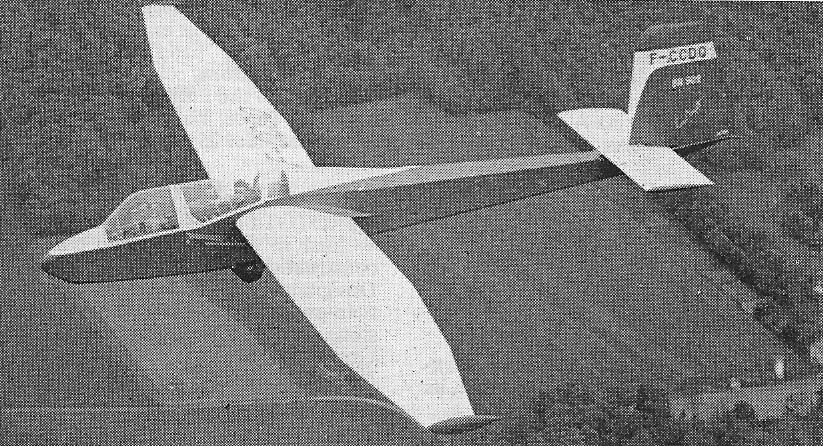
The Breguet 902-01 two-seat glider made its first flight on 14 May 1958.
The Breguet 902-01 two-seat glider made its first flight on 14 May 1958.
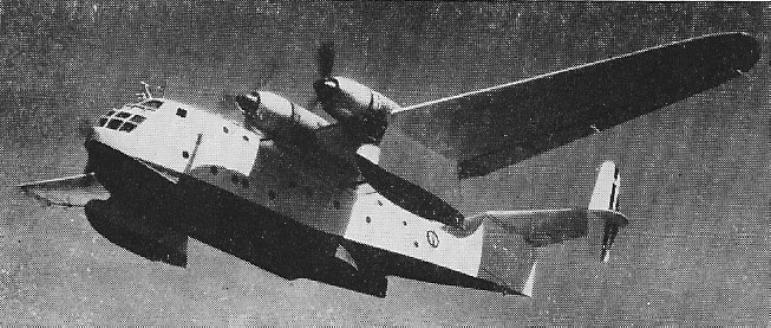
Designed before the war as a military patrol flying boat, the Type 731 Bellatrix was test flown at the Berre naval air base in unoccupied France in 1942, the prototype Type 730 having been flown just before World War 2.
The Type 731 differed from the pre-war Type 730 in having re-designed crew accommodation, modified floats, and a strengthened hull. The Type 731 escaped destruction and, after the war, it was re-engined with four 1480 hp Gnome-Rhone 14R radials and was used by the French Naval Air Service.
Only one Type 731 Bellatrix was completed.
Engines: our 1480 hp Gnome-Rhone 14R
Wingspan: 132 ft 5 in
Wing area: 1851 sq.ft
Length: 79 ft 11 in
Height: 26 ft 10 in
Empty weight: 41,226 lb
Loaded weight: 77,161 lb
Max speed: 239 mph at 8,530 ft
Cruise: 186 mph
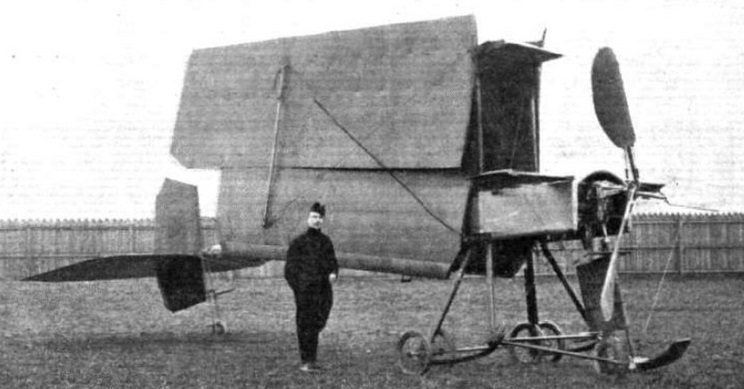
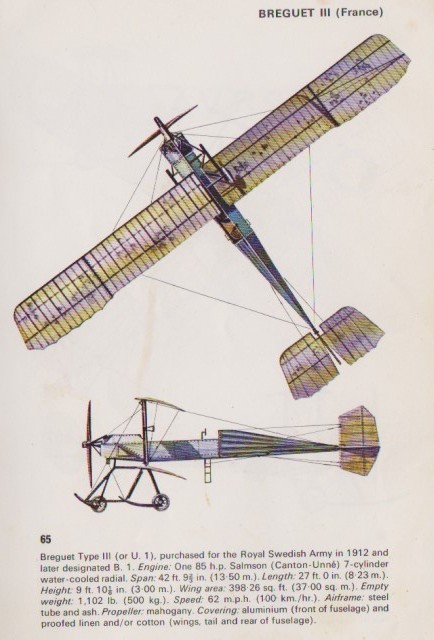
The Bréguet Type III, which first flew in April 1910, was a development of the Type II which Bréguet had built and flown earlier that year. Eliminating the upper booms that had helped to carry the tail surfaces of the earlier aircraft, it had what is now seen as the conventional biplane configuration, with a fuselage containing a front-mounted engine driving a tractor propeller and control and stabilising surfaces mounted at the rear. At the time this was an unusual layout: the Goupy II which had first flown the previous year was the first aircraft of this configuration to be successful. Like Bréguet’s earlier aircraft, extensive use of metal was made in its construction: the structure of the rectangular-section fuselage, wing spars and interplane struts were steel, and the ribs were aluminium pressings.
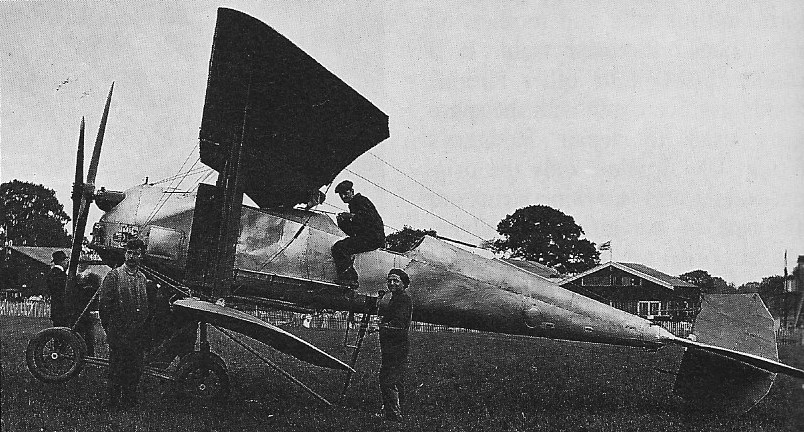
The lower wings were mounted on a short spar mounted below the lower longerons and the upper wing was supported by only four struts, two inboard supporting the centre section of the wing, and one on either side connecting the mainspars of the wings near the wingtips. The mainspars of the wing panels were connected to the centre-section spar by knuckle joints, so that the wings could easily be folded back for road or rail transport.
Four small vertical stabilisers were mounted below the upper wing, and a pair of supplementary control surfaces were mounted below the fuselage. These were intended for lateral control, and were operated in conjunction with wing-warping The rear-mounted empennage initially consisted of a fixed fin and rudder and a rectangular elevator, with no fixed horizontal surface, but this was soon replaced by a cruciform assembly combining rudder and elevator, connected to the fuselage by a universal joint. This unusual arrangement became a characteristic of the aircraft manufactured by Bréguet before World War I.
The prototype was powered by a 50 hp (37 kW) Gnome Omega driving a three-bladed aluminium propeller through a 2:1 reduction gear. Later aircraft were produced with other powerplants.
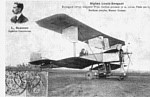
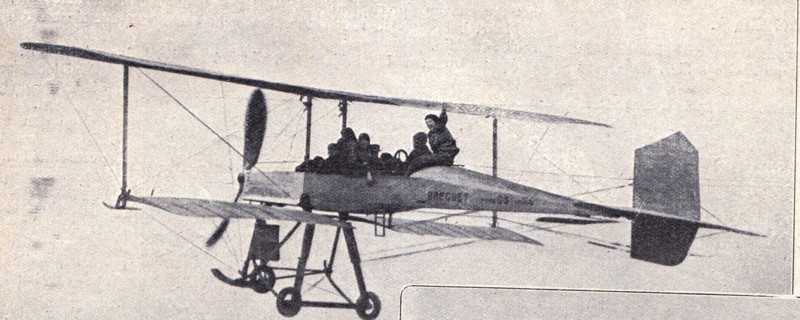
A Type III gained fame in August 1910 by being the first aircraft to lift six people.
Specifications (as shown at 1910 Paris Aero Salon)
Powerplant: 1 × R.E.P. 1910 60hp 5-cyl. 2-row semi-radial, 45 kW (60 hp)
Upper wingspan: 13.2 m (43 ft 4 in)
Lower wingspan: 9.9 m (32 ft 6 in)
Wing area: 38 m2 (410 sq ft)
Length: 9.2 m (30 ft 2 in)
Empty weight: 475 kg (1,047 lb)
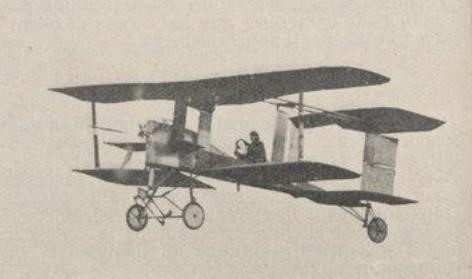
Like Bréguet’s previous design, the Bréguet Type I, the structure was principally of metal, although less highly stressed parts such as the tail surfaces used wood. It had a triangular section fuselage of wire-braced steel tube with the 41 kW (55 hp) air-cooled Renault engine at the front: this drove a three-bladed propeller which was connected to the engine’s camshaft and so revolved at half the speed of the engine. The wings had pressed aluminium ribs threaded onto a main spar of 65 mm (2.56 in) diameter steel tube. These were connected by a single interplane strut on either side. Tail surfaces consisted of a pair of horizontal surfaces, the lower carried on the rear of the fuselage and the upper by a pair of booms running back from the centre section of the upper wing. The upper surface was movable to achieve pitch control. A rectangular balanced rudder was mounted between the two horizontal surfaces. In addition, a pair of small horizontal stabilising surfaces were mounted at the front of the aircraft either side of the engine. The pilot’s seat was positioned halfway between the wings and the tail surfaces: a passenger seat was fitted behind the engine. The main undercarriage employed oleo-pneumatic suspension, and there was a single steerable tailwheel.
It was intended that lateral stability would be achieved by automatic differential movement of the two halves of the upper wing, this feature being the subject of a patent filed by Bréguet. In a turn, the greater speed of the outer wing would cause the angle of attack to be reduced, so eliminating the increase in lift that the greater speed would otherwise have produced. Lateral control was effected by a pair of mid-gap ailerons mounted on the interplane struts: these were evidently not effective and Bréguet intended to use another method for lateral control in his next design.
Its first recorded flight was made on 5 January 1910, when Louis Breguest made three circuits of the flying field at La Brayelle near Douai. and on 16 January 1910 it made a flight of 1.5 km (0.93 mi) However, by April 1910 Bréguet was flying his next design, the Type III.
Powerplant: 1 × Renault 50/60 hp V-8, 41 kW (55 hp)
Propeller: 3-bladed, 2.50 m (8 ft 2 in) diameter
Upper wingspan: 12.0 m (39 ft 4 in)
Wing area: 40 m2 (430 sq ft)
Empty weight: 580 kg (1,279 lb)
Gross weight: 800 kg (1,764 lb)
Maximum speed: 70 km/h (43 mph, 38 kn)
Seats: 2
The Bréguet Type IV was developed from the Bréguet Type III which had appeared during 1910. It was a tractor biplane with a tricycle undercarriage.
The Bréguet Type IV was an aircraft built by Bréguet Aviation. It was first flown in 1911, and was the first Bréguet aircraft to be produced in quantity. It was used by the French Army and the British Royal Flying Corps. It is notable for the extensive use of metal in its construction, unusual in an aircraft of its time.
The Bréguet Type IV was produced in a number of variants, differing in their seating arrangement and in the engine fitted.
G, later G.1 powered by a 50 hp (37 kW) Gnome Omega
G.2 powered by a 70 hp (52 kW) Gnome
G.3 powered by a 100 hp (75 kW) Gnome Gnome Double Omega
G.4 powered by a 160 hp (120 kW) Gnome Gnome Double Lambda
R.1 powered by a 50 hp (37 kW) REP
R.2 powered by a 70 hp (52 kW) REP
L.1 powered by a 50 hp (37 kW) Renault 50/60 hp (the ‘L’ for Louis Renault)
L.2 powered by a 70 hp (52 kW) Renault
C.1 powered by a 40 hp (30 kW) Chenu
C.2 powered by an 80 hp (60 kW) Chenu
U.1 powered by an 80 hp (60 kW) Canton-Unné
U.2 powered by an 80 hp (60 kW) Canton-Unné
D.1 powered by a 100 hp (75 kW) Dansette
O.1 powered by an 80 hp (60 kW) Le Rhône
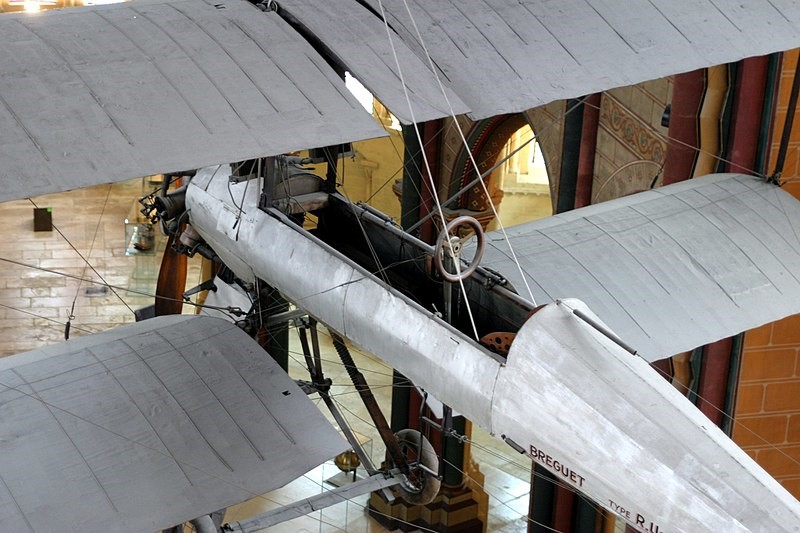
Although Bréguet’s earlier aircraft were referred to using a type number, the aircraft produced after the Type III were generally referred to using an airframe number and a letter/number combination denoting the type of engine fitted.
An example, an R.U.1, is on display at the Musée des Arts et Métiers in Paris.
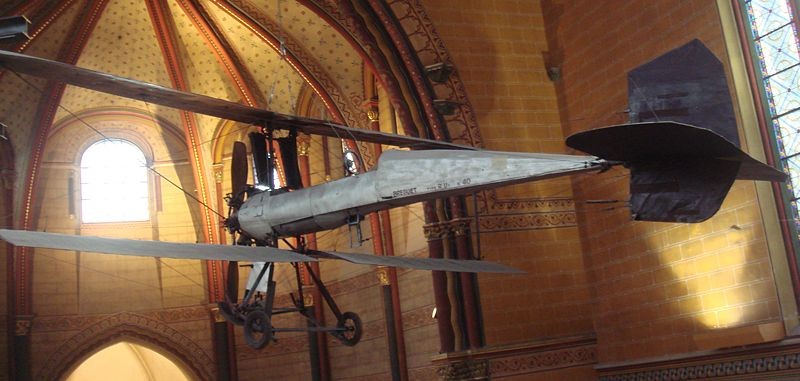
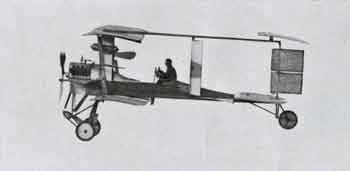
A large Breguet RU1 biplane.
The original 1909 Breguet U.I designed and built by Louis Breguet was later improved into the U.I-bis. Originally the Breguet biplane 1, but after a crash, it was re-designed and rebuilt. Sometimes referred to as the Breguet 2.
Number 40, of 1911 had a radial engine, two-blade wood propeller.
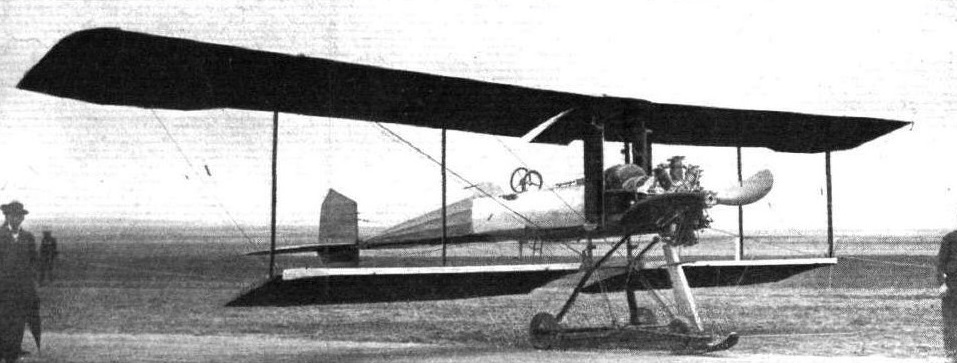
Proposed by the manufacturer to meet a military requirement, the Breguet U2 biplane was presented in various versions from 1911. The 1911 U2 version with a Salmson Canton-9 liquid cooled engine cylinder, two-bladed propeller, had the fuel tank between the two radiators placed vertically. The pilot, in back position, faced a rear-facing passenger, the other passenger, in the front, looked forward.
This machine has a steel structure fuselage, with a main landing gear with four wheels comprising two rear wheels mounted on the same axis and two front wheels detached. On early versions, lateral control was obtained by warping the wings, and later aileron control.
Initially the aircraft was equipped with a 130 hp Gnome rotary engine and was able to carry three people. Many engines were mounted on these machines, including Anzani, Renault 55 or 60 CV, and Canton-Unné of 120 hp. The propellers can be bladed or four-bladed.
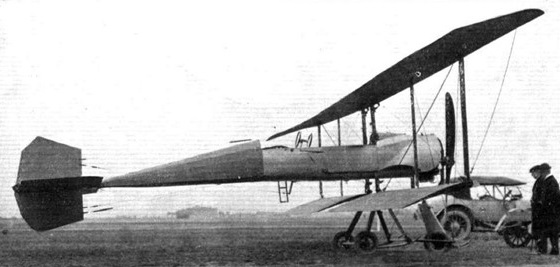
Type U.2 No 45; Another military machine showing in the same Concours. A heavier aircraft than L.1 No 3, with an interwing strut between the earlier 2, retaining the original wiring. 2 tall radiators stood up under the center-section; the nosewheel was now doubled.
Type U.2 No 102: This 3-seater 2-bay single-spar biplane appeared in 1913. The 4-wheel landing gear was supported under the rear cockpit by a tall skid, keeping the cruciform tail off the ground. The fuselage was no longer a single boom aft, but consisted of 4 steel tube longerons supporting a structure faired out with stringers.
Type U.2 No 138: Similar to No 102, this new 1914 machine was a 2-bay 2-spar biplane, with 2 separate cut-out cockpits. The wing cell design was named “semi-rigide,” and the wings still warped.
The Breguet H-U2 and U3 H seaplanes were derived from U-2 biplane. These became famous in April 1913, in Monaco, then in August of the same year in Deauville, in the hands of Henri Brégi and René sparrow.
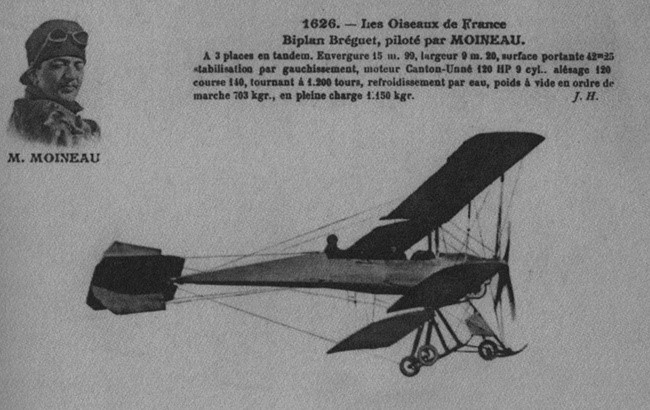
At the beginning of the First World War, the first bombing took place early in August 1914 with an attack of Frascati airship hangar near Metz by the airman Corporal Finck. Projectiles were almost exclusively former 90 or 120 caliber artillery shells. These weapons were crammed into cabins and launched by hand by the observer. Some firebombs were tried, but proved difficult to use and dangerous for the aircraft that carried them. The first months of war dart boxes (cylindrical steel rods of 12 cm long and 8 mm in diameter, tapered tip and Phillips tail to rotate to stabilize during the fall) were used. This process of low efficiency (lack of accuracy and dispersion) was abandoned in early 1915.
Used for reconnaissance missions at the beginning of the First World War these machines had rigid wings equipped with ailerons and a Salmson Canton-Unné liquid cooled 110 hp or rotary Gnome engine of 100 HP that allowed them to reach 110 km / h.
French forces employed about 30 machines.
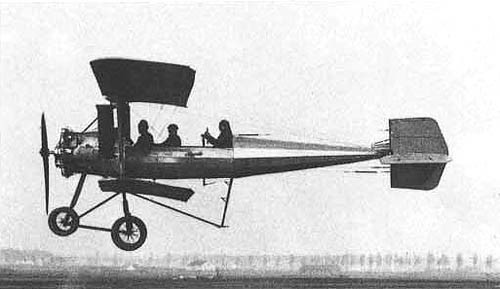
A small batch of the popular Breguet L.2 biplane, powered by an air-cooled Renault V-8, was assembled or built by Albatroswerke, Johannisthal in Germany under license and test flown by Bréguet factory pilot Debussy in March 1912.
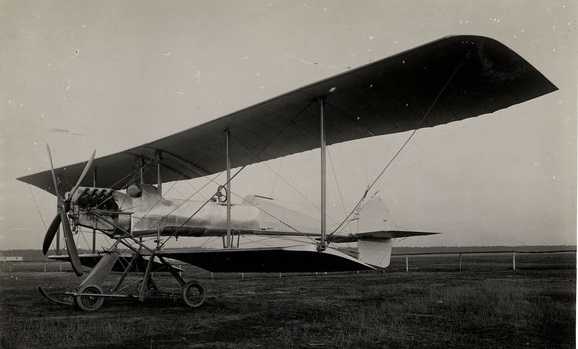
A myriad of versions of the Breguet biplane, were produced between 1910 and 1914. Breguet used a complex letter-number designation for the engine used in the machine. The L.2 uses a 70 hp Renault engine driving a four bladed propeller. In the Breguet system it was then coded as L (= Renault) 2 (70 hp). It might seem strange to code the Renault engine with the letter L, but the letter R was already taken by the R.E.P. engine. Code 2 stood here for 70 hp, where code 1 denoted 50 hp.
The machine had a tricycle undercarriage with a nosewheel. There were undercarriage skids to prevent the machine from nosing over. The big bulb in the front of the fuselage is the petrol tank. After the tank is a compartment holding two persons and the pilot at the back. The whole fuselage was a metal construction and in this version the big wings are two-bay.
The Breguet Biplane managed to set a world record with seven passengers.
The Royal Flying Corps (RFC) around August 1912 bought two machines of this exact type (L.2). They lasted till December 1913 but did very little flying, at most a few hours.
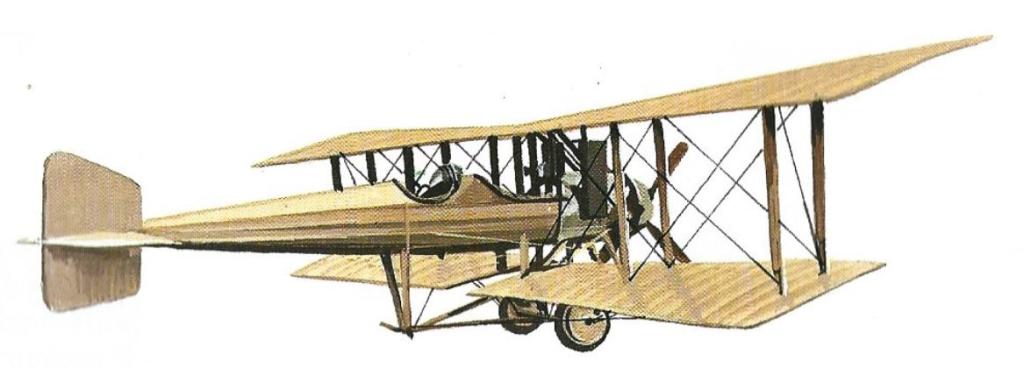
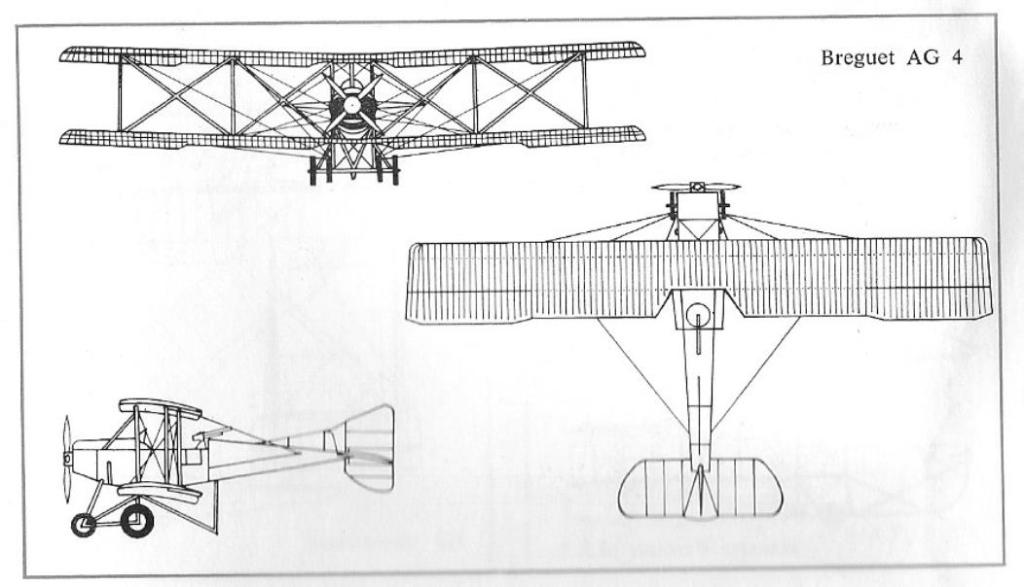
Just before the outbreak of the War, Breguet had started 2 new aircraft and projected a third. The A-G.4 was a 160 Gnome tractor; the A-U.3 was a 200 hp Canton-Unne tractor, and B-U.3 was a 200 hp Canton-Unne pusher (the A and B now used to distinguish similarly-powered machines only.)
The relative success of the use of cannon in the Breguet BU.3 led the Breguet company to install it in their latest aircraft, the Breguet 5.
The French forces employed some type A-G4, the British employed some A-G4 for the Royal Flying Corps and 15 A-G4 for the Royal Royal Naval Air Service, the Italians some A-G4.
The A-G4 was the definitive 1913 military version with a rotary engine.
L-1 Cruiser
Propeller: 2.4 m (8 ft) diameter
Upper wingspan: 13.94 m (45 ft 9 in)
Lower wingspan: 8.74 m (28 ft 8 in)
Wing area: 30.43 m2 (327.5 sq ft)
Length: 8.5 m (28 ft)
Crew: 1
Capacity: 1
U.I
Engine: Salmson Canton-Unné, 85 hp
Span upper: 45′ / 13,70 m
Span lower: 39’4″
Length: 30′ / 9.15m
Empty weight: 1275 lb
Total weight: 1150 kg
Speed: 80 kph
U.I-bis
Span: 41′
Length: 27’11”
Weight: 1100 lb
U.2
Engine: Canton-Unné, 110 hp
Wingspan: 44 ft 4 in / 13.5 m
Length: 27 ft 10 in / 8.5 m
Height: 8 ft 4 in / 2.5 m
Empty weight: 1234 lb / 560 kg
Loaded weight; 2116 lb / 960 kg
Max speed: 68 mph / 110 kph
Armament: none
U.2
Engine: Salmson Canton-Unné, 85 hp
Wingspan: 13,70 m
Length: 9.15m
Total weight: 1150 kg
Speed: 80 kph
A-G.4
Engine: Gnome, 160 hp
Wingspan: 50 ft 4 in / 15.35 m
Length: 27 ft 1 in / 8.25 m
Height: 10 ft 10 in / 3.30 m
Weight: 2970 lb / 1350 kg
Max speed: 62 mph / 100 kph
Ceiling: 42900 ft / 1500 m
Armament: 1 x mg
Crew: 2

When the specification was outlined in January 1958, designs were submitted to NATO and by the end of 1958, the Breguet Br 1150 had been selected as the best of the projects. The choice was endorsed by all 15 nations in NATO, including the USA, Canada and the UK.
A joint develop¬ment contract was drawn up in February 1959, which provided for work on the Br 1150 to be financed by Belgium, France, Germany, the Netherlands and the USA, although only France and Germany were at that time indicating an interest in acquiring the new MR type in operational quantities. Belgian and Dutch interest was maintained as a means of obtaining a share in the production programme for indigenous companies, while US financing was part of that nation’s general support for NATO.
To handle the joint design and production of the Br 1150, for which the name Atlantic had been adopted, Societe d’Etude et de Construction de Breguet Atlantic was set up as the industrial executive agency, the original constituent companies of which were Breguet, Sud Aviation, ABAP (the Belgian grouping of SABCA and the then Fairey company), Fokker and Seeflug (the German grouping of Dornier and Siebel). Engines, propellers and the radar ECM system were to be government funded equipment (GFE) but were also made the subject, so far as possible, of European joint production programmes. The Rolls Royce Tyne RTy 20 Mk 21 was selected to power the Atlantic, production being under licence in France by SNECMA (with a 44 per cent share) and contributions by MTU in Germany (28 per cent), Rolls Royce (20 per cent) and FN in Belgium (8 per cent). The Hawker Siddeley Dynamics (de Havilland) propeller was put into production by Ratier. CSF was chosen to produce the radar in France and other major suppliers were Hispano Suiza for the undercarriage, Crouzet for navigation equipment and Bendix, Sperry and Canadian Marconi for avionics items.
Breguet Br.1150 / ATL.2 Atlantique Article
To launch the programme two prototypes were ordered in July 1959, and the basic industrial programme for the prototype and production stages was agreed in December. The first prototype, powered by RTy 20 engines supplied completely by Rolls Royce, flew at Toulouse on 21 October 1961. It was followed by the second (Atlantic 02), which flew on 25 February 1962, but was lost in an accident two months later, on 19 April. Meanwhile, two pre-¬production examples had been ordered in February 1961; the first of these (Atlantic 03) flew on 25 February 1963 and featured the lengthened fuselage that had been adopted for the production model, 3 ft 3 in (1 m) longer than the prototypes. Other features of the production standard Atlantic, for which orders were placed in June 1963, were incorporated in the second pre production Atlantic, 04, which flew on 10 September 1964 and subsequently being referred to as the first production model. This same aircraft was eventually to be used, in 1979, as an aerodynamic test vehicle for the Atlantic NG (in which guise it was known as the ANG 001).
The initial phase of flight test and development was completed on 31 October 1965, with some 2,000 hrs of flying, and on 10 December that year the first production Atlantic for the French Aeronavale and the Federal German Marineflieger were handed over in a formal ceremony at Nimes Garons. By the end of the year, five aircraft were off the line and production was at a rate of two a month. Production was shared between France (60.5 per cent by value of the airframe), Germany (17 per cent), the Netherlands (15 per cent) and Belgium (7.5 per cent). In practice, the work was divided between Sud Aviation (outer wings), Breguet (front and centre fuselage plus final assembly at Toulouse (Colomiers), Dornier (rear fuselage and lower lobe of centre fuselage), SIAT (tail unit), SABCA (power plant cowlings), Fairey (centre section flaps) and Fokker (centre section structure and nacelles).

Between 1965 and 1968, Aeronavale received 40 Atlantic Is and Marineflieger, 20. In France, these aircraft were issued progressively to four Flottilles, Nos 21F and 22F based at Nimes Garons and operating in the Mediterranean area, and Nos 23F and 24F based at Lann Bihoue and operating over the Atlantic. The front line strength of each of these Flottilles is seven aircraft. Late in 1975, the Aeronavale released three of its Atlantics for sale to Pakistan and these are now based at Karachi for operation by the naval aviation element of the Pakistan armed forces.
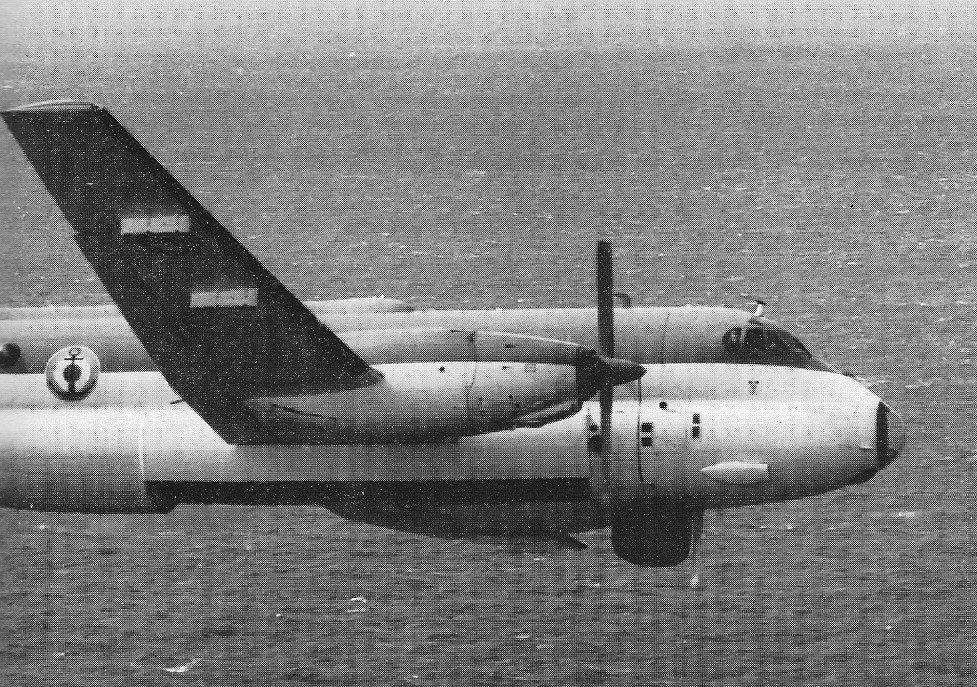
In the Marineflieger, the Atlantic replaced the Fairey Gannets operated in the ASW role by Marineflieger-geschwader (MFG) 3 “Graf Zeppelin” at Nordholz. Of the 20 aircraft acquired, five were converted by LTV for special electronic intelligence (ELINT) duties over the Baltic (one of these having subsequently been lost). Early replacement of the 15 Atlantic Is in the ASW role having been ruled out on financial grounds, the Marineflieger embarked in 1978 on a programme to update the avionics and sonar equipment in the existing fleet, all of which will have been cycled through the so¬called KWS modernisation programme by Dornier GmbH at Friedrichshafen by 1983.
Dutch interest in the Atlantic crystallised towards the end of 1960, just as production of the initial run of 60 was completed; purchase of nine was linked to the formation of a new squadron to help replace the aircraft carrier Karel Doorman, and as the need was urgent Avonavale released four of its Atlantic Is for early use by the MLD pending deliveries from the re opened production line. With the Dutch designation SP 13A (the MLD, unlike its land based counterpart the KLu, assigns its own designations to its current aircraft), the Atlantics were issued to VSQ 321 (No 321 Squadron) based at Valkenburg, and were supplemented by the five new production aircraft by January 1972.
Meanwhile, Italy’s Marinavia (or A viazione per la Marina Militare) had also decided to adopt the Atlantic 1 and had ordered 18. This brought Aeritalia into the SECBAT partnership, with responsibility for producing (on the finat batch of aircraft) the moving control surfaces, rear fuselage lower lobe, parts of the front fuselage and the engine nacelles. The final batch of aircraft included not only the 18 for Italy but the four replacement Mk Is for Aeronavale to make good those transferred to MLD. Delivered between June 1972 and July 1974, the Italian aircraft entered service with two Stormi Anti¬Somergibile, the 30o Stormo (86o Gruppo) at Cagliari Elmas and the 41o Stormo (88 o Gruppo) at Catania Fortanarossa, each with nine aircraft. Marinavia provides half the crews for these two squadrons, but since 1978, control of land based ASW aircraft has been assigned to the AMI (Italian Air Force) rather than the Navy.
On July 19 1974 the Toulouse-Colomiers plant of Dassault/Breguet Aviation delivered the 18th Breguet 1150 Atlantic maritime patrol aircraft to the Italian Government. This delivery ended the first production phase involving 87 Atlantics. The 87 Atlantics delivered are absolutely identical. Delivery schedule was as follows: 40 for the French Navy, 20 for the German Navy, nine for the Dutch Navy and 18 for the Italian armed forces.
Improved versions of the basic Atlantic 1 were under study as early as 1972, with the primary objective of expanding the aggressive roles of the aircraft to include anti shipping strike as well as the primary anti submarine mission, and of improving its performance.
The French government decided, on 23 February 1978, that the programme should go ahead, and two prototypes of the ANG were duly ordered from Dassault Breguet on 21 December 1978 (these to be conversions of Atlantic I airframes). Destined to become the first prototype (ANG 01), the Atlantic 1 No 42 arrived at Toulouse on 17 July 1979, and made its maiden flight after conversion on 8 May 1981; the second prototype (ANG 02) was a conversion of Atlantic 1 No 69.
Breguet, in the original Br 1150 design, a mid wing layout that provided good flotation characteristics in case of ditching, with a two lobe or “double bubble” fuselage permitting pressurisation of most of the upper lobe and an unobstructed cabin of constant width over a length of nearly 50 ft (15 m), with a weapons bay in the unpressurised lower lobe some 27 ft in length.
The mid wing position also allowed the weapons bay doors to open by sliding up the sides of the fuselage, thus avoiding obstruction of the panoramic search field of the radar, with its antenna in a retractable radome ahead of the bay, and keeping drag to a minimum with the doors open; loading of weapons also was facilitated by this weapon door arrangement.
The Atlantic’s wing was designed with a relatively high aspect ratio of about 11:1, producing a good economy in cruising flight and excellent manoeuvrability at low altitude.
The wing was a three spar structure with powered ailerons, slotted flaps, air brakes above and below each half wing and three spoiler segments ahead of the flaps each side. The tail unit included conventional powered control surfaces and a fixed tailplane, with ECM sensors in a fairing atop the fin. The undercarriage had twin wheels on each leg, with the nosewheel retracting to the rear and the main wheels retracting forwards.
An APU was located in the forward starboard side of the lower fuselage to provide compressed air for engine starting and ground air conditioning, plus emergency electrical services. Breguet chose turboprop power, electing to use a pair of Rolls Royce Tyne RTy 20s.
Structurally, extensive use was made of bonded light alloy/ honeycomb sandwich material for the wing and fuselage panels. In particular, such sandwich construction, in moulded form, was adopted for the wing torsion boxes (containing the integral fuel tanks), the pressurised upper fuselage lobe, tail unit torsion boxes and doors to the weapons bay and landing gear.
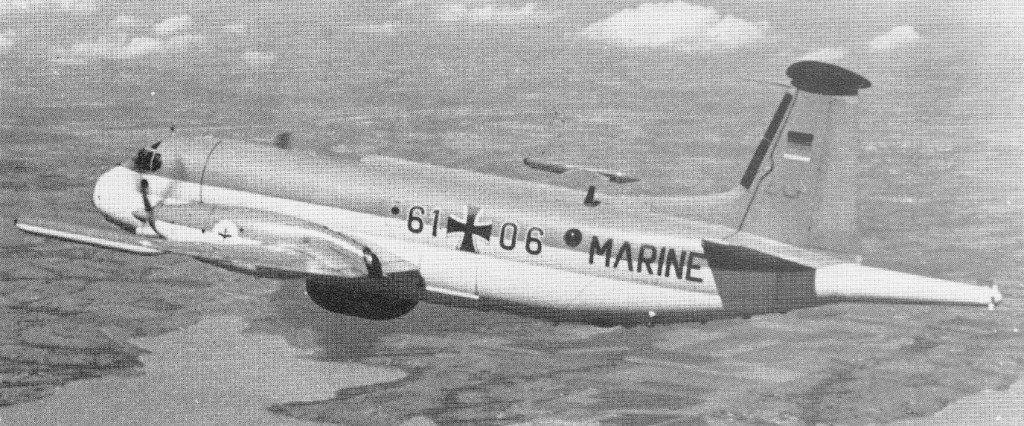
Systems in the Atlantic 1 have been almost totally replaced in the ANG included sonobuoy systems and a CSF magnetometer for submarine detection and tracking. Typically, the two forward racks carried four L4 or eight Mk 44 torpedoes, the centre rack could receive a nuclear depth charge and 10 active sonar buoys would be mounted in the third rack. Four wing strong points usually carried four AS 12 missiles and internal storage was provided for flares, marker buoys, smoke bombs, submarine detection charges and 72 active sonar buoys. A retro launcher in the rear fuselage allowed sonobuoys to be dropped at nil forward speed.
In developing the ANG, the objective has been to produce an airframe with a 12,000 hr life with increased operational serviceability. In pursuit of these targets, the structural design of the ANG has been improved in several respects for easier and more economical maintenance and longer fatigue life. The improve¬ments include a refined bonding technique, extended anti-corrosion protection, better jointing between skins and the use of lighter structural materials in some areas, such as the landing gear, without loss of strength. No changes have been made in the power plant, fuel systems, basic flying controls or hydraulic and electric systems. The ANG has Tyne 21 engines that are functionally interchangeable with the Atlantic Mk 1 powerplants, three integral fuel tanks in each wing with two engine driven pumps and two separate fuel systems with crossfeed options.
The weapon bay in the ANG is physically the same size as that in the Atlantic 1, and the same range of stores can be mounted on the three transverse carriers: each carrier or bridge can accommodate four Mk 46 torpedoes, four ASW depth charges or bombs of up to 275 lb (125 kg) weight, three 550 1b (250 kg) mines or four ASR packs not all these items can be carried on all three bridges at the same time, but with the rear bridge empty any combination is possible on the forward and centre bridges, ie, up to eight torpedoes, depth charges or bombs. The new feature for the ANG is the provision to carry Aerospatiale AM 39 Exocet ASMs either two on special bridges, or one AM 39 in combination with three torpedoes, this latter representing a likely standard load.
Supplementing the internal stores are four wing hardpoints, now of increased capacity 1,650 lb (750 kg) outboard and 2,205 lb (1000 kg) inboard each able to carry an air to-surface missile such as the AS 12 carried by the Atlantic 1.
Initial deliveries began in October 1988 to meet a requirement for 42 aircraft to equip four Aeronavale squadrons.
Breguet Br 1150 Atlantique
Engine: 2 x Rolls-Royce Tyne R.Ty 20 Mk 21, 6022 shp
Wingspan: 119 ft 1 in / 36.3 m
Wing area: 1292 sq.ft
Length: 104.167 ft / 31.75 m
Height: 37.172 ft / 11.33 m
Max take off weight: 95917.5 lb / 43500.0 kg
Max. speed: 355 kts / 658 km/h
Service ceiling: 32808 ft / 10000 m
Range: 4860 nm / 9000 km
Max endurance: 18 hr at 195 mph / 1000 ft
Crew: 12
Dassault Breguet Atlantic NG
Power Plant: Two Rolls Royce/SNECMA Tyne 21 turboprops each rated at 5,665 shp at 15,250 rpm for take off (5 min limit) and 5,190 shp at 14,500 rpm for unrestricted continuous operation.
Propellers: Ratier built BAe Dynamics four blade variable pitch of 16 ft (4,88 m) diameter.
Fuel capacity, 5,086 Imp gal (23120 1t).
Max permissible speed, 355 kts (658 km/h) or Mach = 0.70
Max speed, 320 kts (593 km/h) at sea level
Cruising speed, 300 kts (556 km/h) or Mach = 0.50 at 25,000 ft (7 620 m)
Typical patrol speed 170 kts (315 km/h)
Take off run, 5,420 ft (1650 m) ISA at sea level max weight
Initial rate of climb, 2,000 ft/min (10,1 m/sec)
Ceiling 30,000 ft (9 100 m)
Max endurance, 18 hrs.
Empty equipped weight, 55,115 lb (25 000 kg)
Max fuel load, 40,785 lb (18 500 kg)
Military load (ASW), 6,615 lb (3 000 kg)
Normal take off weight, 97,885 lb (44 400 kg)
Max overload weight, 101,850 lb (46200 kg)
Max zero fuel weight, 71,650 lb (32 500 kg).
Wing span, 122 ft 7 in (37,36 m)
Length, 107 ft 0.25 in (32,62 m)
Height, 37 ft 11 in (11,31 m)
Undercarriage track, 29 ft 6 in 4 (9,00 m)
Wing area, 1,295.3 sq ft (120,34 sq.m)
Aspect ratio, 10.94:1.
Internal weapons bay, length 29 ft 6 in (9,99 m), width, 6 ft 1012 in (2,1 m), height, 3 ft 314 in (1,0 m), Armament: up to eight Mk 46 homing torpedoes, two AM 39 Exocet ASMs, 12 depth charges, nine 550 1b (250 kg) mines, etc; four wing strong points have combined capacity of 7,715 lb (3 500 kg); rear fuselage bay contains up to 78 sonobuoys.
Normal flight crew: 12, two pilots, flight engineer, forward observer, radio navigator, ESM/ ECM/MAD operator, radar operator, tactical co ordinator, two acoustic operators and two aft observers.
ATL.2 Atlantique
Engine: 2 x R-R Tyne RT.20 Mk.21 turboprop, 6,100 shp (4549 kW).
Installed thrust: 8450 kW.
Prop: 16 ft 0 in (4.88 m) dia 4 blade.
Wing span: 119 ft 1 in (36.30 m).
Length: 104 ft 2 in (31.75 m).
Wing area: 1,295 sq ft (120.34 sq.m).
Empty wt: 27,500 kg.
MTOW: 95,900 lb (43,500 kg).
Warload: 3000 kg.
Max speed: 645 kph.
Initial ROC: 885 m/min.
Ceiling: 9100+ m.
T/O run (to 15m): 1840 m.
Ldg run (from 15m): 1500 m.
Fuel internal: 23,120 lt.
Range: 1850 km.
Endurance: 5 hr on station.
Air refuel: No.
Cruising speed: 345 mph (556 km/h).
Max range: 5,590 miles (9,000 km).
Crew: 12.

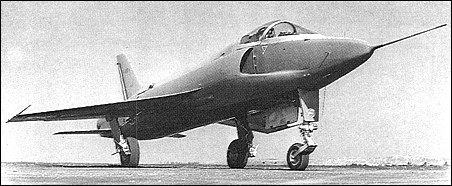
Based broadly on the design of the Br 1001 Taon, the Br 1100 single-seat ground attack and tactical light fighter preceded the the Br 1001 into the air. The Taon having been delayed in order to incorporate in part the then newly discovered area rule formula, the Br 1100 first flew on 31 March 1957, not featuring area rule. Designed to meet the requirements of a Ministere de la Air specification which dictated the use of paired lightweight turbojets (SNECMA R.105 Vestas, Hispano- Suiza R.800s or Turbomeca Gabizos), the Br 1100 was intended to feature an internal rocket pack of 15 68mm Brandt SNEB Type 22 rockets or two 30mm DEFA cannon. The Gabizo turbojet was selected for installation, this offering 1210kg dry and 1500kg with afterburning. Three prototypes were ordered, the third of which was to have been navalised, but only one was flown, the second (when 80% complete) and third being cancelled for budgetary reasons.
Engines: 2 x Turbomeca Gabizo, 1210kg / 1500kg with afterburning
Take-off weight: 6545 kg / 14429 lb
Loaded weight: 3793 kg / 8362 lb
Wingspan: 7.83 m / 25 ft 8 in
Length: 12.52 m / 41 ft 1 in
Height: 4.35 m / 14 ft 3 in
Wing area: 19.52 sq.m / 210.11 sq ft
Max. speed: 1128 km/h / 701 mph

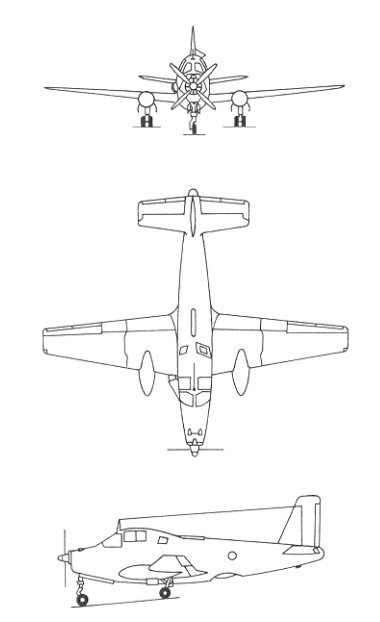
Initially a Breguet design known as the Br.960 “Vultur” and designed as a conventional strike aircraft, the Br.960 grew into the Br.965 as French Navy requirements changed. The resulting Br.965 later became the definitive anti-submarine warfare system designated as the Br.1050 Alize (Tradewind).
Breguet received a development contract in 1954 for a three seat ASW version. Power was provided by a 2,100 eshp Rolls Royce Dart turboprop, and the first Dart powered prototype flew on 6 October 1956 followed by five pre-production aircraft.
The Br.1050 is a most distinct-looking aircraft, particularly in the design of the nose assembly. A crew of three monitors the various systems aboard the craft and the wings are designed to be carrier-friendly and fold for storage.
Fuel is in four tanks in the inner wings and one fuselage tank, with a total capacity of 462 Imp.Gal. There was provision for a 105 Imp.Gal auxiliary tank.
The Alize carried three depth charges or a torpedo in the internal weapon bay, sonobuoys in the wheel housings, and more depth charges, rockets, or two AS.12 air to-surface missiles on under-fuselage/wing stations. The racks under the inner wings hold two depth charges of up to 385 lb each.

Orders for 75 production Alizes were placed by the French Navy and the first was officially delivered on 20 May 1959. Sixty-five were in service by May 1961. Two French Navy squadrons operated Alizes on board the carriers Foch and Clemenceau.

A further contract for Alizes was received subsequently from the Indian Navy and 12 were delivered, plus two ex-French aircraft.
Breguet Br.1050 Alize in detail
Breguet Br 1050 Alizé
Engine: Rolls Royce Dart R Da 21, 2100 shp, 1450kW
Length: 45.505 ft / 13.87 m
Height: 14.993 ft / 4.57 m
Wingspan: 51 ft 2 in / 15.6 m
Wing area: 36.0 sq.m / 387.50 sq ft
Max take off weight: 18081.0 lb / 8200.0 kg
Empty weight: 5700 kg / 12566 lb
Max. speed: 243 kts / 450 km/h
Cruise speed: 370 km/h / 230 mph
Service ceiling: 20505 ft / 6250 m
Range: 1550 nm / 2870 km
Maximum Range: 1,785miles (2,872km)
Crew: 3
Armament:
1 x Tordedo or 3 x Depth Charges (held in an internal bay)
2 x Depth Charges (externally held)
6 x RP or 2 x air-to-surface missiles (underwing)
Hardpoints: 8
Br 1050-ASM
Engine: Rolls-Royce Dart R.Da.7
Wingspan: 51 ft 2 in
Wing area: 387.5 sq.ft
Length: 40 ft 4.25 in
Loaded weight: 18.078 lb
Max speed: 276 mph
Endurance: 4 hr
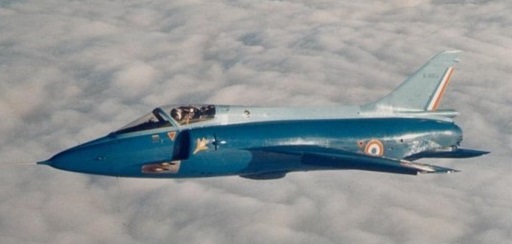
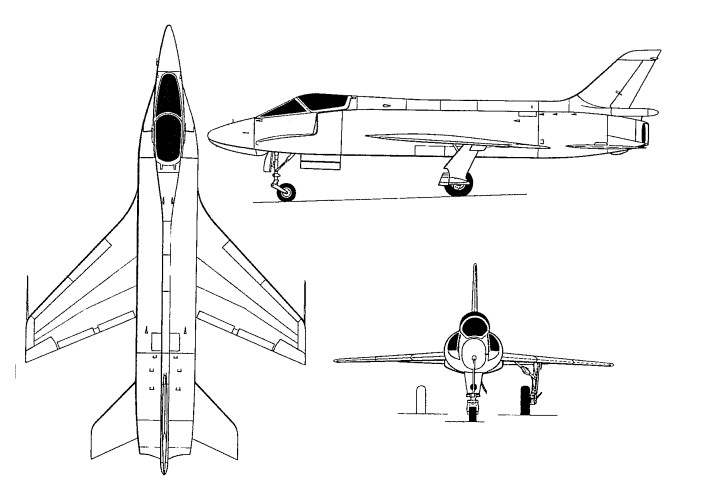
In response to a NATO requirement for a single-seat lightweight strike fighter, Breguet designed a small mid-wing monoplane with swept wings and tail surfaces. The retractable tricycle landing gear was designed especially for operation on unprepared strips. The fuselage accommodated the pilot in an enclosed cockpit well forward, and housed a Bristol Orpheus BOr.3 turbojet. In competition with other proposals, Breguet’s design won an order for three prototypes, the first of these making its maiden flight on 26 July 1957. The second prototype incorporated minor aerodynamic improvements and had a slightly lengthened fuselage.

To enhance high-speed performance, improved area ruling was provided by the introduction of aerodynamic bulges at the wing roots, these serving also to house additional fuel. In this configuration, the Br.1001 Taon (gadfly) set an international speed record for a 1000km closed circuit, reaching 1046.65km/h at 7620m on 25 April 1958. Three months later, on 23 July, the Talon raised this figure again for the same record to 1075km/h. Despite this high-speed performance, development was discontinued, and only the two prototypes were built.

Breguet 1001 Taon
Engine: 1 x Bristol Orpheus BOr.3 turbojet, 2200kg
Take-off weight: 5560 kg / 12258 lb
Loaded weight: 3425 kg / 7551 lb
Wingspan: 6.80 m / 22 ft 4 in
Length: 11.68 m / 38 ft 4 in
Height: 3.7 m / 12 ft 2 in
Wing area: 14.50 sq.m / 156.08 sq ft
Max. speed: 1194 km/h / 742 mph

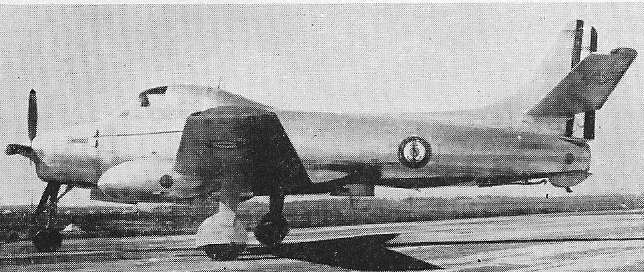
Initially a Breguet design known as the Br.960 “Vultur” and designed as a conventional strike aircraft, the Br.960 grew into the Br.965 as French Navy requirements changed. The resulting Br.965 aerodynamic test vehicle later became the definitive anti-submarine warfare system designated as the Br.1050.
The Br.965 was actually the second prototype Type 960 Vultur with the 1320 hp Armstrong Siddeley Mamba A.S.Ma.3 turboprop retained but the 5000 lb thrust Hispano-Suiza Nene 104 deleted, provision made for a third crew member, and radar equipment mounted on the wing.
The 965 first flew on 26 March 1955 and a pre-production batch of five generally similar Type 1050-ASM were ordered.

