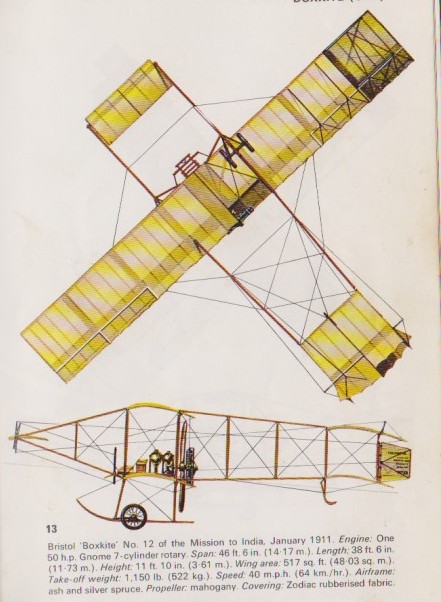
Bristol Boxkite

After first buying a Zodiac biplane from France, which Bristol proposed to manufacture, they settled on a copy of the Farman III which was a better design and unlike the Zodiac could be made to fly successfully.

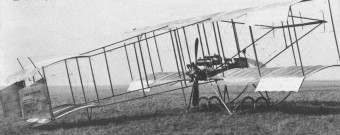
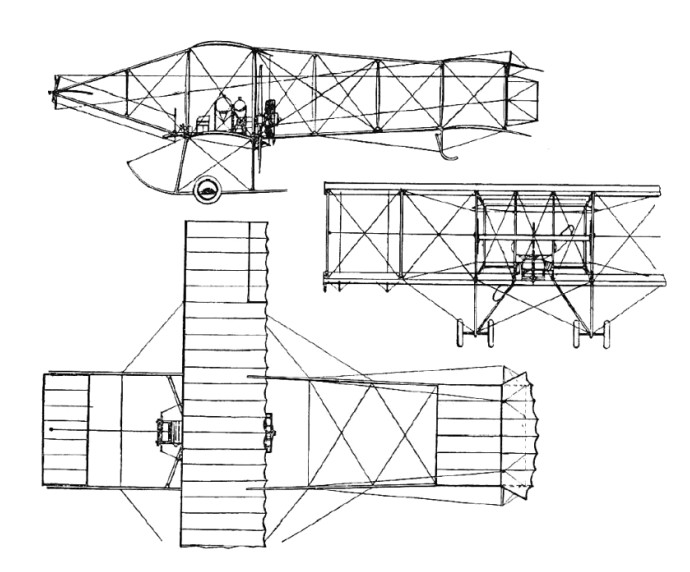
George Challenger, the company’s chief engineer at Filton, sfter seeing detailed drawings of the Farman III in Flight magazine, was pretty sure he could build a copy of the plane. A few weeks later, the first copy was constructed, using materials from the partially built Zodiac aeroplanes. The Farman copy is a tractor biplane having its upper and lower planes equal, directly superposed, and connected by 6 struts. The front struts are rigidly braced by cables; the rear ones free for warping. The fuselage is of quadrangular section. The chassis has four wheels.

The Boxkite, as it was named, was first flown on 31 June 1910 by Maurice Edmond at the company’s flying school on Salisbury Plain with a 37kW Gregoire engine and in September 1910 made the first military flight when it was used in a reconnaissance role during Army manoeuvres on Salisbury Plain, which led to the delivery of the first military aircraft as an army co-operation machine in May 1911.
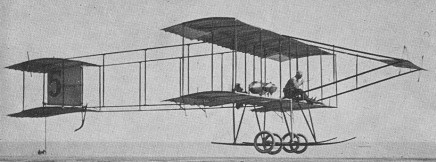
Farman, not surprisingly, sued the British and Colonial Aeroplane Company for patent infringement. However, White was able to show Farman that they had made significant alterations to Farman’s design to improve it… so Farman dropped the suit. The Bristol Boxkite was the first plane to be built in mass quantity, with four purchased by the British War Office in 1911, and others sold to Russia and Australia.

This plane was simply called the No. 7. Best guess is that the initial Zodiac was No. 1, with the five partially-constructed Zodiac‘s taking the numbering up to No. 6.
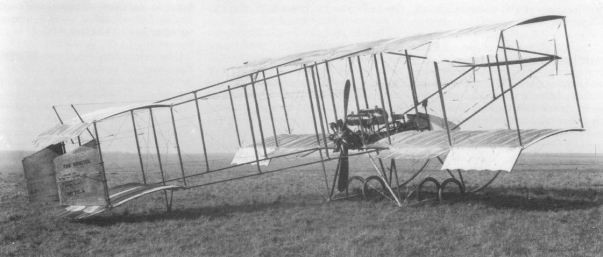
The first Boxkite, No. 7, used fitted with a Grégoire 50 horsepower motor, but even before its first test flight, they swapped it out for a same output Gnome motor.
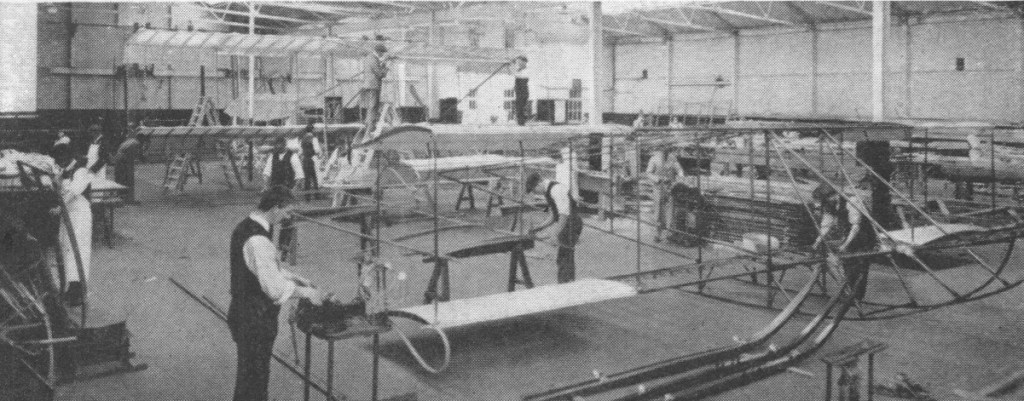
Boxkites under construction

For later trials, they put the Grégoire back in.

Boxkite No. 8 used an E.N.V. 50 horsepower motor.

Still, for almost all other aeroplanes, the company supplied the aeroplanes with the 50 horsepower Gnome rotary engine. Each motor was set just above the lower wing upon sturdy wooden beams, which, also held up the pilot and passenger seats up front.

Although early Boxkite examples built had equal upper and lower wingspans, later ones had a longer upper wing (known as the Military version).

The No. 9, flown by pilot Robert Loraine in late September of 1910, was the first aeroplane to send a radio signal down to the ground, in Great Britain. Loraine, has his diary noted by the Oxford English Dictionary, as the first written example of the word “joystick” to describe aircraft stick controls.
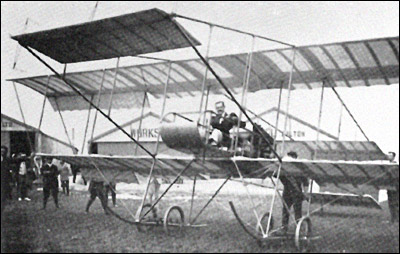
Within a matter of months of the first flight the company was planning for expansion and mounting its first overseas sales drive. Missions were dispatched to Australia, India and other countries with good results. In November 1910 the first export order was placed by Russia for eight Boxkites and subsequently aircraft were also sold to Sweden, Spain, France, Italy, Turkey, Romania and Bulgaria.

The Boxkite has a rich history in the evolution of military aviation in Australia and was the first official military aircraft built in Australia that was used to train Australia’s military aviators.

A Bristol Boxkite was flown in Australia for the first time on 1 March 1914, when Lieutenant Eric Harrison took one into the air at Point Cook. The airfield was then the home of the Australian Flying Corps (AFC).
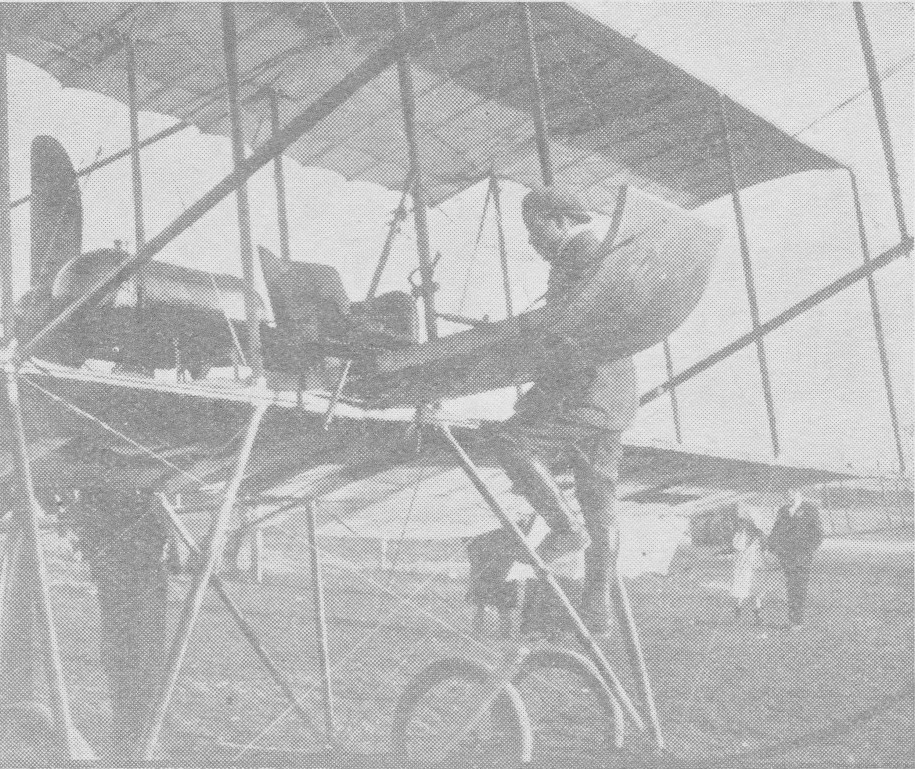
M. Jullerot in November 1911

On March 14, 1911, the British War Office ordered four Bristol Boxkites for its planned Air Battalion Royal Engineers—becoming the first production contract for military aircraft for Britain’s armed forces. A second order of four was made later that year, with them all pretty much being used as trainers for would-be pilots.
When WWI broke out, four more were ordered by the British War Office, the last of which was written off in February of 1915, as obsolete. These aeroplanes were used as trainers at the Bristol flying schools at Brooklands and Larkhill, both of which were responsible for giving nearly 50 percent of British pilots their license before WWI.

By the time production of the Boxkite ceased in 1914, the British and Colonial Aeroplane Company had constructed 78 Bristol Boxkite aeroplanes in total, of which 60 were the so-called Military version, one (no. 44) was a Racer version, and one, No. 69, was a an unsuccessful Voisin variant.

Bristol Boxkite‘s No. 73-78 were built at Brislington by the Tramway Company, with all those before it manufactured at the Filton facility.

Three replica aircraft built for the movie Those Magnificent Men In Their Flying Machines. One is at the Bristol City Museum and Art Gallery, another at the Shuttleworth Collection at Bedfordshire, and the third is at the Museum of Australian Army Flying in Australia.

Wills’s Aviation Card #51 – “Bristol” Military Biplane.
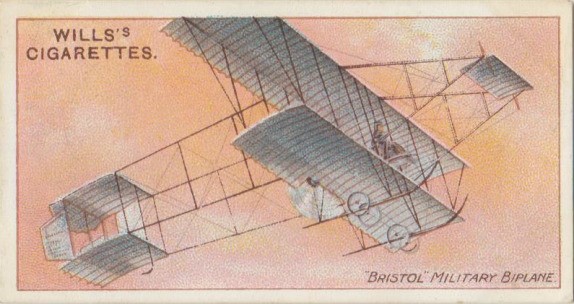
Card #51 of 75, W.D.& H.O Wills, Aviation series 1911, Vice Regal Mixture issue

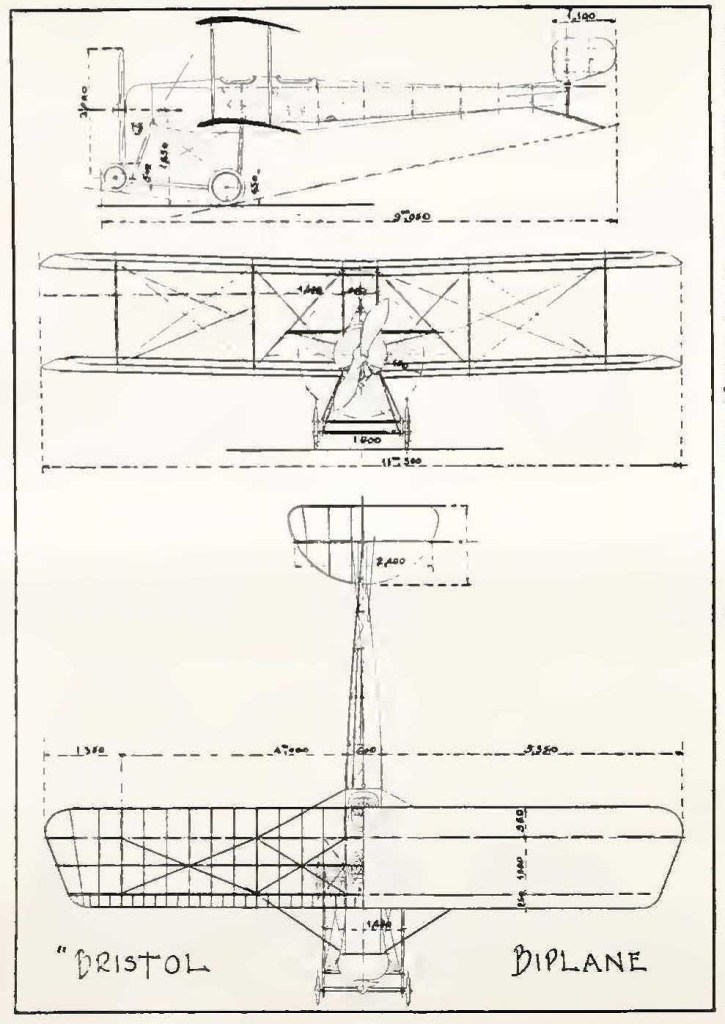
This card shows the Bristol Biplane (official name), though the Wills’s card calls it the Bristol Military Biplane, and the world seems to refer to it as the Bristol Boxkite.
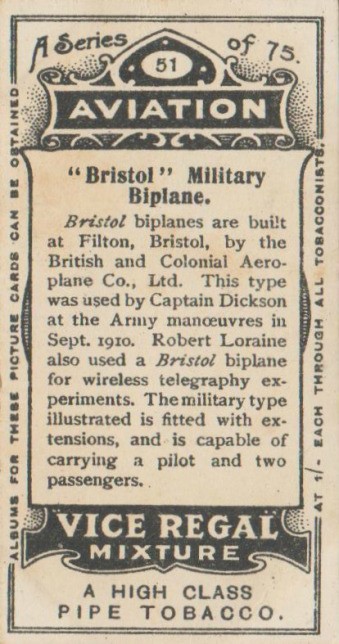
Replica:
RAAF Museum Bristol Boxkite
Miles Bristol Boxkite

Gallery

Bristol Boxkite
Length: 38.386 ft / 11.7 m
Height: 10.827 ft / 3.3 m
Wingspan: 46.49 ft / 14.17 m
Max take off weight: 1151.0 lb / 522.0 kg
Empty weight: 363 kg / 800 lb
Max. speed: 35 kts / 65 km/h
Engine: Gnôme, 50 hp
Crew: 2

Bristol Boxkite
Engine: Gnôme, 80 hp
Wingspan: 11.3 m
Wing area: 40 sq. m
Max. speed: 80 km/h

Boxkite Standard
Engine: Gnôme, 50 hp
Wingspan: 10.52 m / 34 ft 6 in
Length: 11.73 m / 38 ft 6 in
Height: 11 ft 10 in / 3.61 m
Empty weight: 363 kg / 800 lb
Wing area: 42.46 sq.m / 457.04 sq ft
Max. speed: 64 km/h / 40 mph

Bristol Boxkite Military version
Engine: 1 × Gnome Omega, 50 horsepower (37 kW)
Wingspan: 14.17 meters (46 feet 6 inches)
Wing area: 48.03 square meters (517.0 square feet)
Length: 11.73 meters (38 feet 6 inches)
Height: 3.61 meters (11 feet 0 inches)
Empty weight: 408 kilograms (900 pounds)
Maximum takeoff weight: 522 kilograms (1150 pounds)
Maximum speed: 64 kilometers per hour (40 miles per hour)
Wing loading: 10.9 kilograms per square meters (2.22 pounds per square foot)
Power/mass: 70.9 watts per kilogram (0.043 horsepower per pound)
Crew: 2
Bristol / British & Colonial Aeroplane Company Ltd

In 1910 Sir George White, the wealthy owner of the Bristol Tramways Company, formed the Bristol and Colonial Aeroplane Company Ltd. With head offices in Bristol and a factory at nearby Filton, the aircraft produced by the company were generally known as ‘Bristols’.

Bristol Article

Founded at Bristol, Somerset, in February 1910 as British & Colonial Aeroplane Company Ltd, a factory was set up in two sheds in the village of Filton in south Gloucestershire, just north of Bristol. Sir George White was a wealthy Bristol businessman and his company was registered on 19 February 1910 with a capital of £25,000.
First began construction of a number of biplanes under license from Societe Zodiac, but these were not completed because the sample aircraft bought from France could not be induced to take to the air.

First aircraft produced were Bristol biplanes, usually known as the Boxkite, which initially were little more than copies of the Henry Farman biplane. The first of these, the Boxkite, was based on a Henri Farman design. The Boxkite made its debut at the Third International Aero Exhibition in 1911 and went on to become the first commercially produced aircraft in Britain with two per week rolling out of the factory. It was sold to the British and Russian military as well as being exported throughout the British Empire.

Flying schools established at Larkhill, on Salisbury Plain, and at Brooklands, Surrey, 1911. February 1911 Deutsche Bristol-Werke established at Halberstadt, Germany, to operate a flying school and build Bristol airplanes; arrangement canceled June 23,1914.

First military aircraft were monoplanes designed by Henri Coanda; No. 105 shared third place with a Deperdussin in the Military Aeroplane Competition of 1912. Bristol Scout, or “Baby Biplane”, evolved by Frank Barnwell 1914. The two-seat Bristol Fighter entered service in 1917 and became regarded as the best general-purpose combat aircraft of the First World War.
During the final year of the war the company produced 2,000 aeroplanes from its own factories. By the Armistice the payroll had risen from 200 in August 1914 to 3,000 and the original tram sheds were now part of a factory with eight acres of floor space.
Following the acquisition of the Cosmos Engineering Company in 1920, the Bristol Company was also a major builder of aero engines.
Renamed the Bristol Aeroplane Company on 9 February 1920. Problems of readjustment and survival were intensified by the general world wide economic depression that succeeded the brief postwar boom. Diversification was one of the expedients adopted to keep the nucleus of the skilled workfiorce in being at Filton. Aircraft manufacture was augmented by produc¬tion of bus and coach bodies and later of motor car bodies.
Between the wars Bristol Bulldog biplanes had equipped nine RAF Squadrons by 1932 and were most widely used fighter until 1936.
In 1935, Bristol’s directors, realising that the company’s capital resources were inadequate, resolved on 15 June to re organise the firm as a public limited liability company with a share capital of £1.2million.
Bristol Type 138A of 1936 captured world altitude record in September, 1936, then regained it from Italy in June 1937 with an altitude of 16,440m. Bristol Type 142, built as executive aircraft for Lord Rothermere, became the military Blenheim, an important light bomber in the early Second World War period. Beaufighter, first flown July 1939, became RAF’s first nightfighter, subsequently an important antishipping aircraft armed with rockets, torpedoes, and bombs.
Designed and built prototype of eight-engined 100- passenger Brabazon I, first flew September 4, 1949; scrapped 1953 for financial/political/technical reasons. Type 170 Freighter first flown December 2, 1945 and 213 built subsequently.
Turboprop powered Britannia first flew August 16, 1952, made the first non-stop airliner flight London, Vancouver (8,208km), June 29, 1957, and first North Atlantic passenger service to be flown by a turbine-powered airliner on December 19 of the same year.
A helicopter department was set up in 1945 as part of the aircraft division at Filton. Austrian born Raoul Hafner headed a research and development team which produced the Type 171 Sycamore. Subsequently entering service with RAF as its first British-designed helicopter in 1952.

1955

In January 1956 the Bristol Aeroplane Company had reorganised into three wholly owned companies; Bristol Aircraft Ltd, Bristol Aero-Engines Ltd, and Bristol Cars Ltd.

September 1957

Four years later Bristol Aircraft Ltd joined with Vickers Ltd and English Electric to become the British Aircraft Corporation.

In 1960 Westland Aircraft took over the Bristol Helicopter Department.

In 1960 Bristol Aircraft Ltd joined with Vickers Ltd and English Electric to become the British Aircraft Corporation.

Bristol Aero Engines (formerly Bristol Engine Company) merged with Armstrong Siddeley Motors in 1959 to form Bristol Siddeley Engines Limited (BSEL) which in turn was taken over by Rolls-Royce in 1966.

Research and development ot the tandem-rotor helicopters resulted in Type 192 Belvedere which entered service with the RAF, in 1961.

On 28 December 1963 the separate companies merged their identities and Bristol Aircraft Ltd became the Filton Division of BAC. Four years later the Bristol title was lost from the engine side when Bristol Siddeley Engines Ltd became the Bristol Engine Division of Rolls Royce Ltd. The nationalisation of the aircraft industry in 1977 resulted in the formation of British Aerospace (BAe) and the works at Filton became part of the Weybridge Bristol Division of BAe Aircraft Group while the BAC Guided Weapons Division at Fillon became part of the Stevenage Bristol Divi¬sion of the BAe Dynamics Group.

Bristol Aero Engines (formerly Bristol Engine Company) merged with Armstrong Siddeley Motors in 1959 to form Bristol Siddeley Engines Limited (BSEL) which in turn was taken over by Rolls-Royce in 1966.

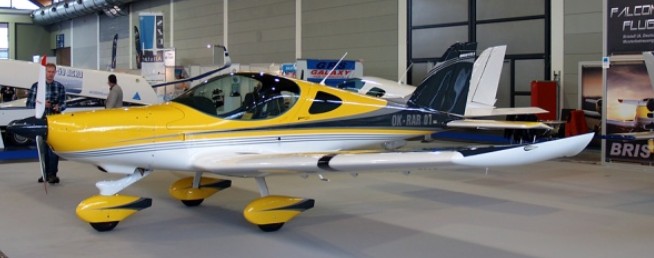
BRM Aero Bristell NG 5

The BRM Aero Bristell is a Czech low-wing, two-seat in side-by-side configuration, single engine in tractor configuration, ultralight and light-sport aircraft that was designed by Milan Bristela and produced by BRM Aero. The aircraft was supplied as a complete ready-to-fly aircraft.

The aircraft was designed to comply with both European microlight rules and also the US light-sport aircraft regulations, by using different versions for each regulatory environment.

The aircraft is made from aluminium and features a 130 cm (51 in) wide cabin at the shoulder, with a bubble canopy over the cockpit. The wings feature flaps. The standard engine is a 60 kW (80 hp) Rotax 912UL, with the 75 kW (101 hp) Rotax 912ULS, the 71 kW (95 hp) ULPower UL260i/iS and the 88 kW (118 hp) ULPower UL350iS powerplants optional. The 115 hp (86 kW) Rotax 914, 85 hp (63 kW) Jabiru 2200 and 120 hp (89 kW) Jabiru 3300 are also available. Other engines are planned, particularly for the United States market. The aircraft has a useful load of 279 kg (615 lb). The landing gear is of tricycle configuration.

The aircraft was introduced at the Aero show held in Friedrichshafen in 2011. After 42 examples had been completed (September 2011) the aircraft was introduced into the US market in September 2011 at the AOPA Summit. The 2011 base price was US$125,000.

Ultralight aeroplane Bristell UL and its modifications Bristell HD, Bristell RG and Bristell LSA are aeroplanes for flight training in flight schools, gliders towing and recreational flying.
The Bristell HD version offers heavy-duty wing spars, and Bristell RG is a version with retractable undercarriage.

The Bristell tricycle-gear (and new taildragger version), low-wing S-LSA comes standard with 10-inch Dynon SkyView or Advance Flight Systems AF5600 EFIS panel, Com, two-axis autopilot, BRS parachute and leather interior. Price 2012: $156,000.

Gallery

Variants:

Bristell UL
Base ultralight model
Engine: 1 × Rotax 912ULS , 75 kW (100 hp)
Wing span: 8,13 m (26 ft 8 in)
Wing area: 10,5 sq.m (113 sq ft)
Wing loading: 45 kg/ sq.m
Length: 6,45 m (21 ft 2 in)
Height: 2,28 m (7 ft 6 in)
Cabin width: 1,3 m
Empty weight: 290 kg (639 lb)
Maximum take-off weight: 472,5 kg (1,042 lb)
Useful load: 182,5 kg
Fuel tanks capacity: 130 lt (29 imp gal; 34 US gal)
Fuselage luggage compartment: 15 kg
Wing luggage compartment: 2 x 20 kg
Load factors: +4/-2g
Stall speed with flaps VSO: 52 km/h
Stall speed without flaps Vs1: 67 km/h
Manoeuvring speed VA: 165 km/h
Maximum flap speed VF: 139 km/h
Cruising speed: 214 km/h 250 km/h
Never exceeded speed VNE: 270 km/h
Seats: 2

Bristell HD
Heavy duty model
Wing span: 8,13 m
Wing area: 10,5 sq.m
Wing loading: 57,1 kg/ sq.m
Length: 6,45 m
Height: 2,28 m
Cabin width: 1,3 m
Empty weight: 310 kg
Maximum take-off weight: 600 kg
Useful load: 290 kg
Fuel tanks capacity: 130 lt
Fuselage luggage compartment: 15 kg
Wing luggage compartment: 2 x 20 kg
Load factors: +4/-2g
Stall speed with flaps VSO: 78 km/h
Stall speed without flaps Vs1: 87 km/h
Manoeuvring speed VA: 165 km/h
Maximum flap speed VF: 139 km/h
Cruising speed: 250 km/h
Never exceeded speed VNE: 290 km/h

Bristell LSA
Model for the US light-sport aircraft category
Wing span: 9,13 m
Wing area: 11,75 sq.m
Wing loading: 51,06 kg/sq.m
Length: 6,45 m
Height: 2,28 m
Cabin width: 1,3 m
Empty weight: 330 kg
Maximum take-off weight: 600 kg
Useful load: 270 kg
Fuel capacity: 130 lt
Fuselage luggage capacity: 15 kg
Wing luggage compartment: 2 x 20 kg
Load factors: +4/-2g
Stall speed with flaps VSO: 58 km/h
Stall speed without flaps Vs1: 74 km/h
Manoeuvring speed VA: 165 km/h
Maximum flap speed VF: 139 km/h
Cruising speed: 250 km/h
Never exceeded speed VNE: 290 km/h

Bristell RG
Rectractable gear model
Wing span: 9,13 m (30.0 ft)
Wing area: 11,75 sq.m
Wing loading: 51,06 kg/ sq.m
Length: 6,45 m
Height: 2,28 m
Cabin width: 1,3 m
Empty weight: 335 kg
Maximum take-off weight: 600 kg (1,323 lb)
Useful load: 265 kg
Fuel tanks capacity: 130 lt
Fuselage luggage compartment: 15 kg
Wing luggage compartment: 2 x 20 kg
Load factors: +4/-2g
Stall speed with flaps VSO: 58 km/h
Stall speed without flaps Vs1: 74 km/h
Manoeuvring speed VA: 165 km/h
Maximum flap speed VF: 139 km/h
Cruising speed: 250 km/h
Never exceeded speed VNE: 290 km/h

BRM Aero NG 4

BRM Aero finished colaboration with ROKO AERO company and stopped sale of NG 4 aircrafts built from ROKO AERO quick built kits, but continued to support the NG 4 customers with spare parts, repair and any kind of modifications on their aircraft.

Bright Star Gliders Valkyrie

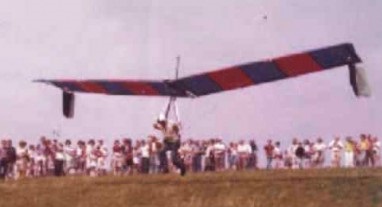
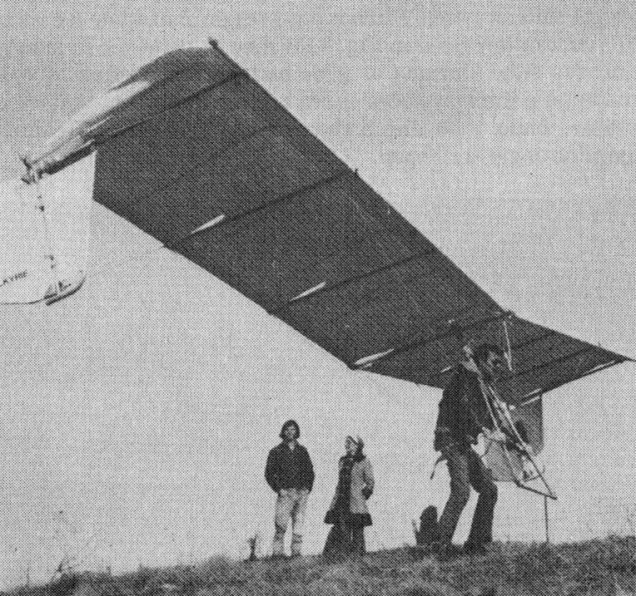
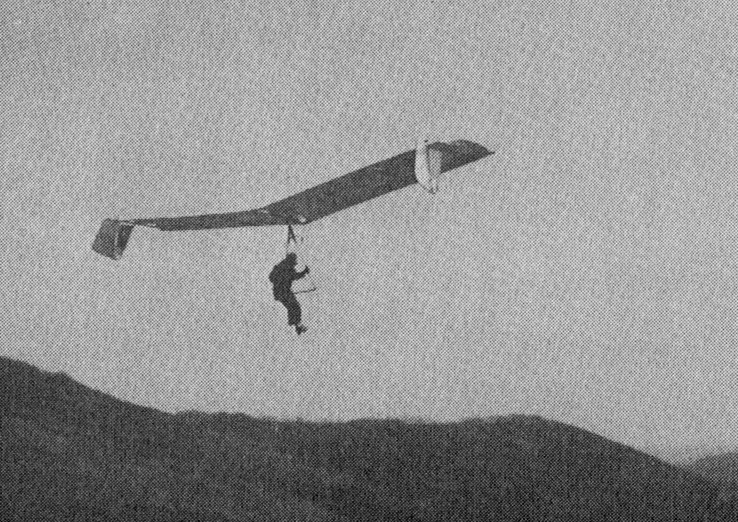
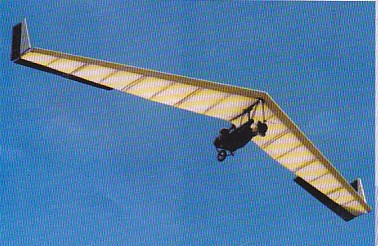
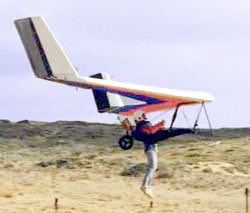
Designed by Bill Wolf of Columbus, Indiana, USA. It was easy to build with just the construction plan. But one big disadvantage: it could not be completely disassembled, only folded in half.

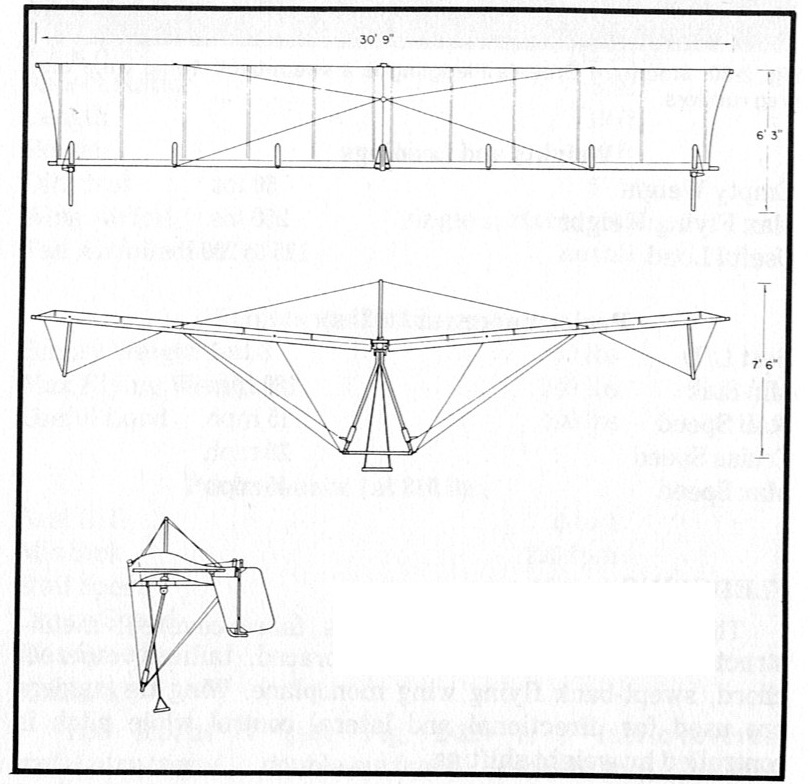
The Valkyrie is a fabric covered metal-structured, cable-braced, tailless, flying wing of constant chord and straight leading edge. Wingtip rudders are used for directional control, while pitch control is achieved solely by means of weight shifting. The tip rudders may be deflected to induce drag for either turning or glide path control. Deflecting one rudder at a time produces a turn and bank about the deflected rudder, while deflecting both rudders simultaneously causes the glide angle to steepen.

Take down / setup times are about 10 minutes without tools, and the Valkyrie should be carried on a special rack to minimise damage. Pilot suspension is via typical swing seat. It takes about 50 to 60 hours to build a kit.

Bill Wolf’s unique Valkyrie

Wing area: 12.82 m²
Wing span: 9.37 m
Aspect ratio: 6.8
Hang glider weight: 22 kg

Wing span: 30 ft 9 in
Wing area: 138 sq.ft
Aspect ratio: 6.8
Length: 6 ft 3 in
Height: 7 ft 6 in
Dihedral: 5 degrees
Wing Airfoil: single surface, reflex
Empty weight: 50 lb
Max flying weight: 250 lb
Useful load: 125-200 lb
Best L/D: 8-1
Min sink: 180 fpm
Stall: 15 mph
Cruise: 20 mph
Max speed: 45 mph

Briffaud GB-80 Aerovoiler

While landing on a wet section of the runway, however, the nosewheel of the GB-6 dug in and it flipped over violently. The pilot was only slightly injured.
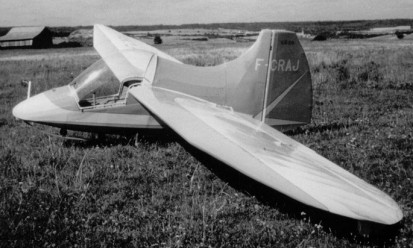
Only the wing was salvageable. Georges Briffaud considered re-using it by enlarging it for use in a motorglider project, the GB-80. This was a midwing single-seater whose engine, placed near the center of gravity, was to drive via a short driveshaft a two-bladed propeller located between the fixed vertical fin and the rudder. This solution had the advantage of fairing in the propeller during soaring flight without requiring feathering or the retraction of the engine-propeller assembly. The airframe was of fabric-covered wood; the cockpit was equipped with a molded canopy.
The GB-80 made its first flight as a glider on 21 September 1960 at Beynes with pilot Jacques Gomy at the controls, pulled by the club towplane. During succeeding flights, several modifications proved necessary, notably an increase in rudder area. Handling of the GB-80 was similar to that of other gliders of the same generation, and the machine’s wing performance was close to that of the Nord 2000 (French version of the German “Meise”), despite a low aspect ratio of only 7.6. It received its certificate of airworthiness (CNRP) on 4 July 1961. On one flight, it was double-towed with another flying wing, the AV-36 flown by Eric Nessler.
The motor originally intended for it, a 2-stroke, 18 hp Kroeber, was never installed, being replaced by an equivalent weight of ballast. The engine had no starter, and the development of that accessory was never completed (Charles Fauvel faced similar problems with the AV-45). Georges Briffaud designed a version designated GB-81, with a new, easier to build fuselage, but that project was never realized. Disappointed, Georges Briffaud decided in 1963 to dismantle the GB-80.

Wing span: 11.20 m
Length: 4.20 m
Wing Area: 15.4 sq.m
Airfoil: modified NACA 23012
Aspect ratio: 7.6
Empty weight: 165 kg
Max. weight: 260 kg
Best glide ratio: 22:1
Minimum sink rate: 0.90 m/s

Briffaud GB-6

In the Fifties, Georges Briffaud designed the GB-6, a tailless airplane with a high wing and a Lutétia 44 hp engine. Inspired by the work of Abrial and Fauvel, he provided his airplane with an inherently stable wing allowing the horizontal tail to be omitted. The wing, however, had an original airfoil section, based on the NACA 23012, whose inherent stability was achieved by raising the trailing edge. Assembled by SAN (Société Aéronautique Normande), this airplane took off with Lucien Quérey (Director of SAN) at the controls in June 1955, from the Bernay airport. While landing on a wet section of the runway, however, the nosewheel dug in and the GB-6 flipped over violently. The pilot was only slightly injured.
Only the wing was salvageable.