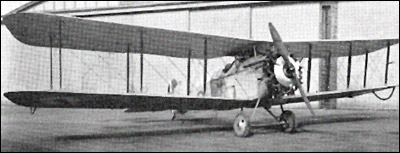
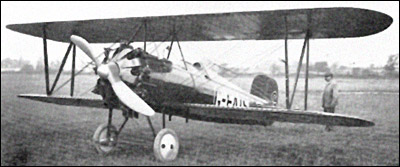
Bristol Biplane Type T Sequence number 45 was used by Marcel Tabuteau in the June 1911 Circuit de L’Europe. Alternatively the machine was sometimes known as the Challenger-Dickson Biplane.
Engine: 1 x 70hp Gnome Take-off weight: 454 kg / 1001 lb Empty weight: 363 kg / 800 lb Wingspan: 10.67 m / 35 ft 0 in Length: 7.47 m / 24 ft 6 in Wing area: 32.52 sq.m / 350.04 sq ft Max. Speed: 93 km/h / 58 mph Crew: 1
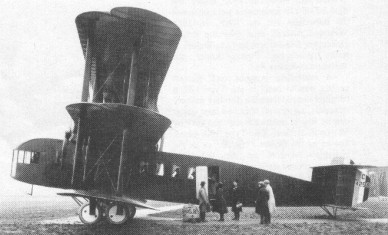
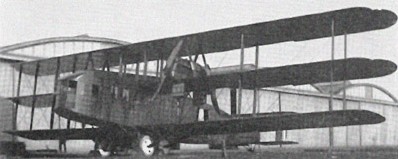
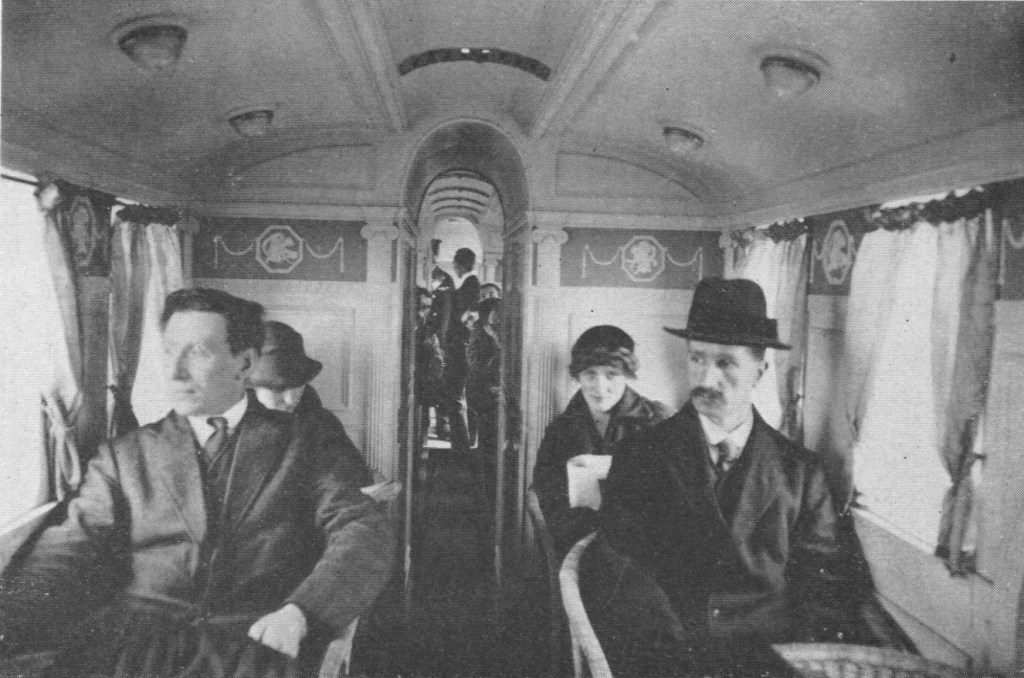
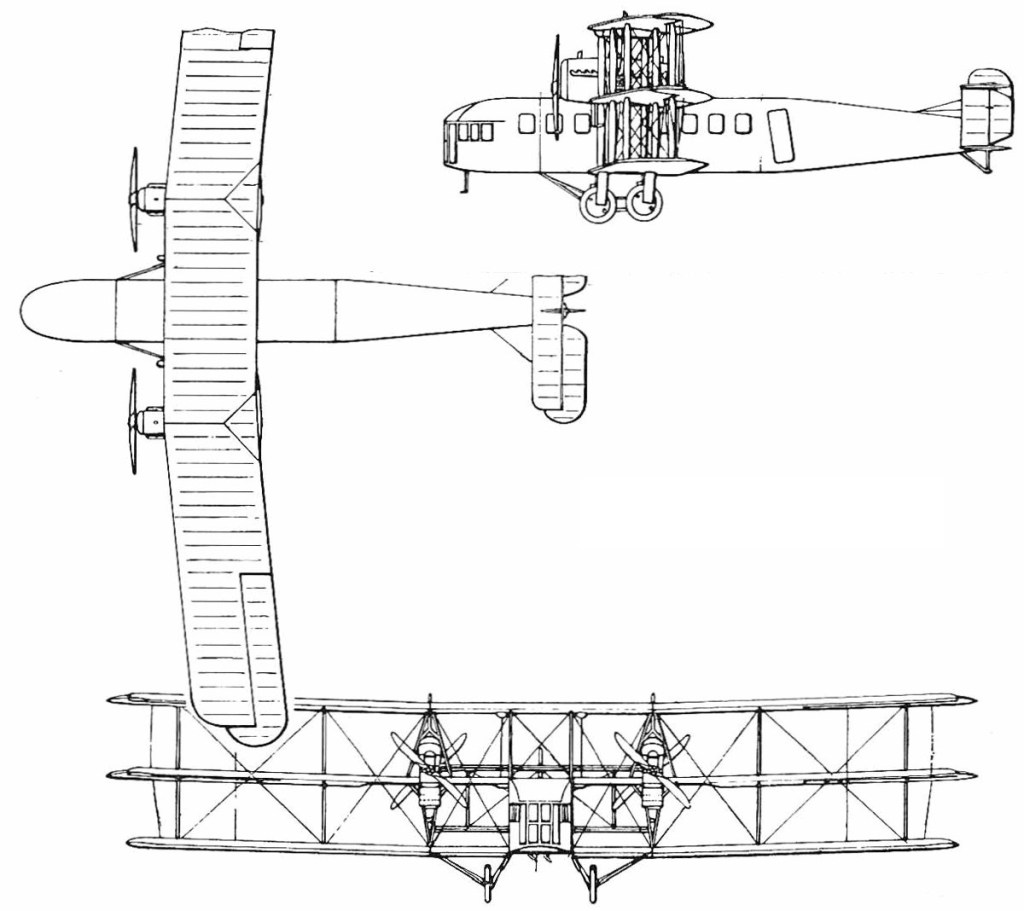
An unsuccessful contender for a 1917 large bomber requirement, the Bristol Braemar triplane formed the basis of the Pullman, an equally unwanted airliner with a large cabin and enclosed cockpit. The Pullman’s crew distrusted this feature and took to carrying axes with which to hack their way out in an emergency.
Bristol Pullman Engine: 4 x 400hp Liberty 12 inline piston engines Take-off weight: 8059 kg / 17767 lb Empty weight: 4994 kg / 11010 lb Wingspan: 24.89 m / 81 ft 8 in Length: 15.85 m / 52 ft 0 in Height: 6.10 m / 20 ft 0 in Wing area: 176.98 sq.m / 1905.00 sq ft Max. speed: 217 km/h / 135 mph Ceiling: 4572 m / 15000 ft Crew: 2 Passengers: 14
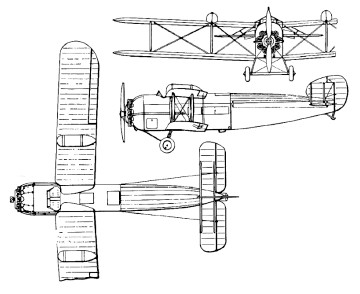
The Bristol Ten-seater and Bristol Brandon were British single-engine biplane transport aircraft built by the Bristol Aeroplane Company in the early 1920s. Only three were built, two of which were used as civil transports and one of which (the Bristol Brandon) served with the Royal Air Force.
Early in 1921, the British government provided subsidies for approved airlines, so Bristol’s management authorised Barnwell to proceed with a design for a single-engined transport aircraft. It was intended to be powered by a Bristol Jupiter engine, but this had not yet been type approved, so the initial prototype was fitted with a Napier Lion.
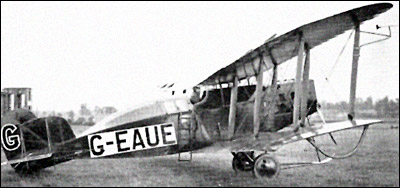
The Lion-engined prototype, the Bristol Type 62, or Bristol Ten-seater, with the registration G-EAWY first flew on 21 June 1921. The Ten-seater was a large, two bay biplane, with a cabin for nine passengers and a forward cockpit for the single pilot. The Type 62 had its Certificate of Airworthiness issued on 14 February 1922 and was transferred to Instone Air Line for service on its London to Paris route, carrying passengers and cargo. It was later transferred to Handley Page Transport Ltd.
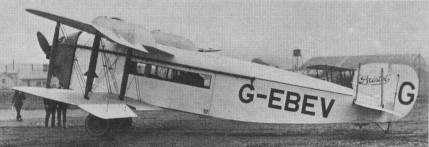
The second aircraft, the Bristol Type 75 was powered by the preferred Jupiter engine, which was mounted behind a fireproof bulkhead, with the entire engine installation capable of being swung open like a gate to allow easy access to the rear of the engine. The Type 75 was designed to accommodate eight passengers and two crew. This aircraft, registered G-EBEV, first flew in July 1922.
The Type 75 received its Certificate of Airworthiness on 16 July 1924. By this time, Instone Air Lines had merged with the other three subsidised British airlines to form Imperial Airways. Imperial had a policy of using only multi-engine aircraft for passenger flights, so the Type 75 was converted into a freighter to carry 1,800 lb (820 kg) of cargo, operating the London – Cologne route from 22 July 1924 until 1926. A second Type 75 was not completed, and was broken up for spares in 1923.
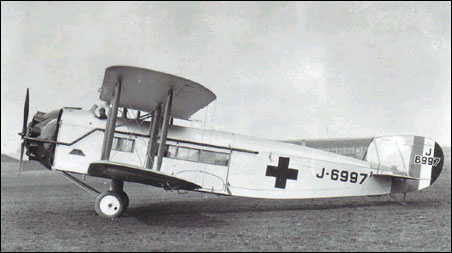
A third aircraft, the Bristol Type 79 was ordered by the Air Council to be equipped as a troop-carrier and air ambulance for the Royal Air Force. It was fitted with wings of greater chord, and had accommodation for three stretchers and an attendant or two stretchers and four sitting patients. The Type 79 first flew on 19 March 1924 and was delivered to the RAF, as the Bristol Brandon, in 1925. It was overweight at full load and did not go into overseas service, being used as an ambulance at RAF Halton together with the Avro Andover.
B.79 Brandon
Variants
Bristol Type 62 Ten-seater Engine: 450 hp (340 kW) Napier Lion
Bristol Type 75 Engine: Bristol Jupiter IV 9, 425 hp (317 kW) Wingspan: 56 ft 0 in (17.07 m) Length: 40 ft 6 in (12.35 m) Height: 11 ft 0 in (3.35 m) Wing area: 700 sq.ft (65.1 sq.m) Empty weight: 4,000 lb (1,818 kg) Max takeoff weight: 6,755 lb (3,070 kg) Service ceiling: 8,500 ft (2,600 m) Wing loading: 9.65 lb/sq.ft (47.2 kg/sq.m) Endurance: 5 hours 30 min Maximum speed: 96 knots (110 mph, 177 km/h) Crew: 2 Capacity: Eight passengers or 1,800 lb (820 kg)
Bristol Type 79 Brandon Engine: 425 hp Bristol Jupiter IV Take-off weight: 3223 kg / 7106 lb Empty weight: 1984 kg / 4374 lb Wingspan: 16.48 m / 54 ft 1 in Length: 12.88 m / 42 ft 3 in Height: 4.37 m / 14 ft 4 in Wing area: 82.68 sq.m /889.96 sq ft Max. Speed: 185 km/h / 115 mph Ceiling: 2591 m / 8500 ft Crew: 2 Passengers: 8
Rules of a competition released in July 1919 emphasised safety in terms of a short takeoff and slow landing speed as well as useful load and economy, and Bristol decided that a modification of the Tourer was their best hope.
The single passenger was enclosed in a cabin immediately behind the pilot’s open cockpit, with a raised roof and windows in the decking where the second seat in the Tourer had been. The fuselage was deepened by dropping the lower longerons and floor to the lower wing spar. Ahead of the pilot, the fuselage bays were built from steel rather than wood spars. The single-axle main undercarriage carried wheels with disc brakes; there was a central skid to prevent nosing over and fenders under the wing tips. The tail skid was steerable and sprung. The Seely was a three-bay biplane with greater wing area than the Tourer, with ailerons on both upper and lower wings. The rudder was horn balanced and the fin area generous. For the competition, it was powered by a water-cooled upright in-line 240 hp (180 kW) Siddeley Puma with a large nose radiator behind the wooden two-blade propeller. There were only two other aircraft in the competition, held at RAF Martlesham Heath in August 1920, the Westland Limousine and the Sopwith Antelope. Westland was the winner of the competition and Bristol retained the Seely on general duties until 1923, when it was converted into a test bed for Jupiter development, being purchased by the Air Ministry for use with the Royal Aircraft Establishment. It was fitted with a 435 hp (324 kW) Jupiter III nine-cylinder radial engine driving a steel two-bladed Leitner-Watts propeller. The Jupiter had an exhaust-driven supercharger to enhance high-altitude performance, raising the Seely’s service ceiling from 18,000 ft (5,490 m) with the Puma to 24,000 ft (8,230 m). At these altitudes, the enclosed cabin provided the observer with relief from the elements.
Engine: Siddeley Puma, 240 hp (180 kW) Gross weight: 3,000 lb (1,360 kg) Empty weight: 908 kg / 2002 lb Wingspan: 14.40 m / 47 ft 3 in Length: 8.99 m / 29 ft 6 in Height: 3.66 m / 12 ft 0 in Wing area: 52.58 sq.m / 565.97 sq ft Max. Speed at sea level: 177 km/h / 110 mph Ceiling: 5486 m / 18000 ft Seats: 2
In 1919, Frank Barnwell crashed the MR1 – the first all-metal airframe produced by Bristol and a development of the F2B – into a tree at Farnborough, successfully decapitating the tree and writing the airframe off in the process.
Engine: 1 x 140hp Hispano-Suiza Take-off weight: 1276 kg / 2813 lb Empty weight: 772 kg / 1702 lb Wingspan: 12.85 m / 42 ft 2 in Length: 8.23 m / 27 ft 0 in Height: 3.12 m / 10 ft 3 in Wing area: 42.55 sq.m / 458.00 sq ft Max. speed: 177 km/h / 110 mph
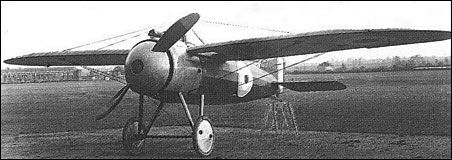
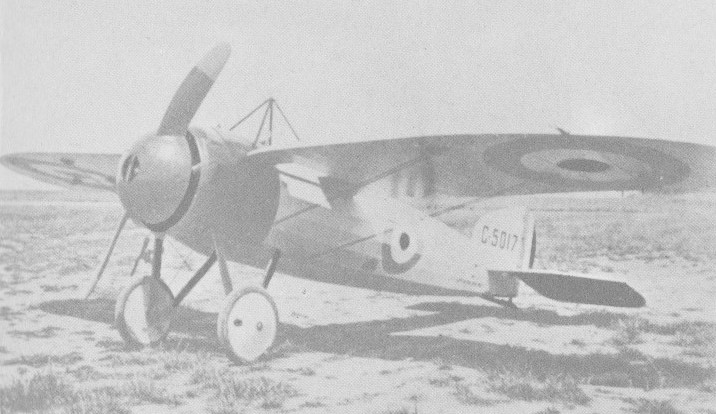
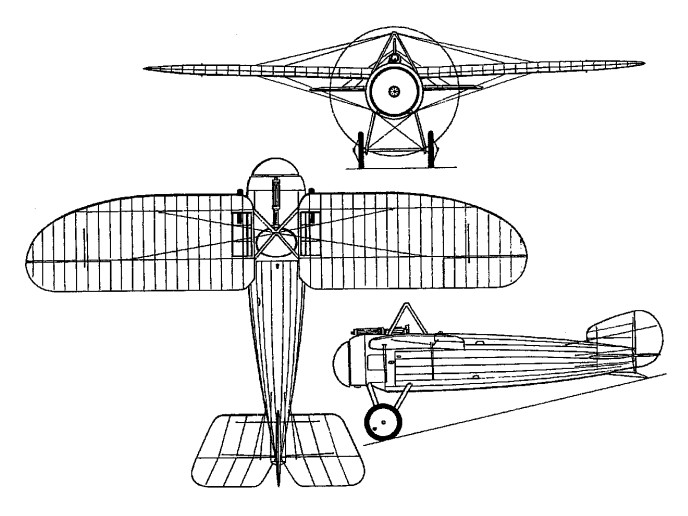
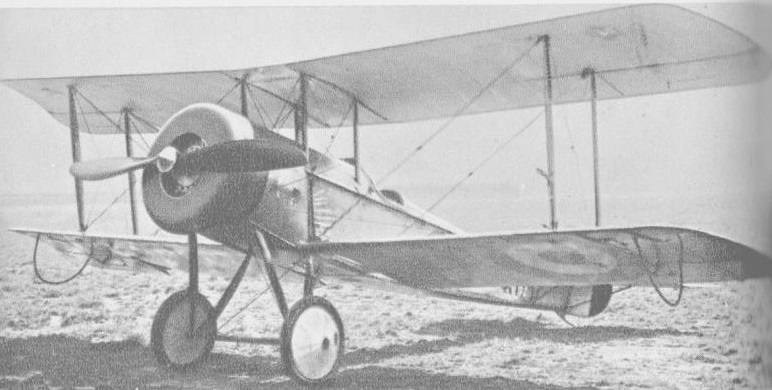
The prototype Bristol M.1A, designed by Frank Barnwell with a 110 hp Clerget engine, flew for the first time on 14 July 1916. Streamlined for its day, it reached a top speed of 132 mph.
Four M.1B’s were built for service trials, differing from the prototype only in having a pyramid-shape wing support structure, in place of the former curved cabane, and a 7.7mm Vickers machine-gun on the port side of their front fuselage and a clear-view cut-out panel in the starboard wing root to afford the pilot a measure of downward visibility.
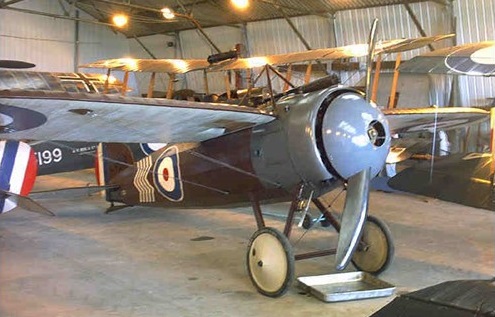
A production order for 125 aircraft was placed on 3 August 1917 as M.1s. Powered by a 110hp Le Rhone 9J nine-cylinder rotary engine, the M.1C had a centrally-mounted Vickers gun, but its subsequent operational career was largely confined to the Middle East where 33 M.1Cs were sent during 1917-18.
M .1C
Only five squadrons were partly equipped with the M1 for operational use although a number were issued to flying schools. No aircraft of this type were issued to RFC squadrons based in France, the 97km/h landing speed being considered too high for small Western Front airfields.
M.1C Engine: 110hp Le Rhone 9J nine-cylinder rotary Wingspan: 9.37 m / 30 ft 9 in Length: 6.23 m / 20 ft 5 in Height: 2.37 m / 7 ft 9 in Wing area: 13.47 sq.m / 144.99 sq ft Empty weight: 406 kg / 895 lb Take-off weight: 611 kg / 1347 lb Fuel capacity: 18 gal Max. speed: 209 km/h / 130 mph at SL Service ceiling: 20,000 ft Endurance: 1 hr 45 min Armament: 1 x Vickers 7.7mm mg Seats: 1
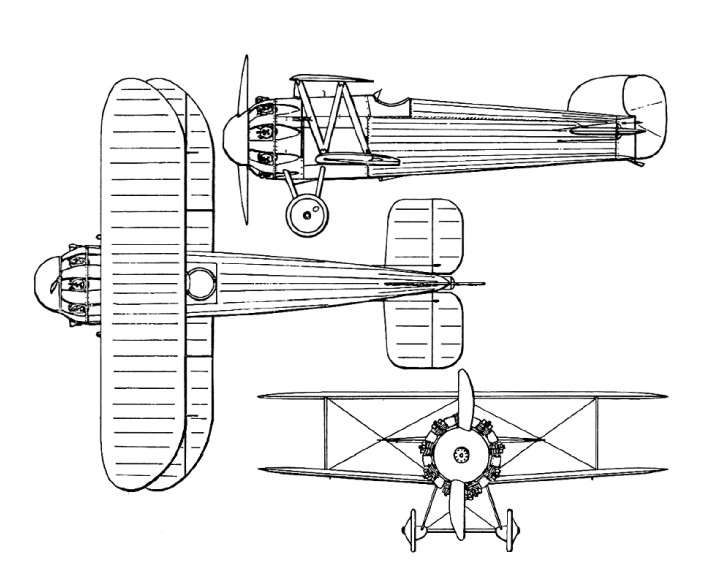
Bristol Bullet Engine: 1 x 450hp Bristol Jupiter II Take-off weight: 1044 kg / 2302 lb Empty weight: 817 kg / 1801 lb Wingspan: 9.50 m / 31 ft 2 in Length: 7.34 m / 24 ft 1 in Height: 2.95 m / 9 ft 8 in Wing area: 27.41 sq.m / 295.04 sq ft Max. Speed: 250 km/h / 155 mph Endurance: 2 hr 30 min Crew: 1
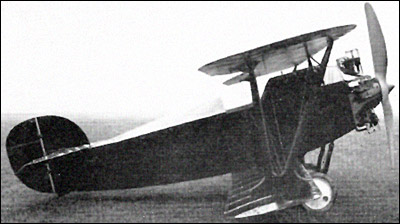
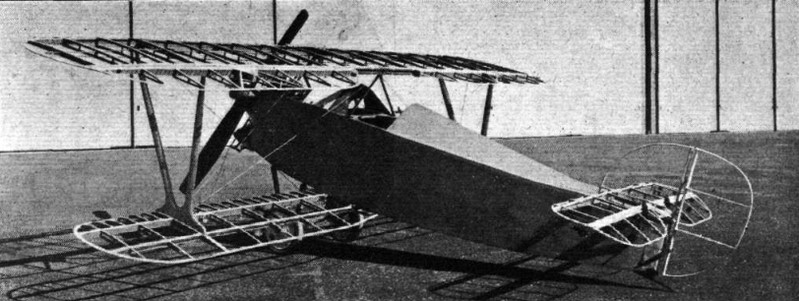
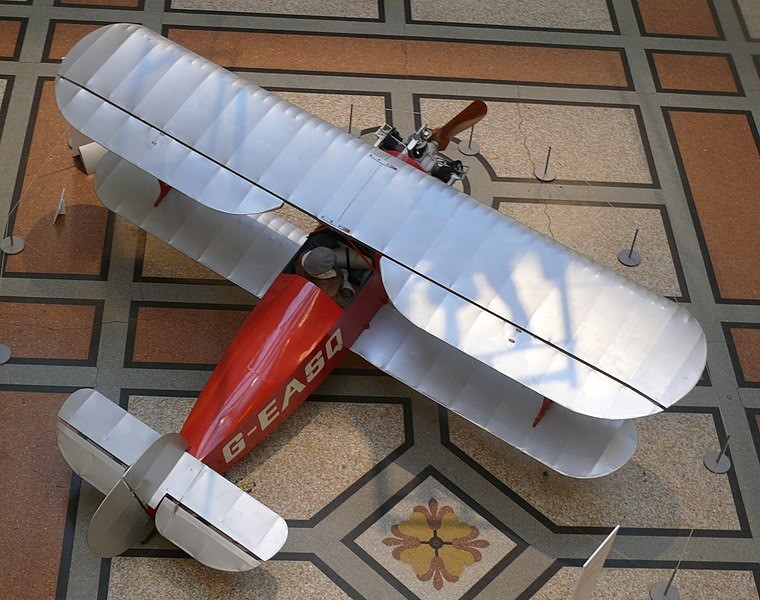
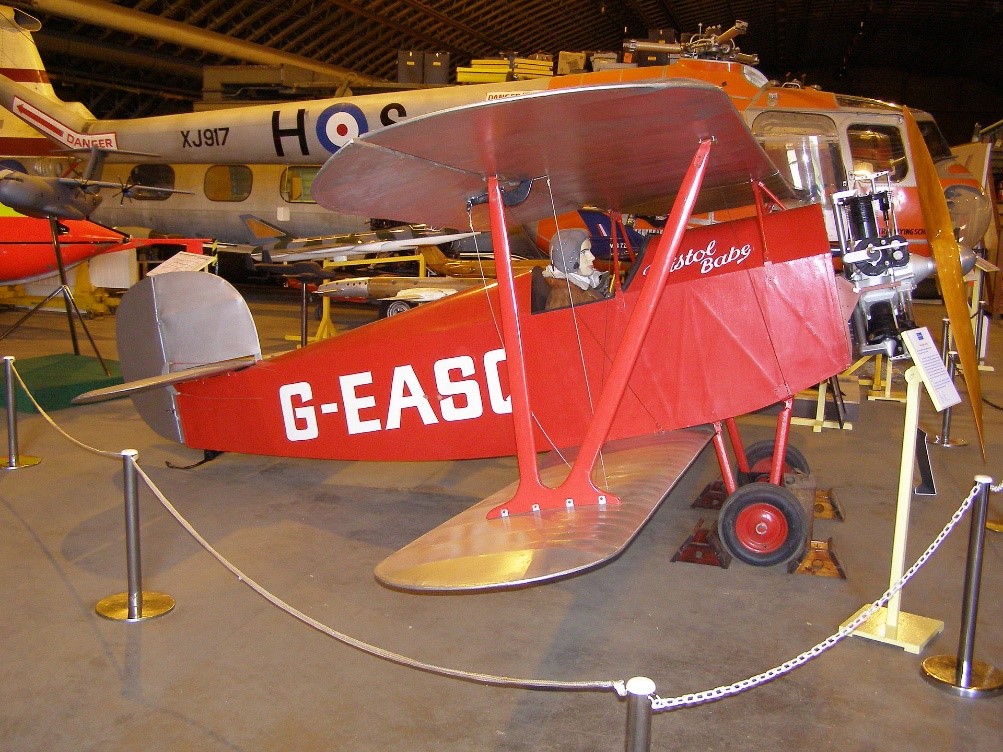
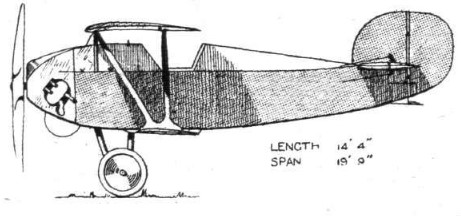
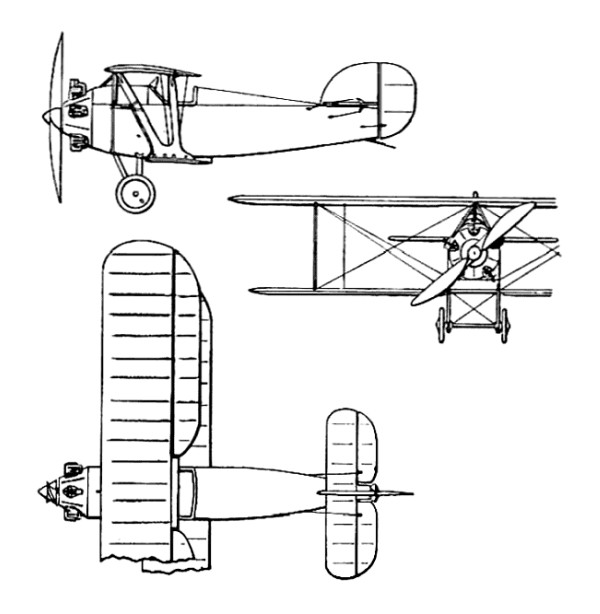
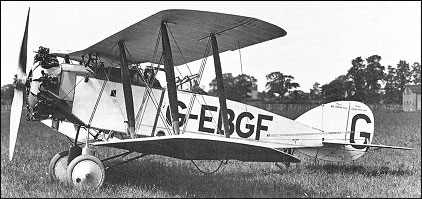
The Bristol Babe was the creation of Frank Barnwell, Bristol’s chief designer. It was aimed at the private owner flyer and was a small single-engined single-seat biplane with unswept staggered single-bay wings of unequal span. Full-span ailerons were fitted on the top wing only. The fuselage was plywood-skinned, with fabric covering it for protection. The cockpit was below the upper wing trailing edge with rounded decking aft to the tail. The fin and rudder were generous and rounded, the undercarriage a conventional single-axle plus tailskid arrangement.
The original intention was to use the 60 hp (50 kW) ABC Gadfly radial, but in April 1919 ABC pulled out of aero-engine manufacture. A possible alternative was the 40 hp (30 kW) flat-twin Siddeley Ounce currently being developed, so a third Babe was begun as a testbed. In the meantime, Barnwell resurrected a 1911 Viale 35 hp five-cylinder radial engine of 45 hp (34 kW) that had been installed in an Avro Type F and which had been put into storage following a crash. This engine ran satisfactorily for up to half an hour, after which it tended to overheat. This was installed in the second Babe which made its first flight on 28 November 1919. The pilot, Cyril Uwins reported that it was an easy aircraft for an experienced pilot but rather unstable for a novice.
Though it was useful for testing, the old Viale was not reliable enough for sale, so following discussions at the Paris Aero Show in November 1919, two seven-cylinder 60 hp (50 kW) Le Rhône Type 7B2 rotary engines were ordered for the first two Babes. The third Babe appeared at this show with an incomplete Ounce engine.
Replica
The second Babe built was referred to as the Babe I when it had the Viale engine and then as the Babe III with the Le Rhône engine. The Le Rhône-powered first machine was the other Babe III. The Ounce-powered third machine, designated Babe II, never flew, but the two Babe IIIs did and were registered over the winter of 1919-20.
The first Babe underwent a drastic modification in May 1920 when it received a thick cantilever monoplane wing. Safety concerns prevented its testing and by February 1921 both aircraft were off the Civil Register. The Viale engine is now in the Science Museum, London. In the retrospective allocation of Bristol type numbers made in 1923, the Babe I was labelled Type 30, the Babe IIs as Type 46 and the unflown Babe III the Type 46A.
Replica
Engine: 1 x 45hp Viale Wingspan: 5.99 m / 19 ft 8 in Wing area: 10.03 sq.m / 107.96 sq ft Length: 4.55 m / 14 ft 11 in Height: 1.75 m / 5 ft 9 in Take-off weight: 310 kg / 683 lb Empty weight: 209 kg / 461 lb Max. Speed: 137 km/h / 85 mph Ceiling: 3048 m / 10000 ft Crew: 1
Babe III Powerplant: 1 × Le Rhône Type 7B2, 60 hp (45 kW) Wingspan: 19 ft 8 in (6.00 m) Wing area: 108 sq ft (10.0 m2) Length: 14 ft 11 in (4.55 m) Height: 5 ft 9 in (1.75 m) Empty weight: 460 lb (209 kg) Gross weight: 840 lb (381 kg) Maximum speed: 107 mph (172 km/h, 93 kn) Service ceiling: 15,000 ft (4,570 m) Crew: one
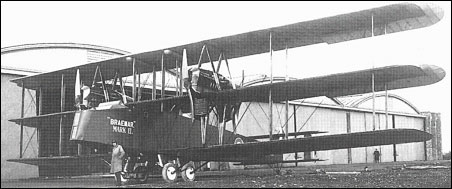
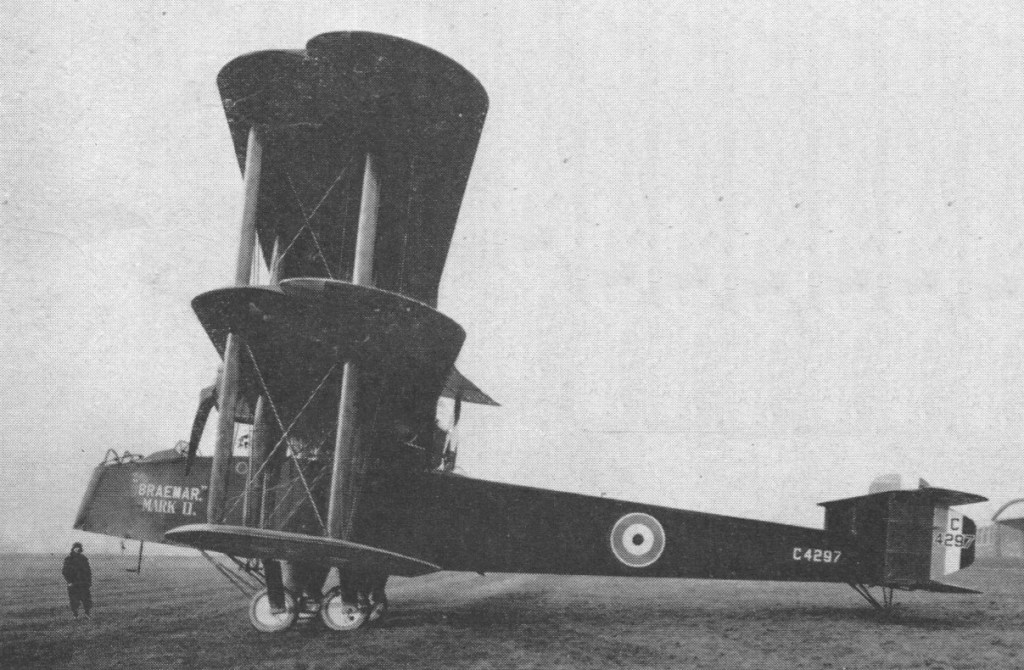
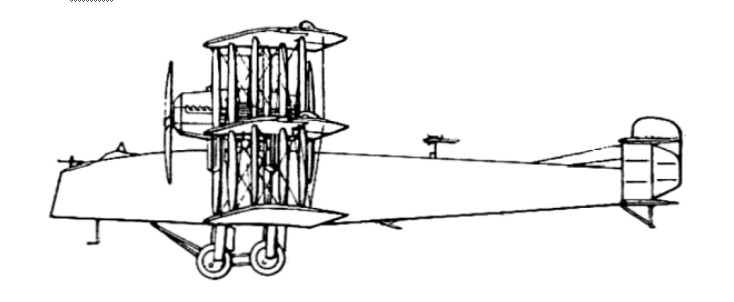
An unsuccessful contender for a 1917 large bomber requirement, the four engined triplane Bristol Braemar which did not go into production. The Braemar formed the basis of the Pullman, an equally unwanted airliner with a large cabin and enclosed cockpit. The Pullman’s crew distrusted this feature and took to carrying axes with which to hack their way out in an emergency.
Braemar Mark II Engine: 4 x 410hp Liberty 12A water-cooled in-line engines Wingspan: 24.89 m / 81 ft 8 in Length: 15.70 m / 51 ft 6 in Height: 6.30 m / 20 ft 8 in Wing area: 176.98 sq.m / 1905.00 sq ft Take-off weight: 8399 kg / 18517 lb Empty weight: 4835 kg / 10659 lb Max. speed: 201 km/h / 125 mph Ceiling: 5182 m / 17000 ft Crew: 6 Armament: 5 x 7.7mm machine-guns, 6 x 100kg bombs
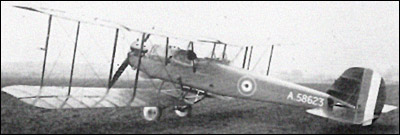
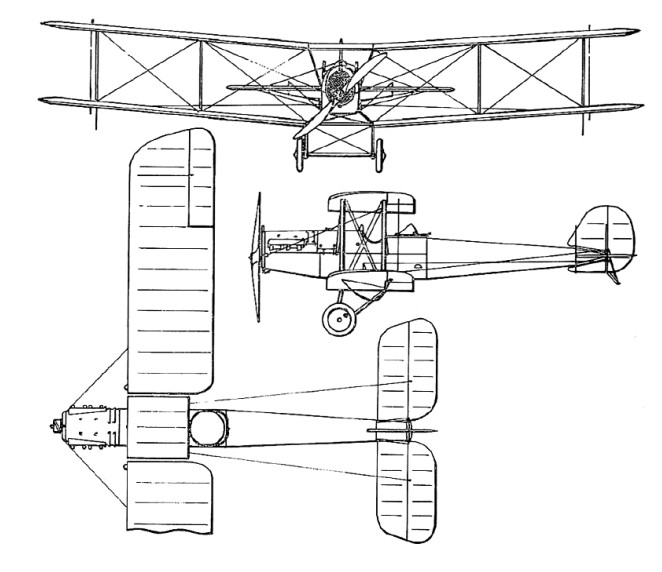
The Jupiter Fighter was essentially an adaptation of the F.2B airframe to take a 425hp Bristol Jupiter IV engine and an oleo-type undercarriage. Three conversions were completed, the first of these flying in June 1923. One of the three Jupiter Fighters was purchased by the Swedish government and entered service with Flygkompaniet in May 1924. The first Jupiter Fighter had crashed on 23 November 1923 as a result of an engine seizure at high altitude, and, in September 1924, the third example was converted as a dual-control trainer.
Engine: 425hp Bristol Jupiter IV Take-off weight: 1397 kg / 3080 lb Empty weight: 993 kg / 2189 lb Wingspan: 11.96 m / 39 ft 3 in Length: 7.62 m / 25 ft 0 in Height: 2.89 m / 9 ft 6 in Wing area: 37.62 sq.m / 404.94 sq ft Max. speed: 216 km/h / 134 mph