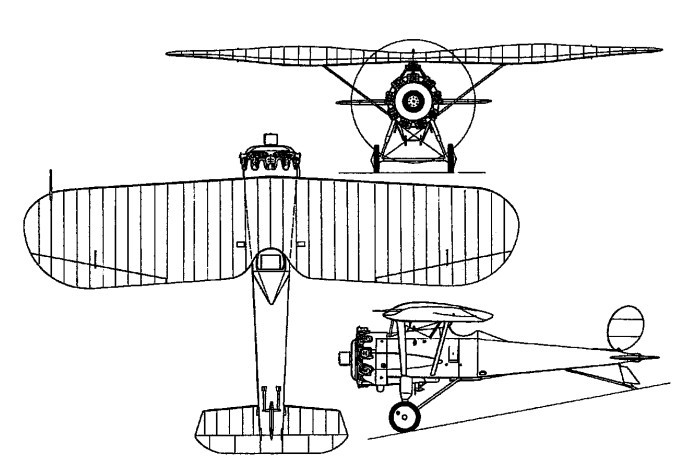
In 1911, George Challenger and Archibald Low designed the single seat Bristol Monoplane, powered by a 50 hp Gnôme rotary engine. Two of these machines (No. 35 and No. 36) were built, and exhibited at the Olympia Aero Show in February and in St. Petersburg in March. The monoplane tried at Larkhill, where it was damaged during taxi tests. It was not rebuilt, due to the more promising Bristol-Prier monoplane then under construction.
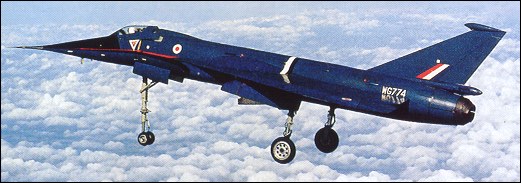
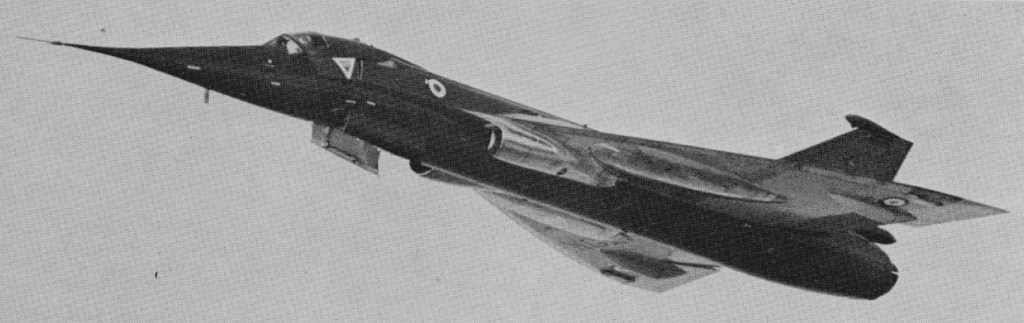
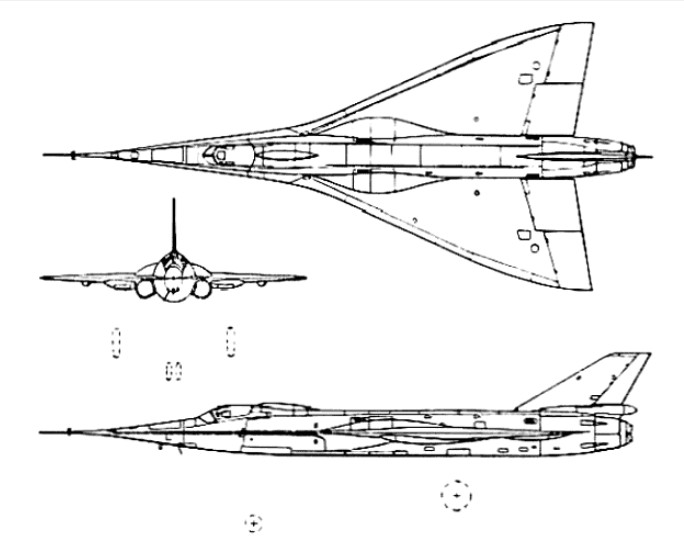
The last of the ‘Bristol’ aircraft was the purely research aeroplane, the Type 221. With the B.188, they furnished valuable information on the structural and aerodynamic problems associated with supersonic flight. The Type 221, first flown was on May 1, 1964, was a modified version of the record breaking Fairey Delta 2 and used to investigate the handling and control characteristics of the slender ogival wing, which was again to feature in the Concorde.
Engine: 1 x 5000kg Wingspan: 7.62 m / 25 ft 0 in Length: 17.55 m / 57 ft 7 in Height: 3.96 m / 12 ft 12 in Wing area: 46.82 sq.m / 503.97 sq ft Max. speed: 1707 km/h / 1061 mph Crew: 1
In the late 1950s the Bristol aircraft design team, under the leadership of Dr Archibald E. Russell, was awarded important MoS contracts for design and feasibility studies in the development of a supersonic transport. After an outline design for a thin delta wing with pencil fuselage had been accepted, the Bristol Type 198 was projected. This would have been a trans Atlantic range delta aircraft powered by six Bristol Olympus engines. The government decided that this 380,000 lb machine was too heavy and asked for a smaller design, capable of carrying 100 passengers across the Atlantic, with a maximum weight of 250,0001b. This resulted in the Type 223 which formed the basis for the British contribution to the collaborative venture with France which was agreed in November 1962 and resulted in Concorde. Concorde 002, G BSST, made its inaugural flight from Filton on 9 April 1969
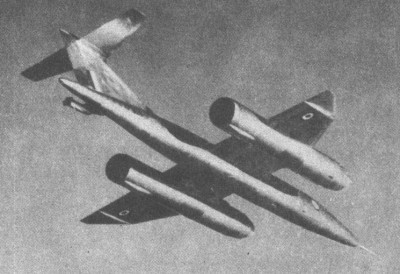
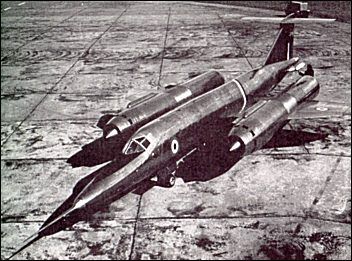
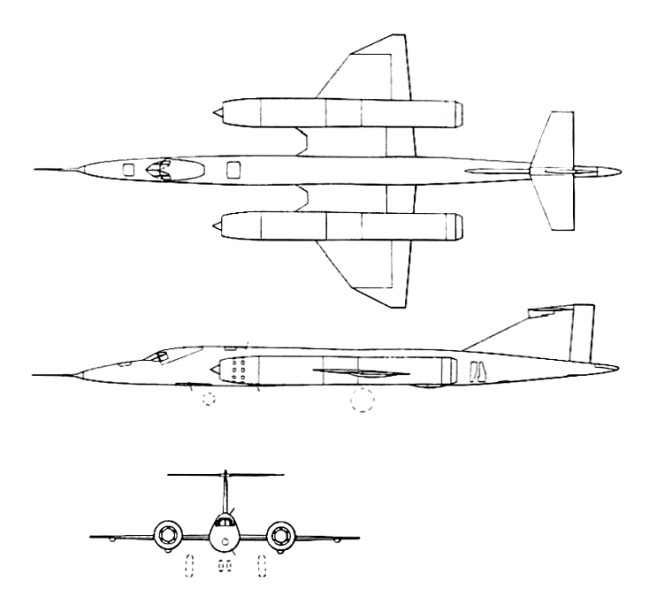
The Bristol 188 was designed to research structures for sustained supersonic flight, particularly in support of the Avro 730 reconnaissance aircraft. This required the aircraft to ‘soak’ at Mach 2.6 for at least 30 minutes. The Bristol Type 188 research aircraft XF962 was built for high speed research. Two examples were built, constructed mainly of stainless steel and highly polished natural metal finish. Powered by two de Havilland Gyron Junior turbojets, the type first flew on 29 April 1963 and subsequently attained Mach 1.88 at 36,000 ft. However, the 188 had an extremely high fuel consumption and was only able to remain airborne for about 25 minutes.
Take-off speed was nearly 483km/h, but in all other respects the 188’s speed was slower than desired, being able to achieve Mach 2.0 for only a couple of minutes. The whole project cost a huge GBP20 million and failed to achieve its objectives. It was wound down rather than develop the engines further. Test pilot Godfrey Auty was voted the ‘man most likely to eject in the coming year’ by his peers but never had to.
In 1964 the B.188 was indefinitely grounded, less than two-years after the first of two flew. A third never reached flight. The most expensive research aircraft built in Britain, the B.188 which a list of projects up to Mach 3 was to be flying for 12 to 15 years. For some time, one plane was cannibalised to support another.
B.188 Engines: 2 x de Havilland Gyron Junior DGJ.10R turbojets, 6350kg Wingspan: 10.69 m / 35 ft 1 in Length: 21.64 m / 70 ft 12 in Height: 4.06 m / 13 ft 4 in Wing area: 36.79 sq.m / 396.00 sq ft Max. speed: 1932 km/h / 1201 mph Crew: 1
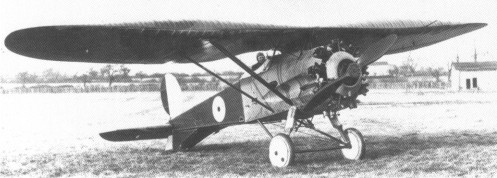
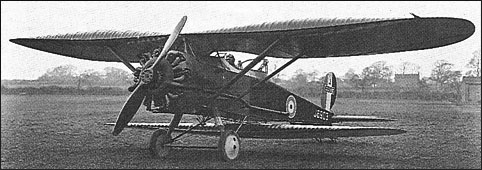
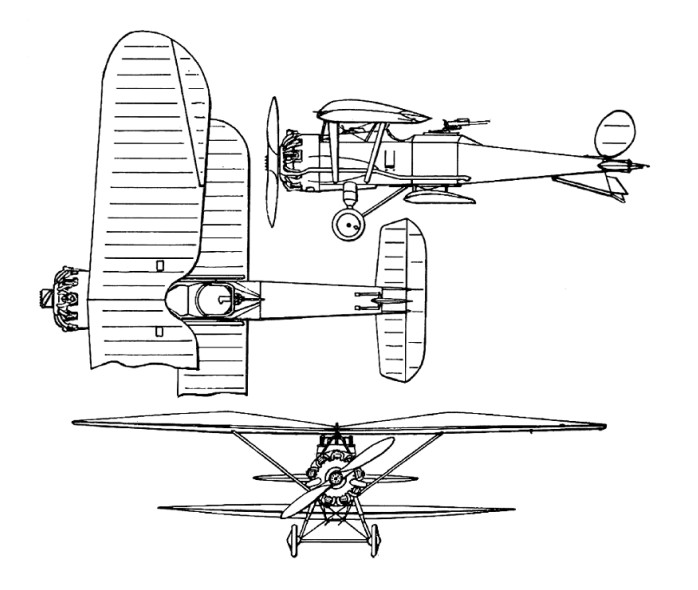
Captain Frank Barnwell designed the MF as an all-metal parasol-wing monoplane that could be flown as the MFA single-seat fighter or MFB two-seat reconnaissance plane. The latter had an extra fuselage section behind the cockpit for the gunner’s position and, below this on a short cabane arrangement, a cantilever second wing. In April 1921 the Air Ministry ordered three prototypes with wooden wings. Bristol proposed the name Pegasus, but this did not conform with current British practise and the two MFAs became Bullfinch Mk Is while the sole MFB became the two-seat Bullfinch Mk II. By March 1922, when the name Bullfinch was officially adopted, the decision had been taken to complete two of the prototypes as single-seaters, these being delivered in April 1923. Armed with two 7.7mm Vickers machine guns, the Bullfinch single-seaters were flown experimentally by the RAF and were found to offer a relatively good performance on the 425hp of a Bristol Jupiter III radial, but no production order was forthcoming. The Mk II was first flown on 15 February 1924 and delivered in March 1924. The Bullfinch II differed from the single-seat model primarily in having a 91.4cm section housing a self-contained gunner’s cockpit inserted in the fuselage immediately aft of the pilot’s cockpit and beneath which was attached a cantilever lower wing, the resultant shift of the centre of pressure compensating for the change in the CG. The only other change consisted of the repositioning of the main undercarriage members farther aft. The rear cockpit was fitted with a Scarff-mounted 7.7mm Lewis gun, and structural weight was increased by 145kg. The 425hp Jupiter III engine was insufficiently powerful to cater for the additional 400kg of the two-seater in fully loaded condition and the performance of the Bullfinch II suffered. Both variants were fully evaluated, but no orders followed.
Bullfinch II
Principal versions – Bullfinch Mk I (single-seat fighter prototype) and Bullfinch Mk II (two-seat reconnaissance prototype).
Bullfinch Mk.I Engine: one 450-hp (336-kW) Bristol Jupiter III radial Maximum speed 135 mph (217 km/h) at 15,000 ft (4,570 m) Srvice ceiling 22,000 ft (6,705 m) Endurance 4 hours 0 minutes. Empty weight 2,175 lb (987 kg) Maximum take-off weight 3.205 lb (1,454 kg). Wing span 38 ft 5 in (11.71 m) Length 24 ft 5 in (7.44 m) Height 10 ft 9 in (3.27 m) Wing area 267.0 sq ft (24.80 sq.m). Armament: two 0.303-in (7.7-mm) fixed machine guns.
Bullfinch Mk.II Engine: 425hp Jupiter III Take-off weight: 1854 kg / 4087 lb Empty weight: 1132 kg / 2496 lb Wingspan: 11.71 m / 38 ft 5 in Length: 8.38 m / 27 ft 6 in Height: 3.28 m / 10 ft 9 in Wing area: 36.32 sq.m / 390.94 sq ft Max. speed: 193 km/h / 120 mph
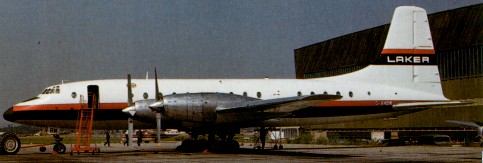
The Type 175 began as a Medium Range Empire (MRE) design to meet BOAC requirements set down in MoS Specifica¬tion 2/47. Designed to carry 32-36 passengers and be powered by four Bristol Centaurus 662 sleeve-valve engines, the aircraft’s size was soon increased and consideration given to the installation of Bristol Proteus turbines or Napier Nomad compound engines. After some delay, in June 1948 the Ministry of Supply ordered three Centaurus-powered prototypes but stipulated that the second and third should be capable of conversion to Proteus-engined aircraft. When the first prototype emerged in 1952 it was a much bigger aeroplane with accommodation for more than 80 passengers and powered by Proteus 625 engines. Prototypes were ordered in February 1948 and the first of these was airborne at Filton on 16 August 1952, powered by Bristol’s new Proteus turboprop.
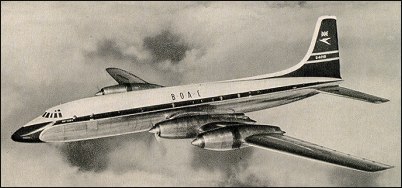
The second prototype was lost after only 51hr flying and a major engine fault delayed entry into service with BOAC until February 1957. On 1 February 1957 BOAC began operating Britannia 102 with 2,906kW Proteus 705 and up to 90 seats on its London-Johannesburg services.
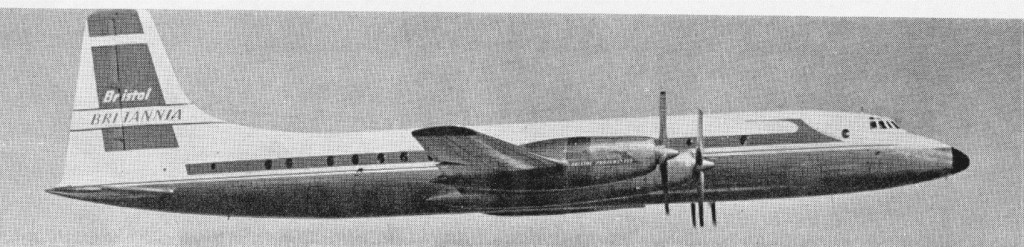
A number of versions were developed from the Series 100 aircraft and on 19 December 1957, BOAC began the first turbine-powered North Atlantic service when it put Britannia 312 on the London-New York route. These were 3.12m longer, had accommodation for up to 139 passengers, were powered by 3,070kW Proteus 755 and had a 13,608kg increase in max weight. On the day that BOAC introduced Britannias on the North Atlantic, El Al flew a Britannia 10,328km non-stop from New York to Tel Aviv.
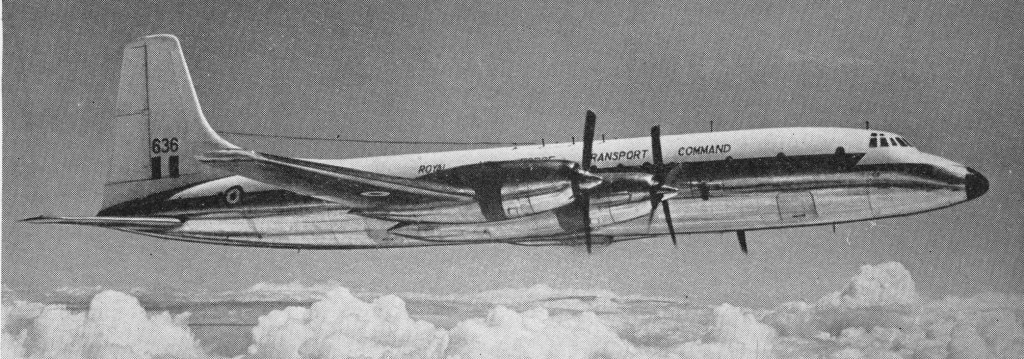
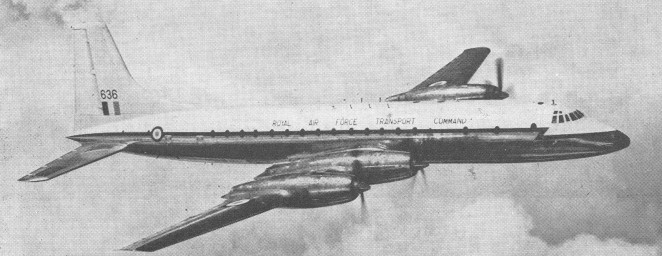
The Bristol Britannia entered RAF Transport Command service with No.99 Squadron, at Lyneham, Wiltshire, in mid-1959. As Britannia C.1, twenty Britannia 250 were operated with strengthened floor and large freight loading doors. Three Britannia C.2s were purchased by the Ministry of Supply for use on trooping flights.
The Britannia 310 was ordered by BOAC, El Al, Hunting Clan, Canadian Pacific Airlines and Cubana.
Britannia 310
Only 85 Britannias were built at Filton and by Shorts at Belfast.
Canadair developed the Britannia design into the military CL-28 Argus and CL-44 Yukon and the CL-44 series of passenger and cargo aircraft.
100 Series 90 passenger airliner All built at Filton Engines: four Bristol Proteus 705, 4,400 h.p. Length: 114 feet Height: 36 feet 8 inches Wing Span: 142 feet 3 inches Weight (empty): 88,000lbs Weight (all-up): 155,000lbs Range: 3,450 miles
101 – Two prototypes, initially powered by Proteus 625, later 705 102 – 25 ordered by BOAC. The last ten were cancelled in favour of the 300 series.
200 Series All-cargo stretched version of the 100 series, with an extra 10 ft in length. Five options from BOAC, but cancelled in favour of the 310. None built.
250 Series As 200 series, but mixed passenger and freight Length: 124 feet 3 inches Height: 37 feet 6 inches Wing Span: 142 feet 3 inches Weight (empty): 90,500lbs (90,600lbs for 253) Weight (all-up): 185,000lbs Range: 2,268 miles
252 – Three ordered by Royal Air Force and given the designation C Mark 2. All built at Belfast. 253 – 22 ordered by Royal Air Force, with designation C Mark 1. All but the last five were built at Belfast, the remainder were built at Filton
300 Series As 200 series, by passenger only. Capable of carrying up to 139 passengers. Engines: 4 x 4,400 h.p. Bristol Siddeley Proteus 705 turboprop Length: 124 feet 3 inches (37.89 m.) Height: 37 feet 6 inches Wing Span: 142 feet 3 inches (43.38 m) Weight (empty): 92,500lbs Weight (all-up): 185,000lbs Econ cruise: 355 m.p.h. (570 kph) Range: 3,496 miles Range 4,268 miles (6,869 km.) with max. payload of 28,000 lb (12,700 kg) Crew: 9 Pax cap: 133
301 – one prototype, built at Filton 302 – Ten ordered by BOAC. Order cancelled in favour of 305 Series, later 310 series. Two were completed, but not delivered. Both were built at Belfast.
305 Series As 300, but with increased fuel capacity Length: 124 feet 3 inches Height: 37 feet 6 inches Wing Span: 142 feet 3 inches Weight (empty): 90,000lbs Weight (all-up): 185,000lbs Range: 4,268 miles
306 – 1 built, leased to El Al. built at Belfast 307 – 2 ordered by Air Charter. One was a conversion of the sole 306, the other was built at Belfast. 307F – 1960’s conversion of 307 to freighter (both Series 307 aircraft converted) 308 – 2 ordered by Transcontinental, built at Belfast. 308F – 1960’s conversion of 308 to freighter (both Series 308 aircraft were converted) 309 – 1 ordered by Ghana Airways, built at Belfast.
310 Series Initially known as 300LR. As 305 series, but with strengthened fuselage skin and undercarriage. Engines: 4 x Bristol Proteus, 4120 shp Length: 124 feet 3 inches (37.89 m) Height: 37 feet 6 inches Wing Span: 142 feet 3 inches (43.38 m) Weight (empty): 82,500lbs Weight (all-up): 185,000lbs Range: 4,268 miles Max level speed: 385 mph (616 kph)
311 – one prototype, built at Filton. 312 – 19 ordered by BOAC, all built at Filton. Engine : 4 x Proteus 755, 4064 shp Length: 124.245 ft / 37.87 m Height: 37.5 ft / 11.43 m Wingspan : 142.224 ft / 43.35 m Max take off weight : 185030.4 lb / 83914.0 kg Max. speed : 345 kts / 639 km/h Service ceiling : 26247 ft / 8000 m Range : 5004 nm / 9268 km Crew : 5 + 133 PAX
312F – 1960’s conversion of 312 to freighter (five converted) 313 – Four ordered by El Al, all built at Filton. 314 – Six ordered by Canadian Pacific, all bar one built at Belfast. 317 – Two ordered by Hunting-Clan Air Transport, all built at Filton. 318 – Four ordered by Cubana, all built at Filton. 320 Series – as Series 310, with a few modifications, giving increased maximum range. Length: 124 feet 3 inches Height: 37 feet 6 inches Wing Span: 142 feet 3 inches Weight (empty): 86,400lbs Weight (all-up): 185,000lbs Range: 4,268 miles
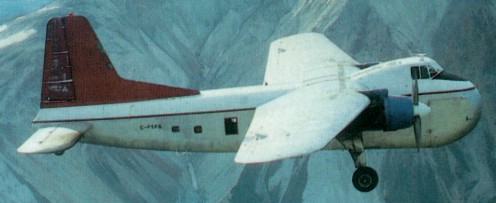
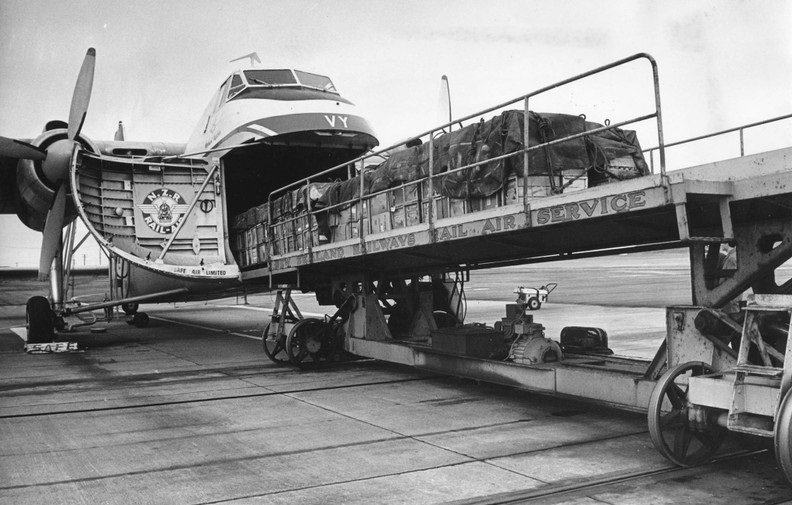
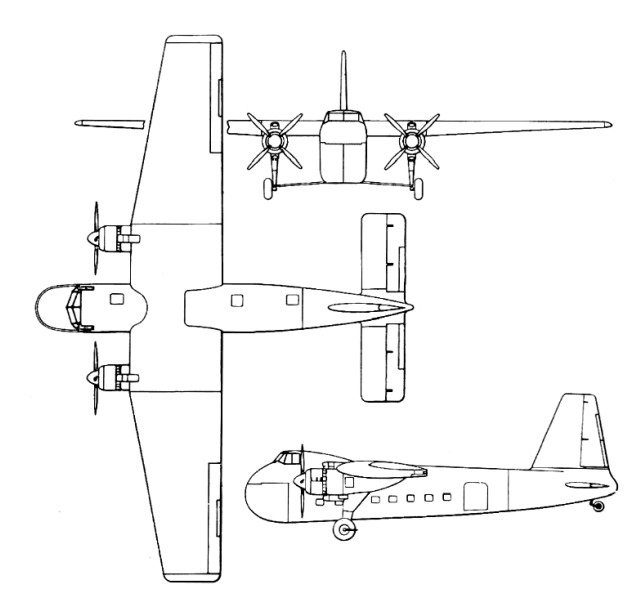
An immediate postwar civil aircraft project, Type 170, was a freighter derived from the Bombay military transport. The Type 170 was designed as a passenger, freight/passenger or all-freight transport aircraft to Specification 22/44 to carry a high payload on short-range flights. Because the campaign against the Japanese in Burma was still under way, a second Specification (G.9/45) was issued to provide a military transport capable of carrying into jungle areas a three-ton payload, including heavy trucks, guns, 28 stretchers and attendants, 36 fully equipped troops, 23 paratroops or other military loads. Large twin nose-doors facilitated loading and unloading of cargo.
The first of the two prototypes flew on 2 December 1945, by which time it was too late to see service during World War II. But surveys had shown that there was a genuine need for a similar aircraft for post-war commercial services and so the Freighter and Wayfarer were put into production, with nose-doors for loading freight or mixed passenger/freight-carrying and without nose-doors but seating for 36 passengers respectively.
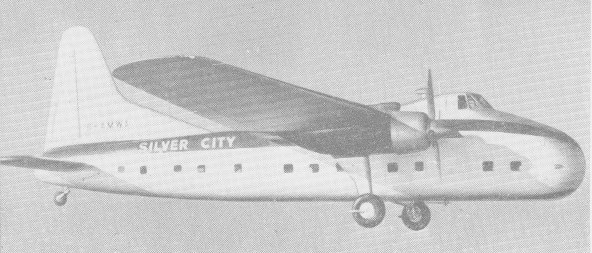
Of the 214 Bristol Type 170 built between December 1945 and March 1958, the the Mk 32 with a 5 ft lengthened fuselage, was ordered by Silver City Airways. This version could accommodate two or three cars and 23 passengers.
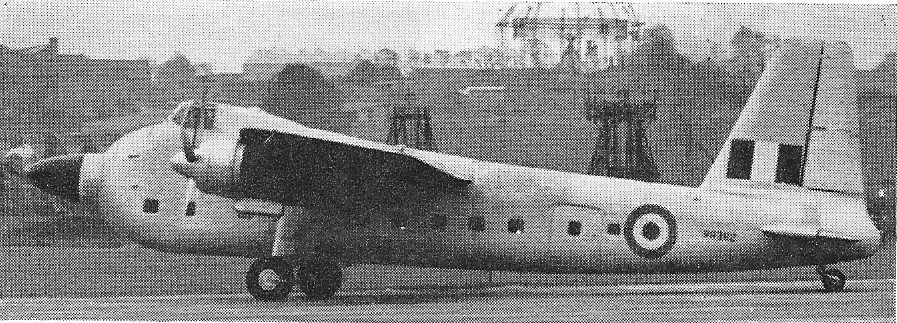
Apart from the large numbers of commercial versions which were supplied for use in all parts of the world for a variety of duties, the Type 170 was also produced as a military transport and served with the RAAF, and RCAF (Mk 31 freighter version). A major user of the B-170 was the Pakistani Air Force, buying 38 in all. The RNZAF also became one of the major users of the B-170, buying 12, and operating them in the tactical transport role in New Zealand and South East Asia and flying them with a single pilot, a navigator and a signaller; and eventually losing two in accidents before retiring of the remainder in 1977.
In 1957 the two B.170s used at R.R.E. Defford as flying test beds for the development of air interception radar were scrapped. They were VR380 (ex-G-GAPV) and VR382 (ex-G-AGUT).
VR382 (ex-G-AGUT)
The biggest civil user was Safe Air who operated 14 in all with a maximum of 11 at any one time. The penultimate Bristol Freighter was built in early 1958 and delivered to Safe Air as ZK-BVM.
Engines: 2 x Bristol Hercules 734, 1455kW Take-off weight: 19967 kg / 44020 lb Empty weight: 12415 kg / 27371 lb Wingspan: 32.9 m / 107 ft 11 in Length: 20.8 m / 68 ft 3 in Height: 8.6 m / 28 ft 3 in Wing area: 138.1 sq.m / 1486.49 sq ft Max. speed: 360 km/h / 224 mph Cruise speed: 254 km/h / 158 mph Ceiling: 7000 m / 22950 ft Range w/max.fuel: 3800 km / 2361 miles Range w/max.payload: 1200 km / 746 miles Crew: 2-3 Passengers: 44-56
Mk.31 Engines: Bristol Hercules 734, 2000 hp Wingspan: 108 ft Length: 68 ft 4 in Height: 21 ft 6 in Wing area: 1487 sq.ft Empty weight: 25,547 lb Loaded weight: 44,000 lb Max cruise: 193 mph at 10,000 ft ROC: 1380 fpm Range, 12,000 lb payload: 420 mil Service ceiling: 24,500 ft
Mk.31M Engines: 2 x Bristol Hercules 735, 1980 hp. Wing span: 108 ft. Empty wt: 27,760 lb. MAUW: 46,000 lbs. Max speed: 230 mph @ 3,000 ft.
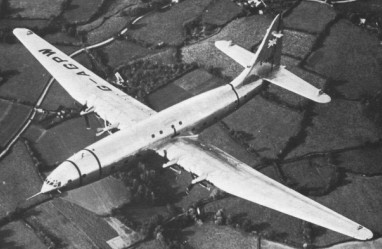
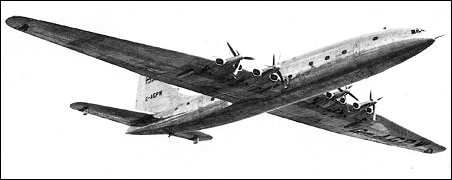
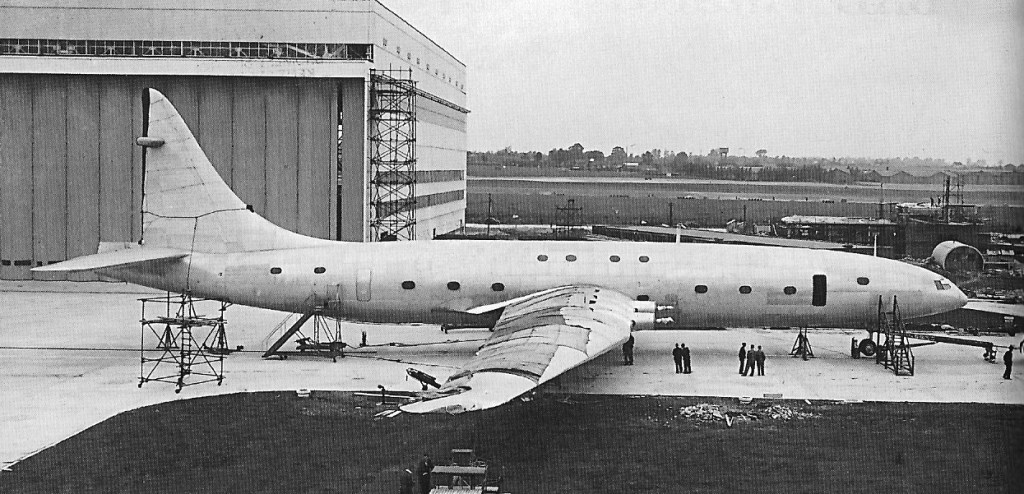
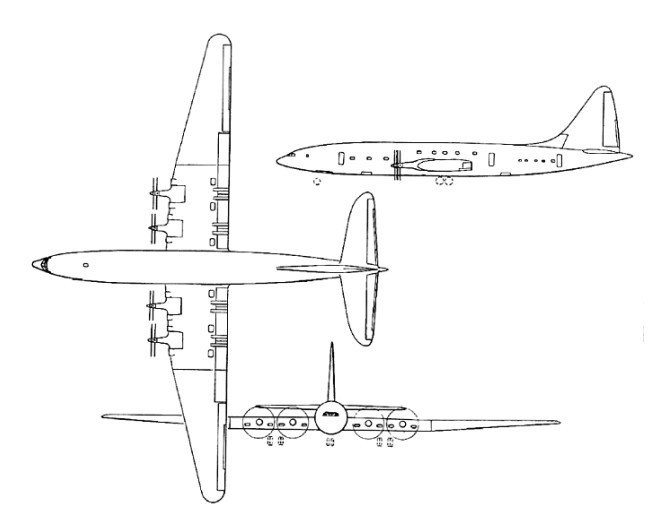
The Brabazon was a large trans Atlantic airliner project, designed to meet one of the postwar requirements formulated by the Inter-Departmental Committee under the chairmanship of Lord Brabazon of Tara. This committee was set up in 1943 to decide on the types of aircraft likely to be needed after the end of the war, able to carry 100 passengers non-stop from London to New York. Filton’s submission for an eight engined, 160 ton aeroplane drew extensively upon design studies that had been made in 1942 for a long range bomber. The Bristol Aeroplane Company was given leave to proceed with two fully pressurised prototypes, the name Brabazon chosen for the type. In 1945 construction of the prototype commenced in October. Many problems were encountered during the next four years leading up to the first flight on 4 September 1949. There was extensive testing of design innovations both on the ground and in the air. The huge Brabazon Hangar was built at Filton to accommodate the assembly of the two prototypes and a new runway was laid, involving the demolition of a village and closure of a dual carriageway. Six and a half years later, in 1949, the first Brabazon was ready at Filton. The only aircraft to be completed, G AGPW, had flown only 400hr when it was decided to abandon the project in 1953. Structural and flight control problems associated with gust alleviation were behind the political and financial decision to scrap the giant.
With a 70 m (230 ft) wing span and 15.25 m (50 ft) high to the tip of its fin, eight 2500 hp Bristol Cen-taurus piston engines driving contra rotating propellers were mounted in pairs within its wing. The maiden flight took place on 4 September 1949. The second aircraft would have been powered by Bristol Proteus turboprops in coupled pairs. It was expected that the Mk 1 would be retained for experimental flight research into the problems associated with very large aircraft, while the Mk 2 would be furnished to carry 100 passengers by day or night, plus a flight crew of seven and eight stewards. However, although the Mk 1 flew well and BEA wanted to use it between London and Nice, France, fatigue cracks in the propeller mounting and other problems ended the project.
The Brabazon was flown to the Farnborough Air Show with only three hours’ total flying time, before touring seaside resorts to give taxpayers a sight of the aircraft their money had paid for. Its thick wing was designed to lift at low airspeeds (160 kph/100 mph) at take-off, but was hopelessly inefficient for high speed flight. The Brabazon was too slow, and American airliners then reaching the market offered better performance at much lower cost. Late in 1952 the British government reported that ‘neither the civil airlines nor fighting services could foresee any economic use for it’ and ordered the prototype, with 400 hours of flight time, and a second unfinished Brabazon to be broken up. The two machines and all the jigs were sold for £10,000, though they cost £12,500,000.
Bristol 167 Brabazon Engines: 8 x Bristol Centaurus 20, 1863kW, 2466 hp Max Take-off weight: 131542 kg / 290002 lb Empty weight: 65816 kg / 145100 lb Wingspan: 70.1 m / 229 ft 12 in Wing load : 54.53 lb/sq.ft / 266.00 kg/sq.m Length: 53.95 m / 177 ft 0 in Height: 15.24 m / 50 ft 0 in Wing area: 493.95 sq.m / 5316.83 sq ft Max. speed: 483 km/h / 300 mph Cruise speed: 402 km/h / 250 mph Cruising altitude : 24934 ft / 7600 m Ceiling: 7620 m / 25000 ft Range: 8850 km / 5499 miles Passengers: 50-180 Crew: 3
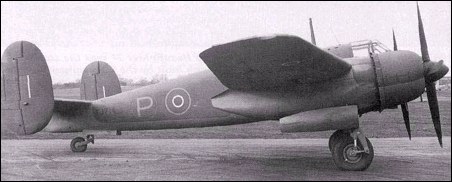
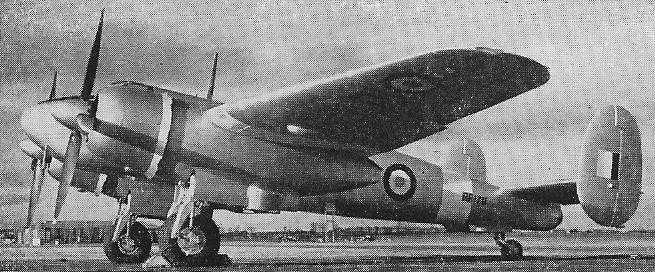
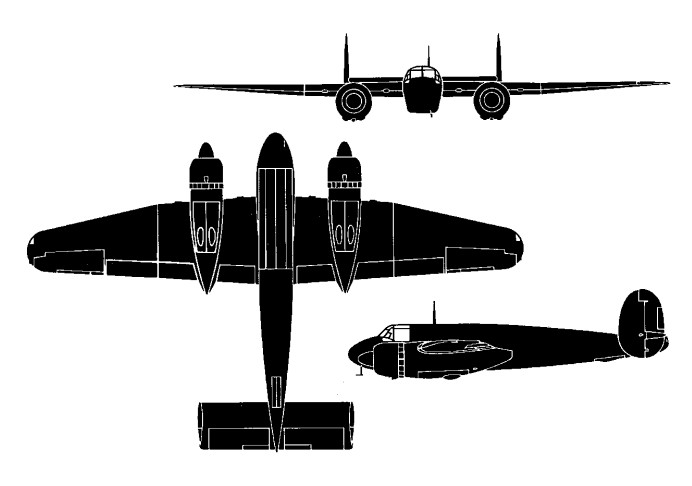
Derived from the Model 163 Buckingham as an advanced trainer, the Bristol Type 166 Buckmaster had considerable commonality with its predecessor, and the last 110 Buckinghams were converted to Buckmasters by installation of dual controls and other modifications.
The first of two prototype Buckmaster flew from Filton on 27 October 1944, both aircraft being conversions from partly completed Buckinghams.
One hundred and fifty sets of Buckingham components had been manufactured when the contract was cut back and these were used for the Buckmasters, the first of 100 production aircraft being completed in 1945 and the last the following year.
Several Buckmasters served with No. 8 Squadron at Aden on communications duties, but most were delivered to Operational Conversion Units to train Brigand pilots. Blind-flying instruction and instrument training could be undertaken and the normal crew complement was pilot, instructor and air signaller.
Buckmaster T.1
The last Training Command Buckmasters served with No. 238. OCU at Colerne into the mid-1950s, while one or two were used on experimental work at Filton. One of these, probably the last survivor, was relegated to RAF Halton where it served as an instructional airframe until scrapped in 1958.
Bristol B.166 Buckmaster Engines: 2 x 2520hp Bristol Centaurus VII radial piston Max Take-off weight: 15286 kg / 33700 lb Empty weight: 10433 kg / 23001 lb Wingspan: 21.89 m / 71 ft 10 in Wing load : 47.56 lb/sq.ft / 232.00 kg/sq.m Length: 14.15 m / 46 ft 5 in Height: 5.33 m / 17 ft 6 in Wing area: 65.77 sq.m / 707.94 sq ft Max. speed: 566 km/h / 352 mph Service Ceiling: 9145 m / 30000 ft Range: 3219 km / 2000 miles
166 Buckmaster T.1 Engines: 2 x Bristol Centaurus 11, 2520 hp Wingspan: 71 ft 10 in Length: 46 ft 10 in Height: 17 ft 6 in Loaded weight: 33,700 lb Max speed: 352 mph at 12,000 ft Max cruise: 325 mph ROC: 2245 fpm Seats: 3
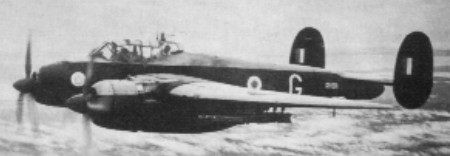
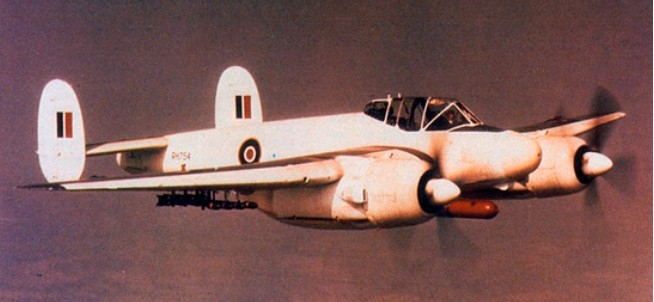
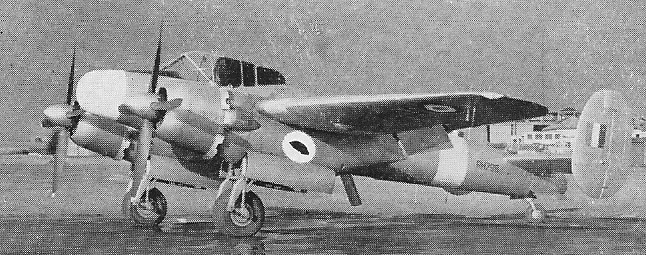
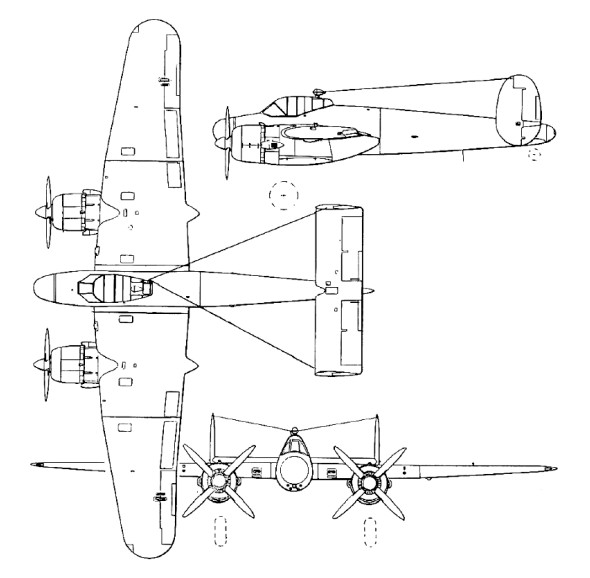
The Brigand was designed as a twin-engined three-seat long-range attack aircraft capable of fulfilling the duties of a torpedo-bomber, dive-bomber and fighter to replace the Beaufighter. It used wings, landing gear, engine nacelles and tail unit of a similar type to those of the Buckingham.
The prototype first flew on 4 December 1944. Although the first 11 aircraft were delivered as TF.1 torpedo-bombers to Coastal Command, in 1947 the Mk 1 was remodelled as a three-seat general-purpose bomber and most of the remaining 132 production Brigands were delivered as B.1. However a few saw service as Brigand Mk 2 training aircraft for radar navigators and Met Mk 3 meteorological reconnaissance aircraft.
The Brigand T.4 was an unarmed advanced trainer version based on the Brigand B.1 and employed primarily as a night fighter radar trainer. The T.4 normally carried a crew of three in tandem seats under a continuous canopy. For night fighter radar training the rear cockpit was blacked out.
Brigand T.4
The Brigand served with the RAF from 1949 until 1958, seeing action in Malaya during 1950 54, when it was operated with considerable success by Nos 45 and 84 Squadrons of the RAF, and had the distiction of being the RAF’s last piston-engined bomber.
Bristol Brigand B.1 Engines: 2 x Centaurus 57, 1842kW, 2470 hp (2,810hp with methanol/water injection) Prop: 14 ft 0 in (4.27 m) dia 4 blade. Max Take-off weight: 17690 kg / 39000 lb Empty weight: 11610 kg / 25596 lb Wingspan: 22.05 m / 72 ft 4 in Length: 14.15 m / 46 ft 5 in Height: 5.33 m / 17 ft 6 in Wing area: 66.7 sq.m / 717.95 sq ft Max speed: 358 mph (576 kph) at 16,000 ft (4,880m) Cruise speed: 500 km/h / 311 mph Service ceiling: 7900 m / 25900 ft Max range: 4500 km / 2796 miles Crew: 3 Armament: 4 x 20mm cannon, 900kg of weapons
Brigand T.4 Engines: 2 x Bristol Centaurus 57, 2470 hp Wingspan: 72 ft 4 in Length: 46 ft 5 in Height: 17 ft 6 in Max speed: 358 mph at 16,000 ft Cruise: 311 mph at 23,000 ft ROC: 1500 fpm Max range: 2800 mi Crew: 3