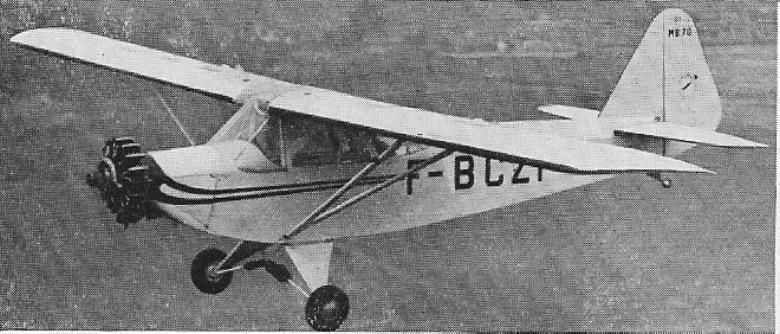
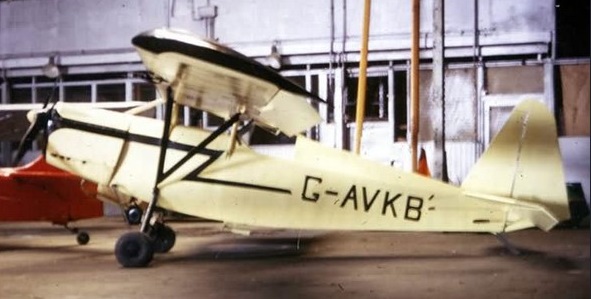
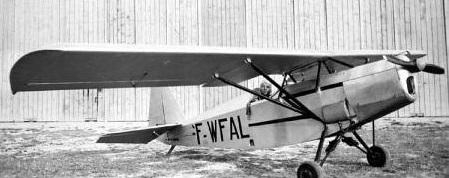
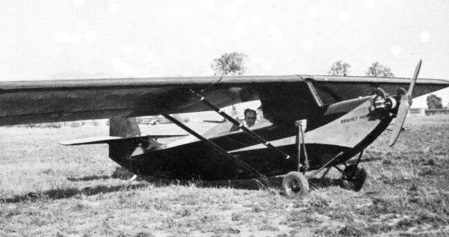
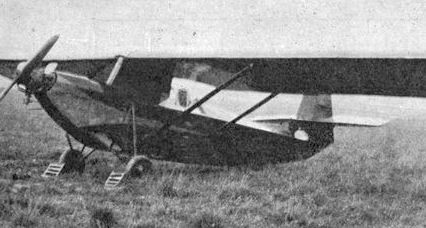
The M.B.100 three seat cabin monoplane was developed from the earlier M.B.70 and M.B.80. The M.B.101 is identical to the M.B.100 apart from the addition of an air filter and tropical finish to suit it for service in North Africa.
An initial order for eight M.B.100s and twelve M.B.101s was placed by the French Service de l’Aviation Legere Sportive which were distributed to flying clubs in France and Norg Africa.
Engine: Hirth H.M.504A-2, 100 hp Wing span: 34 ft 11 in Wing area: 153 sq.ft Length: 21 ft 4 in Height: 6 ft 7 in Empty weight: 1023 lb Loaded weight: 1716 lb Max speed: 112 mph Cruise: 102 mph ROC: 590 fpm Service ceiling: 11,480 ft Range: 375 mi Seats: 3
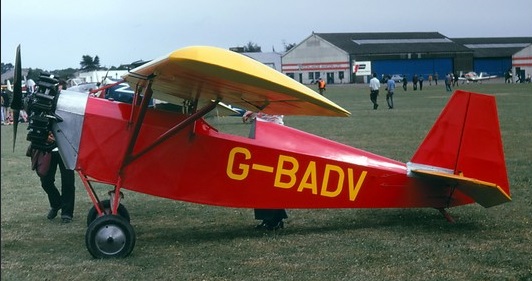
The MB.80 was a derivative of the Brochet MB.71, using essentially the same wood airframe, but with a redesigned wider fuselage, balanced control surfaces, and revised, spring steel undercarriage.
The MB.80 No.1 F-BGLA first flew on 4 October 1951 (or 15 November) with André Deschamps at controls. The Certificat de Navigabilite was obtained on 6 June 1952.
The Service de l’Aviation Légère et Sportive purchased ten examples for distribution to French aeroclubs. Most examples were operated in France, but one example was later sold privately to the United Kingdom.
MB.80 Engine: Minie 4DC-32B, 56 kW (75 hp Wingspan: 10.45 m (34 ft 3 in) Wing area: 14.2 m2 (153 ft2) Length: 6.58 m (21 ft 7 in) Height: 2.55 m (8 ft 4 in) Empty weight: 385 kg (849 lb) Gross weight: 615 kg (1,356 lb) Maximum speed: 158 km/h (99 mph) Range: 500 km (310 miles) Rate of climb: 3.5 m/s (690 ft/min) Crew: One pilot Capacity: 1 passenger 10 built
MB.81 Engine: Hirth HM 500B-2 1 built
MB.83 Engine: Continental C90 1 converted from MB.80
MB.84 Engine: Continental A65 1 converted from MB.80 F-BGLI
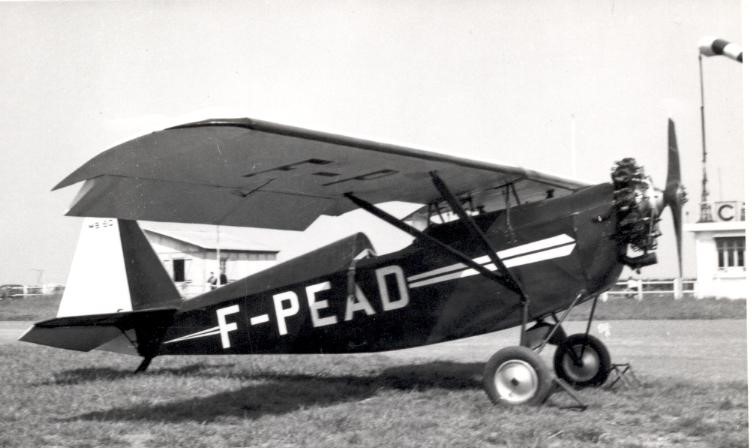
Derived from the MB.50 Pipistrelle and MB.60 Barbastrelle, the two-seat cabin MB.70 was built to meet the requirements of the Service de l’Aviation Legere et Sportive.
It obtained its Certificat de Navigabilite in July 1950.
Prototypes of three versions were built, differing only in the type of engine installed.
MB.70 Engine: Salmson 9ADB, 45 hp Wing span: 33 ft 11 in Seats: 2
MB.71 Engine: Minie 4 DC32, 75 hp Wing span: 33 ft 11 in Length: 21 ft 4 in Height: 8 ft 2 in Empty weight: 765 lb Loaded weight: 1212 lb Max speed: 101 mph Cruise: 89 mph ROC: 787 fpm Seats: 2
MB.72 Engine: Continental A65, 65 hp Wing span: 33 ft 11 in Seats: 2
Maurice Brochet formed Constructions Aeronautiques Maurice Brochet and designed the MB.60 Barbastrelle tandem two-seat high-wing monoplane which first flew in June 1949.
Brochet MB.50 Pipistrelle at Chavenay airfield near Paris in May 1957
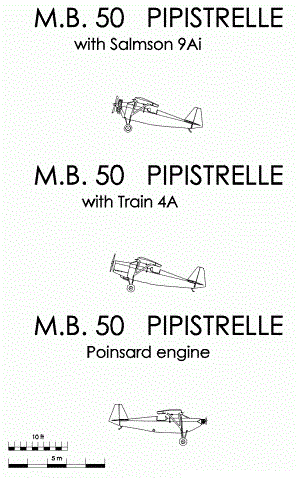
The first postwar design of Maurice Brochet was the MB.50 Pipistrelle (“Bat”) of 1947, which first flew that year. It is a single-seat open-cockpit ultra-light aircraft with a pylon-mounted high wing, wooden fuselage frame and fabric covering. The design was kept simple with the amateur-built market, using factory working drawings, in mind.
The first MB.50 was built in 1947 by Maurice Brochet and was powered by a Salmson 9ADb 45 h.p. radial engine. The subsequent Pipistrelles were all built by amateur constructors. In 1965, six were active, three powered by the Salmson, two by the Beaussier 4Bm O2 of 45 h.p. and one fitted with a Zlín Persy II.
Pipistrelle F-PEBZ was still active in 2005. Another was held in the collection of Ailes Ancienne Toulouse, near Toulouse Blagnac International Airport, during 2006.
Engine: 1 × Salmson 9ADb, 30 kW (45 hp) Wingspan: 8.00 m (26 ft 3 in) Length: 5.80 m (16 ft 0 in) Empty weight: 240 kg (529 lb) Gross weight: 351 kg (772 lb) Maximum speed: 140 km/h (87 mph) Cruising speed: 115 km/h (72 mph) Crew: One pilot
Derived from the MB-20, the 1934 Brochet MB-30, called the “Little Pike”, was basically the MB-20 with a tractor engine.
The type 20 took a different configuration although the aerodynamic set remains identical. The MB.30 was a parasol-wing monoplane of all-wooden construction.
Designed by Maurice Brochet, the single-seat sports aircraft first flew on 11 September 1934.
Brochet built three MB.30 in 1934 before opening the factory.
Engine: 1 × Poinsard 25hp, 19 kW (25 hp) Wingspan: 10.0 m (32 ft 10 in) Wing area: 13.5 m2 (145 sq ft) Length: 6.0 m (19 ft 8 in) Empty weight: 190 kg (419 lb) Gross weight: 300 kg (661 lb) Maximum speed: 105 km/h (65 mph, 57 kn)
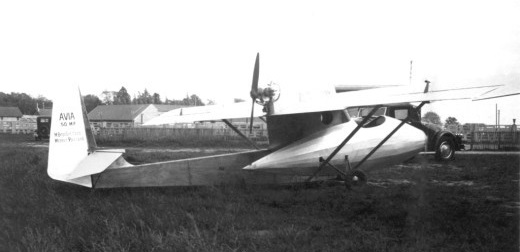
The Avia 50 MP (ex MB-20), built by Maurice Brochet in Neauphle-le-Château
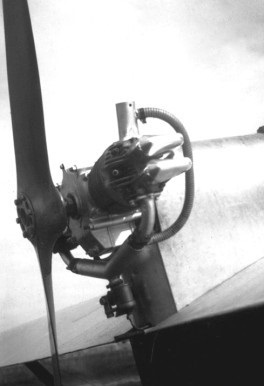
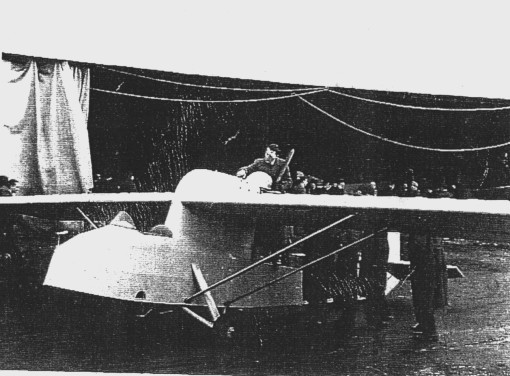
Maurice Brochet, former coachbuilder, recovered in 1931 a wreck of an Avia XVa. In his workshop at Neauphle-le-Château, he built a new fuselage with a central pylon on which he fixed a 25 horsepower Poinsard engine. The engine weighs only 35 kg. A single seater, the wing is high and guyed by two masts on each side.
Poinsot 25 CV
Even before the end of the construction, Brochet had designated his future motorglider MB-20. The aircraft was announced by Les Ailes in May 1933.
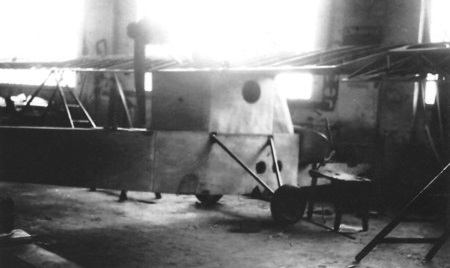
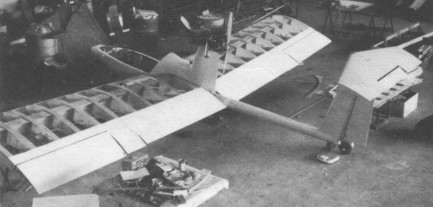
MB-20 under construction
A Jarlaud and Massenet visited Maurice Brochet, while the aircraft was still under construction. Attracted by the project, they bought the machine for 15,000 francs on behalf of the Aero-Club of Paris, and sign with Brochet a serial construction protocol. An engineer, Jarlaud modifies it to use the maximum of Avia parts.
After discussion, it was agreed that the device will be called “Avia-50”, however, this organization, represented by both visitors, were to bear the cost of testing the machine.
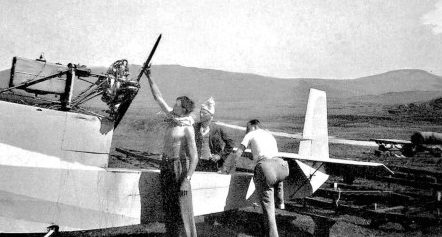
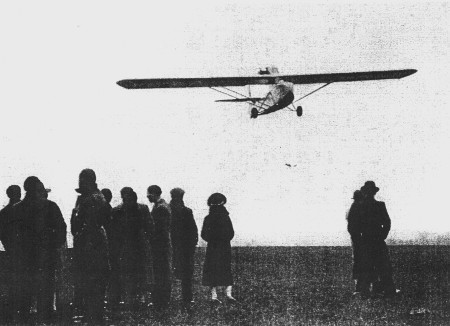
The first flight was on the morning of May 17, 1934, at Toussus-Paris, piloted by Eric Nessler. It started with three small hops at 7 or 8 meters high, soon followed by a real flight at 150 meters for ten minutes.
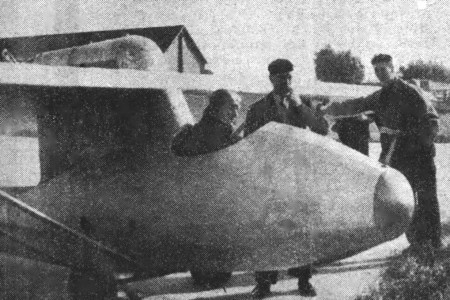
Eric Nessler at the helm of Avia 50 # 1 (ex MB-20,). At his side (with the beret) Maurice Brochet
After the flights of Eric Nessler, Albert Monville flew the motor-glider. After his flight, his impressions were as follows: “It’s really a glider, which is flying as such, and not an airplane. Glider pilots will be comfortable aboard this aircraft; they will soon be familiar with them. “
Georges Abrial then tested the machine after Albert Monville.
The propeller, poorly adapted, rotated too fast and a new propeller was prepared.
The aircraft was tested in the wind tunnel at Lille, January 5, 9 and 11, 1935, completed by a test of June 25 of the same year, without the wheels, totaling 3:30 hours of tesing.
An Avia 50 is built in 1934 by the “Aeronautical Constructions Letord et Cie” in Meudon. It has a fuselage redesigned. This motorglider was exhibited at the AéCDS show at the 1934 fair.
Avia 50 n ° 2. This copy was not built by Brochet
Les Ets Louis, in Pantin, built at least one Avia 50.
At the beginning of 1936, the AVIA lent its Avia 40 MP to the C.A.U. (Club Aéronautique Universitaire) for the training of its trainees B or C. It was present at the Vincennes meeting on May 23, 1937, piloted by Clamamus.
Avia 50 MP
The AVIA 50 MP was flown to Banne d’Ordanche and used for training. It was crashed by Emile Manduech during one of these courses. During late 1936 at Banne Ordanche, this aircraft was crashed by André Costa, following a loss of speed. The fuselage was broken, but the driver unscathed.
Bonnet in Bordeaux, Joly in Beaune, Leroy in Evreux, Botali in Paris and Brochet de Neauphle le Château, built the first motor-glider “Avia 50”.
Engine: 25 hp Poinsard Wingspan: 11,90 m Length: 6,72 m Height: 2,10 m Take off run: 10 sec Speed: 100 kph Range: 300 km
In the early 1950s Avions Maurice Brochet designed and built lightweight sporting aircraft. In addition to production versions, some were intended also for amateur construction. These included the M.B.70, M.B.71, M.B.80, M.B.100, and M.B.101.
Single seat twin engined mid wing monoplane with conventional three axis control. Wing has unswept leading and trailing edges, and constant chord; T tail. Pitch control by fully flying tail; yaw control by fin mounted rudider; roll control by one third span ailerons; control inputs through stick for pitch/roll and pedals for yaw. Cantilever wing; wing profile Worthmann FX 63 137; double surface. Undercarriage has two wheels in tandem with wing tip skids; steel spring suspension on tailwheel and oleo-pneumatic suspension on main wheels. Push right go right tailwheel steering connected to yaw control. Brake on main wheel. Glass fibre/Kevlar fuselage, totally enclosed. Engines mounted above wing driving tractor and pusher propellers. Wing and T tail are also made with carbon and glass fibre, Kevlar and Dacron covered. A twin engined push pull aircraft, the Epervier descends in a direct line from his earlier Libellule. This prototype is a cross-country microlight, capable of covering 522 mile (840km) on one engine at economic cruise. The consumption of the Konig SC340 tri cylinder is 1.6 US gal/h (1.3 Imp gal/h, 6.0 litre/h) with the Epervier cruising at 40mph (65 kph). The Epervier can also be regarded as a motor glider with a glide ratio of 20/1 at 34 mph (55 kph), thanks to its Worthmann FX63 137 wing profile combined with a NACA0012 profile for the empennage. In addition to the ailerons, this wing is also fitted with three position flaps acting as flaps at 2o and 15 o and air brakes at 70 o camber. The construction of the prototype, designed at the end of 1981, was first seen during the summer of 1982, the first flight being made in May 1983.