UK
This engineering firm of Cathcart, Glasgow, built Airco D.H.9 and RAF B.E.2c, B.E.2e and F.E.2b aircraft under subcontract during First World War. In 1930s built Autogiros under Cierva license; C.28/W-1 in 1933, W-2 in 1934, W-3 and W-4 in 1936. In 1937-1938 built and flew W-5 twin-rotor helicopter under Focke license, followed by W-6 of 1938-1939, world’s first helicopter to carry a passenger. Outbreak of war ended development.
Aircraft
Weir Draggin Fly
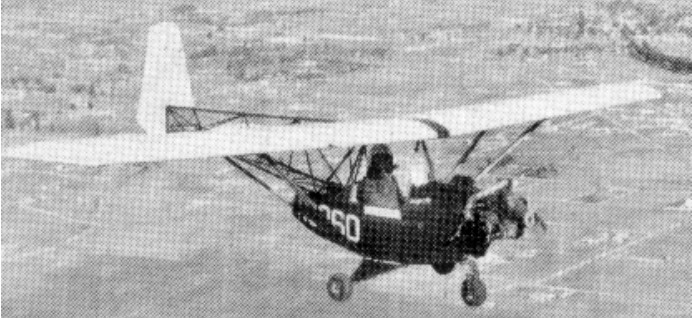
Draggin Fly was designed to be easy to build, inexpensive to fly and maintain, strong, safe, easy to fly with a stock 1600cc VW engine. Ron Weir recommends using only the 1600cc or 1700cc VW — “Smaller engine won’t fly it well, and a larger engine won‘t balance the plane well.”
Gross weight 688 lbs
Empty weight 470 lbs
Fuel capacity 8 Usgal
Wing¬span 24’5”
Length 17’5”
Engine VW1600cc-1700cc
Vmax 70+ mph
Cruise speed 65 mph
Climb rate 350 fpm
Takeoff run150’
Landing roll 200’
Range 170 sm
Weil Ornithopter / Bicycle Bird
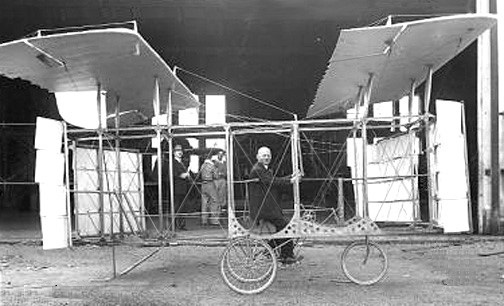
The Ornithopter, or Bicycle Bird, was built by Lehman Weil in 1927. Inventor Wilde insisted “This Bicycle Bird will fly”.
Weighing 275 pounds, there was a sprocket-and-gear arrangement that flapped the wings while a pilot treadles and iron pipes for struts.
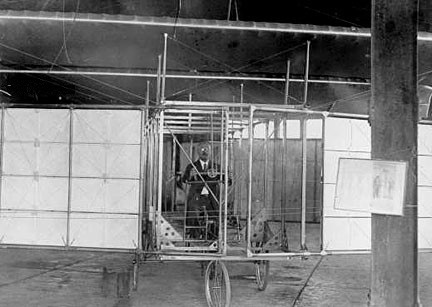
During tests at Curtiss Field on Long Island the airplane was not successful. There were stories of chasing the thing across Staten Island as the wings flexed and its engine strained.
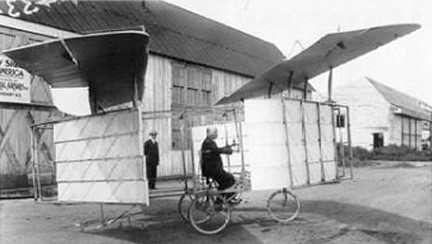
Weil, Lehman
Lehman Weil
225 West 71 St
New York NY.
USA
Circa 1927
In his lifetime (1861-1940), Lehman Weil invented several devices, including an early washing machine and a traffic light. The 1927 Ornithopter he built was his only flying machine.
Weihmüller Monoplano 1909 / Weihmüller I
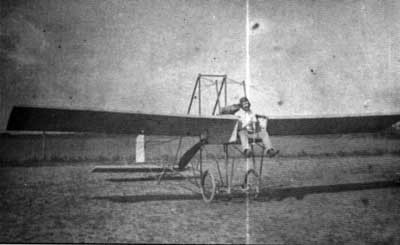
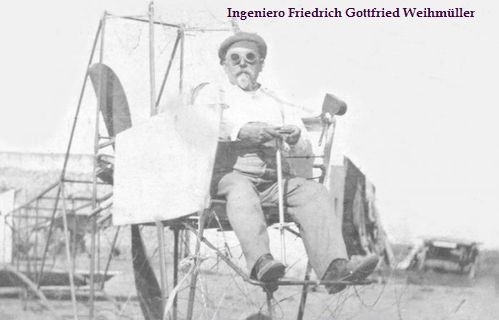
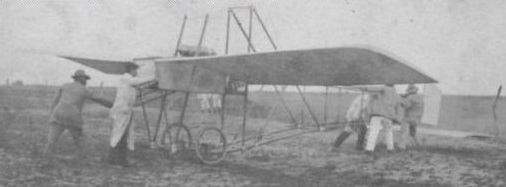
The first of two monoplanes built at San Jerónimo Sud, Argentina, by Santa Fe aeronautical pioneer/constructor Ingeniero Friedrich Gottfried Weihmüller, aka Federico Godofredo Weihmuller (frequently spelled Weighmüller).
Weidmann Flying Tank
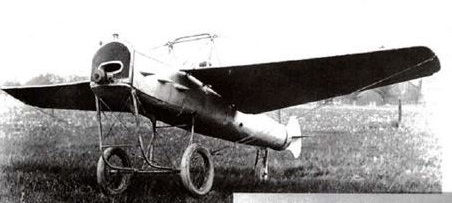
In 1910 brothers George and Edward Wiedman of the (George) Weidmann Body & Trailer Co built a single place, open cockpit, mid-wing monoplane.
Powered by an automobile engine, it was all-steel, including rolled-steel wing covering with folding wings and cruciform tail surfaces supported by a big ball-shaped universal joint.

It was probably built in 1918, even though Aerofiles and a magazine article give the date as 1910, which might be explained by a statement that the brothers had spent ten years developing the plane.
It was reportedly flown in April 1918 by a pilot by the name of “Dare Devil” Mills.
Weidmann
(George) Weidmann Body & Trailer Co
North Tonawanda NY.
USA
Circa 1910 built the Flying Tank
Weick A-1
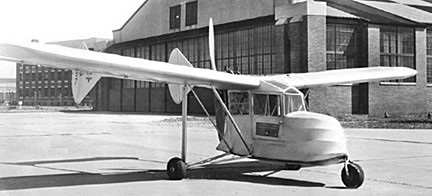
As the assistant chief of the aerodynamics division at Langley Field, in Virginia, Fred Weick was the guiding force behind development of the W 1, a pusher with an unorthodox wing configuration and decidedly unusual performance. The wing had an open slot behind the main spar controlled by a small aileron on the top surface and trailing-edge ailerons.
Although Weick’s research director at Langley wanted to have the aircraft built as a NACA project, Weick preferred to keep it free of smothering bureaucratic supervision. So, with the help of a handful of enthusiastic engineers, he built it in his garage, thereby early betraying an independent spirit.

The W 1 indeed turned out to have good stability and control and, according to Weick, was “automatically nonspinning.” It also would get in and out of unusually small spaces, off in 200 feet with no wind to an altitude of 50 feet. It landed in 100 ft, was spin- and stall-proof.
The W 1 also possessed a mildly revolu¬tionary device called a tricycle landing gear, which is what Weick says he first called it in his SAE report on the aircraft. The Weick W 1 team adopted the tricycle gear as a way to reduce ground-looping as well as a means of simplifying the entire land¬ing and takeoff process. Other noteworthy features were flaps, slot-lip ailerons, a pusher engine and twin fins.
With twin-boom, twin-tail; tricycle gear, the wing had an open slot behind the main spar controlled by a small aileron on the top surface and trailing-edge ailerons. Took off in 120′, landed in 100′, was spin- and stall-proof.
Purchased in 1934 by DoC for $5,000, plane was handed to Fairchild (Kreider-Reisner) to produce a modified W-1-A, with flaps in place of slots (NX213Y, NS67, NX67. It was Corp transferred to the NACA, it was damaged in testing and scrapped in 1938.
Engine: 85hp Pobjoy
Cruising Speed: 80 mph
Stall: 35 mph
Span: 30’0″
TO ground roll: 120 ft
Seats: 1
Weick, Fred E
Fred E Weick
130 Cherokee Rd
Hampton VA.
USA
Circa 1934
Weeks & Williams / Weeks & Riggs Biplanes
During 1910-11 Elling O Weeks and E A “Gus” Riggs built two aircraft, fairly traditional Wright-type designs.
Then Weeks and O E Williams built two tractor biplanes in Scranton PA in 1912, after which he joined forces with Gus Riggs for a couple more in 1915-16.

 All Aero