Gabardini Sa manufactured a 80 hp rotary-engined two-seat monoplane at Novara in 1913, used for a non-stop flight between Milan and Venice. Company subsequently opened factory at Cameri in 1914 to build a military version of this monoplane, powered by a smaller engine. Also built biplane trainers. Nothing more heard of company until it produced a two-seat light cabin monoplane, the Lictor 90, in 1935.
Name of Costruzioni Aeronautiche Novaresi SA assumed May 1, 1936 by former Aeronautica Gabardini SA. Head office and factory at Cameri; began with repair and maintenance work on aircraft and engines. First product was C.5 single-engined one/two-seat training biplane (Fiat or Alfa Romeo engine), built in some numbers in late 1930s for civil market. The C.6 was a less successful development. CANSA then became subsidiary of Fiat, producing small numbers of F.C.12 fighter/trainer monoplane (first flown 1940) and also the F.C.20 twin-engined ground- attack aircraft.
Aircraft
Canova 1912 Areoplano
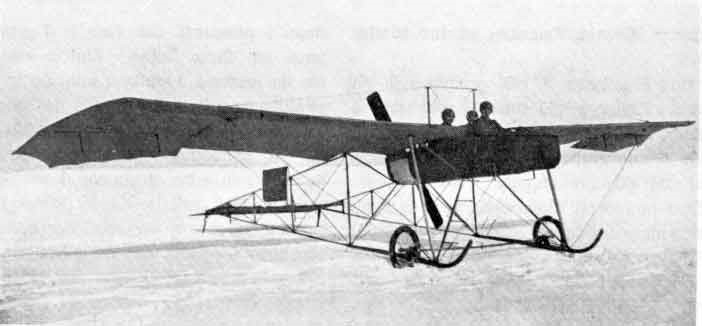
Italian pusher monoplane designed by Italian engineer Canova. Characteristic and beautiful looking machine accommodating three people in the short central fuselage. Ailerons on the wing. Single rudder on the tail-boom construction.
Cannon Brothers 1911 monoplane
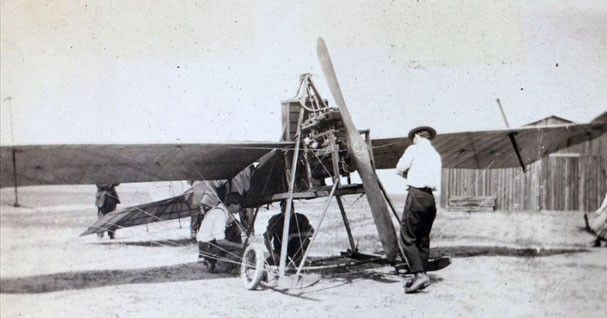
Californian brothers Walter Bissell Cannon and John Arthur Cannon built two machines in 1911. The second, a monoplane, was tested on Eaton Field in June 1911, powered by a Ford engine.
Cannon Brothers
Californian brothers Walter Bissell Cannon and John Arthur Cannon built two machines in 1911. The first was a biplane that was flown very successfully as a towed glider and later with a Ford automobile engine. The second, a monoplane, was tested on Eaton Field in June 1911.
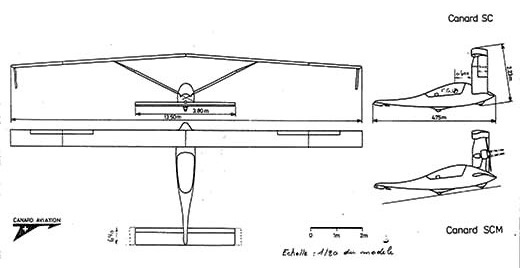
Canard SC / SCM / Farner SC / SCM / Aviafiber SC / SCM
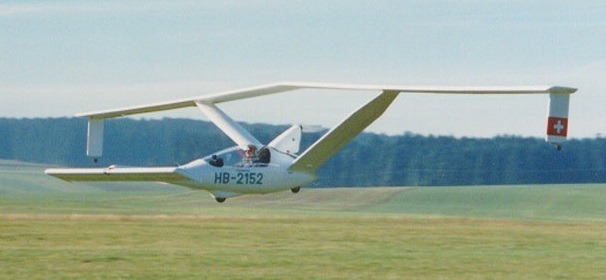
The Canard SC was the 1983 production version of the Farner Canard 2FL by Canard Aviation. designed by Ernst Ruppert with ETH Zurich.
During flight tests of the SC, from 23 July 1983, progress was accelerated by the use of an auxiliary 15 kW (20 hp) König SC 430 3-cyl. two-stroke radial engine mounted on a pylon between the v-struts and main-plane, driving a folding propeller, as the SCM.
Two were built (HB-2152 V-01 & HB-3004).
Two motorized versions (Canard SCM and Colibri) flew in 1983 and 1984. The development was suspended in 1993 following the accidental death of the designer, Hans Farner, during a test flight. The Company immediately bought the sold aircraft and ceased production.
They are stored in an attic, and two trailers are located at Ruppert Composites in Wald (Switzerland)
Canaero Dynamics Toucan
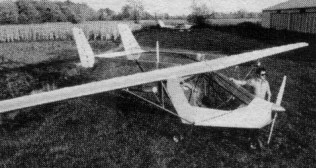
Designed by Peter Corley, the Toucan is a twin-engined, centreline thrust aircraft with twin tail booms.
Engine: 2 x Rotax 277
Empty wt.: 393 lbs
Max wt.: 900 lbs
Wing span: 38.5 ft
Wing area: 182 sq.ft
Wing loading: 5 lbs/sq.ft
Power loading: 16 lbs/hp
Max speed: 80 mph
Cruise: 65 mph
Stall: 25 mph
Vne: 90 mph
Canadian Vickers Vancouver
During the 1920s six other designs appeared: the Varuna, Vista, Vanessa, Velos, Vigil, and Vancouver. Of these, only the Varuna (eight) and Vancouver (six) flying-boats went into production.
Canadian Vickers Vigil
During the 1920s six other designs appeared: the Varuna, Vista, Vanessa, Velos, Vigil, and Vancouver. Of these, only the Varuna (eight) and Vancouver (six) flying-boats went into production.
Canadian Vickers Velos
During the 1920s six other designs appeared: the Varuna, Vista, Vanessa, Velos, Vigil, and Vancouver. Of these, only the Varuna (eight) and Vancouver (six) flying-boats went into production.
Canadian Vickers Vaness
During the 1920s six other designs appeared: the Varuna, Vista, Vanessa, Velos, Vigil, and Vancouver. Of these, only the Varuna (eight) and Vancouver (six) flying-boats went into production.

