Prototype of CE.45 Leopard flown late 1975.
Aircraft
Cerva CE.44 Cougar
Prototype of generally similar CE.44 Cougar was flown in October 1974.
Cerva CE-43 Guepard
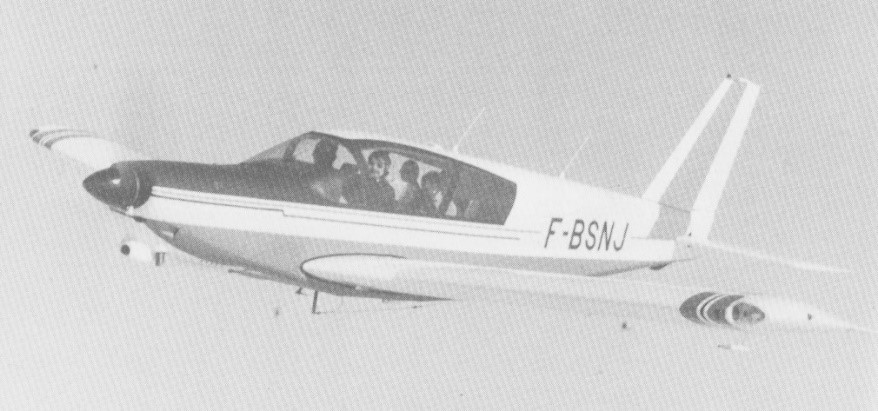
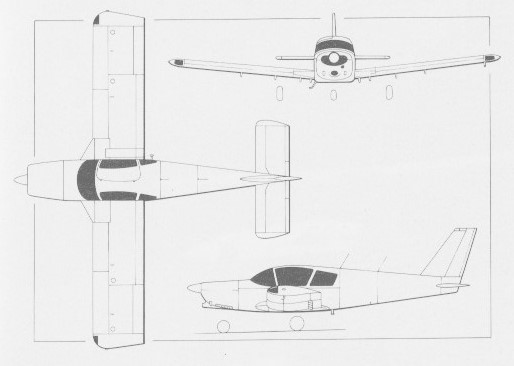
First flown in 1971, the CERVA CE-43 Guepard (Cheetah) was an all metal derivative of the Wassmer WA-40 Srs. A six-seat Tiara engine version was flown in 1974.
Engine: Lycoming IO-540-C4B5, 250 hp
Wingspan: 32 ft 9.5 in / 10.00 m
Length: 27 ft 6.5 in / 8.40 m
Cabin max width: 3 ft 7 in / 1.09 m
Empty weight: 1863 lb / 845 kg
MTOW utility: 3220 lb / 1460 kg
MTOW normal: 3527 lb / 1600 kg
Max cruise: 167 kt / 192 mph / 310 kph
Max ROC SL: 1080 fpm / 330 m/min
Service ceiling: 17,400 ft / 5300 m
Range max fuel: 1565 nm / 1800 mi / 2900 km
Seats: 4
Cerva / Consortium Europeen de Realisation de Ventes d’Avions
France
Consortium Europeen de Realisation de Ventes d’Avions is a joint venture started 1971 by Siren SA and Wassmer Aviation to build and market CE.43 Guepard four-seat light aircraft, an all-metal development of the Wassmer Super 4/21, first flown May 1971. Prototype of generally similar CE.44 Cougar flown October 1974, and CE.45 Leopard late 1975. Partnership ended autumn 1977 owing to bankruptcy of Wassmer.
Cerny 1910 monoplane
The 1910 Cerny monoplane was designed and built by Cerny in Czechia.
Century Aircraft Corp
USA
Amarillo, Texas, based company which in 1977 certificated a re-engined (TPE 331) version of Handley Page Jetstream Mk 1 twin-turboprop transport; conversion carried out by Volpar Inc.
Century Aerospace Corp
USA
Developing Century Jet CJ-1 and CJ-2 as six-seat light entry-level business jets, with single Williams-Rolls FJ44 turbofan engine. First flight anticipated year 2000.
CVV P.M. 280 Tartuca
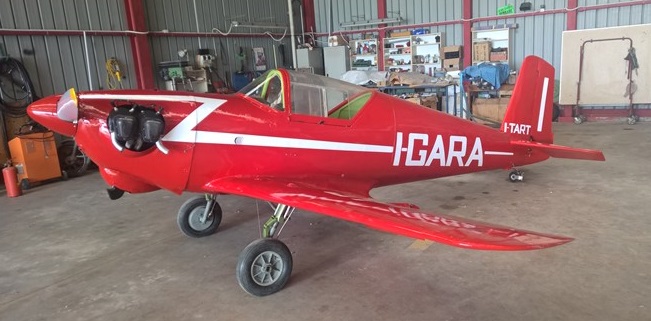
Centra Volo a Vela also produced prototypes of the P.110 three/four-seat cabin monoplane and P.M. 280 Tartuca single-seat low-wing monoplane.
CVV P.110
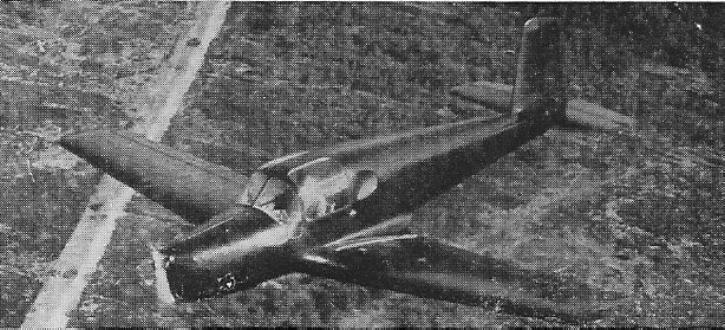
Centra Volo a Vela also produced prototypes of the P.110 three/four-seat cabin monoplane and P.M. 280 Tartuca single-seat low-wing monoplane.
Designed by Ing. Ermenegildo Preti, the P.110 was of all wood construction and the enclosed cabin seats four in two pairs.
The sole prototype was built by the Centro Volo a Vela (Gliding Centre) of the Milan Polytechnic School, originally designated C.V.V. P.110 or, alternatively, Preti CP.110.
The manufacturing rights were acquired by Construzioni Aeronautiche Giovanni Agusta, and the type was evaluated by the Italian Air Force, but no production orders materialised.
Engine: Alfa 110ter, 145 hp
Wingspan: 34 ft 9 in
Length: 23 ft 11 in
Empty weight: 1500 ft
Loaded weight: 2425 lb
Max speed: 170 mph
Cruise: 149 mph
Range 620 mi
Centro Vola A Vela / CVV
Italy
Centra Volo a Vela, Politecnico di Mario, fundamentally a research and development center attached to Milan Polytechnic after Second World War to study soaring flight. Production included gliders and sailplanes, but in the late 1940s/early 1950s the Centra Volo a Vela also produced prototypes of the P.110 three/four-seat cabin monoplane and P.M. 280Tartuca single-seat low-wing monoplane.

