Cierva

Juan de la Cierva was born in Murcia, Spain on September 21, 1895, and by 1908-9, had decided to make aviation his career. In 1911 he enrolled at the Civil Engineering College of Madrid (Caminos, Canales y Puertos) and in 1912 with his friends “Pepe” Barcala and Pablo Diaz constructed the first Spanish airplane, the BCD-I, known as “EI Cangrejo” – the “Red Crab”, becoming the “Father of Spanish Aviation.”

By the mid 1920s Cierva’s success became known worldwide, and he was invited to Britain to demonstrate his machines to the Air Ministry.

Transferring operations to England in 1925 and forming Cierva Autogiro Ltd. on March 24,1926 with prominent Scottish industrialist James G. Weir, his brother Viscount William Weir of Eastwood and Sir Robert M. Kindersley, Cierva continued to improve the Autogiro and in early 1929 licensed the technology and rights to his patents to Harold Frederick Pitcairn of Bryn Athyn, P A. Early models of which were based on surplus Avro 504Ks. British, French, German, American, Japanese and Russian companies built Cierva type autogiros.

Two best known craft were C.8L, first rotorcraft to fly the English Channel, and C.30A, built by A. V. Roe as Rota for RAF. Production of other Autogiros licensed by Cierva to Airwork (C.30, C. 30P); Avro (C.6, C.8, C.9, C.12, C.17, C.19, C.30A, C.30P); British Aircraft Manufacturing Co (C.40); Comper (C.25); de Havilland (C.24, C.26); George Parnall & Co. (C.10, C.11); and Westland (CL.20).

Weir formed a separate company (G. & J. Weir Ltd.) in 1933, and reestablished Cierva Company in 1944.

In 1936, Cierva was killed in the Croydon KLM airliner accident when the aircraft in which he was a passenger crashed after taking off in fog. From 1936 to 1939 James Allan Jamieson Bennett was Chief Technical Officer of the company. Dr. Bennett carried through with Cierva’s intention to offer the Royal Navy a gyrodyne, which Cierva had argued would be simpler, more reliable and efficient than the proposed helicopter. Bennett’s design, the C.41, was tendered to the Air Ministry (Specification S.22/38) but preliminary work was abandoned with the outbreak of World War II. Bennett joined Fairey Aviation in 1945, where he led the development of the Fairey FB-1 Gyrodyne.

After Second World War evolved (jointly with above company), the W.9, a two-seat helicopter using jet thrust to counteract torque. The W.11 Air Horse three-rotor design was built for Cierva by Cunliffe-Owen; designed specifically for crop-spraying, it was first flown December 8,1948. The first prototype of the Air Horse crashed killing Alan Marsh, Cierva’s manager and Chief Test Pilot John “Jeep” Cable, Ministry of Supply Chief Helicopter Test Pilot, and J. K. Unsworth the Flight Engineer. This led Weir to cease further investment in the company and its development contracts were transferred to Saunders-Roe.

The W.14 Skeeter, small two-seat helicopter, first flown October 8,1948. Both designs taken over in 1951 by Saunders-Roe, together with other Cierva projects. Company then concentrated on research; eventually reemerged as Cierva Rotorcraft Ltd, and bought up Rotorcraft Ltd. in April 1966 and Servotec Ltd. in 1968.The prototype CR.LTH-1 flew October 18,1969, but was not produced due to lack of funds.

J.Weir maintained a working association with J.S.Shapiro, and in 1961 63 Servotec built a man carrying helicopter model to embody Weir’s ideas of a non stalling rotor, which emerged from many years of model tests. In the course of this collaboration, Weir became aware of the CR Twin development and in 1965 decided to give this development financial support. This combination of interests was cemented in a take over of Rotorcraft Ltd by the Cierva Autogiro Co, which was thereupon renamed the Cierva Rotorcraft Co. The largest shareholders were Weir and Shapiro.
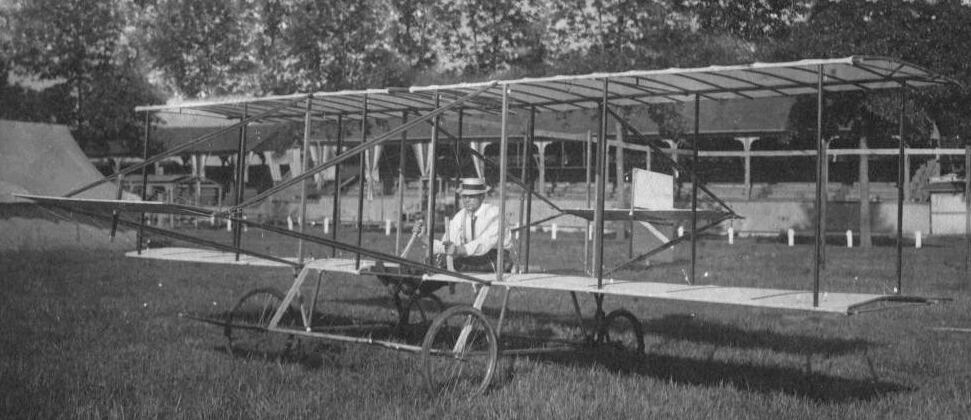
Church Aeroplane Co 1910 glider

Daniel A. Kreamer was a railroad engineer from Freeport, Illinois. In 1910 he bought a glider from the Church Aeroplane Co. of Brooklyn, NY, in which he made some very successful flights, towed by an automobile and cutting loose when 75 or 80 feet high and gliding several hundred feet to the ground. He apparently considered installing an engine in the glider, but instead bought a Curtiss-type biplane built by Everette K. Barnes and Harold H. Havens of Rockford, IL. Kreamer lost his life at the Chicago Aero Club’s field on July 13th, 1911, when he lost control during a turn while trying for his pilot’s license.

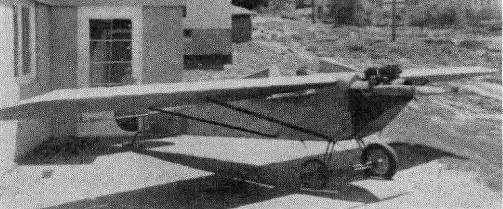
Church JC-1 Midwing Sport Monoplane

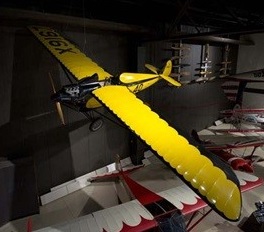
Church Midwing JC-1 – N9167

The Church Midwing was originally advertised as “the sportiest, safest, best-looking airplane in the light, single seat class,” and sold as a home-built kit.

Like the first Church aircraft, built by James Church in 1928, the Church Midwing has a Heath fuselage, which is wire-braced and bolted. The Midwing lacks a windscreen, providing the pilot protection from windblast with a cowling, which extends from the firewall to the instrument panel. The instrument panel itself consists only of a tachometer, and oil pressure and temperature gauges.

1955

Gene Chase acquired the fuselage, stabilizer and elevator, Church wings with ailerons, windshield cowling, and a set of plans in the 1960’s. Working from those plans, which are copies of the original set drawn by James Church, Gene began a five-year restoration process. Gene’s restored Midwing made its first appearance at EAA during the 1970 Oshkosh fly-in. It made its first flight at the Ottumwa Fly-In in September of that year, witnessed by the plane’s creator, James Church. On May 29, 1972, James Church visited Gene Chase in Tulsa and flew the plane; he notes in the plane’s log book that this was, “my first flight in one of my Mid-Wings since 1941 (31 years ago).”

Ultralight replica:
RagWing Aircraft RW4 Midwing Sport

Engine: Heath-Henderson 83ci, 27 hp @ 2,700 r.p.m.
Length: 16 ft. 9 in.
Span: 26 ft. 8 in.
Wing area: 110 sq. ft.
Chord: 4 ft. 6 in.
Empty Weight: 367 lbs.
Gross Weight: 584 lbs.
Fuel capacity: 4 ½ USgals.
Oil capacity: 6 quarts
Fuel consumption: Approx. 2 g.p.h. @ 2,500 r.p.m.
Top speed: 90 m.p.h. (est.)
Cruising speed: 70 m.p.h. (est.)
Landing speed: 28 m.p.h. (est.)

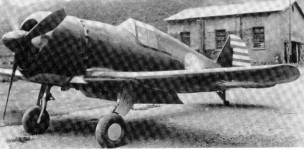
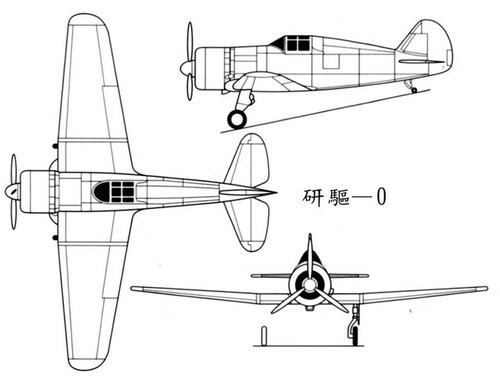
Chu X-PO / AFAMF (Air Force Aircraft Manufacturing Factory) XP-0

The reliance on foreign imports was not ideal, and so, despite having to pick up and move their comparatively new and basic aircraft industries further west as the Japanese advanced, the Chinese began to explore building their own aircraft designs. And this has led to two, known as the Chu XP-series.

The first of these Chinese aircraft, the XP-0 was initiated in early 1941. Major General Chu Chia-Jen, who was Chief of the Air Force Technical Bureau, started development of an indigenous fighter that would be heavily based on the Curtis Hawk 75 export fighter.

This aircraft had been ordered in kit form from the United States and production had been attempted, but proved too much for the young aero industry, especially with the pressures of Japanese bombing and factory relocation. However, it was the most modern design that the Chinese had experience with, so it formed the basis of the XP-0.

Lacking modern aeronautical materials, the Chinese had to institute many compromises. Instead of the Hawk’s all metal structure, the XP-0 used a mixed construction, utilizing a welded tube metal fuselage which was clad in a plywood skin. The wings too were of wooden construction.

The engine was the Pratt & Whitney Twin Wasp that produced 1,200hp, an engine that was the most powerful available in any numbers to the Chinese.

A unique prototype was manufactured in 1943 by AFAMF-Yangling, using the tail surfaces of a Hawk 75, the centre section of the wing and the landing gear of a North American NA-6, the tailwheel from P-43 and the engine and cockpit of a P-66. The wings were built in wood/plywood.

There are some issues in the information on armament. Generally, it is stated that this aircraft had a rather heavy weapon load of either two or four 20mm cannons, which it carried in underwing fairings, and a centreline bomb rack. But for early 1941, that would be an extremely powerful punch for a single-engine fighter, and certainly a massive step up from the Hawk 75. As said, the available evidence is fragmentary. But it is possible that both may be correct. Because the design was initiated in early 1941, and the first prototype didn’t fly until 1943, it is conceivable that considering the development time involved, the weapon fit did evolve before that first flight.

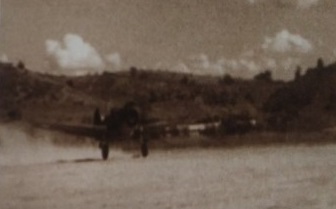
First flight

Apparently, the aircraft handled well in the air, but its performance as a fighter by 1943 standards was low. Top speed was reported as 313mph (c.503kp/h) and XP-0 seems to have been broadly comparable to aircraft of its generation.

How well it would have stood up to prolonged flight testing is also a question because on landing the aircraft ground looped and was written off. However, the pilot survived and his debrief apparently allowed at least one more prototype to be developed.

1944

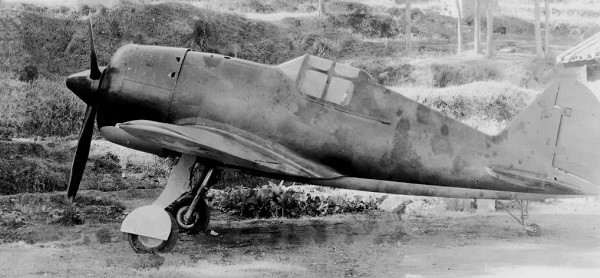
It is confusing as to how many other variants of the XP-0 were built, but some Chinese online sources assert that as many as nine improved models were built through 1944-46.

An upgraded X-P0 with different appearance was shown in 1944.

By mid-1941 China was the recipient of Lend-Lease aid from the United States, and though it would take a while to really build up the Nationalist forces, the massive influx of modern aircraft meant the need for a home-grown fighter was vastly diminished.

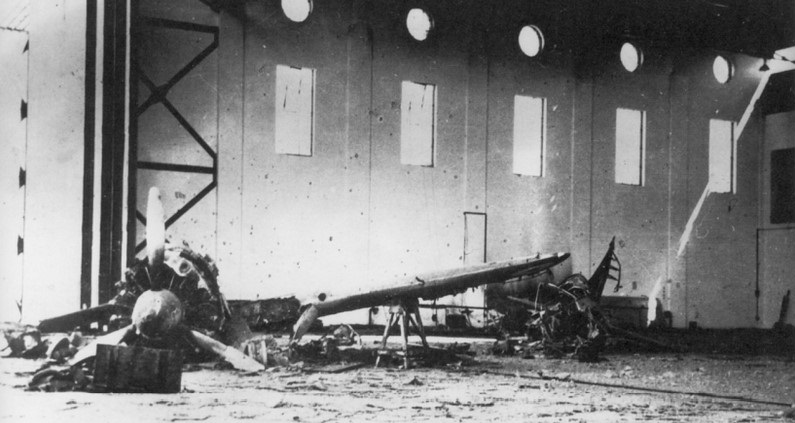
Lei Yun 1942 after Japanese bombing

Engine: Pratt & Whitney Twin Wasp, 1,200hp
Wingspan: 11.4 m
Length: 8.8 m
Height: 3.70 m
Wing area: 22 sq.m
Max weight: 2,990 kg
est max speed: 504 kph
Range 1,400 km

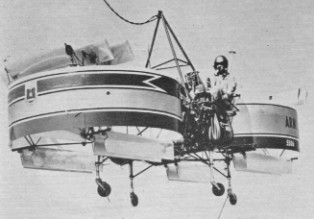
Chrysler VZ-6

In 1959, the U.S. Army, through its Trans¬portation Research and Engineering Command, initiated the development of three types of VTOL research aircraft in a programme aimed at pro¬ducing a flying jeep. Fundamentally a cross between an Army jeep and a reconnaissance helicopter, this type was intended ultimately to operate at speeds of about 50 mph a few feet above the ground, carrying a payload of about 1000 lb. Contracts were placed with the Chrysler Corporation, Acrophysics Development Corp¬oration and Piasecki Aircraft Corp¬oration.
The Chrysler VZ 6, like the Piasecki flying jeep, was of the ducted fan type, using two fans in tandem with the pilot and engine in between. Work on this configuration had been going on at the Chrysler Defense Engineering Company since 1955 and a unique feature of the design was the use of rigid fixed pitch three blade rotors or fans.
Since the fans could not therefore contribute to control of the aircraft, Chrysler developed a system of control vanes. Pitch control came from lateral vanes across the duct intakes and yaw and roll control came from longitudinal vanes in the duct exit. The engine was located in the center of the rectangular-shaped vehicle, next to the off-set pilot’s position. Rubber skirts around the outside of the vehicle’s bottom edge helped sustain the fan-generated lift.
A 373 kW (500 hp) Lycoming engine powered the VZ 6, which weighed about 2,300 lb. fully loaded and was 23 ft. long. The diameter of the ducted fans was 8 ft. 6 in.
During 1959, the VZ 6 (58 5506) made some tethered hovering flights. On the first attempt at a free flight it got out of control and overturned. The prototype was not repaired and the second example (serial 58-5507) which had been ordered (58 5507) was not completed. Both prototypes were disposed of in 1960.

Chrysler VZ-6
Engine: 1 x Lycoming piston, 370kW
Rotor diameter: 2.6m
Length: 6.55m
Height: 1.58m
Take-off weight: 1080kg

Christofferson Hydro

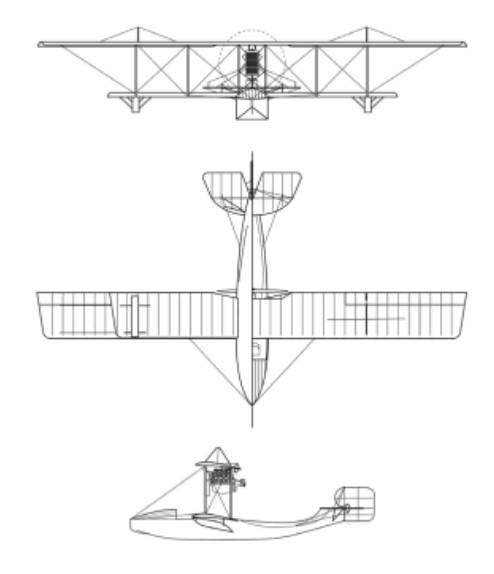
The Hydro flying boat built by Christofferson Aviation flew in 1913, and was probably designed by Alan Loughead who worked for Christofferson at the time.

A two-bay biplane, of the three or four examples known to have been completed in 1914, two were sold to explorer Roald Amundsen for a proposed Arctic flight (that never happened), and one was used by Silas Christofferson’s San Francisco-Oakland Aerial ferry in 1914. This was the second scheduled airline to operate in the US.

Another Hydro is listed as having been sold to Japan.

Engine: Hall-Scott V-8, 120 hp
Span: upper: 49′ lower 33’6″
Length: 28′

Chrysostomides Jaguar

The Jaguar began in 1969 as a biplane class racing aircraft Pete Tomalesky, was interested in racing and felt that, the recently evolved biplane class would be fertile ground to explore. The project was literally shelved in early 1970 as business matters took most of Tomalesky’s time. As often happens, interests change, and he abandoned the project to design and build a two-place, side-.by-side biplane he called the Tomcat. The aircraft bare bones were purchased by Stavros Chrysostomides, a South Carolina artist/homebuilder.

This aircraft was designed for an O-290 Lycoming of 125 hp, and the mount was welded directly to the airframe to save weight. A one-piece steel spring landing gear was formed and fitted with 500 x 5 wheels and tires, which were later sold to a fellow building a Knight Twister.

The negative staggerwing configuration was selected to provide the pilot maximum visibility in pylon turns, and since the top wing root was aft of the pilot’s head, the forward sweep of the top wings was needed to locate the wing properly in relation to the CC and the lower wing.

Chrysostomides discovered. the need to adjust the angle of a forward sweep since he was using a larger O-320 Lycoming. Also included was a statically balanced elevator to reduce chances of high-speed elevator flutter. The counterweight was attached to the elevator horn, and thereby completely concealed inside the Nselage. Calculations placed the top speed near 200 mph with a cruise near 150 mph.

The Jaguar was still flying in December 1979.