In 1919; building two-seat trainer biplane, designed by Vincent Burnelli and powered by Curtiss OX engine.
Aircraft
Continental Aircraft Corp
USA
Based at Amityville, Long Island, NY, in 1919; was then building KB-3T two-seat trainer biplane, designed by Vincent Burnelli and powered by Curtiss OX engine.
Contender 606
A pressurized business and commuter rear-winged turbojet aircraft, triple-engined Contender 606 for up to 33 passengers in a wide-body commuter layout.
Contender 303
A pressurized business and commuter rear-winged turbojet aircraft, as triple-engined 11 to 19 passenger Contender 303
Contender 202
A pressurized business and commuter rear-winged turbojet aircraft, as twin-jet Contender 202 for seven to 19 passengers, triple-engined 11 to 19 passenger Contender 303
Contender Aircraft Inc
USA
Founded to develop a series of pressurized business and commuter rear-winged turbojet aircraft, as twin-jet Contender 202 for seven to 19 passengers, triple-engined 11 to 19 passenger Contender 303, and triple-engined Contender 606 for up to 33 passengers in a wide-body commuter layout.
Constantin et d’Astanières No2 biplane
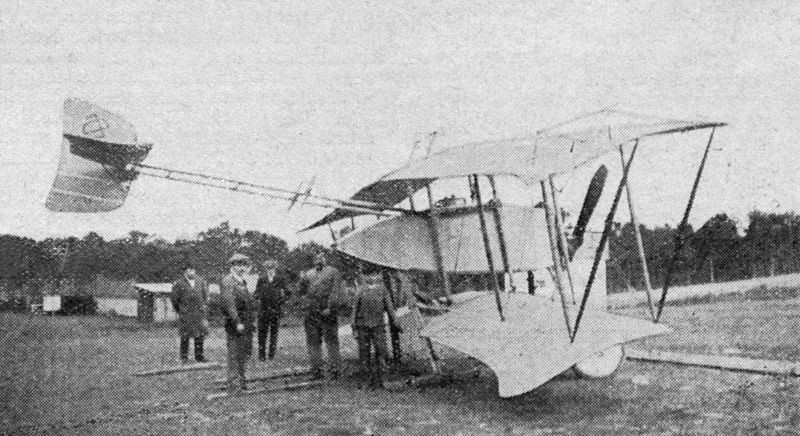
This second design of the duo Louis Constantin (designer) and M. d’Astanières (sponsor) never participated in the Concours de la sécurité (1914) for which it was intended, because it was not ready and still had problems that needed to be fixed. The machine was claimed to have three special features: A special design of the leading edges of the wings to improve their efficiency, automatic lateral stability by negative dihedral wings, and improved longitudinal stability by minimal its longitudinal moment of inertia. The last two of these appear rather counterintuitive, but perhaps… It was first tested only days before the outbreak of WW1, which stopped any further experimenting.
Constantin et d’Astanières No.1
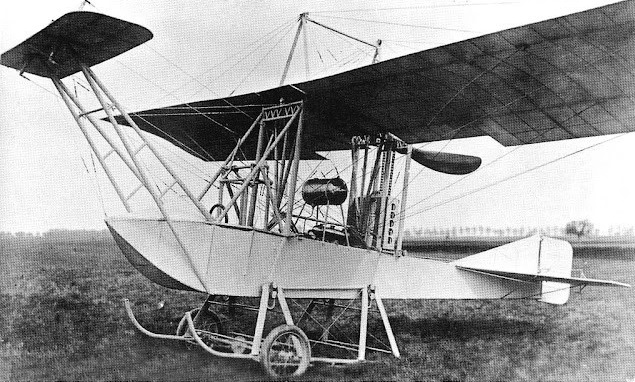
An aircraft designed following the ideas a patent of Francois d’Astanières about an automatically-stable monoplane. Built by Louis Clement, it was tested initially in 1913. The aircraft was later modified with some safety features patented by Louis Costantin (concave leading-edge flaps and modified elevators), the then called Constantin-d’Astanieres monoplane took part in the 1914 Concours de Sécurité.
Powered by a fuselage-mounted car engine that drove, via chains, a pusher propeller. The Constantin-d’Astanieres has a fairly orthodox rear fuselage and tail feathers, sles conventional was its additional front elevator on outriggers. The icing in the cake was its “slighty flexible” wings intended to absorb wind gusts.
The d’Astanières autostable in its second configuration, was under test at Bois d’Arcey in May 1913.
Contal 1910 monoplane
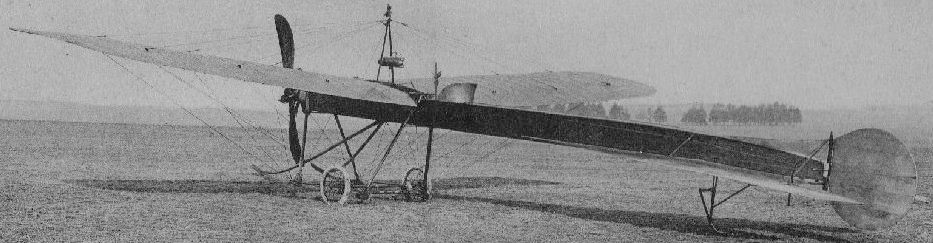
During 1909 and 1910 Camille Contal of Mourmelon, France, the inventor of a three-wheeled car called the Mototri, built several monoplanes. The 1910 machine had a narrow triangular fuselage was covered with sheets of mahogany with a 50 hp Gnome overhung at the nose. The rectangular wings could be warped, with the front spars fixed through steel fittings to the top two ash longerons, and the rear spars hinged. The pilot sat with his legs extended so that he could set his back easily against the seat without having to be strapped in.

Consolidated 37 / XC-99
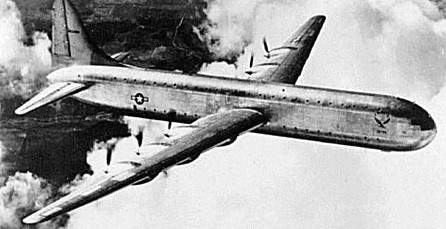
Shortly after starting to develop the B-36 bomber, Convair began the parallel design of a transport late in 1942 (Model 37). The XC-99 used the same wings, empennage, landing gear, and six 3,500hp (2,600kW) Pratt & Whitney Wasp Major engines as in the ‘Peacemaker’, but it had a large pressurized, double-decked fuselage capable of carrying 400 troops or more than 100,000lb (45,350kg) of cargo.
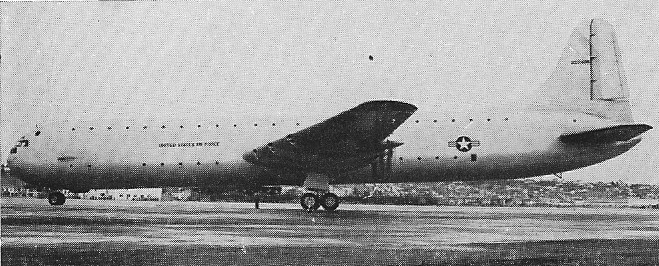
Only a single aircraft was built which flew on 23 November 1947, it subsequently acquired bogie main wheel units and weather radar. By 1955 it had carried 35 million pounds of freight in 4,000 flying hours. It was used successfully by the US Air Force for special transport operations until retired in 1957.

Engines: 6 x Pratt & Whitney R4360-41 Wasp Major, 3,500hp (2,600kW).
Span: 230 ft
Length: 182 ft 6 in
Height: 57 ft 6 in
Empty weight: 132,000 lb
Loaded weight: 265,000 lb
Max. Speed: over 300 m.p.h.
Service ceiling: 30,000 ft
Payload: 400 troops or 100,000+lb (45,350kg) of cargo.
Maximum range w/10,000 lb: 8100 miles

