Diamond Aircraft Industries GmbH / Hoffman Aircraft / HOAC

Hoffmann Flugzeugbau-Friesach GesmbH
Wolf Hoffinann Flugzeugbau KG
Hoffmann Aircraft Ltd
HOAC AG
HOAC-Austria, Flugzeugwerk Wiener Neustadt Gesellschaft mbH
Dimona Aircraft
Diamond Aircraft Industries GmbH

Hoffmann Flugzeugbau-Friesach GesmbH was founded in Friesach, Austria, in 1981 to produce the newly certified H36 Dimona motorglider.
1983: Wolf Hoffinann Flugzeugbau KG, Sportflugplatz, D 8870 Gfinzburg; West Germany.
By 1985, Hoffmann Aircraft Ltd, was a 100% subsidiary of Simmering-Graz-Pauker AG, and in 1985 moved to Vienna and introduces the Dimona Mk II.
Production facilities are established at the Wiener Neustadt airport, just south of Vienna in 1987. The airport has a long history, dating back to before the first world war.
The Dries family acquired 100% control of the company, now named HOAC AG, in 1989, thereafter being known as HOAC-Austria, Flugzeugwerk Wiener Neustadt Gesellschaft mbH. Immediately, development of the HK36R Rotax 912 powered motorglider and its derivative, the DV20 “Katana”, were started.
With a view to supplying the US market with its new technology training aircraft, a full production facility was established in London, Ontario, Canada, in 1992. The company was named Dimona Aircraft.
The Austrian built DV 20 Katana is certified in 1993 and the first, DV20, OE-CPU went on a demo tour in the US and Canada.
The first Canadian built production DA20-A1 was delivered to Central Missouri State University in 1995 and serial production was ramped up. The DA20-A1 Katana receives the prestigous Flying Magazine Eagle Award, for best light aircraft.
Named Diamond Aircraft Industries GmbH since March 1996, Diamond Aircraft Industries Canada division produced the HK 36 Super Dimona motorglider in four versions, but stopped production of the DV 20 Katana two-seat lightplane in Austria (first flown March 1991 as the HOAC LF 2000, becoming LF2 before DV 20), which is now produced in Canada as the DA 20 Katana. Latest aircraft is the four-seat DA 40 Katana (first flown 1998). HOAC introduces 4 new versions of the HK36 motorglider: taildragger or tricycle gear, either with the Rotax 912 or turbo 914 engine.
The 4 seater DA40 program is announced in 1997 at the AERO EXPO in Friedrichshafen. The first experimental aircraft are powered by Rotax 914 and TCM IO-240 engines. The Lycoming IO360 is selected for the production version.
The Rotax powered Katana, after production of 500 units, is replaced with the all new TCM IO240 powered DA20-C1, featuring improved performance, useful load and comfort.
Diamond opens its new Diamond Flight Center, including training facilities and the Katana Kafé restaurant, at the London Airport.
HOAC is renamed Diamond Aircraft GmbH, to align with the North American operation, and Diamond Austria acqired the Wiener Neustadt – East Airport (LOAN). In 1998 Diamond Aircraft maintained two research and de¬velopment centres, located in London, Ontario, Canada, and Weiner Neustadt, Austria. Diamond’s primary manufacturing facilities are located at their Canadian base, where the Con¬tinental powered Katana C1 is produced. The new Diamond DA40, four-place aircraft was also to be manufactured in this facility. Production of Diamond’s Katana Xtreme, high performance motor glider/glider tug aircraft takes place at the company’s Austrian facilities.
By 1999 over 1250 Diamond aircraft were flying worldwide. The Wiener Neustadt airport and company facilities undergo significant expansion, with the addition of new taxiways, runway lighting, NDB approach, construction of a new administration building, pilot shop, restaurant, and maintenance facilities.
The DA20-100, a factory refurbished and re-engined (Rotax 912S-100hp) Katana, is introduced and proves very popular, particularly in Europe.
Diamond opens a factory sales, service and flight training center in Egelsbach (Frankfurt).
The DA20-C1 Eclipse, an improved and enhanced version of the DA20-C1, enters production.
The IFR DA40-180 Diamond Star is certified in 2000 and enters production. The HK36TTC-ECO, a specialized aerial camera platform also enters service.
The DA40-180 receives FAA type certification and production for the North American market starts in London, Ontario in 2001.
Diamond Austria flies the world’s first modern production GA diesel powered aircraft, the DA40-TDI, in 2001.
The DA20-C1 was selected for the USAF Introductory Flight Training Program in 2002. The DA42-TDI project is announced at the Berlin International Airshow in May 02. Company CEO, Christian Dries makes the first test flight on December 9th. The DA40-TDI turbo diesel powered Diamond Star receives European certification.
In 2004 the DA42, equipped with the Garmin G1000, receives European certification and serial production is started. The company’s DA42 demonstrator crosses the Atlantic nonstop, direct from St. John’s, Newfoundland to Porto, Portugal, with a total fuel burn of only 72 gallons of jet fuel. DA20 and DA40 receive Chinese CAAC certification and first G1000 equipped DA40’s are delivered to PanAm Beijing.
The DA40 FP, a carburated fixed pitch version of the DA40 was certified in 2005. Diamond announces a Chinese joint venture to produce the DA40 Diamond Star for the Chinese market. The DA42 receives FAA certification and first US delivery is made.
In 2006 the DA20-C1 was selected for new USAF training program, D-JET completes first flights, the first Diamond Brilliance Center opens in Naples, FL, and DA40 XL introduced.
The DA50 Super Star made its first flight in 2007 and the DA40 XLS/CS Launch at AOPA Expo.
2008: 1560 Crumlin Sideroad, London N5V 1S2, Ontario, Canada.
Diamond DA42 is certified for Known Icing in 2008 and in 2009 the Turbo diesel Austro Engine AE 300 is certified.

It was in 2017 that China-based Wanfeng Aviation Industry acquired full ownership of the Austria-based Diamond Aircraft Group, founded in 1981 and maker of single- and twin-engine piston aircraft, including the four-seat DA40, four-seat DA42, and seven-seat DA62 models. Wanfeng’s acquisition also included Diamond’s sister company and diesel aerospace engine maker Austro Engine.
DG Flugzeugbau Silence

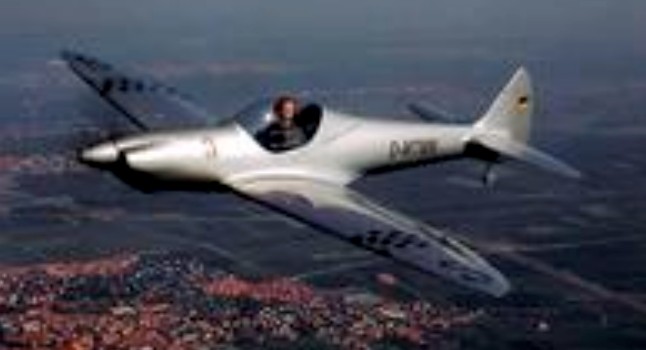
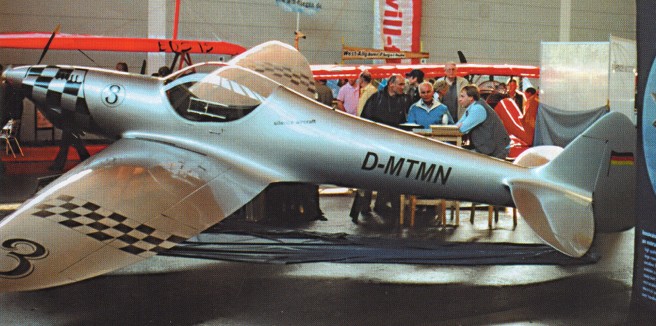
The developers of the Silence single place ultralight joined DG to produce both kits and finished aircraft. The main components are of a honeycomb sandwich.

Silence Twister

Silence, manufactured by Silence Aircraft in Verl near Bielefeld, Germany.

Silence Twister

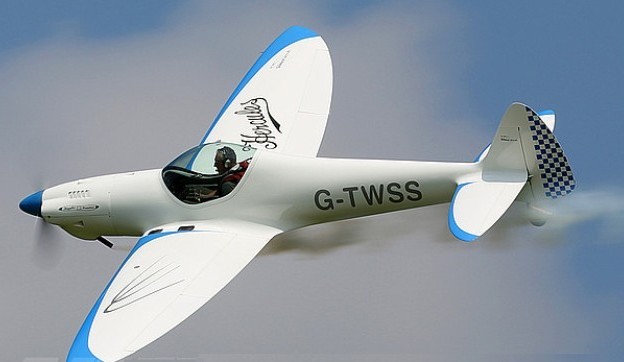
The Swiss company H55 was working with the Solar Impulse project co-founder and pilot André Borschberg. They use the Silence Aircraft Twister and jointly with Siemens they developed a single seat aerobatic airplane.

Engine: Jabiru 2200, 80 hp.
Stall: 41 kt / 47 mph / 76 kmh
Cruise: 127 kt / 146 mph / 235 kmh
VNE: 162 kt / 186 mph / 300 kmh
Empty Weight: 238 kg / 525 lbs
MTOW Weight: 399 kg / 880 lbs
Climb Ratio: 1275 ft/min / 6 m/s
Max speed: 140 kts.
Seats: 1.

DFS Prüfling

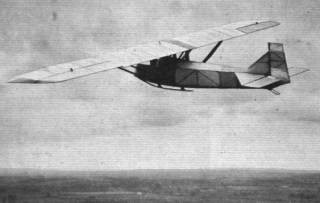
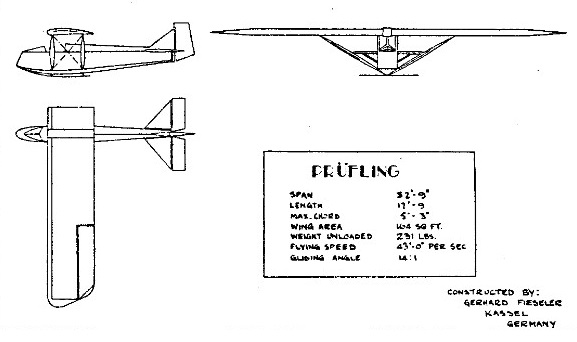
The German RRG Prufling of 1926 was a secondary training glider designed for club use. It was to be cheap to build, given the difficult financial situation of many Germans after the First world war, as well as simple enough that skilled non-professional builders and gliding clubs could successfully build them from plans.

The concept took shape shortly at the Martens gliding school at the Wasserkuppe in the rhön-Rossitten-Gesellschaft GBR at the end of 1925. Chief Martens instructor Fritz Stamer and Alexander Opisem were to produce two gliders in a few days; a Zogling and Prufling. Some parts, such as wings, and to a lesser extent, horizontal tails, the two aircraft were similar.

Both were almost rectangular in shape, two-spar wooden structures, with two-piece wings with fabric covering everywhere except the front edges of which were covered with plywood. In Pruflings the tips of the wings were more rounded and his wingspan 500 mm more. The ailerons were simple, though Pruflings were a little longer. Both had triangular tailplanes carrying elevators, which were rectangular pieces cut-out for rudder movement, though the tail Pruflings was more strongly swept and wider in chord.

The main difference between the two was in the fuselage. In the Zogling was very simple to open a longeron of the fuselage, Prufling more regular hexagonal cross section, wood-frame structure, covered with plywood forward from under the wing, and fabric aft. The wing was supported over the fuselage with a pair of parallel lift struts on each side, tying it almost in the middle of the span when the spars to the lower fuselage longerons. The open cockpit was under the wing center section was supported by two pairs of struts to the upper longerons of the fuselage. Front pair located in the front part of the cabin was a single, upright struts and in the back, just back, had a friend with an inverted V-steam. In the center there was a noticeable gap between the wings, connected by short wooden the link of the chord. The horizontal tail was located on the top longerons. with a triangular fin to wear vertically, straight edged balanced rudder, which was at an angle just below the heel and extended down to the keel. In Prufling landed on the rubber suspension below the frame forward the whole ply skin of the fuselage, helped a very small skid.

It first flew in 1926 and was soon in use with the corresponding RRT rhön Rossitten gliding clubs.

The plans were sold and many of them were built inside and outside of Germany. As an example, one was flying from the Lancashire Aero club and the other with the London gliding club in the early 1930s. Despite this success, Prufling was something of a disappointment as an additional training aircraft, for their performance was not much better than a typical primary. Handling also was not good, with lack of stability.

Wingspan: 10.50 m / 34 ft 5 in.
Wing area: 15.24 sq.m / 164.0 sq ft.
Aspect ratio: 7.23
Length: 5.484 m / 18 ft 0 in
Empty weight: 105 kg / 231 lb
Gross weight: 195 kg / 430 lb
Wing loading: 12.8 kg/sq.m / 2.6 lb/sq ft
Seats: One

DFS 230

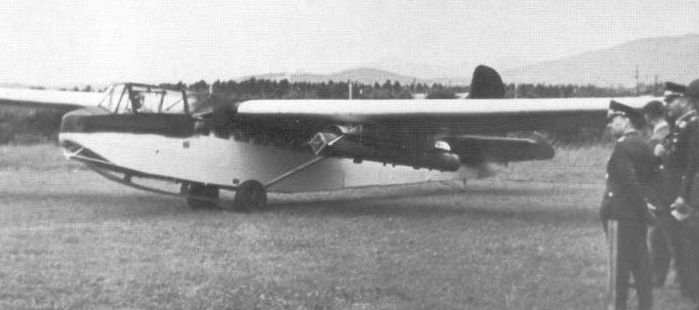
German assault glider. The major contribution of the Deutsches Forschungsinstitut for Segelflug (German Research Institute for Gliding) to Germany’s Second World War armoury was the DFS 230 assault glider of 1937. With a rectangular section fabric covered steel tube fuselage, and a long tapering wing covered in plywood and fabric and braced by metal struts to the fuselage, the glider could carry some 272 kg (600 lb) of freight in addition to the pilot plus nine troops and their equipment. Three prototypes were built and tested by the DFS, and further DFS 230s were produced by Gothaer Waggonfabrik, a series of A 0 pre production models being followed by production A 1s and dual control A 2s. Deliveries began in October 1939. Some modifications were incorporated in the B 1 and B 2 production series, notably a parachute pack for braking, a stronger landing skid and a mounting for a single MG 15 machine gun.
The DFS 230 made its operational debut in the attack on Fort Eben Ernael and Albert Canal bridges in Belgium and Holland in May 1940. It went on to take part in attacks on the Corinth Canal, and in the airborne invasion of Crete in May 1941. However, such heavy losses were suffered during the later operation that thereafter DFS 230s were largely confined to transport duties in the Mediterranean and on the Eastern Front. One other spectacular operation involved DFS 230s, however, when DFS 230c 1s B 1s fitted with forward firing braking rockets in a special nose cone were used to land German commandos on the Matto Grosso as part of the rescue of Italian leader Benito Mussolini. A total between reported figures of 1022 and 1500 DFS 230s were produced, and the glider soldiered on in the supply role almost until the end of the war.

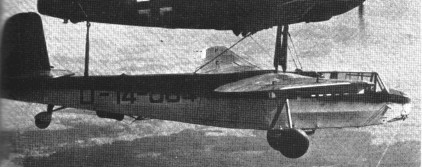
DFS230 glider with Argus AS014 pulsejets

DFS 230A-1
Wingspan: 68 ft 5.5 in / 20.87 m
Length; 36 ft 10.5 in / 11.24m
Height; 9 ft / 2.74 m
Wing area; 444.55 sq.ft / 41.3 sq.m
Empty weight; 1896 lb / 860 kg
MAUW: 4630 lb / 2100 kg
Max towed speed: 130 mph / 210 kph

DFS 230B 1
Span: 21.98 m (72 ft 11 in)
Length: 11.24 m (36 ft 10.5 in)
Gross weight: 2100 kg (4630 lb)
Maximum speed: 290 km/h (180 mph)

DFS / Deutsche Forschungsinstitut Für Segelflug / German Research Institute for Gliding / Rhon-Rossiten-Gesellschaft

Established as the Rhon-Rossiten-Gesellschaft at Wasserkuppe in 1925.
Became DFS on moving to Darmstadt in 1933 and undertook glider research. Designed and built the successful DFS 230 assault glider in the Second World War, and the DFS 228, an air-launched rocket aircraft used as a research vehicle for the DFS 346, a swept-wing reconnaissance project expected to reach 1,650mph (2,655kmh) at 66,000 ft (20,120 m). Also undertook development of Me 163 and Mistel composite bomber. Experimented with delta designs by Dr. Alexander Lippisch and evolved piloted V-1. In 1946 the DFS 346 project and its engineering design staff were taken by the Soviets to Podberczhye, where the project was said to have been completed.

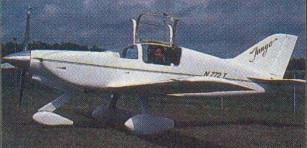
DFL Tango

Fabricated in Asia from American moulds, prefabricated instrument panels and firewall forward options reduce the build time.

Top speed: 225 mph
Cruise: 208 mph
Stall: 63 mph
Range: 850 sm
Rate of climb: 1500 fpm
Takeoff dist: 600 ft
Landing dist: 800 ft
Engine: Lycoming O-360, 180 hp
HP range: 150-200 hp
Fuel capacity: 40 USG
Empty weight: 1040 lb
Gross weight: 1800 lb
Length: 19.3 ft
Height: 7.25 ft
Wing span: 25 ft
Wing area: 75 sq.ft
Seats: 2
Landing gear: nose

DFG Hintner Eindecker

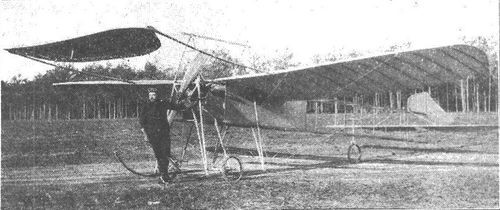
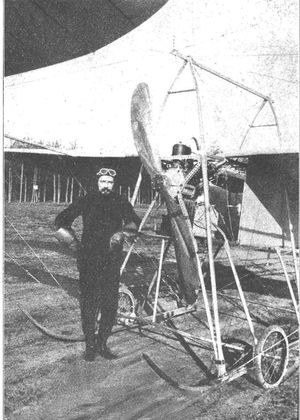
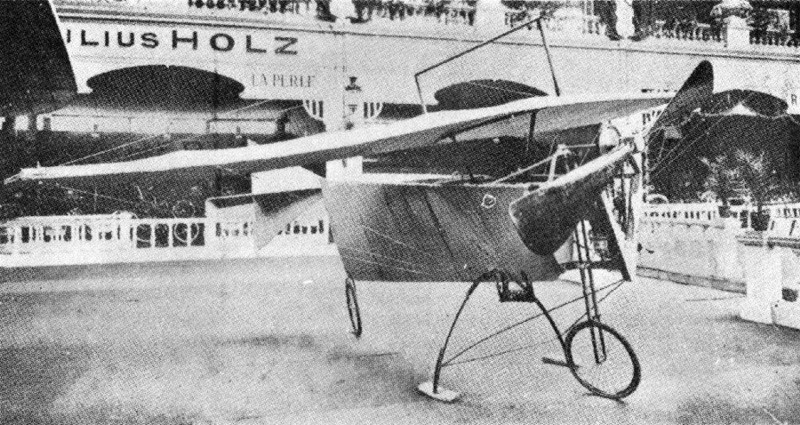
DFG Hintner Eindecker of 1910 was a monoplane drawn up by the Cornelius Hintner – a successful Austrian artist who later became famous as a film director – realized by the German firm of Deutsche-Flugmaschinenbau-GmbH.

The Hintner Eindecker was special in that the elevator was mounted in front of the tractor propeller. Power was supplied by a 25 hp Anzani 3-cylinder radial driving a Chauvière propeller. The wing area was about 30 m², where total weight (inclusive the pilot) was 280 kg.

During the first test flight the machine flew for 500 meters at a height of 25 meters, most likely only in a straight line. The machine lifted after a run of only 25 to 30 meters.

When Hintner flew his Eindecker he had no licence and almost certainly no flying experience whatsoever. He later received German flying licence No.110 on September 9, 1911 flying an Albatros biplane at Berlin.