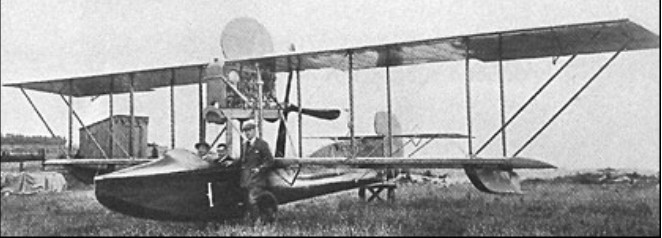
1914
1914
Based at Bognor, Sussex. Acquired U.K. rights to products of Curtiss Aeroplane Company. Built Short S.38 trainers under subcontract in 1914. About 1910 had designed and built an unsuccessful aircraft with wings covered in sheet aluminium. Registered 1912 as private company; designed and built one- and two-engined flying-boats for the Admiralty in 1914.
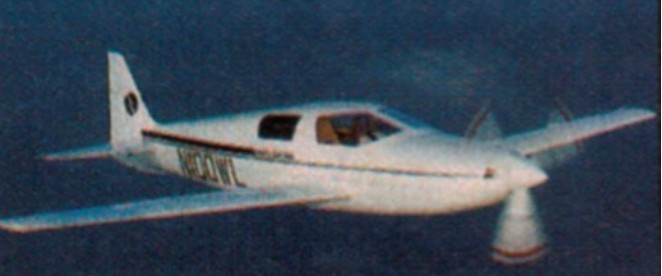
A high speed, four place composite aircraft designed by Nick Jones. By 1998 about 50 examples had een finished.
Speed max: 280 mph
Cruise: 265 mph
Range: 1600 sm
Stall: 67 mph
ROC: 1900 fpm
Take-off dist: 1300 ft
Landing dist: 1300 ft
Service ceiling: 20,000 ft
Engine: Continental IO-360, 210 hp
Fuel cap: 70 USG
Weight empty: 1400 lbs
Gross: 2400 lb
Height: 7.17 ft
Length: 23.33 ft
Wing span: 27.67 ft
Wing area: 89.2 sq.ft
Seats: 4
Landing gear: retractable nose wheel
Engine: Continental, 210 hp
Wing span: 8.4 m
Wing area: 8.2 sq.m
MAUW: 1088 kg
Empty weight: 635 kg
Fuel capacity: 265 lt
Max speed: 450 kph
Cruise speed: 426 kph
Minimum speed: 100 kph
Climb rate: 9.5 m/s
Seats: 4
Fuel consumption: 45 lt/hr
Kit price (1998): $45,000
1995: 179 Aviation Ave, PO Box 497, Walterboro, SC 29488, USA.
Built the WLAC-1
The 1937 White-Kremsreiter W-K Special, NX18219, was a single place open cockpit monoplane powered by an 85hp Schilberg engine.
(Benjamin) White-(Hans) Kremsreiter
Milwaukee WI.
USA
Aircraft builder circa 1937

At the end of 1916, the Whitehead Aircraft Company completed, at its Richmond, Surrey, works, a small single-seat fighting scout. Not unlike the Camel in general appearance – and perhaps inspired by the Sopwith type, for the production of which Whitehead was a major contractor – the aircraft was a compact single-bay biplane, with ailerons on all four wings. The fuselage was faired to a near-circular cross section and the engine was an 80hp Le Rhone nine-cylinder rotary. The name Comet was bestowed upon the fighter by its manufacturer, although it was also known within the works as the Boyle Scout, in an allusion to its principal designer, Edwin Boyle. It is not clear if it was designed by T. Navarro, who left Whitehead Aircraft to work on another scout project at Thomas Lowe & Sons, or if the designer was the then 23 year old Edwin Boyle. If it was known in the works as the Boyle Scout, that does suggest Boyle.
No details of the planned armament appear to have survived, nor of any flight testing, although the Comet was reported to have flown.
UK
Established at Richmond, Surrey, built Airco D.H.9 and RAF B.E.2a and B.E.2b under subcontract during First World War. Was a major supplier of Sopwith Pups. Built a prototype only of own-design Comet single-seat scout.
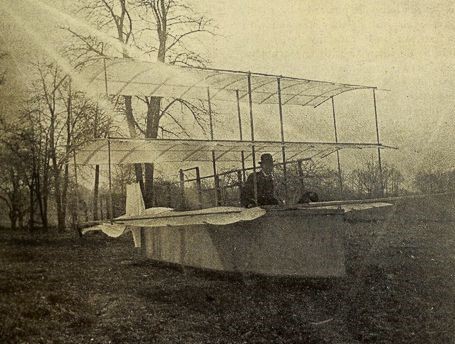
Whitehead’s airplanes are notoriously undocumented. There seems to have been a development from a triplane glider to a powered version either with a single tractor propeller or two tractor propellers running in opposite directions. The triplane could be flown without or with the body. The triplane glider with body attached, was later flown without the body. The proposed twin-propeller tractor version of the triplane with body may or may not have been built or flown.

Circa 1901, the Number 21 was a single place open cockpit mid-wing monoplane, reportedly had an acetylene gas-powered motor. Silk-covered, twin-tractor powered glider with a birdlike appearance (one of some two dozen Whitehead designs) was claimed by Whitehead, and his many supporters, to have attained powered flight two years before the Wright brothers, on 21 November 1901, but there apparently is no grounded substantiation.
A replica of this craft was built by Otto Timm, for the 1938 film, “Men With Wings,” and another by Andy Kosch in 1986.
 All Aero