Douglas

Donald Douglas, the son of a bank cashier in Brooklyn, came to Los Angeles in 1915 with a degree from the Massachusetts Institute of Technology. By 1922 he had established a factory with a capital of $350 in an abandoned motion-picture studio in Santa Monica, where he built torpedo plane for the US Navy. Two years later he had signed for his first export order, to Norway.
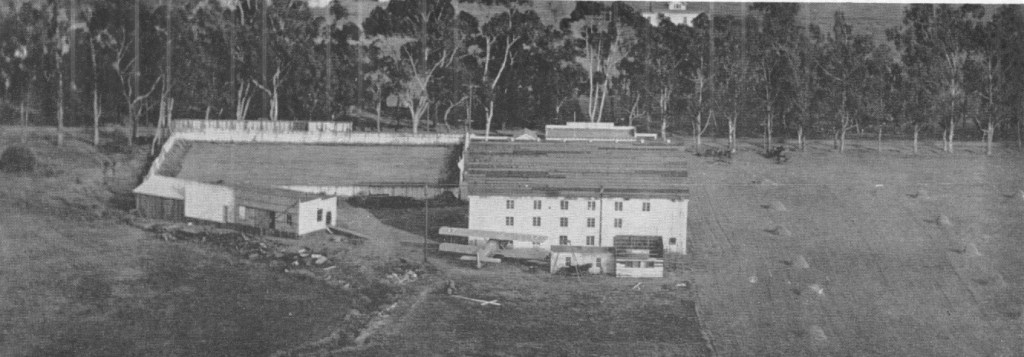
Douglas Aircraft, Santa Monica, California, 1920s

The Davis-Douglas Cloudster of 1920, Donald W. Douglas’s first design, was followed in 1921 by the DT torpedo- bomber for the U.S. Navy, the largest single-engined aircraft in the U.S.A. at the time. Four modified DTs, known as Douglas World Cruisers, made the first round-the-world flight in 1924, with Army crews. The Douglas Aircraft Company was formed in 1928, and in July 1929 a former Douglas engineer, Jack Northrop, set up the Northrop Aircraft Company and produced an all-metal low-wing dive-bomber, the XBT-1/A-17.
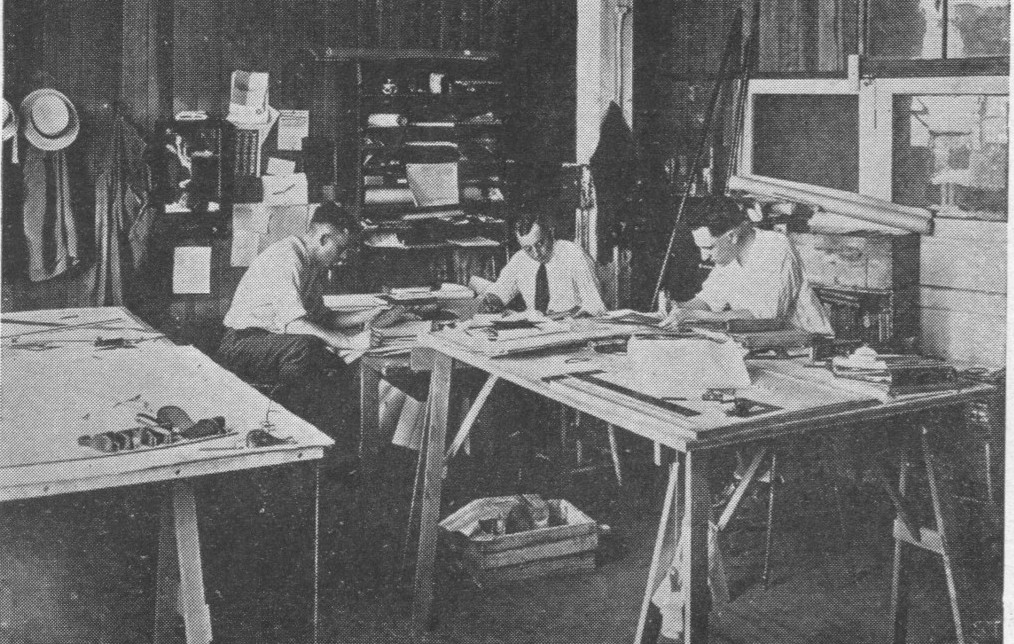
Donald Douglas, at left, working on the Cloudster design.

With the help of designer Jack Northrop, Lockheed built the F1, but it was turned down by the Navy. In 1923 Northrop left to take a job with Donald Douglas, and later founded his own corporation.

Northrop and Douglas merged in 1937 (Douglas with a majority stockholding), and in 1938 it became Douglas-El Segundo. The dive-bomber design progressed, via the Douglas TBD Devastator of 1934, to become the U.S. Navy’s first monoplane, and was followed by the Dauntless SBD. Ultimate Douglas development of the single-engined piston-engined attack-bomber was the 1945 Skyraider, which served in many roles until 1968, both in Korea and Vietnam. Last single-engined military designs by Douglas were the small delta-wing F4D Skyray jet fighter (first flown January 1951) and highly successful A4D Skyhawk jet attack-bomber (first flown June 1954 and 2,960 built up to 1979; current programs around the world keep substantial numbers of Skyhawks operationally capable with foreign forces).

The first twin-engined Douglas design appeared in 1925; the T2D for the U.S. Navy. The B7 of 1930 was the first of a series for the U.S. Army, and was followed by the B-18 in 1935. The most famous twin, however, was the DB-7/A-20 Boston (and nightfighter Havoc), which first saw action in June 1940. A total of 7,385 was built, of which 3,125 went to Russia. The A-26/B-26 Invader of 1945, developed from the A-20, served in Korea and Vietnam, and the Boston/Havoc concept was taken into the jet age by the Skywarrior and Skynight. A version of the former became the B-66 Destroyer, Douglas’s (and the USAF’s) last conventional light-attack bomber.

In 1933, under pressure from United Airlines’ Boeing 247, Transcontinental & Western Air turned to Douglas to provide a competing aircraft. The first DC-1 (Douglas Commercial) appeared in prototype only, but 131 DC-2s followed in 1932-1936. The first commercial orders were in 1933 for 40 DC-2 for the new Trans World Airways. A wide-bodied sleeper version, the DST, led to the DC-3 in 1936, which was to be the most famous airliner of all time. In 1940 the USAAC ordered it as the C-47 transport. Douglas built 9,255 of the 10,125 produced, and in 1961 1,000 were still in military use, and 600 civil DC-3s remained in operation in the U.S.A. in 1974. Douglas, consulting five airlines, developed a four-engined version, the DC-4, in 1941. The Army commandeered all civil DC-4s on U.S. entry into the war, and 1,162 military C-54s were built. After the war many reverted to DC-4 status, to be succeeded by the DC-6 and DC-7.

At Santa Monica, the Douglas company had made 29,000 aircraft during World War 2, but produced 127 in 1946.

Douglas temporarily lost its lead in transport when Boeing produced the Model 707, but then produced the very effective DC-8 and DC-9 jet.

Military transport design continued with the big C-124 Globemaster in 1950, and C-133 Cargomaster of 1957, a heavy strategic freighter capable of carrying all the thencurrent IRBMs or ICBMs. In 1947 Douglas went supersonic with the jet D-558-1 Skystreak and D-558-2 rocket Skyrocket, built for NASA. The latter held the world speed record in 1953 at 1,981km/h and achieved Mach 2.01 at 19,810m in 1953. The later X-3 research aircraft was intended for flight at up to Mach 3. There was a brief involvement with executive jets with the PD-808 Vespa-jet, production being transferred from El Segundo to Rinaldo Piaggio before, in 1967, the company merged with McDonnell Aircraft to become McDonnell Douglas.

Douglas files bankruptcy and was forced to sell at a knocked down price to McDonnell of St. Louis, which had been making handsome profits out of its F-4 Phantom, supplied to the air force in Vietnam.
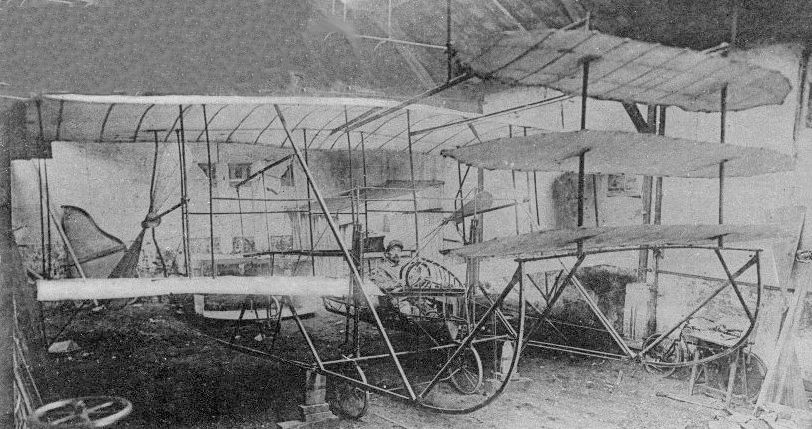
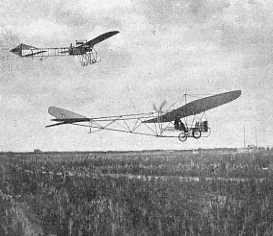
Dottori 1909 biplane         

This somewhat complicated twin-propeller pusher with a span of 12 m and a length of 11 m was designed by Charles-Albert Dottori, who was granted a French patent for “Appareil de direction et de stabilisation pour aéroplanes” on April 16th, 1909. The machine was tested on the ground at Port-Aviation by Edmond Jean Eugène Pouvarel, who had built its 50 hp engine. It was destroyed by fire on the night of December 18th, 1909, before making any flights.

Span: 39’4″
Length: 36’1″

Dornier-Flugzeug D-3800 / D-3801 / D-3802 / D-3803

D.3803 J-405

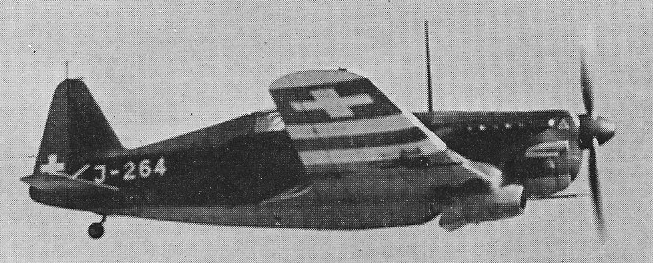
Swiss fighter aircraft. In 1938 the Swiss government purchased two Morane Saulnier M.S.405 fighters from France and, after careful evaluation, purchased a licence for the production version, the M.S.406C. Manufacture of a Swiss version of the 406 was assigned to Dornier Flugzeug at Altenrhein, with the Swiss designation D 3800. This differed from the French aircraft in having a Saurer/SLM licence built Hispano Suiza 12Y 31 of 860 hp, cooled by a fixed ventral radiator.

In 1939 40 Dornier delivered 82, followed in 1940 44 by 207 D 3801 fighters with many refinements and in having the 860 hp Hispano 12Y-31 engine replaced by a 1000 hp Hispano 12Y-51 built by A.G.Adolph Saurer.. Both types had one 20 mm (0.79 in) Hispano cannon and two 7.7 mm (0.303 in) wing guns, with provision for two 50 kg (110 lb) bombs.

D-3801

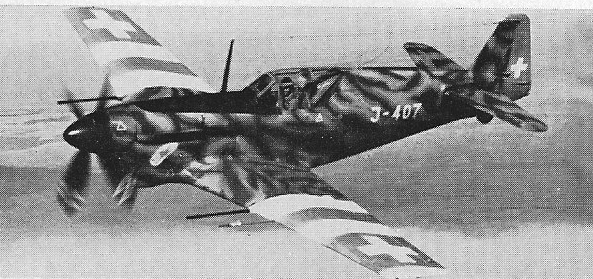
The D 3802 single-seat fighter prototype was built in 1943 by Dornier Werke to designs provided by Morane-Saulnier (designated M.S.450). A second prototype modified up to production standards was produced as the D-3802A, and orders were placed by the Swiss Air Force for 100. With the end of the war in Europe, the order was reduced to ten, built in 1944.

D-3802A

The 1500 hp (12Y 53) D 3803 of 1947 remained a one off, by which time the company had become Flug & Fahrtzeug¬werke (F&FW).

D 3801
Engine: 1000 hp Hispano 12Y-51
Span: 10.61 m (34 ft 9.75 in)
Length: 8.16 m (26 ft 9.25 in)
Empty weight: 4694 lb
Gross weight: 2725 kg (6007 lb).
Maximum speed: 523 km/h (325 mph) at 13,950 ft
Econ cruise: 190 mph
Time to 16,400 ft: 5.4 min
Service ceiling: 35,400 ft

D-3802A
Engine: Hispano-Suiza 1250 hp 12Y-52
Wingspan: 35 ft 2.75 in
Length: 30 ft 7 in
Height: 10 ft 11 in
Empty weight: 6327 lb
Loaded weight: 7716 lb
Max loaded weight: 8014 lb
Max speed: 391 mph at 21,325 ft
Time to 19,865 ft: 7.1 min
Ceiling: 33,500 ft
Armament: three 20mm (0.79 in) cannon

Dornier Composite Sea Star

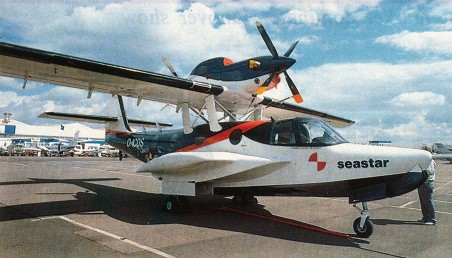
Preproduction Sea Star CD2

Flying Boat, Germany, 1986.

Dornier Composite Sea Star Article

Dornier succcessfully test flew preproduction Sea Star CD2 with technical modifications in 1988.
Modifications included –
Increase in wing area from 28.5 to 30.5 sq.m.
Replacement of the original P&WC PT6A-112 engines with –13S models of 650 hp at takeoff and 500 hp at cruise. This led to a 400 kg gain in takeoff weight, better climb rate, and up o 11 hrs in single engine (600 hp) mode.
Addition of a small keel on the underside of the hull, resulting in greater stability and reduced takeoff and landing speeds.
Modifications to the upper strut shrouds and air intakes, allowing an increase in empty weight, from 2.6 to 2.8t, and rise in payload capacity, from 1.6 to 1.8 t.

Gallery

Engine : 2 x PT 6 A 112, 368 shp
Length : 41.011 ft / 12.5 m
Height : 15.092 ft / 4.6 m
Wingspan : 52.165 ft / 15.9 m
Wing area : 306.774 sq.ft / 28.5 sq.m
Max take off weight : 9261.0 lb / 4200.0 kg
Weight empty : 5292.0 lb / 2400.0 kg
Max. weight carried : 3969.0 lb / 1800.0 kg
Max. speed : 184 kt / 341 km/h
Landing speed : 62 kt / 115 km/h
Cruising speed : 167 kt / 310 km/h
Initial climb rate : 1574.8 ft/min / 8.0 m/s
Service ceiling : 28002 ft / 8535 m
Wing load : 30.14 lb/sq.ft / 147.0 kg/sq.m
Range : 300 nm / 555 km
Crew : 2
Payload : 12pax

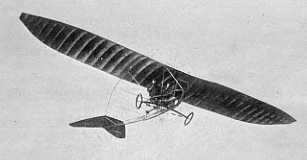
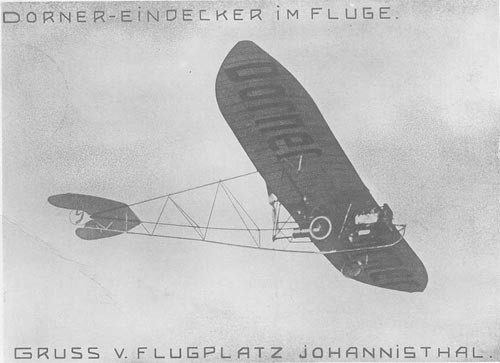
Dorner 1911 Eindecker / T.II / T.III

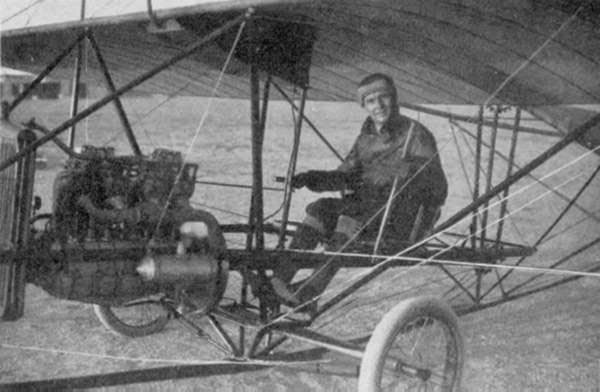
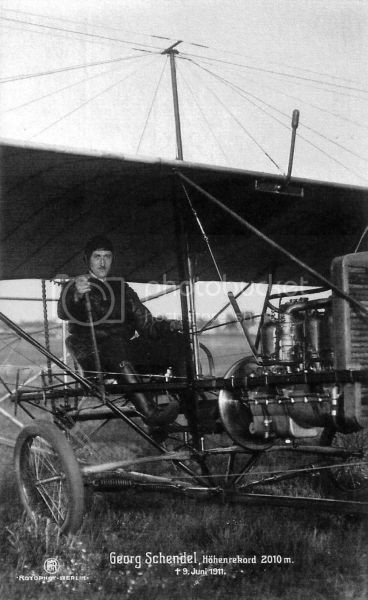
The Dorner monoplane was a well-known sight around Johannistahl. Georg Schendel set a German record for altitude of 2010 meters on 6 June, 1911, and a World Altitude record with passenger, of 1690 meters on 9 June, 1911, in his Dorner.

Type II had a 20 hp Dorner-Motor and cost 13,500 Marks.

Type III came with a 40 hp Dorner-Motor at 15,500 Marks, or 50 hp at 16,500 Marks.

1911 model T III – Dixi engine

Dorner had entered the T III with 40 hp Körting at the “Zuverlässigkeitsflug am Oberrhein” in April/May 1911, where his light monoplane still was underpowered and could not complete a single stage.

The T. III version had a fatal accident for both passenger and pilot on 9 June, 1911 at Johannistahl.

Variation:
Werntgen Wassereindecker

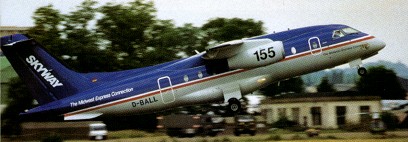
Dornier Do-728JET

A twin jet regional transport aircraft. In 1999, Fairchild Aerospace announced that it had taken an order from Lufthansa for 60 of its all new 70 passenger 728 jets the carrier also reserved 60 options for the jet.

728JET
Engines: two 12,500 lb. General Electric CF343-3D1 turbofans.
Gross weight: 83,754 lbs.
Max cruise: 460 kts
Range: 1,400–4,000 nm
Service ceiling: 41,000 ft.
Takeoff distance: 4,800 ft.
Landing distance: 4,659 ft.
Seats: 70