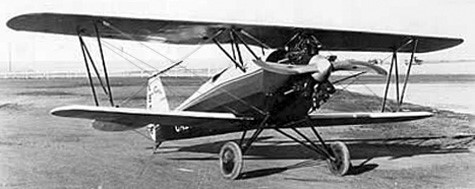
Designed by Floyd Copeland, the 1929 LeBlond powered Cadet NC9026 was a two place sport trainer development of the single place Wilson Cadet.
Designed by Floyd Copeland, the 1929 LeBlond powered Cadet NC9026 was a two place sport trainer development of the single place Wilson Cadet.
1928: Wilson & Co
529 W Douglas
Wichita KS.
USA
1929: Wichita Airplane Mfg Co
C A Noll, Anson O Rorabaugh
716 W 1st St
Wichita KS.
USA

Les Wilms, of 2142 Dayton Street, Chicago, had been experimenting in airship construction and navigation since 1895. His 1910 flying machine, besides framework and a seat for the operator, consisted of a canvas sustainer overhead, flails of canvas and a rudder of like material. The hand-propelled flails, the inventor said, acted on the principle of the feathers in a bird’s wings. The aircraft, which was named “Dinosaur,” was launched into space with the aid of an incline. Trial trips conducted privately northwest of Ravenswood manor were said to have been successful.
pres: A A Stafford
Wichita KS.
USA
Circa 1919 built airplane.
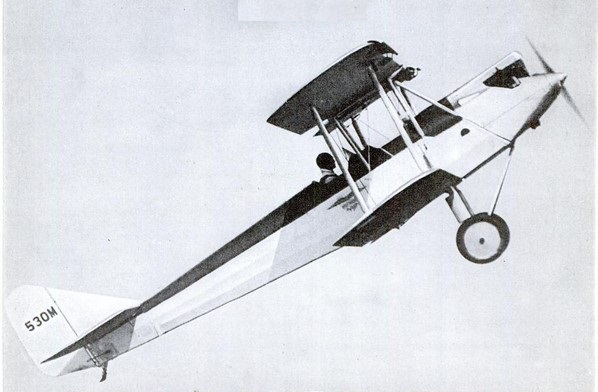
The Whittelsey Avian was advertised as a ‘safe’ aircraft in 1929, featuring Handley-Page wing slots and built to 8g. Designed for training and sport flying, the flyaway price of $4995 from Bridgeport. Powered by a 95 hp Cirrus, the Avian landing speed is 35 mph, and it achieved 20 miles per gallon.
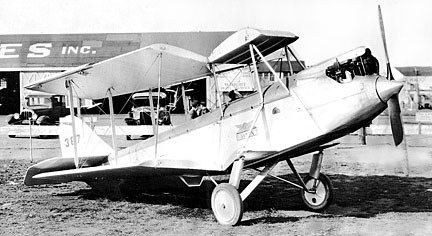
The British Avro folding-wing sportplanes manufactured under license, the Whittelsey Avian was advertised as a ‘safe’ aircraft in 1929, featuring Handley-Page wing slots and built to 8g. Designed for training and sport flying, the flyaway price of $4995 from Bridgeport. Powered by a 95 hp Cirrus, the Avian landing speed is 35 mph, and it achieved 20 miles per gallon.
1929
230 Howard Ave
Bridgeport
Conn.
USA
Built aircraft circa 1929
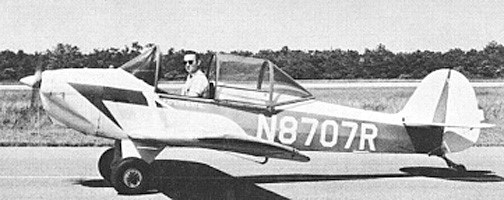
Built by Mickey Whittenburg circa 1965 and registered N8707R, the one-off aircraft was a conglomerate of Luscombe wings and cowling with parts from two J-2 Cubs and a PT-22. First flying in June 1965 powered by a 65hp Continental, the total cost was $575.00.
CT.
USA
Airplane builder circa 1965.
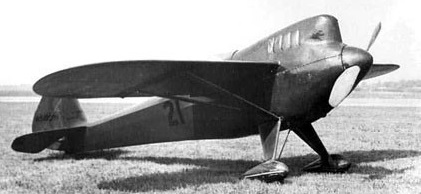
Clayton Folkerts designed the “Mono Special” NX/NR500W while working for the Mono-Aircraft Corporation. The aircraft was a strut-braced mid-winged conventional geared aircraft with a slender tapered tail and undersized wheels and fairings.
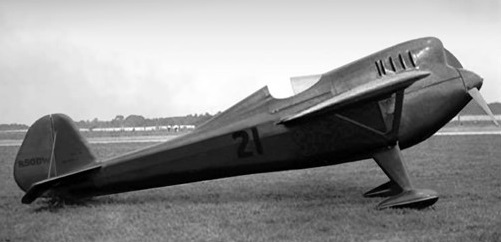
In 1930, for the American Cirrus Derby, pilot John Livingston was hired, but Stub Quimby flew in his place after an illness. The team did not win any earnings. In the 1930 National Air Races, Quimby placed fourth in the 650 Cubic inch class at 142 mph.
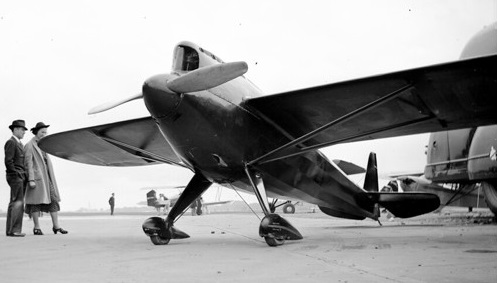
In the 1933 American Air Races, the aircraft was renamed the Folkerts SK-1, with modified lift struts and addition of wheel pants. The aircraft won first place twice in the 350 cubic inch class, and third in the 500 cubic inch class piloted by Harold Neumann, and fifth piloted by Marcellus King. During the 1933 International Air Races, Roy Ligget and Roy Hosler won two fifths and one fourth at a speed of 170 mph.
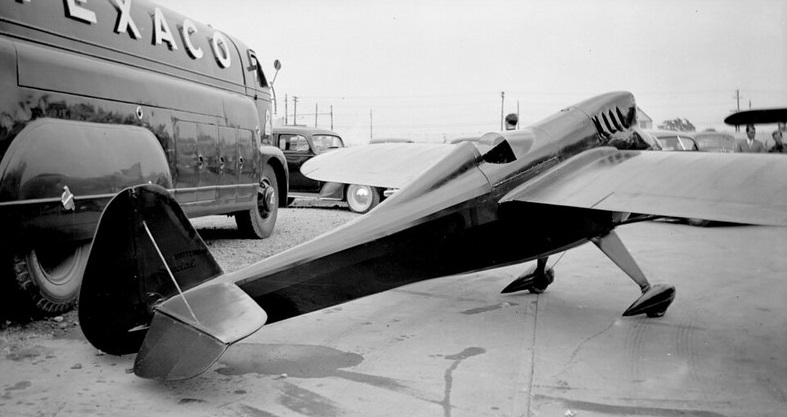
In the 1934 Pan American Air Races, the aircraft was renamed “Matilda”. In the 1935 National Air Races, with a modified headrest fairing, the aircraft raced as the “Fordon-Neumann Special” and placed second at 187 mph.
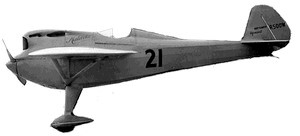
In the 1937 National Air Races, the aircraft raced as the “Hardwick-Whittenbeck Special”
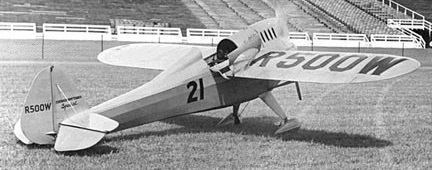
Engine: 1 × American Cirrus Hi-Drive Mk III, 110hp
Maximum speed: 162 kn; 301 km/h (187 mph)
Seats: 1
Greenwood MO, Lincoln NB and Miami OK.
USA
Airplane builder circa 1933.
 All Aero