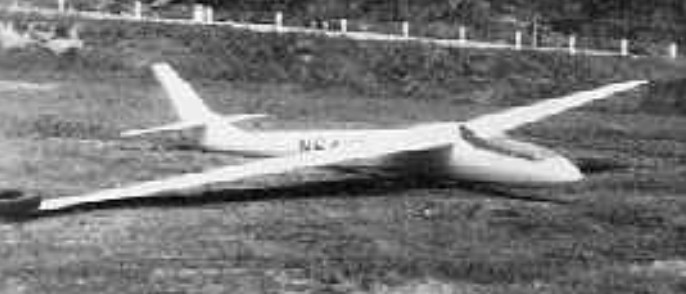
Designed by George Wiederkehr, the Cu-Climber first flew in 1968. The wing has a large (12 x 6 in/ 30 x 15 cm) spruce/ plywood/ fiberglass box-spar stressed to +9/ -6.3 g. The remainder of the wing is a fiberglass/ balsa sandwich, with the bottom of the wing aft of the spar covered with fabric. The fuselage is a fiberglass semi-monocoque structure with foam bulkheads. The ship also has an all-moving conventional horizontal tail with an anti-servo tab. Full span ailerons/ flaps are used for approach control.
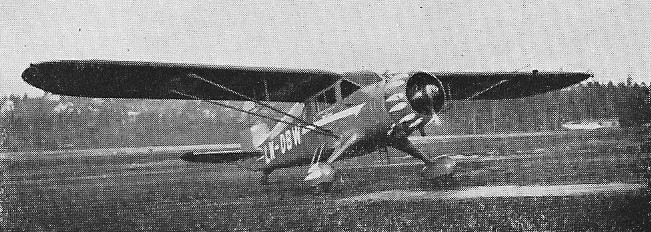
The Polar light utility monoplane built by Wideröe’s Flyveselskap og Polarfly A.S. in 1948, was designed by Birger Hönningstad to a specification prepared by the company. This called for an aircraft suitable for carrying a pilot and five passengers or cargo, capable of operating from wheels, floats or skis. Only one example of the Polar was built.
The Polar is of mixed construction, the plywood and fabric covered wing having two spruce spars and spruce ribs, and the fuselage has a welded steel-tube framework with a spruce and duralumin superstructure covered by light alloy panels forward and fabric aft.
Only one C.5 Polar was built, which was employed by the Wideröe company.
Engine: 1 x Wright R-769-E2, 350 hp Span: 45 ft 0 in Length: 29 ft 6 in Height: 8 ft 4 in Wing area: 269.09 sq.ft Empty weight: 2550 lb Loaded weight: 4130 lb Max speed: 150 mph Cruise speed: 130 mph ROC: 800 fpm Range: 625 miles
Norway The oldest flying company in Norway, established in 1933 a repair department for aircraft and engines. In 1945 built the C.5 Polar monoplane, a five-seat general-purpose or ambulance aircraft which took part in the Norwegian- British-Swedish Antarctic expedition of 1951.
France A new company formed in 1931 by a merger of Avions Michel Wibault with Chantiers de St Nazaire Penhoet, which built a number of single- and multi-engined airliners in the 1930s. Taken over by Breguet.
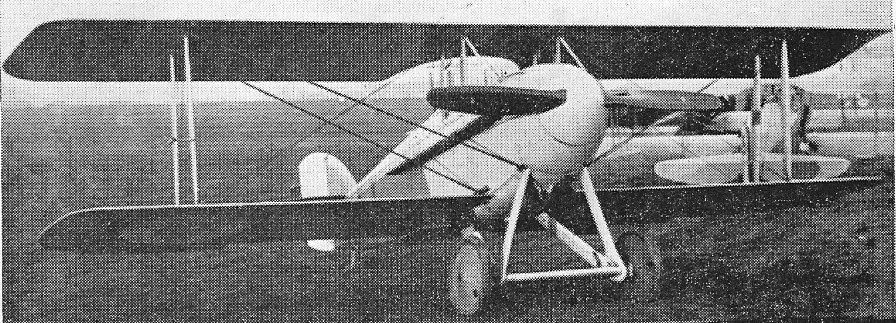
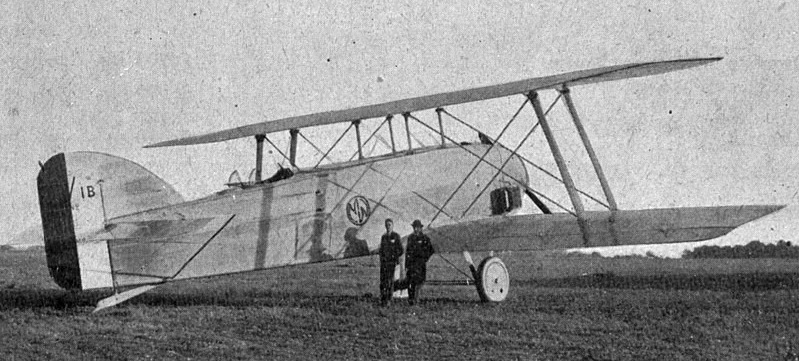
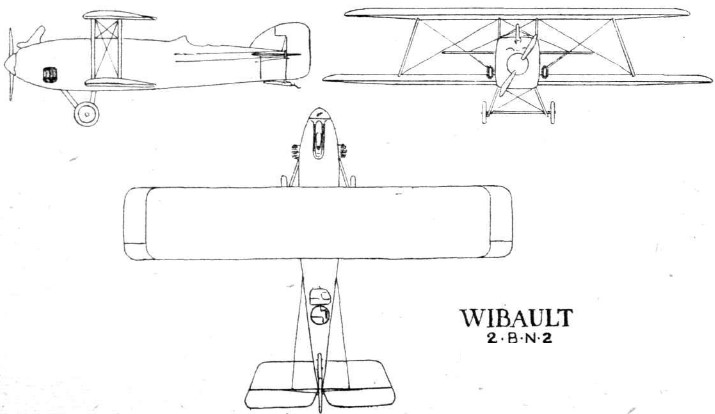
As the military description BN.2 indicates, the Wib 2 was designed as a two-seat night bomber, but the designer, Michel Wibault, had hopes of a passenger carrying derivative. As it was structurally an all-metal aircraft it had, by the standards of the times, a low structural weight and, as a consequence, a high useful load of 1,406 kg (3,100 lb) making the suggested capacity of thirteen passengers plausible. In addition to its metal construction, contemporaries noted other unusual design features, in particular the position of the wings well back along the fuselage, Flight speculated the idea being to distribute the passenger (or bomb) load symmetrically about the centre of pressure and over a greater longitudinal distance than usual, rather than along the span. The pilot sat quite close to the tail with the gunner (in the bomber version) in a separate, gun mounting equipped cockpit immediately behind him. Its span was large for a biplane with only a single set of struts and its upper wing had a shorter span than the lower.
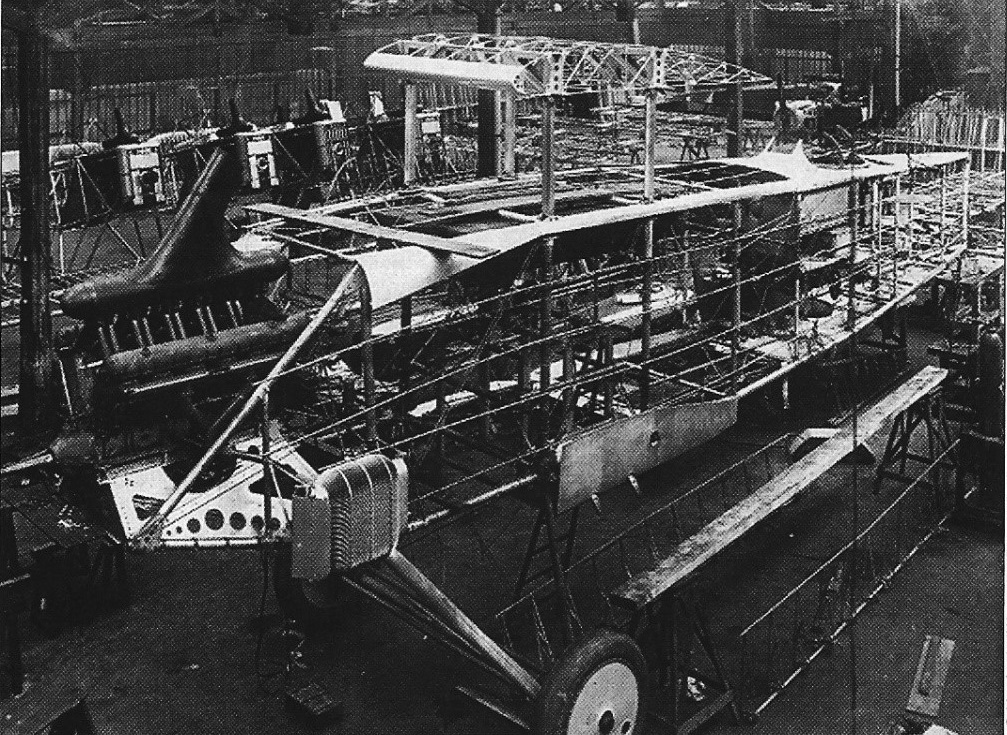
The wings of the Wib 2 were rectangular in plan and mounted without stagger or dihedral. The single bays were defined by parallel pairs of inward leaning interplane struts, assisted by crossed flying and landing wires from the bases of the struts to the fuselage. Cabane struts supported the upper wing above the fuselage. The wings had thick, high lift coefficient sections, constructed around deep single spars built up from Duralumin sheet; the ribs were formed from cross-braced metal tubes. Ailerons were mounted only on the lower wing.
The fuselage was metal framed and fabric covered, with a straight edged, wire braced tailplane carrying divided elevators mounted on top. Its vertical tail was low and broad, with a curved leading edge; the rudder was deep and aerodynamically balanced. The Wib 2 was powered by a 600 hp (447 kW) water-cooled V-12 Renault 12 M engine completely enclosed within a smooth cowling and drove a two-blade propeller. Small radiators projected out on either side of the cowling. The undercarriage was of the fixed conventional type, with the mainwheels on a rigid axle supported by V-struts and assisted by a tailskid.
September 1922
Built by Lavasseur, the Wib 2 flew for the first time on 29 October 1921 but only one, in bomber configuration, was built.
Powerplant: 1 × Renault 12 Ma, 450 kW (600 hp) Propeller: 2-bladed fixed pitch Wingspan: 16.92 m (55 ft 6 in) Wing area: 96.2 m2 (1,035 sq ft) Length: 12.75 m (41 ft 10 in) Height: 5.00 m (16 ft 5 in) Empty weight: 2,096 kg (4,620 lb) Gross weight: 4,286 kg (9,450 lb) Maximum speed: 201 km/h (125 mph, 109 kn) at 1,980 m (6,500 ft) Range: 600 km (370 mi, 320 nmi) Endurance: 4 hr at full throttle Service ceiling: 4,000 m (13,000 ft) Wing loading: 44.6 kg/m2 (9.13 lb/sq ft) Power/mass: 0.048 kW/m² (0.063 hp/lb) Crew: Two
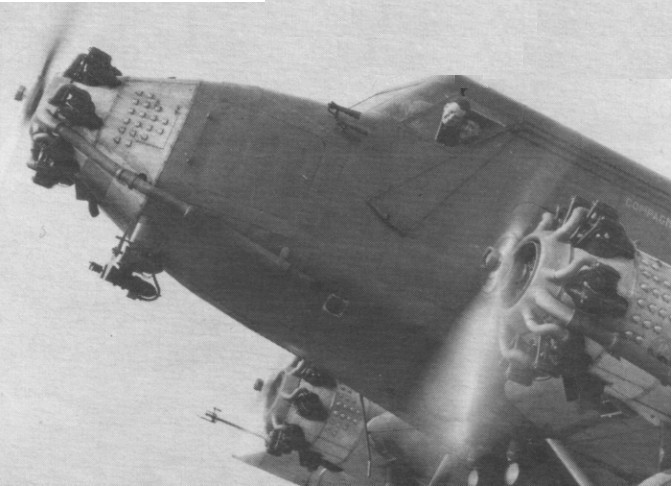
The Wibault 280-T was a French 12-passenger civil airliner produced by Wibault backed by money from the Penhoët shipyards and also known as ‘Penhoët Wibault’.
280 T
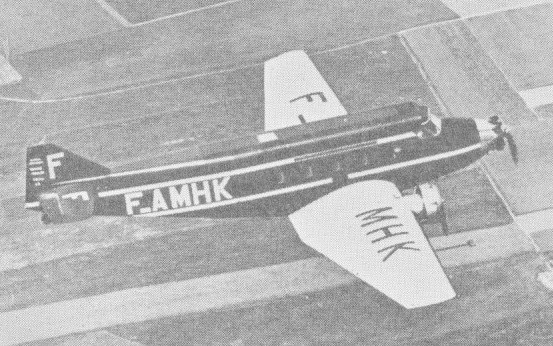
The prototype Penhoët Wibault 280-T first flew at Villacoublay in November 1930 with the development backed by funds from the Penhoët shipyards of St Nazaire. It was an all-metal low-wing cantilever monoplane powered by three 300 hp (224 kW) Hispano-Wright 9Qa radial engines although these were soon replaced by three Gnome-Rhône 7Kb and the aircraft was redesignated the Wibault 281-T.
A second aircraft was built to the 281 standard but then it was converted to a Wibault 282-T with three 350 hp (261 kW) Gnome-Rhône 7Kd engines and room for 12 passengers, seven further aircraft were built as 282s. Some of the 282s were operated by Air Union on the Paris-London Voile d’Or (“Golden Clipper”) service in 1933.
282.T12
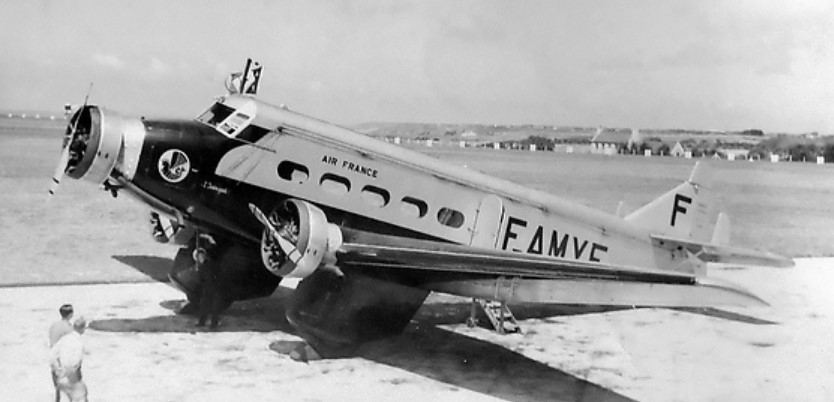
Air France replaced its LeO 21 biplanes with a fleet of Wibault 282s, which in turn gave way to Bloch 220s.
In 1934 Air France took delivery of the first of ten Wibault 283-Ts which had an increased fuel capacity and modified tail. Some of the 282s were converted to 283 standard. Some of the commercial aircraft were later taken over as military transports.
On 9 May 1934, Wibault 282-T F-AMHP of Air France crashed into the English Channel off Dungeness, Kent, United Kingdom, killing all six people on board.
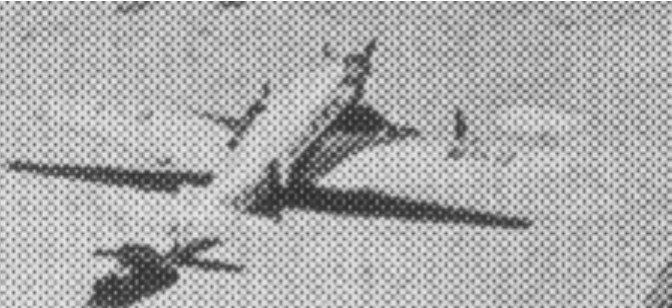
On 19 May 1934, a Golden Clipper of Air France crash-landed on a cricket pitch adjacent to Croydon Airport, Surrey, United Kingdom, due to fuel exhaustion. Only one of the ten people on board was injured.
On 24 December 1937, Wibault-Penhoët 283.T12 (c/n 11) F-AMYD of Air France crashed near Zhůří (currently part of Rejštejn), Czechoslovakia, due to a navigational error. The aircraft was supposed to land at Prague, but was directed by controllers to fly south and crashed in foggy, snowy and dark conditions after 120 km (75 mi). Two pilots and a single passenger were killed.
Penhoët Wibault 280-T Prototype one built converted to a 281 and then to a 282. Engines: three 300 hp (220 kW) Hispano-Wright 9Qa
Wibault 281-T Prototype One built as such and one converted from 280-T. Both converted to 282-Ts. Engines: three 350 hp (260 kW) Gnome-Rhône 7Kd
Wibault 282-T 10-passenger production variant cowlings around the wing-mounted engines Six built from new plus two converted prototypes. Engines: 3 x Gnome-Rhône 7Kd
Wibault 283-T Production variant for Air France NACA cowlings, increased fuel capacity, higher weights and a modified tail ten built. Engines: three Gnome-Rhône 7Kd
283-T-12 Powerplant: 3 × Gnome-Rhône Titan Major 7Kd, 260 kW (350 hp) each Wingspan: 22.61 m (74 ft 2 in) Wing area: 64.4 m2 (693 sq ft) Length: 17.0 m (55 ft 9 in) Height: 5.75 m (18 ft 10 in) Empty weight: 4,266 kg (9,405 lb) Gross weight: 6,350 kg (13,999 lb) Maximum speed: 251 km/h (156 mph, 136 kn) Cruise speed: 230 km/h (140 mph, 120 kn) Range: 1,000 km (620 mi, 540 nmi) Service ceiling: 5,200 m (17,100 ft) Crew: 2 Capacity: 10 passengers
Established in Paris. Wibauit’s first aircraft, a single-seat fighter, appeared too late to see service in First World War. Subsequently designed night bombers and fighters for the Armee de I’Air, as well as civil aircraft. Produced an allmetal aircraft in 1921 and changed from biplane to monoplane configuration 1923. In 1924 flew the prototype of a monoplane fighter, the Wibault 7, produced from 1925 and built under license by PZL and Vickers.
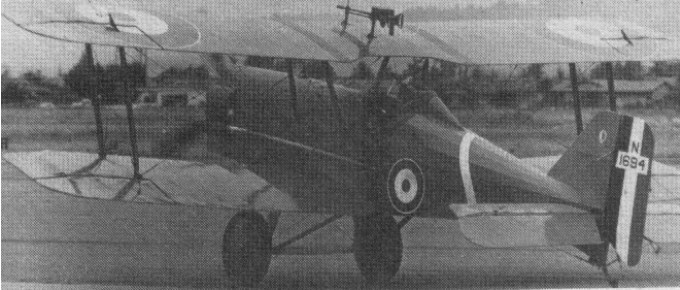
This little single-seat biplane is a 4/5 scale model of the famous British S.E.5A fighter of World War I. Designed by William Wienberg of Kan¬sas City, Missouri, it is constructed of wood and fabric. The wing structure consists of conventional wooden spars and ribs with center-section bracing struts and fabric covering. The fuselage is an all-wood box structure covered with plywood. The tail assembly is a wire-braced steel tube structure also covered with Ceconite fabric. Accom¬modations include a single-seat cockpit and a small baggage com¬partment behind the headrest.
Gross Wt. 1100 lb Empty Wt. 900 lb Fuel capacity 24 USG Wingspan 22 ft Length 18 ft Top speed 95 mph Cruise 85 mph Stall 50 mph Climb rate 600 fpm Takeoff run 200 ft Range 250 sm

 All Aero