Epervier X1

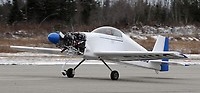
C-FWMQ EP-01

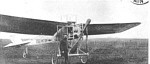
The Épervier Project was developed within the framework of an end-of-program project for the Mechanical Engineering bachelor degree at the Université de Sherbrooke, in 2008. The goal of the project was to design and construct a single passenger, homebuilt construction plane.

The team was made of David Rancourt, Nicolas Vincent, François Bérubé, David Barabé, Mathieu Lavoie, Gabriel Arsenault, Maya Caron, Jasmin Mc Fadden, Francis Beaucaire, Miguel Costa, Mathieu Lessard, Guy Bilodeau.

Entwicklungsschritte Archaeopteryx

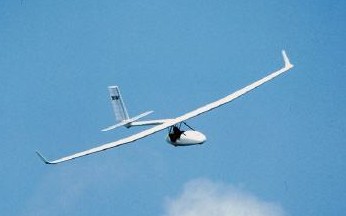
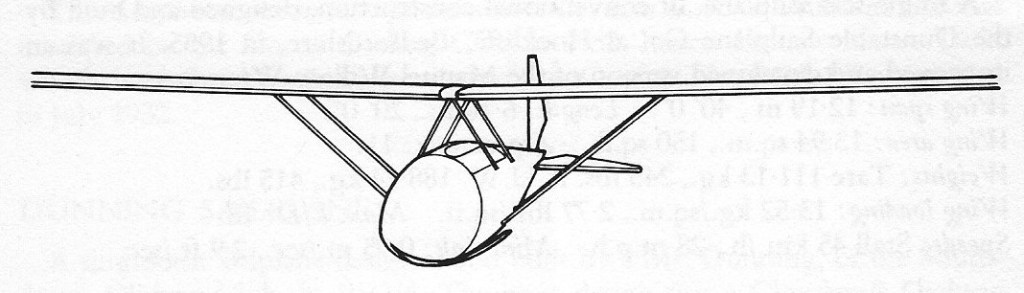
Designed at the Zurich University School of Engineering, the project started in 1998 with the concept prototype, stage P1, first flying in September 2001.
The concept prototype, stage P2, modified from the P1, first flew in May 2002. Concept prototype, stage P2 E P2 with detail evolutions first flew in March 2003.
The result was a successfully tested prototype Archaeopteryx P2E.
For flight testing many successful flights were accomplished AND since then, by foot start and bungee cord, from the level by auto, winding, trike and UL-tows were achieved. The flight behaviour was of a completely new, safe airplane, which fulfils all requirements of its product requirement specifications and for the pilot new possibilities in the super-light sail flight opens.

Span: 13.6 m
Length: 5.7 m
Height: 2.9 m
Wing area: 12.8 sq.m
Wing loading: 9.0-12.5 kg/sq.m
Take-off weight: 115-160 kg
Pilot size: 1.65-1.95 m
Pilot weight: 55-100 kg
Load factor: +5.3/-2.65 g
Stall: 30-35 km/h
Vne: 130 km/h
Min sink: 0.44-0.51 m/s
Glide ratio: 28
Min turn radius 45 deg bank: 15 m

Entwicklungsring Sud Arbeitsgemeinschaft / EWR VJ-101C

In 1959 the design teams of the German companies Bolkow, Heinkel and Messerschmitt were formed into a consortium named Entwicklungsring Sud to develop a Mach 2 VTOL interceptor for the Federal German defence ministry. Heinkel left the consortium in 1964 and in the following year it was re-formed as a company with the title Entwicklungsring Sud GmbH, EWR.

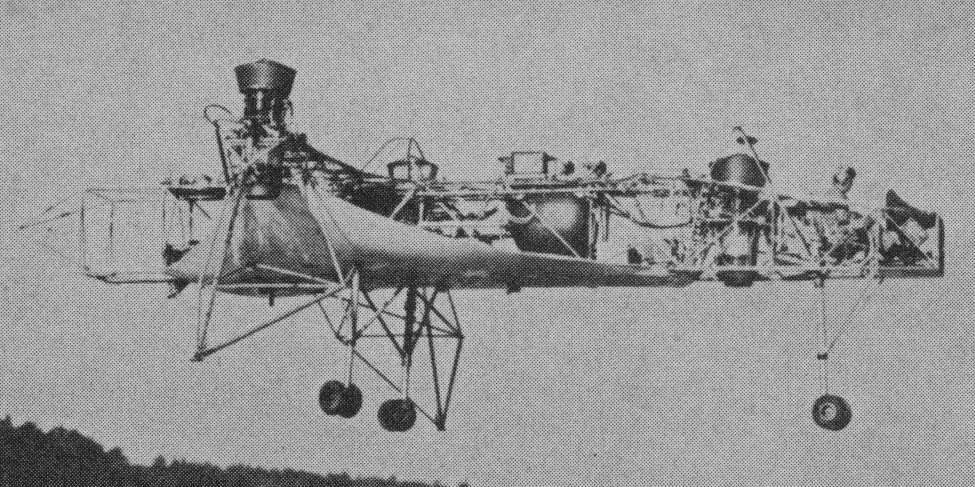
115 foreign companies’ participed including 35 in England, 60 in the US and 20 in France. A test rig built had three 2200 lb thrust Rolls-Royce engines installed in the same geometric arrangement as the VJ-101. Latter two 2759 lb thrust Rolls-Royce RB 145s in each of the two wing tip pods plus another two installed vertically in the fuselage were installed.

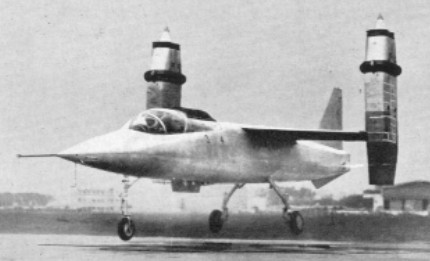
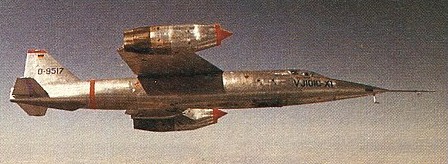
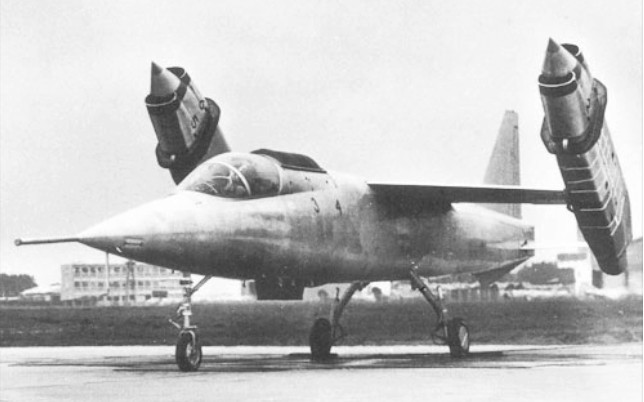
Two prototypes of the EWR VJ 101C single-seat experimental VTOL aircraft were built. Generally similar, they were both of high-wing monoplane configuration, primarily of light alloy construction, had retractable tricycle landing gear and accommodated the pilot in a pressurised cockpit, seated on a Martin-Baker ejection seat. Powerplant comprised six 2750-lb (1247-kg) thrust RB.145 turbojets, developed jointly by Rolls-Royce and MAN-Turbomotoren, with two mounted vertically in the fuselage, immediately aft of the cockpit, and two in a swivelling pod at each wingtip.

Those in the fuselage were used only for VTOL and low-speed flight, those in the wingtip pods for VTOL, low speed, transition from vertical to horizontal flight, and high-speed flight. Control of the aircraft in flight had been explored by a hovering rig powered by three Rolls-Royce RB.108 lift-jets, and by May 1963 this had made a total of 70 flights.

The VJ 101C X-1 prototype was flown for the first time in free hovering flight on 10 April 1963. It had exceeded a speed of Mach 1 several times before it crashed, following a vertical take-off, on 14 September 1964.

Flying the EWR VJ-101C Article

The VJ 101C X-2 differed by having afterburning engines in the wingtip pods, providing greater power (3550-lb / 1610-kg) for take-off and landing, and this made its first hovering flight on 12 June 1965. Four months later, on 22 October, the X-2 achieved the first full transitions from vertical to horizontal flight and vice versa, but development was discontinued soon after.

In absence of support by US Defence department or private manufacturers, the German government indicated in 1964 it won’t continue with a production version. Flight tests of the VJ.101C, including low supersonic advancement with afterburners fitted to the RB.145 engines, was continuing.

Production of a single-seat interceptor was planned, under the designation EWR VJ 101D, but this would have differed considerably from the research prototypes. VTOL lift would have been retained by a battery of Rolls-Royce/ MAN RB.162 lift-jets in the fuselage, but primary propulsion would have come from two Rolls-Royce/MAN RB.153 turbofans mounted in the rear fuselage, these relying upon thrust deflection for control purposes. None of these aircraft was built.

Gallery

EWR VJ 101C X-1
Engines; 6 x Rolls-Royce/MAN RB.145, 1247kg / 2750-lb
Max take-off weight; 6000 kg / 13228 lb
Wingspan; 6.61 m / 21 ft 8 in
Length; 15.70 m / 51 ft 6 in
Height; 4.13 m / 13 ft 7 in
Max. speed; 1.08M
Crew; 1
Entwicklungsring Sud Arbeitsgemeinschaft / EWR

Entwicklungsring Süd GmbH was formed of a Bölkow, Heinkel, and Messerschmitt design consortium on February 23,1959 at the suggestion of the Federal German Defense Ministry, to develop a Mach 2 VTOL intercepter. By May 1963 70 flights had been made with VJ 101C research aircraft, which had tilting jet-pods at wingtips. Studies were made for an entirely different VJ 101D fighter. Heinkel withdrew in late 1964, and in July 1965 EWR changed from a consortium into a limited company. There was later an unsuccessful partnership with Fairchild Hiller.

Entler-Werke

Germany
Based at Wilhelmshaven. Built in 1922, in conjunction with Prof. Junkers, a small two-seater cantilever biplane which had corrugated sheet-metal covering. Development was intended, and in summer 1922 an English selling price of £222 was mentioned. By 1925 the firm had ceased to exist.

Ensner Mk.1       

The Ensner Mk.1 was designed and built by F.G.Ensner, a member of the Thames Valley Gliding Club. A single-seat light sailplane built at West Drayton, Middlesex, UK.

It was built to carry out full scale tests of various aerofoil sections at low speeds. It was conventional wooden construction, with circular cross-section fuselage and parallel chord wing.

It was first flown from Fairey’s Great West Aerodrome on 26 June 1932. Only one was built and no C of A was issued.

Wing span: 7.62 m / 25 ft 0 in
Length: 4.11 m / 13 ft 6 in
Empty weight: 45.36 kg / 100 lb
Max L/D: 20

ENSAE Farfelu

The Farfelu is a two-seat training glider designed and being built at Toulouse by students of ENSAE – the Ecole Nationale Superieure de I’Aeronautique et de I’Espace. Instructor and pupil sit side by side under a one-piece canopy and the monocoque fuselage, of integrally stiffened epoxy/Nomex/epoxy sandwich construction, is built in two halves, the cockpit section tapering into a slimmer rear half carrying the tail; a metal box structure provides additional strength and reinforcement at the wing attachment points. The cantilever shoulder wings have single box spars and a laminated epoxy/Nomex/epoxy sandwich skin; there are Schempp-Hirth air brakes above and below each wing. The unswept cruciform tail unit is of similar construction to the wings, and there is a fixed monowheel in a small fairing and a tail bumper. The Farfelu prototype had not flown in 1955.

Span: 52 ft 6 in
Length: 25 ft 8 in
Wing area: 181.4 sqft
Aspect ratio: 15.19
Empty weight: 617 lb
Max weight: 1,102 lb
Min sinking speed: 2.50 ft/sec
Best glide ratio: 32:1