Indiana
USA
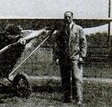
Built in 1930 the Wilcoxsen M-1 Monoplane “The Cloud-Boy”.
Indiana
USA
Built in 1930 the Wilcoxsen M-1 Monoplane “The Cloud-Boy”.
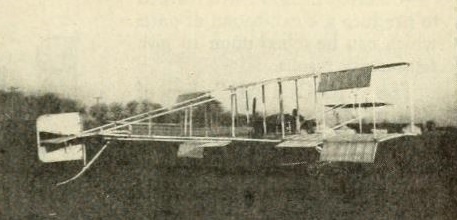
Mr. Wilcox is now engaged at the factory of Moore and Morgen automobile body manufactures, 600 W. Fifth Street, here in the City of New York, building two more aeroplanes, which will be ready to try out at Garden City, L. 1., in about two or three weeks. Louis Strang has purchased one of these machine for $4,500. An effort is being made to have the other one ready for the International Aviation Meet at Belmont Park, L. 1., to defend the Cup won by Glen Curtis at Rheims. The machine which Wilcox has called the “White Ghost” will be operated by a professional aviator who has taken part in aero races abroad.
The Wilcox Aeroplane is modelled upon the Farnam style, but has a large number of decided improvements which, according to Captain Baldwin, make it the steadiest aeroplane on the field. Wilcox has formed a stock company for the purpose of building aeroplanes and has registered his machines in the United States Aeronautic Reserve in which about one thousand aeroplanes have been recorded. Aviators making the above registration, agree to give the use of their machines to the Government as scouts, absolutely free, should there be any wars.
Built in 1910 by Phillip W. Wilcox, the White Ghost was a two-place open cockpit biplane powered by a 50hp Rinek engine.
In 1910 Philip W. Wilcox built his first aeroplane as the required thesis in the Civil Engineering Department, in the University carpenter shop and christened it, “The Columbia.” At the end of the spring term, the machine was taken out to Garden City, L. 1., and assembled at the Triaca School of Aviation. This work required about a month for completion. After the aeroplane had been put together, an engine from the Eastern Cordage Cos., weighing 275 pounds and developing fifty horsepower, was installed. The engine was constructed of cast iron cylinders pressed in macadamite.
The finishing touches on the aeroplane were completed about the fifteenth of June and the machine was taken out for a trial. But the engine refused to work on account of water leaking into the cylinders. Two new cylinders were then obtained from the Eastern Cordage Cos., and preparations made for another trial. Louis Strang, the famous automobile driver, who has become an enthusiastic aviator, was engaged to make the flight. The performance, however, was a failure, due to lack of speed, caused by trouble with the radiator. In running around the field, one of the wheels ran into a stump and the aeroplane was damaged to the extent of $400, Strang escaped from injury, only by a miracle.
It required three or four weeks to make the necessary repairs and get the machine ready for another flight. The next attempt was made by C. K. Hamilton. Owing to a defect in the running gear the machine collapsed after running about 200 feet, causing another smash-up. Hamilton, however, escaped any serious injury. After this unsuccessful flight, the design of the running gear was changed from the Farman style to the Curtis type.
After making this change Wilcox decided to try out the machine himself. The aeroplane went up like a bird to a height of one hundred or more feet and flew about three-fourths of a mile, circled, returned to the field and made a beautiful landing near the starting point Wilcox was so overcome with this successful flight and excitement, that he had to be dragged from the machine by Captain Baldwin, Clifford B. Harmon, Mr, Fairchilds and a number of other noted aviators who had witnessed the flight.
On the morning of June 26, Wilcox made another flight, but after he had reached a height of fifty feet, the propeller was caught by a wire and broken. The machine descended without damage. The necessary repairs were made, and another attempt was made on the afternoon of the same day. Due to lack of experience in guiding the aeroplane, the machine was overturned by the wind, fell to the ground and was broken to splinters, Wilcox escaped injury only by some mysterious chance.
In 1931 Joe W Wilbur of Exeter NH., USA built a two place, open cockpit, monoplane N998M c/n M-2A. Powered by an 80hp Anzani, it was sold on 15 March 1937 and relocated in New Jersey. It was scrapped on 17 March 1938.
Exeter NH.
USA
Airplane builder circa 1931.
UK
Aviation department of J. Samuel White under Howard T. Wright, who joined company in 1912. Employed double cambered aerofoils on early designs. Built training and operational seaplanes for Admiralty, a twin-engined torpedo bomber in 1915 and an experimental single-seat quadruplane.
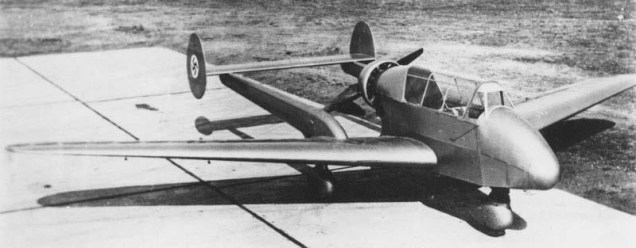
The WNF Wn 16, designed by Erich Meindl in 1937-1938, originally built as the Meindl-van Nes A.XV (aka Meindl M.15), was an Austrian experimental aircraft built in the late 1930s for tricycle undercarriage research. It was a swept wing tandem two-seater, with a pusher configuration engine and twin-boom fuselage. Its cantilever low wing had straight edges and 18.33° of sweep at quarter chord. The wing was in three parts, with a twin spar, steel tube framed centre section welded to the central fuselage which supported the tailbooms on its upper surfaces at their outer ends. The ribs were also formed from steel tube. The forward part of the centre section was plywood covered, with fabric aft. The outer wing panels were ply covered, each with a single wooden single spar. There was a split flap over the whole centre section trailing edge and slotted ailerons which filled the trailing edges of the outer panels.
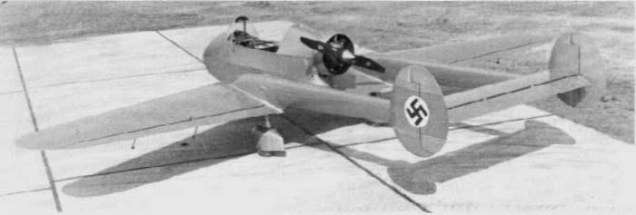
The short fuselage was also a welded steel tube structure, alloy skinned front and rear but with a fabric covered central section that contained the tandem seats under a continuous, multi-framed canopy which merged into the rear fuselage. The Wn 16’s pusher configuration, 37 kW (50 hp) Salmson 9Ad nine cylinder radial engine was installed within a Townend ring cowling at the rear of the fuselage beyond the wing, driving a two blade propeller. The Wn 16 was later re-engined with a 45 kW (60 hp) Walter Mikron.
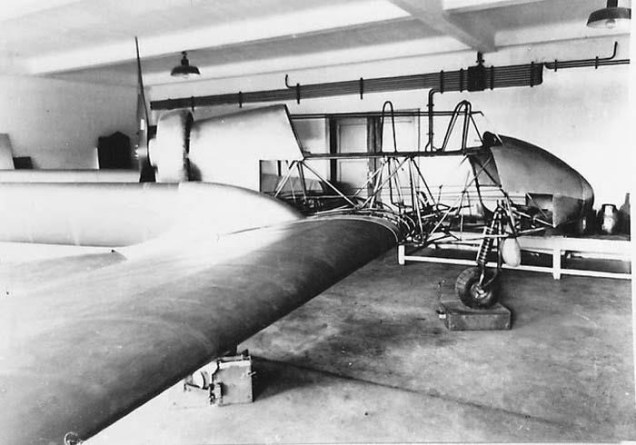
The Wn 16’s tail-booms were wooden monocoques. The rectangular tail-plane and elevator was on top of them, with oval vertical tails acting as end-plates; the fins had ply covered wooden frames and the rudders had fabric covered steel frames.
Its tricycle gear was fixed, all units with bungee cord shock absorbers. Both legs and wheels were enclosed in streamlined fairings. The nosewheel was steerable via the rudder pedals.
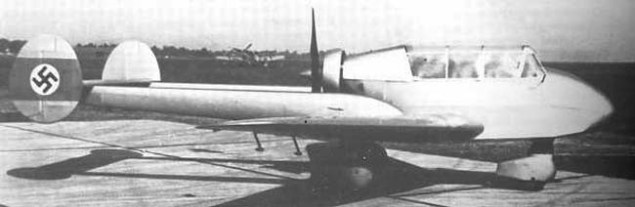
After the Anschluss of Austria, it was further developed by Wiener Neustadt Flugzeugwerke (WNF). The Wn 16 flew for the first time on 23 September 1939, carrying on board the German registration code D-ECAB. Development continued into World War II and the first flight with the Walter engine was on 7 August 1942.
The aircraft was tested in Germany, where it was later re-equipped with the Walter Micron engine (60 hp). The WN-16 successfully flew until the autumn of 1942, and then it was transferred to the Technical School in Stuttgart for further tests. There it remained until September 1944, until it was destroyed during an air-raid.
Engine: 1 × Salmson 9Ad, 37 kW (50 hp)
Propeller: 2-bladed
Length: 7.27 m (23 ft 10 in)
Wingspan: 9.84 m (32 ft 3 in)
Height: 1.80 m (5 ft 11 in)
Wing area: 13.50 m2 (145.3 sq ft)
Empty weight: 350 kg (772 lb)
Gross weight: 550 kg (1,213 lb)
Fuel capacity: 38 l (8.4 imp gal; 10 US gal)
Maximum speed: 160 km/h (99 mph; 86 kn) at sea level
Cruise speed: 145 km/h (90 mph; 78 kn)
Range: 400 km (249 mi; 216 nmi)
Service ceiling: 2,800 m (9,200 ft)
Rate of climb: 2.2 m/s (430 ft/min)
Landing speed: 65 km/h (40 mph)
Crew: Two
Wiener-Neustadter Flughafen Betriebs GmbH
Wiener-Neustadter Flugzeugwerk GmbH
Germany
Originally Wiener-Neustadter Flughafen Betriebs GmbH, after the Anschluss of 1938 was amalgamated with Hirtenberg, whose manufacturing department it absorbed under the name Wiener-Neustadter Flugzeugwerk GmbH. Light two-seat biplane in production 1937, later undertook subcontracts on Bf 109. In 1943-1944 built the world’s first tip-jet helicopter, designed by team under Friedrich von Doblhoff. Four built and tested. Conventional piston-engine provided compressed air which, mixed with fuel, was fed to tip-mounted combustion chambers through rotor blades. System adopted by other designers.
Austria
Built an experimental fighter in 1918.
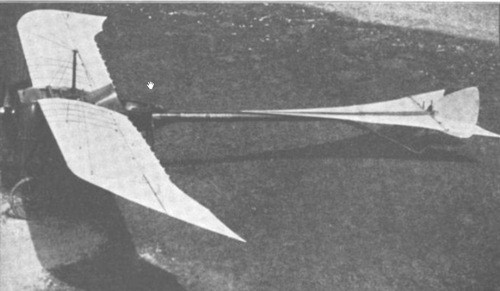
Built in Germany, the 1911 Eugen Wiencziers Renneindecker a very advanced monoplane with a very sleek fuselage which consisted of a metal tube only. The two wheel undercarriage could be folded back to the fuselage. The machine was intended as a two-seater, where the pilot sat enclosed and the passenger sat in a saddle just at his back on the steel fuselage, just like horse riding.
 All Aero