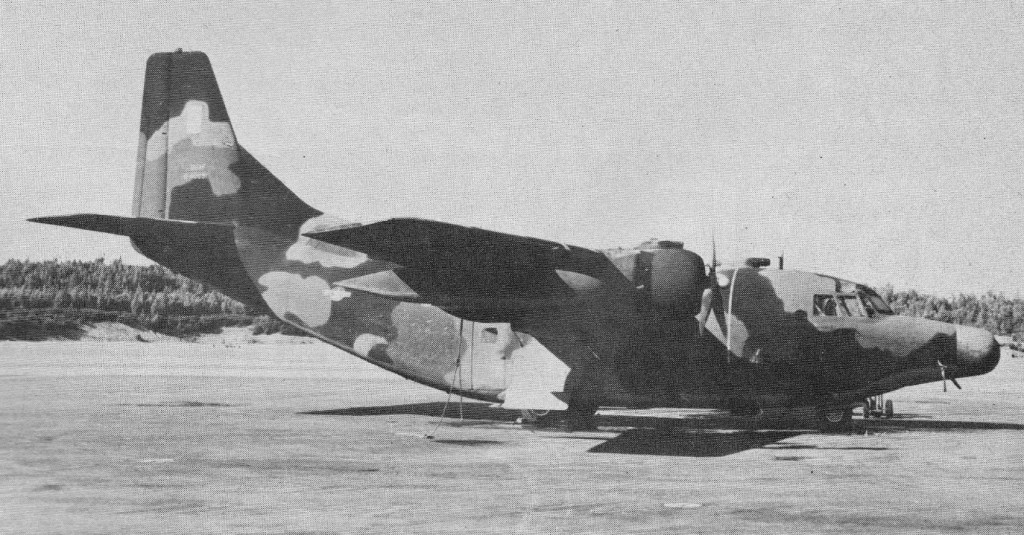
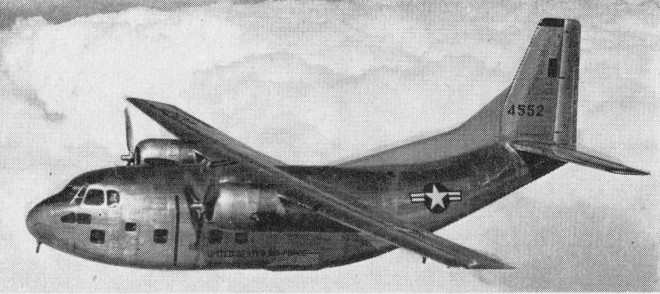
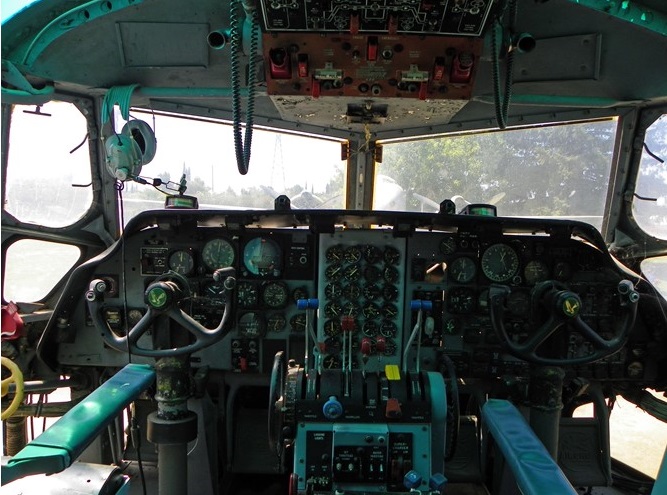
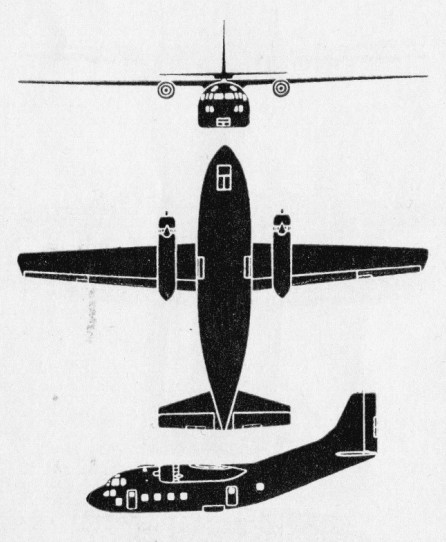
The original Fokker F-27 Friendship was built in Holland. Fairchild has built the F-27 under license from Fokker since 1958. The first F-27 models had a maximum gross weight of 40,500 pounds and seated 44 passengers. Power was supplied by twin 1,720 shp Dart turboprops. When Fairchild merged with Hiller Aircraft, the designation of the airplane was changed to FH-227 and the fuselage was stretched by six feet, giving increased cabin space for passengers and freight. The stretched airliner will accommodate up to 52 passengers. In 1960, power was increased to 2,105 shp. The stretched version was fitted with 2,250 shp engines, and ultimately the FH-227 received a redesigned windshield, stronger landing gear, strengthened rear fuselage, heavier wing skin, propellers of increased diameter and a more powerful 2,300 shp Dart turboprop. Fairchild discontinued building the FH-227 under license from Fokker in 1975.
Engines; 2 x Rolls-Royce RDa-7 Dart Mk.532, 1655kW / 2,300 shp Wingspan; 29.0 m / 95 ft 2 in Length; 25.5 m / 83 ft 8 in Height; 8.4 m / 27 ft 7 in Wing area; 70.0 sq.m / 753.47 sq ft Take-off weight; 20640 kg / 45504 lb Empty weight; 12478 kg / 27509 lb Fuel capacity: 1,364 lb Max. Speed; 483 km/h / 300 mph Top cruise: 270 mph Stall speed: 87 mph Initial climb rate: 1,560 fpm Service ceiling: 28,000 ft Takeoff run: 3,950 ft Landing roll: 4,100 ft Range w/max.fuel; 2500 km / 1553 miles Range w/max.payload; 800 km / 497 miles Seats: 44-52 Crew; 2-3
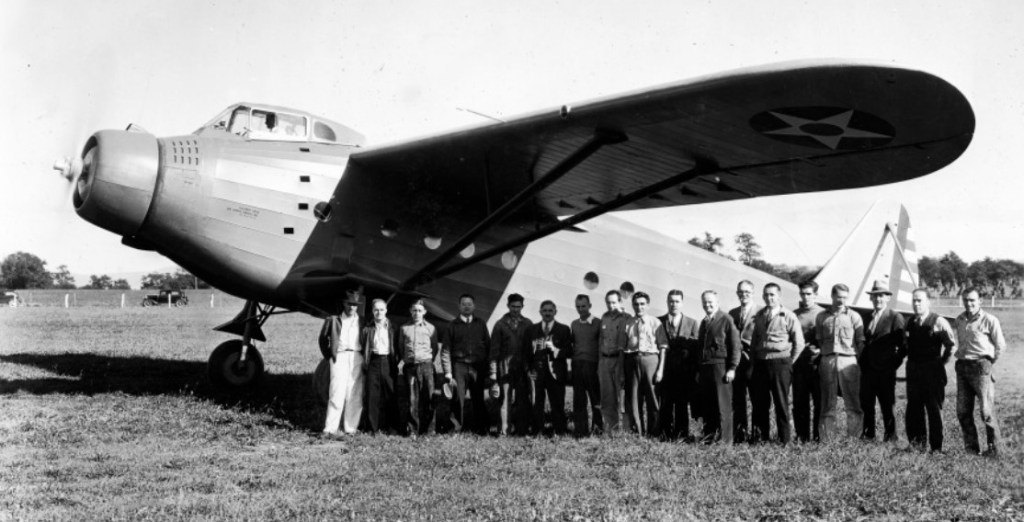
The Kreider-Reisner XC-31 or Fairchild XC-31 was an American single-engined monoplane transport aircraft of the 1930s designed and built by Kreider-Reisner. It was one of the last fabric-covered aircraft tested by the U.S. Army Air Corps.
Kreider-Reisner XC-31 – 34-026
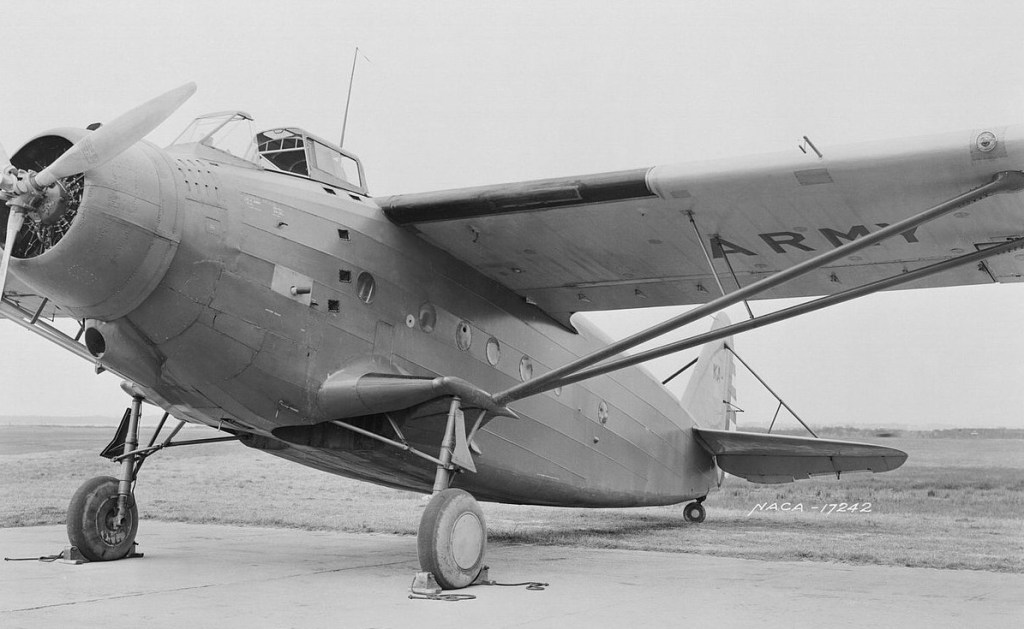
The XC-31 was built with an aluminum alloy framework covered by fabric, and featured strut-braced wing and fully retractable landing gear, with the main gear units mounted on small wing-like stubs and retracting inwards. An additional novel feature was the provision of main cargo doors that were parallel with the ground to facilitate loading.
Designed as an alternative to the emerging twin-engined transports of the time such as the Douglas DC-2, it was evaluated by the Air Corps at Wright Field, Ohio, under the test designation XC-941, but rejected in favor of all-metal twin-engined designs.
XC-31 at Langley
Following evaluation by the USAAC, the XC-31 was transferred to NACA, which used it for icing studies at its Langley Research Center.
Powerplant: 1 × Wright R-1820-25, 750 hp (559 kW) Wingspan: 75 ft 0 in (22.86 m) Wing area: 802 sq ft (74.5 m2) Length: 55 ft 5 in (16.89 m) Height: 15 ft 10 in (4.83 m) Empty weight: 7,322 lb (3,321 kg) Gross weight: 12,750 lb (5,783 kg) Maximum speed: 154 mph (248 km/h, 134 kn) Cruise speed: 143 mph (230 km/h, 124 kn) Range: 775 mi (1,247 km, 673 nmi) Service ceiling: 15,000 ft (4,570 m) Crew: 1 (Pilot) Capacity: 15 passengers or 3,500 pounds (1,600 kg) of cargo
During 1934 the Fairchild company designed a business or executive aircraft with five seats, designated the Model 45. It first flew on 31 May 1935. The Model 45 was a low-wing cantilever monoplane with a conventional cantilever tail unit and a retractable tailwheel landing gear. The aircraft was powered by a 225 hp (168 kW) Jacobs L-4 radial engine and had a luxury five-seat interior as standard. Flight testing showed that the aircraft performed well, although it was described as sedate.
The company predicted that the Model 45 would have only limited market appeal in that form, therefore only the prototype was built.
Fairchild then upgraded the prototype with a larger engine, the Wright R-760 radial, for evaluation. In this configuration it was designated the Model 45-A. This configuration was placed in production, with about 16 units being completed.
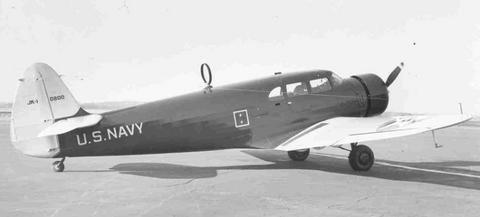
One aircraft was bought as an executive transport by the United States Navy as the JK-1. After the United States entered the Second World War, two aircraft were impressed into service with the United States Army Air Forces as the UC-88.
Fairchild JK-1
In 1997, Greg Herrick requested drawings of a Fairchild 45 tail section for an ongoing restoration project. The request was refused, citing the design was a trade secret. This led to a FOIA request, and lawsuit that was debated in the United States Supreme Court. The effort led to the “Herrick amendment” added to the FAA Air Transportation Modernization and Safety Improvement Act of 2012. The amendment released the ATC type certificate information for 1,257 aircraft first certified in 1927 through the beginning of World War II in 1939.
Variants:
45 One prototype Engine: 225 hp (168 kW) Jacobs L-4
45-A Production aircraft 16 built Engine: 320 hp (239 kW) Wright R-760 Wingspan: 39 ft 6 in (12.04 m) Wing area: 248 sq ft (23.04 m2) Length: 30 ft 1 in (9.17 m) Height: 8 ft 2 in (2.49 m) Empty weight: 2,512 lb (1,139 kg) Gross weight: 4,000 lb (1,814 kg) Maximum speed: 170 mph (274 km/h, 150 kn) Range: 650 mi (1,046 km, 560 nmi) Service ceiling: 18,700 ft (5,700 m) Crew: one Capacity: four passengers
JK-1 One 45-A for the United States Navy
UC-88 Two 45-As impressed into service with the United States Army Air Forces
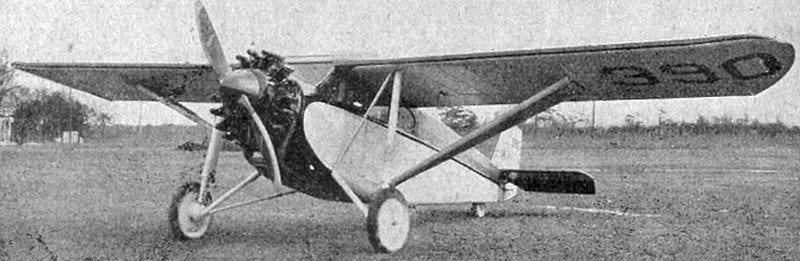
The Fairchild Model 41 Foursome was a light aircraft developed in the United States in the late 1920s and produced as the Model 42 Foursome. It was a conventional high-wing, strut-braced monoplane with fixed tailwheel undercarriage. The pilot and three passengers were seated within a fully enclosed cabin, and the aircraft generally resembled a scaled-down version of Fairchild’s successful FC-2 design.
Fairchild 41
Two prototypes were built as the Model 41 and Model 41A leading to the Model 42 production version which was built in a small series. This production version differed from the prototypes in having a redesigned, strut-braced empennage in place of the wire-braced unit of the earlier aircraft, and a more powerful version of the Wright Whirlwind powerplant.
Variants:
Model 41 Foursome First prototype, one built Engine: 220 hp (160 kW) Wright J-5 Seats: 4
Model 41A Foursome Second prototype, one built Engine: 300 hp (220 kW) Wright J-5 Seats: 4
Model 42 Foursome Production, six built and two converted from the 41 and 41A. Engine: 330 hp (250 kW) Wright J-6 Wingspan: 45 ft 6 in (13.86 m) Length: 30 ft 6 in (9.30 m) Maximum speed: 130 mph (210 km/h, 110 kn) Range: 700 mi (1,130 km, 610 nmi) Seats: 4
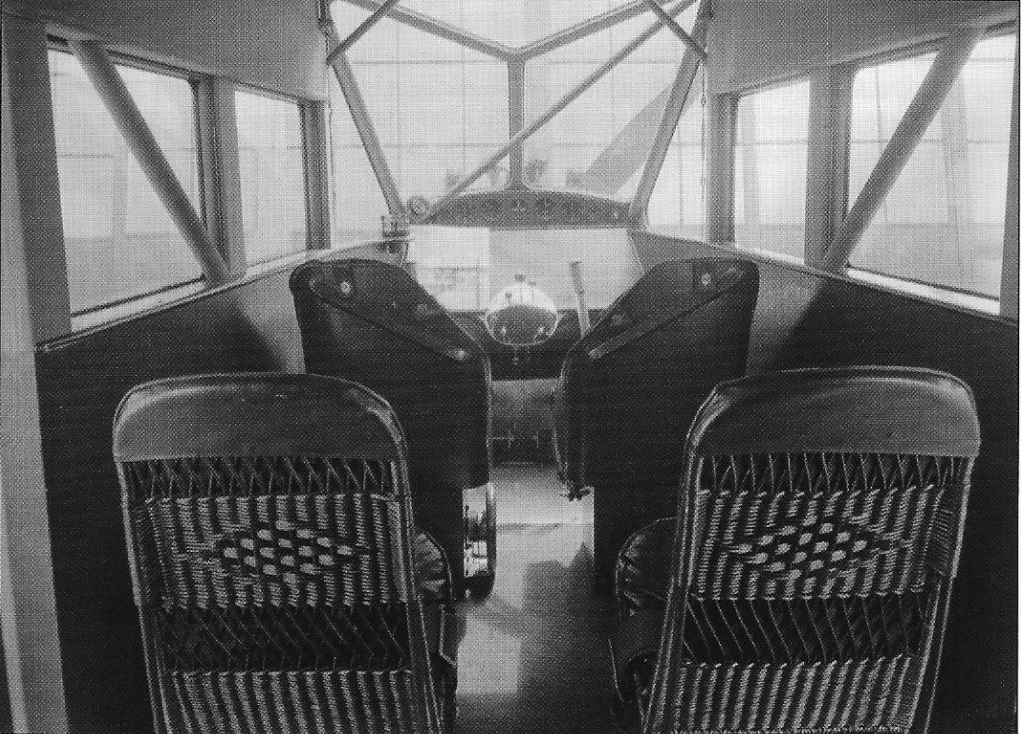
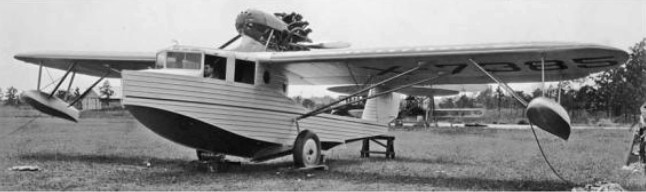
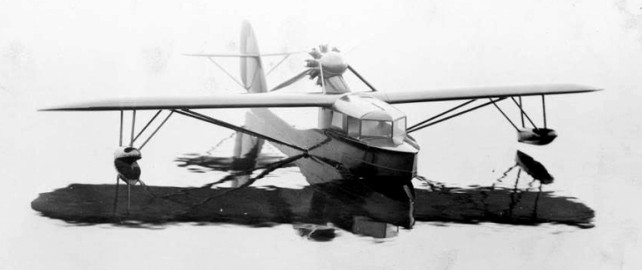
The Fairchild FB-3 (Flying Boat number 3) was an all-metal flying boat designed by Arthur Stelb and developed by the new Fairchild Metal Boat Division of the Fairchild Aircraft Corporation. The prototype was built at Fairchild’s Farmingdale, Long Island facility. The FB-3 was an amphibious high-wing strut-braced monoplane with retractable landing gear, powered by a high pylon mounted pusher configuration radial engine. The two-step hull provided floatation with two outboard floats for stability. The wings used metal spars and ribs with fabric covering. The interior was well finished for its time.
The prototype aircraft (NX7385) was test flown in 1929 but did go into production.
Fairchild FB-3 Engine: 1 × Pratt & Whitney Wasp R-1340, 420 hp (310 kW) Wingspan: 52 ft (16 m) Length: 41 ft (12 m) Maximum speed: 113 kn; 209 km/h (130 mph) Cruise speed: 100 kn; 185 km/h (115 mph) Seats: 4
In 1977, the USAF began to reflect the launch of a program to find a successor to the Cessna T -37B trainer. At the end of 1981, a proposal for participation for a training aircraft of a next generation (NGT / Next Generation Trainer) was sent to Cessna, Fairchild Republic, General Dynamics, Rockwell International and Vought (associated with the German constructor Messerschmitt Bolkow Blohm). The specification was based on twin-turbofan, pressurised cockpit and to have a lower weight at T37. In terms of performance, the Air Force wanted an aircraft capable of a speed of 556 Km / h at 7620 m, and capable of taking off from a runway of 1524 m.
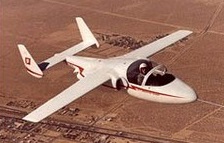
Designed as the Rutan 73, Fairchild Republic Company built a piloted 0.62 scale model of its New Generation Trainer design for the USAF, with the purpose of validating the handling qualities, control surface hinge moments, tail loads and spin characteristics of the full size aircraft.
Powered by a pair of 220 lb st (100 kgp) Microturbo TRS 18 turbojets, the scale aircraft was built by Rutan Aircraft under subcontract from Ames Industrial Corp on behalf of Fairchild and is largely of composite construction.
It was first flown at Mojave, California, on 10 September 1981 with Richard Rutan at the controls, and was expected to make about 35 flights by the end of November before being used for wind tunnel tests.
On July 2, 1982, Fairchild Republic was named the winner of the NGT program, which took the name of Thunder Piglet.
An initial contract was for two T- 46A (FSD) Nos. 84-0492 and 84-0493, 2 airframes for static tests, and an option for 54 of a planned total of 650. Deliveries were scheduled to begin in 1987 with a closure in March 1992.
The flight test program, and the development of pre-types took much longer than expected and led to the cancellation of the program March 13, 1987.
The prototype T-46 first flew in July 1986, but this was largely an academic move as the USAF had terminated the T 46 programme the previous March.
NGT Engines: 2 x Microturbo TRS18 Wingspan: 6.70 m Empty weight: 1,000 lb (454 kg) Gross weight: 1,600 lb (726 kg)
T 46 Engines: 2 x Garrett F109 GA 100 turbo fans, 1,330 lb thrust
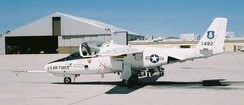
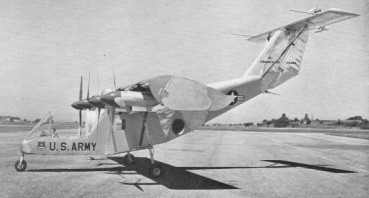
Another deflected slipstream type, similar in principle to the Ryan VZ 3, the Fairchild M 224 achieved less success. It was a two seat high-wing monoplane with a single 1,024 hp General Electric YT58 GE 2 turboshaft engine driving four propellers each of 8 ft 5 in diameter. The wing had 50 per cent chord flaps and endplates. For vertical take off, it was intended to operate at a ground angle of 30 degrees. Control in the hover was by means of small tail fans above the T tailplane for pitch and yaw, and by differential pitch on the outer propellers for roll. Tethered trials with the VZ 5 (56 6940) began on November 18th, 1959, but no free flights were made.
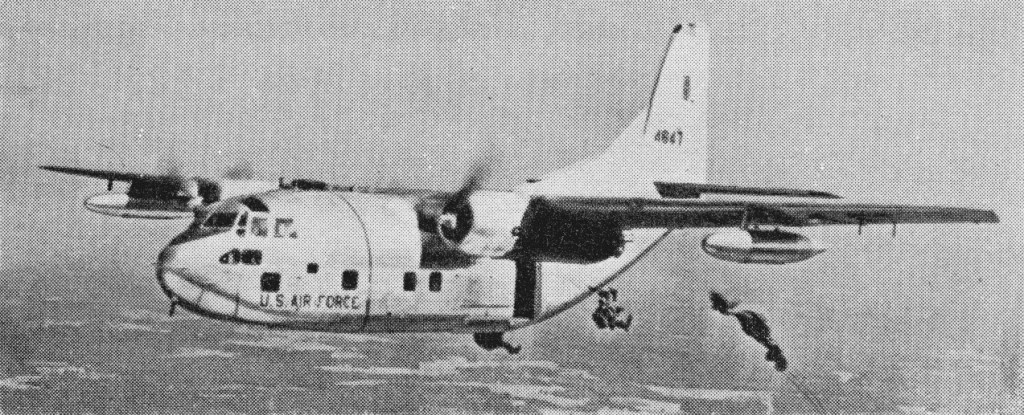
Chase Aircraft developed the larger C-123 Avitruc, first flown 14 October 1949, derived from XG-20 cargo glider. Chase Aircraft constructed the first five examples before Fairchild took over production. Taken over by Fairchild as C-123B and renamed Provider. An XC-123A prototype (four General Electric turbojets) flew on April 21,1951: first flight of a U.S. transport powered by jet engines. Chase became wholly owned subsidiary of Willys Motors Inc. of Toledo, Ohio, in 1953, itself owned by Kaiser- Fraser.
A production order for 300 C-123B, held by the Kaiser-Frazer Corporation (which had acquired a majority interest in the Chase company in 1953), was cancelled in June 1953. New bids were asked for, as a result of which production of the C-123B was assigned to Fairchild. The first Fairchild-built C-123B flew on 1 September 1954 and production aircraft entered service with the USAF’s 309th Troop Carrier Group in July 1955. Orders totalling more than 300 aircraft were completed by mid-1958, six going to Saudi Arabia and 18 to Venezuela.
The M.205 was designated C.123B, H and J.
In 1955 the prototype C-123B was fitted experimentally with two Fairchild J44-R-3 1000-lb static thrust turbojet engines mounted at the wingtips to provide auxiliary power for use in an emergency. As a result ten production aircraft were modified into C-123J with P&W 2,500 bhp R-2800-99W radials and turbojet engines fitted. Meanwhile a small number of C-123H had been produced with wide-track landing gears.
The prototype YC-123H was later experimentally fitted with CJ610 auxiliary turbojet engines and flown on 30 July 1962. After successful tests of a prototype C-123H Provider with jet pods in Viet Nam operations in 1963, the USAF wanted to modify 40 to 50 C-123’s to add a pair of General Electric CJ610 jet engines of 2859 lb thrust to go with the C-123’s standard Pratt & Whitney R-2800’s. Funding may not have been available because of heavy expense of B-52 modification. 183 more C-123B were given 12.68kN General Electric J85-GE-17 auxiliary turbojet engines in underwing pods and designated C-123K (M.473). Some were further converted to AC-123K Spectre gunships for service during the Vietnam conflict.
One of two NC-123X modified into BLU ‘bombers’ for blasting enemy on the trail
The C-123 grossed out at 60,000 lbs and cruised on piston power at 160 knots.
C-123B
When C-123 production ceased on 31 July 1958, Fairchild had built 303, 138 more than the original contract called for.
By 1956, Stroukoff Aircraft Corporation had already gained experience working on the C-123 Provider, having completed two contracts based on that airframe. During November 1954 the Air Force assigned Stroukoff Aviation one of the Providers to be equipped with the system of boundary layer control.
Its YC-123D had introduced a Boundary Layer Control (BLC) system to the C-123B. With the aid of the turbocompressor air was selected from under the inboard flaps between the fuselage and the pods and was blown out through the slots above the ailerons and the outboard flaps. The modernized aircraft XC-123D successfully underwent tests, after showing low stalling speed, small takeoff and path. This greatly improved landing and take-off performance, gross weight capability, and lowered the C-123’s stall speed.
The Air Force hurried to give Stroukoff a contract to build a troop series of six XC-123D. However the head of the firm proposed a more attractive modification, finished in accordance with the advanced concept “Pantobase” (being rested everywhere). The aircraft had a pressurized fuselage, lower part of which were attached the form, which resembles the bottom of boat, usual chassis, two removed water skis even two underwing floats. It could be operated practically from any surface: the earth, water, ice, snow and sand.
The YC-123E had been another experiment in improving the C-123’s ability to operate wherever it might need to, introducing Stroukoff’s own Pantobase system: two high-stress skis fitted to the lower fuselage, wingtip mounted floats, along with sealing the fuselage itself. The first flight took place on 28 July, 1955 and this gave the YC-123E the ability to operate on water, as well as ice and snow, and with the BLC from the previous YC-123D, the new aircraft could effectively be operated from almost any runway surface available, and airstrips of shorter length.
Engines; 2 x P+W R-2800-99W, 1840kW Take-off weight; 27240 kg / 60054 lb Empty weight; 14100 kg / 31085 lb Wingspan; 33.6 m / 110 ft 3 in Length; 23.3 m / 76 ft 5 in Height; 10.4 m / 34 ft 1 in Wing area; 113.6 sq.m / 1222.78 sq ft Max. speed; 392 km/h / 244 mph Ceiling; 7000 m / 22950 ft Range w/max.fuel; 2350 km / 1460 miles Crew; 2
C-123B Assault transport. Engines: 2x Pratt & Whitney R2800-99W, 2500 h.p. Wingspan: 110 ft Length: 75 ft. 9 in Loaded weight: 71,000 lb Max. speed: 245 m.p.h. Ceiling: 29,000 ft. Typical range: 850 miles at 205 mph at 5,000 ft with full load. Crew: 2 Capacity: 61 troops or 16,000 lb cargo.
C-123J Engines: 2 x P&W R-2800-99W radials, 2,500 bhp & 2 x J44-R-3 turbojet, 1000-lb thrust.
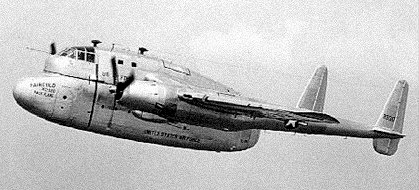
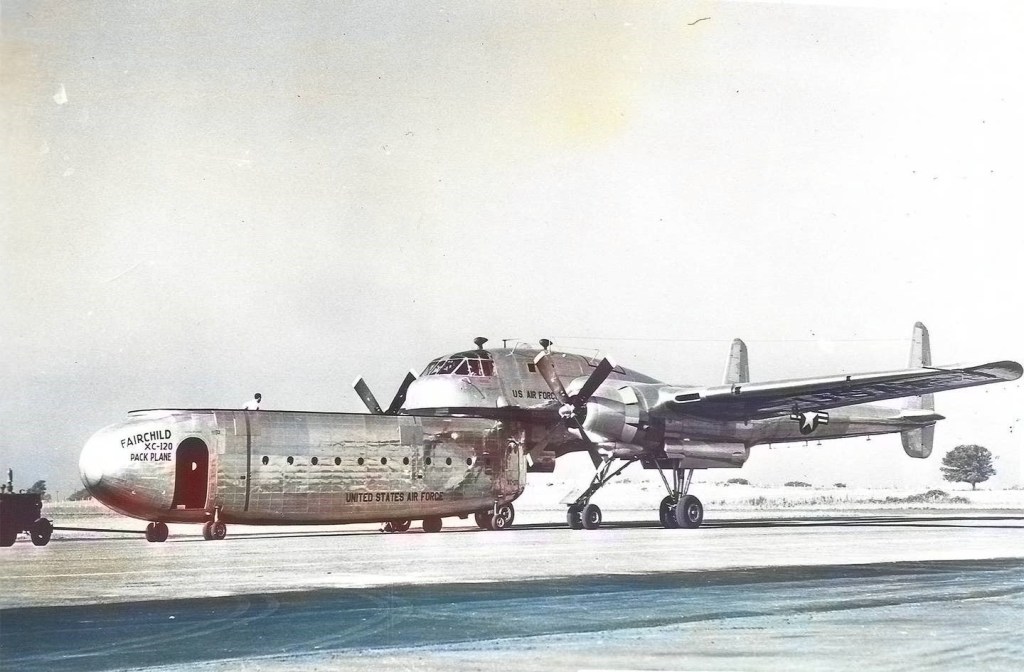
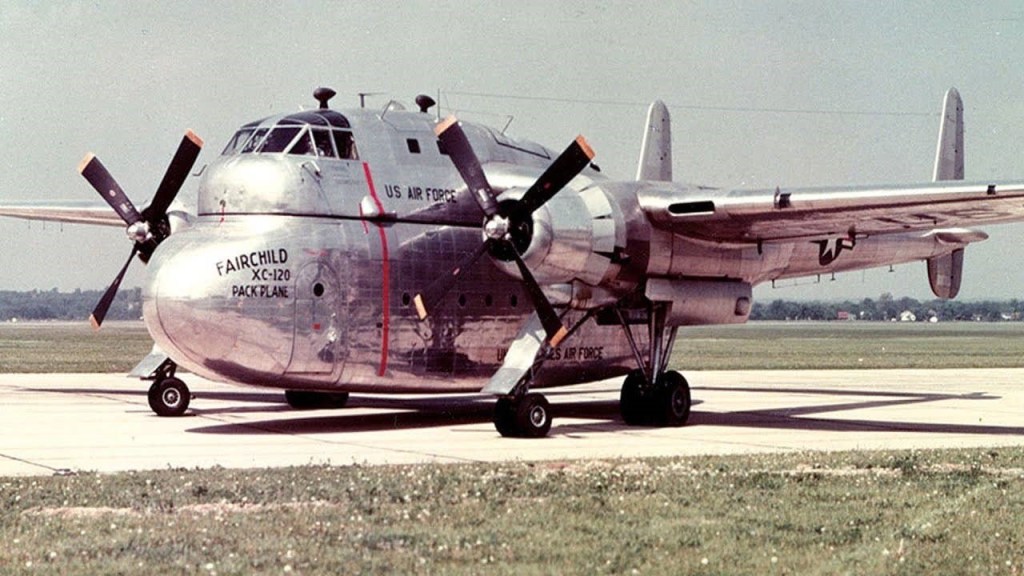
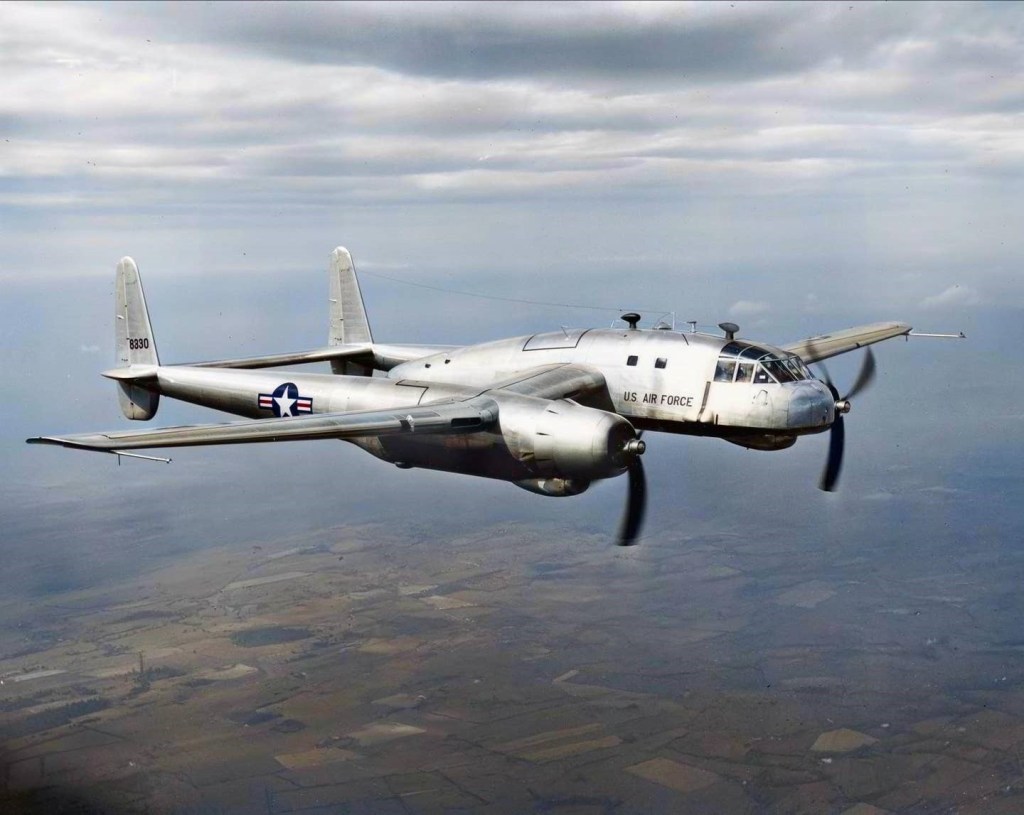
Recognizing that the loading and unloading process could become lengthy and keep aircraft on the ground for inordinately long periods of time, Fairchild engineers devised a modular cargo pod that, in theory, could be quickly and easily attached to and detached from the aircraft. The insect-like aircraft could fly with or without the cargo pod.
The conversion of one C-119B was to meet a USAF requirement for an experimental detachable-fuselage transport. C-119B wings and tail surfaces were combined with a new upper fuselage with a flat surface. A lower component with a flat upper surface, and incorporating a cargo compartment, could be mated with the Packplane.
The flight deck was in the upper component, and the type could be flown with or without pack and it was intended that various packs for different military operations would be provided.
When an aircraft arrived, crews could quickly disconnect the cargo pod it was carrying and reattach a preloaded pod in its place. This would minimize the amount of time the aircraft spent on the ground, theoretically moving more cargo over the course of a day.
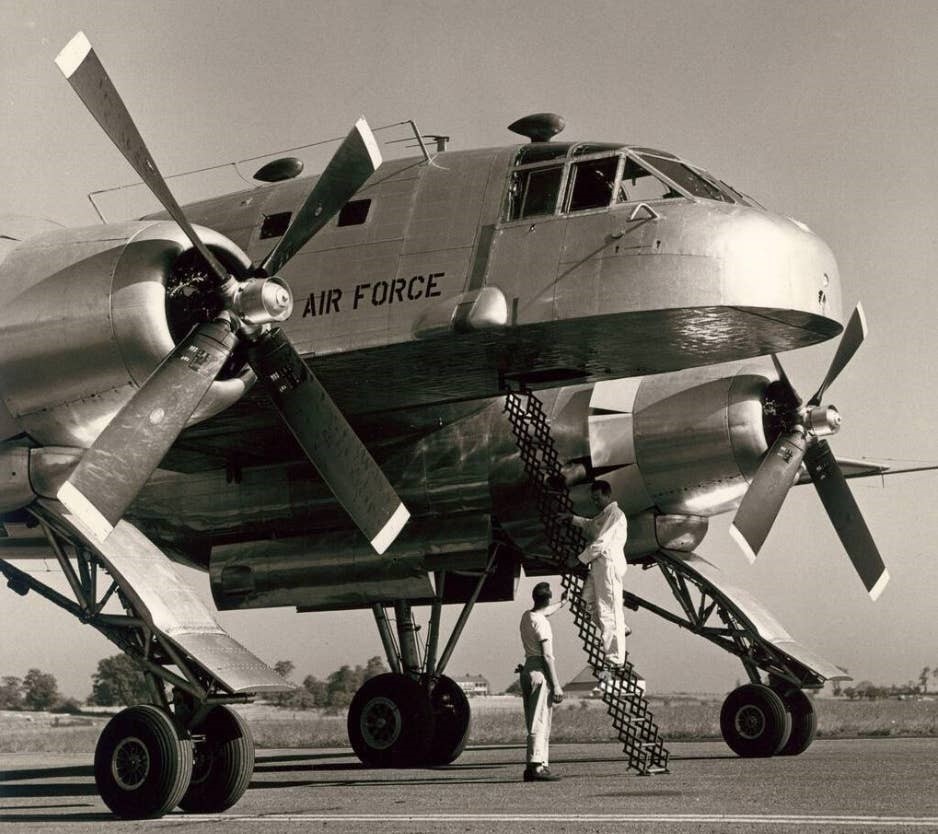
The quadricycle landing gear solved the problem of loading and unloading the cargo pod but presented new problems, particularly with ground towing. Special equipment was required to keep both front wheels tracking parallel to each other when backing up. This equipment could be carried in a pod but had to be left behind when flying without a pod attached. The unique landing gear also precluded “power backs,” or utilizing reverse thrust to back the aircraft up on the ground.
Aerodynamically, it also presented some challenges. Test crews discovered insufficient lateral and directional control at low speeds. Notably, during takeoff, the aircraft’s left-turning tendency could not be overcome by full right rudder. Their solution was to utilize asymmetric power until reaching 35 knots, at which point full power could be applied. The unique landing gear also had to be retracted immediately after liftoff, as it produced large amounts of drag during the retraction sequence.
First flown on 11 August 1950, flight test reports indicate that at a power setting of 2260 BHP, the XC-120 with a pod installed cruised at 218 knots—only 14 knots slower than flight without the pod. The pod weighed approximately 9,000-10,000 pounds. Test pilots also noted that the wheel-well doors were hanging approximately one and a quarter inches open in flight during the entire test program, but this would have been the case with or without a pod attached.
With the pod attached, the absolute ceiling with one engine inoperative at 63,000 pounds (1,000 pounds below maximum takeoff weight) was only 3,300 feet. Under the same conditions, the maximum rate of climb at 2,000 feet was between 10 and 50 feet per minute.
Note the bulges beneath the engines, necessary to contain the retracted forward wheels of the landing gear.
Evaluation crews discovered that attaching or removing the pod required an “unusual” amount of time due to the slow hoist mechanism, and doing so in high or gusty winds proved challenging, requiring even more time.
In 1952, only a couple of years after the XC-120’s first flight, the program was cancelled, and the sole XC-120 was ultimately scrapped.
XC-120 Engine; 2 x Pratt & Whitney R-4360-20, 2435kW Wingspan; 33.3 m / 109 ft 3 in Length; 25.3 m / 83 ft 0 in Height; 7.6 m / 24 ft 11 in Crew; 5 Passengers; 66