Circa 1972, Bob Williams built the W-2, registered N77BW. It was a single place cabin, low wing monoplane.
Engine: VW 1600cc, 65hp
Wingspan: 24’0″
Length: 13’0″
Useful load: 233 lb
Max speed: 105 mph
Cruise speed: 90 mph
Stall: 55 mph
Seats: 1
Circa 1972, Bob Williams built the W-2, registered N77BW. It was a single place cabin, low wing monoplane.
Engine: VW 1600cc, 65hp
Wingspan: 24’0″
Length: 13’0″
Useful load: 233 lb
Max speed: 105 mph
Cruise speed: 90 mph
Stall: 55 mph
Seats: 1
Venice & Pasadena CA.
USA
During 1911-1914, several single and two place open cockpit biplanes were built apparently following the Curtiss design as exhibition ships. Later models with fabric-covered fuselage and rounded wingtips made them quite modern for their day.
The 1911 original had a 60hp Hall-Scott motor and later versions 80hp Curtiss power.
Williams soloed his own creation at Hyde Park Aviation Field (Pasadena CA) on 26 August 1911 at age 19 as the world’s youngest licensed pilot, according to Aero Club of America officials.
Nassau Blvd Aerodrome,
Long Island NY.
USA
In 1912 Alexander Williams built a single place open cockpit biplane powered by a 40hp Williams. It was described as being a “combination Farman and Howard Wright.”
A 1948 Midget racer named Estrellita and piloted by Clifford “Kip” Mone, N44183, powered by an 85hp Continental C-85. A single place cabin, mid-wing monoplane
With an elliptical wing, it was destroyed at an air show on Sep 4, 1950.
Engine: 85hp Continental C-85
Wingspan: 19’6″
Length: 17’0″
Max speed: 180 mph
Cruise speed: 140 mph
Seats: 1
A 1949 Midget racer, N66732, powered by an 85hp Continental C-85. A single place cabin, mid-wing monoplane
Several of Williams products were the result of collaboration with other designers. For instance the Williams-Cangie WC-1 Sundancer N1AE was designed with Carl Cangie and won first place at the 1973 Reno Air Races Formula One Class.
Engine: Lycoming O-290-D2, 100hp
Wingspan (upper): 19’9″
Wingspan (lower): 12’9″
Length: 16’3″
Max speed: 200 mph
Seats: 1
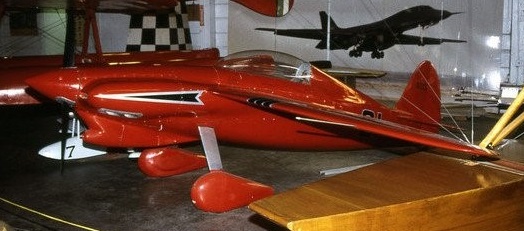
The Williams W-17 Stinger is an American homebuilt racing aircraft that was designed for Formula One Air Racing by Art Williams and produced by his company, Williams Aircraft Design of Northridge, California, introduced in 1971. The aircraft was at one time available in the form of plans for amateur construction, but only one was ever constructed.
The W-17 Stinger features a cantilever mid-wing, a single-seat enclosed cockpit under a bubble canopy, fixed conventional landing gear and a single engine in tractor configuration.
The aircraft fuselage is made from sheet aluminum in a monocoque structure. The wings are all-wood, with laminated spruce spars. Its 19.0 ft (5.8 m) span wing employs a NACA 64008 airfoil at the wing root, transitioning to a NACA 64010 at the wing tip. As the Formula One rules require, the engine is a 100 hp (75 kW) Continental O-200A powerplant.
The W-17 has an empty weight of 585 lb (265 kg) and a gross weight of 835 lb (379 kg), giving a useful load of 250 lb (110 kg). With full fuel of 8 U.S. gallons (30 L; 6.7 imp gal) the payload is 202 lb (92 kg).
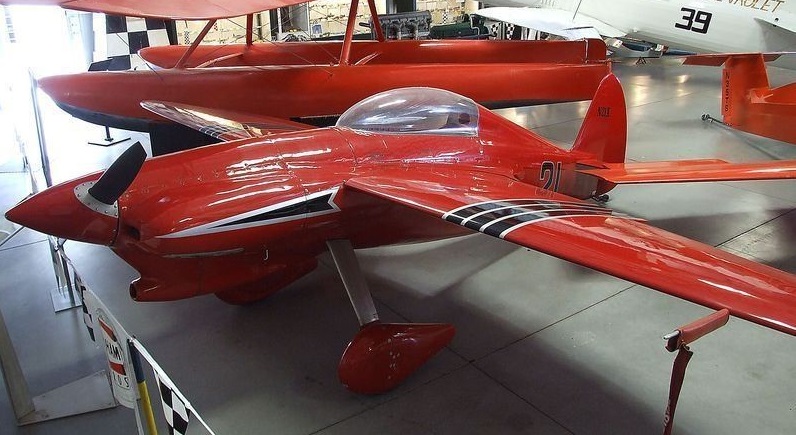
Only one example of the W-17 Stinger was registered in the United States with the Federal Aviation Administration in 1971 (N21X). The sole example was raced at the Reno Air Races by pilot John P. Jones in 1973 and captured second place. It went on display at the Planes of Fame Air Museum.
W-17 Stinger
Engine: 1 × Continental O-200A, 100 hp (75 kW)
Length: 15 ft 10 in (4.83 m)
Wingspan: 19 ft 0 in (5.79 m)
Airfoil: Root: NACA 64008, wing tip: NACA 64010
Empty weight: 585 lb (265 kg)
Gross weight: 835 lb (379 kg)
Fuel capacity: 8 U.S. gallons (30 L; 6.7 imp gal)
Propellers: 2-bladed metal
Maximum speed: 260 mph (418 km/h; 226 kn)
Stall speed: 65 mph (56 kn; 105 km/h)
Crew: one
The Williams Aircraft Design Company was an American aircraft manufacturer based in Northridge, California and run by Art Williams. The company specialized in the design of racing aircraft.
Several of Williams products were the result of collaboration with other designers. For instance the Williams-Cangie WC-1 Sundancer was designed with Carl Cangie and won first place at the 1973 Reno Air Races Formula One Class.
The Williams W-17 Stinger design captured second place at the 1973 Reno Air Races in the biplane class.
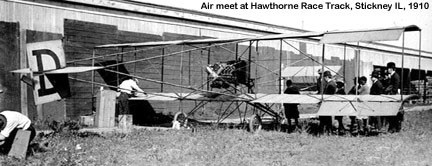
Charles F Willard, who had been leasing a Curtiss airplane for his exhibition flights, returned it, and reportedly designed a similar machine customized to his requirements, but still leased the motor from Curtiss (the one used on Curtiss’ Rheims Racer). This apparently was distinct from the 1910 Banshee Express, which he implied was his design, but was really another Curtiss product.
First flying on 12 August 1910, two were built, the second of which, christened simply The Express, had 50hp five-cylinder Gnôme rotary. Willard set a payload record with this craft by carrying two passengers with him on 14 August 1910.
Engine: Curtiss V-8, 63hp
Seats: 2
Hempstead NY and Los Angeles CA.
Willard, who had been leasing a Curtiss airplane for his exhibition flights, returned it, and reportedly designed a similar machine customized to his requirements in 1910.
 All Aero