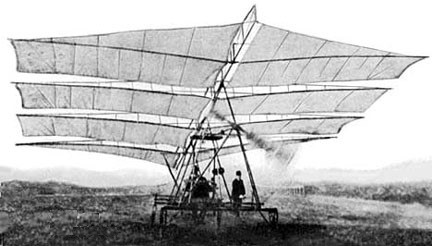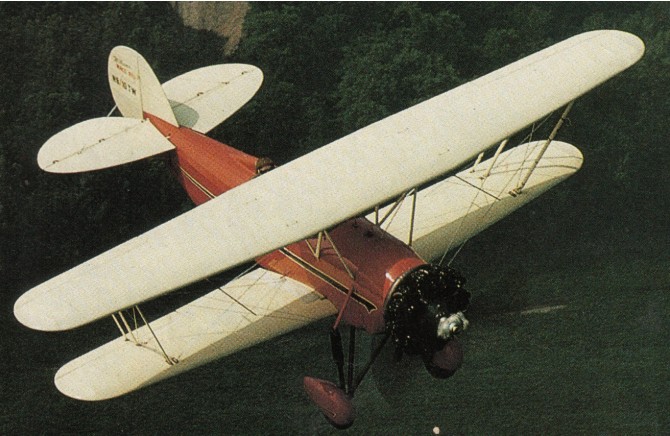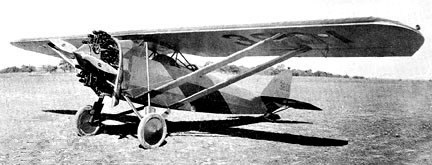
Williams Texas-Temple / Commercial-Wing / Speed-Wing / Sport / Sportsman

Williams Texas-Temple Commercial-Wing N3801

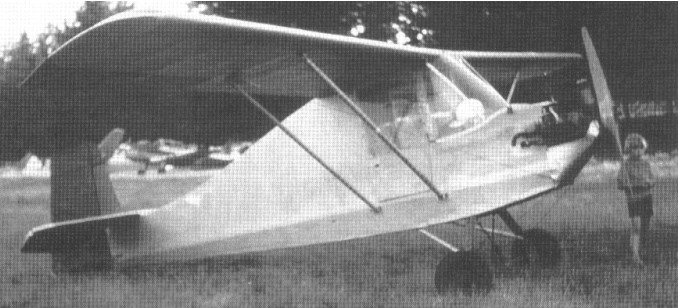
In 1926 a prototype of the Commercial-Wing was designed by George Carroll and George Williams and built. A single place, open cockpit, high wing monoplane, it was powered by an 80hp (later 120hp) LeRhône rotary engine.

Designed by George Carroll and George Williams, four planes were made with the Wright engine (c/n 101 registration NC173, c/n 102 registration NC2506, c/n 104 registration NC5185, c/n 105 registration NC138N), one with a Hisso (c/n 103 – registration NC3801), and one with a 100 hp Curtis OXX-6. This later one could be a Sportsman or the NC6525 registration aircraft.

The 1927 Texas-Temple Commercial-Wing cost $10,500 with an inertia starter, brakes and metal prop.

The 1928 Speed-Wing carried 1 passenger and was a Commercial-Wing for carrying mail. It took a 500 lb payload over a 500-mile range. The plane cost $9,500. It was advertised as a 1 or 2 person sportplane. The first plane was powered by a 150 hp Hisso A engine and had a 39’4″ wingspan. No registration found, but it could be the Commercial-Wing registration NC3801.

Continental Airways of Cincinnati used the Temple Company’s Commercial-wing model almost exclusively. Other models followed, including the much-ballyhooed Sportsman. The Sportsman was touted by British aviation enthusiast Lady Mary Heath as “the best performing airplane its class today.” Her endorsement might mean more to history if Lady Heath had ever met an airplane she didn’t like. During her stay in America, she declared every plane she flew to be a marvel of aviation engineering.

A contract that might have saved the company – delivering air mail between Dallas and Fort Worth and San Antonio and Houston — was awarded instead to Bowen Air Transport. Bowen then took over a hangar at Meacham Field in Fort Worth, a hangar Temple Aero had bought.

The Depression hit the aviation industry early and hard. Companies that had signed contracts with Texas Aero were hard-pressed to honour those contracts.

Operating exclusively out of Temple, Aero scaled back its operation to concentrate exclusively on production of the Sportsman model and the training of student pilots. Three 1929 Sport / Sportsman were built: prototype N480 c/n 1, N852H, and N987N c/n 107.

Commercial-Wing
Engine: 220 hp Wright J-5
Wing span: 39’4″
Length: 25’10”
Useful load: 950 lb
Max speed: 130 mph
Cruise speed: 112 mph
Stall: 35 mph
Range: 550 mi
Ceiling: 18,500 ft
Seats: 2-3

Sport / Sportsman
Engine: Cirrus Mk III, 100hp
Seats: 2

Speed-Wing
Engine: Hisso A, 150hp
Wingspan: 39’4″
Useful load: 1055 lb
Payload: 500 lb
Max speed: 135 mph
Cruise speed: 120 mph
Stall: 42 mph
Range: 500 mi
Seats: 1-2
Williams, Geo. Airplane & Manufacturing Co

Texas Aero Manufacturing Co
Temple Aero Club
Texas Aero Corp
Texas-Temple

USA
George W. Williams designed and built his first aircraft, a light monoplane, about 1908 and started operations at Temple, Texas, as the Texas Aero Manufacturing Company. With George Carroll was credited with development of first full monocoque cantilever wing (not flown). Only production aircraft Texas-Temple of 1928-1929. On Williams’s death in 1929 company reorganized as the Texas Aero Corporation.

George Williams was a pioneer aviator who lived in Temple. He had built and flow his own monoplane called the Prairie Queen in 1910. Williams had been experimenting with aircraft design from at least 1908. Williams first aviation company was the Texas Aero Manufacturing Company, formed in 1911, which became in turn George Williams Airplane and Manufacturing Company in 1920. The Texas Aero Corporation of Temple became in 1928 the first Texas business licensed by the government to sell new aircraft. Begun with a $150,000 stake.

In 1911 Williams and others formed the Temple Aero Club. The club was based at Woodlawn Field, Temple, Texas. Its officers in 1920 were President, Eldon Kent Williams (Williams’ newspaperman brother); Secretary-Treasurer, George W Williams; and Field Manager, Lieutenant Eric A Locking, ex RAF.

James Albert Jackson Carroll (aka George A Carroll), was born on April 4, 1902 in Belton, Texas and died on July 17, 1987 in Tujunga, California. Carroll had joined with the Williams’ to found the Texas Aero Corporation; the first commercial aircraft fabricating facility in Texas.

George Williams, learned to fly but never took a pilot’s license. His brother, E.K. Williams, publisher of the Temple Telegram, promoted the venture with a plane that delivered the newspaper by plane.

In October 1927 the Aero Club changed its charter to form the Texas Aero Corporation. Its purpose was to manufacture aircraft in Temple. At the time the Corporation commenced it had orders for six aircraft.
To increase the Corporation’s capital in June 1929 it offered 100,000 shares at $10 per share in 1929. A 4-acre site was acquired at Love Field, Dallas for a new factory to replace its Temple facility.

Williams, aged 45, died in an air crash in August 1930, while training Clyde Moore, a student pilot. The plane had stalled at low altitude and crashed 3 miles (4.8 km) west of Temple near the hospital dairy farm. The Corporation folded as a result.

George Williams and Carroll designed and built the Texas Monoplane. In total 12 aircraft were constructed between 1928 and 1930 when the Corporation ended.

Texas Aero Corporation planes were registered as Texas-Temple and Temple.

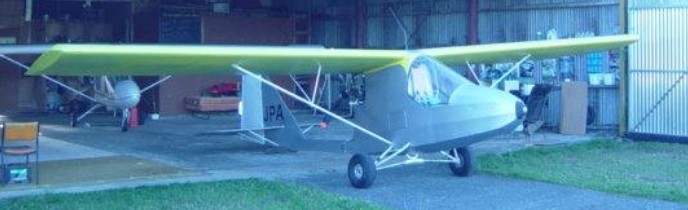
Williams Mk.4

As the designation infers, the Williams Mk.4 is the fourth aircraft from the hands of the late Geoff Williams, a well-known Otago identity who did not like to conform to the rules. It was finished about 1990, first flew in 1991 and had logged over 160 illegally flown hours prior to its sale to Bob Gibson in June 2002. This aircraft was legally registered as ZK-JPA on 25 February 2003.
Geoff Williams never flew again after the third aeroplane, but resolved to build a fourth aircraft. This is the aircraft Bob Gibson bought. This plane was not difficult to fly he did have a few minor landing faults.
Geoff’s ambition was to fly his aeroplane around Fiordland coastline, landing at somewhere like Jackson’s Bay for refuelling and to this end he built a heated cabin and fuel capacity of over 100 litres and a locker where he could hold an additional 10- or 15-litre can. Sadly this was never to be realised as Geoff became ill March 2002 and died on 10 May 2002. It was Geoff’s wish that his plane be kept flying, and Bob seemed to be the person most interested.

Wingspan: 30 ft
Engine: Rotax 447
Prop: 3-blade Warp Drive
Cruise: 60 kts
Stall: 22 kts
Seats: 1
ROC: 500 fpm
Fuel burn: 12 lt/hr

Williams Third

After the Aeroplane Geoff Williams immediately commenced building a third aeroplane, a low wing monoplane also powered by a Volkswagen engine. This air­craft largely still existed in 2003 and was stored in Alex Armstrong’s hangar at Taieri in the form of the wings and fuselage. Also stoutly built, it was prone to be underpowered by the tired Volkswagen engine Geoff had two lucky escapes when it crashed due to lack of power. The first was while climbing up the Lindis Valley in Otago when he realised too late that the ground was climbing more rap­idly than his aeroplane, and he was unable to turn because of the proximity of hills ei­ther side. His last flight was at Tarras when the plane crashed on take off, again because of lack of power. He never flew again, but resolved to build a fourth aircraft.

Engine: VW

Williams 70s Aeroplane

Based on a model and built in the 1970s without official blessing. The aircraft was kept at Wickcliffe Bay, Otago Peninsula, New Zealand, and flown by the builder/owner. By all accounts, the aircraft flew rather well. Built Geoff [or Jeff] Williams. To achieve the correct scale, the builder is said to have sat on a chair and scaled the plans around himself. This was flown from an old wartime emergency air¬strip situated on a farm owned by the Neil family on the Otago Peninsula. Both air¬craft are said to have been soundly con-structed, no doubt the builder’s occupa¬tion having some influence here, but the engine installation, undercarriage and other fittings left something to be desired. The fuel tank in the high wing craft was nothing more than a twenty litre can hung by its handle behind the pilot’s seat. The fuel line a flexible rubber hose pushed over a cooper tube protruding through the instrument panel. When the aircraft re-quired refuelling it was a simple task to remove the can and take it to the nearest service station.
As well as the Omarama incident, the little homebuilt was flown to Cromwell where it landed on the main road. On another occasion Williams turned up at Queenstown in the VW-powered aircraft where he attempted to purchase fuel from a local helicopter operator who refused to cooperate. Apparently he was less than impressed by the craft. I’m led to believe CAD finally caught up with the wayward flyer, confiscating the engine and thus bringing his illegal activities to a halt. For a number of years the aircraft re¬mained dismantled in a shed on the Neil farm until the property changed owner¬ship, when both airframes and the stor¬age shed were destroyed.
Geoff flew this aircraft successfully all over Otago while refusing to register it with CAA. They eventually threatened to pros¬ecute him unless he signed a declaration stating he would never fly it again. During this time he had about 65 hours of flying and many incidents.

Engine: VW

Williams Biplane

The first machine built by Geoff Williams was constructed by Geoff in the family home in Stewart Street, Dunedin, while he was still at school, but it proved on a number of occasions to be too much of a handful and thus he moved on to the Aeroplane. The biplane was badly damaged in an argument with a hedge before any significant flights had been undertaken, was flown from an old wartime emergency airstrip situated on a farm owned by the Neil family on the Otago Peninsula, New Zealand.

Engine: VW

Williams WACO RTO

An 80% scaled replica version of the Waco ATO. Construction began in May 1983.
The four wing panels are identical but required 48 ribs built during 1983. Each panel contains 12 truss type spruce ribs, and the 6 foot centre section has nine constant chord ribs. The wings retain the original M-6 profile. The chord of the centre section ribs is 4 ft 1.5 in, and outboard ribs 2 ft 10.5 in. The spars are solid planks, the forward being 5 x 11/8 in and the rear spar 4 x 1 inch. The four ailerons each have six ribs and are equal span and chord. The wings are braced with dual straight 4130 steel outboard struts and N centre section struts, and streamlined stainless steel wires. The fuselage and tail components are welded 4130 with wood formers and stringers in the fuselage and wood fairings at the fin and stabiliser roots.
The tail spans 8 ft 10 in and rudder stands 3 ft 3 in. Rudder and aileron are cable controlled and the elevator through torque tubes. The main undercarriage is a welded outrigger type with Cleveland brakes, and a 5 ft 2 in tread. A Scott 3200 tailwheel holds an 8 inch tyre.
The first flight was in August 1987. Total cost: approx US$15,000.

Engine: Warner Super Scarab, 165-175 hp
Prop: Aeromatic 85 in
Seats: 2
Empty wt: 1085 lb
Loaded wt: 1630 lb
Wingspan: upper 24 ft lower 22 ft
Length: 18 ft
Height: 7 ft 2 in
Fuel cap: 31 USG
ROC 2500 fpm @ 70 mph
Cruise 65%: 105 mph
Stall: 55 mph