First flown in 1980, the single Fisher Flyer built was based on the UFM Easy Riser. It was a single seat biplane ultralight.
Aircraft
Fisher Skylite
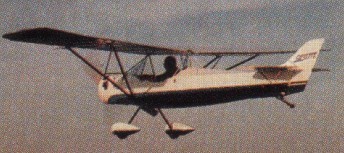
First flown in 1991.
Engine: Rotax 277, 28 hp
HP range: 28-50
Height: 6.6 ft
Length: 17.5 ft
Wing span: 29.2 ft
Wing area: 117 sq.ft
Fuel capacity: 5 USG
Empty weight: 240 lb
Gross weight: 520 lb
Top speed: 60 mph
Cruise: 47 mph
Stall: 27 mph
Range: 90 nm
Rate of climb: 400 fpm
Takeoff dist: 400 ft
Landing dist: 600 ft
Service ceiling: 9000 ft
Seats: 1
Landing gear: tailwheel
Fisher XP-75 Eagle
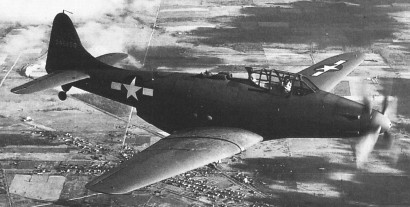
In February of 1942, the USAAF issued a Request For Proposals for a fighter/interceptor of high performance. Maximum speed was to be 440 mph at 2000 feet, operational ceiling was to be 38,000 feet, and range was to be 2500 miles. A special requirement was added for the initial climb rate, which was to be no less than 5600 feet per minute.
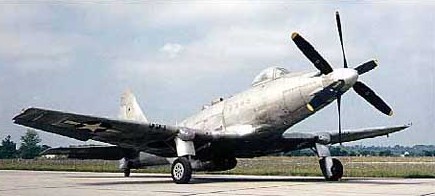
In April of 1942, Donovan Berlin (who had been responsible for the P-36 and the P-40) left the Curtiss company to take over the directorship of the Aircraft Development Division of the Fisher Body Division of the General Motors Corporation. One of his first assignments was in response to the USAAF request. In September of 1942, Fisher submitted their proposal using the most powerful liquid-cooled engine then available, the 2,885-hp twenty-four cylinder Allison V-3420. This engine was basically a pair of coupled V-1710 engines, mounted side-by-side in a W-type configuration. Significant savings in cost and time were to be gained by employing major assemblies from existing aircraft already in production in the manufacture of the new interceptor.
The first of two proto¬type XP-75s that flew on 17 November 1943 was built with P-51 Mustang outer panels, F4U Corsair landing gear and A-24 Dauntless empennage.
On October 10, 1942, a contract for two prototypes was awarded to Fisher under the designation XP-75.
Serial numbers 43-46950 and 43-46951 were assigned to the two XP-75 prototypes. The Allison engine was to be located behind the cockpit and was to drive a set of contra-rotating propellers via an extension shaft and a reduction gearbox. The engine was cooled by a duct in the ventral fuselage. Initially, it was planned that the outer wing panels of the P-51 Mustang would be used in an inverted-gull configuration. However, at an early stage it was decided to drop the inverted gull-wing configuration and go with a straight wing design utilizing outer wing panels from a P-40.
By the summer of 1943, the USAAF had a more urgent need for long-range escort fighters than it did for fast-climbing interceptors. The urgent demand to exploit existing components was abruptly dropped. On July 6, 1943, the USAAF ordered six more prototypes that would be adapted to fulfill the long-range escort role. They were assigned the designation XP-75A, and the serial numbers were 44-32161/32166. They were to be powered by an Allison V-3420-23 engine, and were to be armed with six 0.50-inch machine guns in the wings and four 0.50-inch guns in the fuselage nose. At the same time, the USAAF decided to order 2500 production P-75As, although they did stipulate in the contract that if the production aircraft did not meet specifications the order might be cancelled. Maximum speed was to be 434 mph at 20,000 feet and 389 mph at sea level. These production P-75As were to be built at the Fisher plant in Cleveland, Ohio.
The first XP-75 flew on November 17, 1943. It was powered by an Allison V-3420-19 engine rated at 2600 hp for takeoff and driving a pair of contra rotating propellers. As planned, the wing was of a straight center section with P-40 outer panels with modified tips. The tail assembly was from an A-24, and the main undercarriage members were taken from an F4U Corsair.
The ‘hybrid’ test ships were fol¬lowed by six production XP-75As with bubble canopy rather than the braced hood of earlier machines and a modified tail assembly. The first of these flew on 15 Septem¬ber 1944 and had most compo¬nents designed new from the out¬set. It featured the V-3420-23 engine of the XP-75A.
All six XP-75A long-range escort versions were in the test program by the spring of 1944. Some problems were encountered with instability, since errors had been made in the initial estimate of the aircraft’s center of mass. The coupled Allison engine failed to give its full rated power. The engine cooling was inadequate, aileron forces were excessively high, and the spinning characteristics were poor. Though it could reach a speed of 400 mph, the XP-75 was disappointing in almost every other aspect.
At that stage in the war, the Republic P-47D Thunderbolt and the North American P-51D Mustang were more than adequately fulfilling the long-range escort role, and the USAAF decided that there was no longer any need for a new escort fighter.
Consequently, the USAAF decided to terminate the P-75 development program, and the production contract for the P-75A was cancelled on October 27, 1944. The serial numbers of the six P-75As built were 44-44549/44553.
By the time of contract termination, the first and second P-75A had been delivered to Elgin Field, Florida for tactical suitability trials, the third machine was in the shop being fitted with an experimental intercooler, and the fourth and fifth machines were almost complete.
Although the USAAF no longer had any need for the P-75, it was decided to go ahead and finish these machines and use them for development work. The sixth machine was to be placed in storage and scavenged for spare parts to keep the rest flying.
The five production P-75As never completed official performance trials, but enough testing was performed to confirm the fact that the maximum speed was at least 30 mph below that guaranteed by the manufacturer. The third machine received an experimental intercooler installation which permitted substantial increases in engine power.
The improved version was still unsatisfactory and after three Eagles had crashed, the entire program was cancelled on November 8, 1944. Only eight XP-75s and six P-75As were built.
The last production P-75A (serial number 44-44553) was on display in the Annex at the Wright-Patterson Air Force Base Museum in Dayton, Ohio, in 1992. This was apparently the aircraft that had been scavenged to keep the other P-75s flying, so more than a few things may be missing. The P-75A on display was loaned to the USAF Museum by the National Air and Space Museum of the Smithsonian Institution in 1977.
XP-75
Engine: Allison V-3420-23, 2885 hp
Span: 49 ft. 4 in.
Length: 40 ft. 5 in.
Height: 15 ft. 6 in.
Wing area: 347 sq.ft
Empty weight: 11,495 lb
Normal loaded weight: 13,807 lb
MTOW: 18,210 lb
Maximum speed: 404 mph.
Max speed: 433 mph at 20,000 ft
Cruising speed: 250 mph.
Range: 2,600 miles
Range max external fuel: 3500 miles
Service Ceiling: 29,500 ft.
Absolute ceiling: 36,400 ft.
Initial climb rate: 4200 fpm at 10,000 ft
Climb rate: 3900 fpm at 20,000 ft
Crew: One
Armament: six 0.50-inch machine guns wings (235 rpm) / four 0.50-in machine guns fuselage (300 rpm) / two 500-pound bombs
Fisher Body Division, General Motors
Fisher entered aircraft production in the 1940s with design team headed by Don Berlin, formerly of Curtiss. Developed the Eagle fighter with an Allison engine, and the prototype first flew on September 30,1943. Eight XP-75s and five P-75As were built before the program ended.
Fisher Monoplane
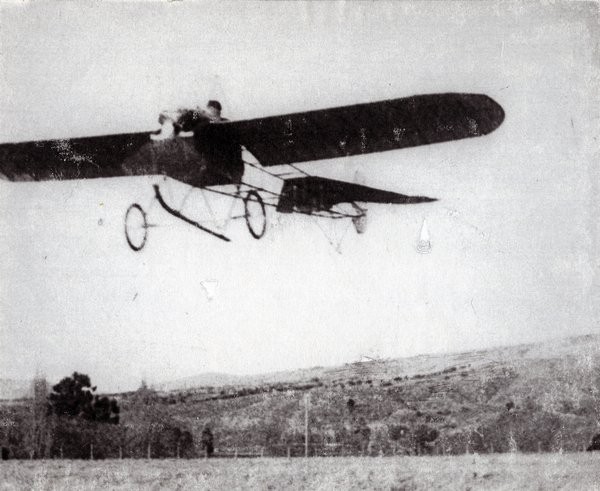
Percy Fisher began the design of his aircraft in June 1911, and the machine was finally finished in November 1912. On Christmas day 1912, Fisher attempted his first flight at Pigeon Bush in the Wairarapa. It was a short hop into the air, followed by a heavy crash. While the engine was powerful enough to lift the aircraft into the air, the basic configuration presented some severe control problems. On 28 April 1913 with Reginald White at the controls, the Fisher monoplane made its first successful short flights at Pigeon Bush. After the Gladstone flights in June 1913, several different pilots occasionally flew the aircraft, before it was retired in early 1916. The only remains of the aircraft in 2003 were the two cylinders at Southward’s Museum. Percy Fisher went on to have a very successful engineering business in Wellington, New Zealand. He died in 1941.
Fisher, Percy
“The planes were attached to what was really an endless belt, revolving around two drums, one placed higher than the other, to allow the planes to meet on an independent stratum of air. The planes were set at an angle on the belt, and when in motion gave a strong lifting impetus to the machine. The propelling apparatus also consisted of planes fixed to an endless band, so designed that the planes pushed the air when traveling in one direction, and feathered when returning in the opposite direction.”
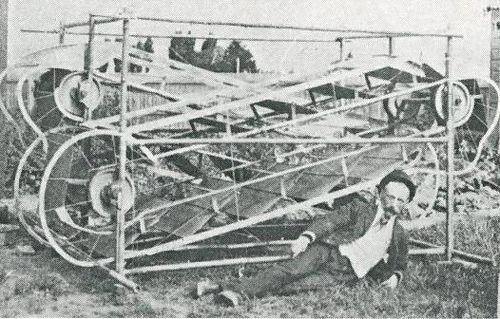
Direct-lift flying machine invented in 1909 by Harry Fisher, an early experimenter from Tauherenikau, New Zealand.
He went on to build a monoplane in 1911.
Percy Fisher died in 1941.
First Strike Bobcat / SuperCat
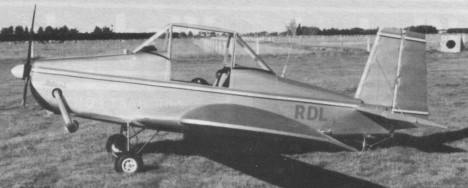
Designed by Bobby Baker and first shown in public in 1984. Built up from wood from plans supplied by the First Strike, the fuselage is constructed out of spruce longerons and plywood bulkheads, resulting in a strong, light and inexpensive approach for the homebuilder. Powered by a Rotax engine. Finished in ceconite and dope. Centre mounted joy stick, rudder pedals, tailwheel steerable through rudder pedals. The wings are removable for trailering, set up time being cited as 20 minutes. Designer Bobby Baker notes that some owners have been using the Bobcat for spray work, however he cautions that the design requires some beefing up – seen as no problem – before the additional load is carried. Suggestions for beefing up the structure, putting the craft up out of the microlight category, are included with the initial plans.
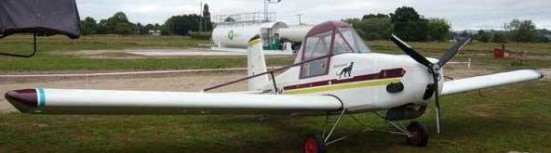
The Supercat is a strengthened version with a slightly shorter wingspan and greater performance capabilities.
Bowdler Aviation Inc markets plans and kits to build the Supercat single-seat monoplane, formerly developed by First Strike and first flown 1984.
The SuperCat has removable wings, taking less than one hour with two people, and fold up tail feathers.
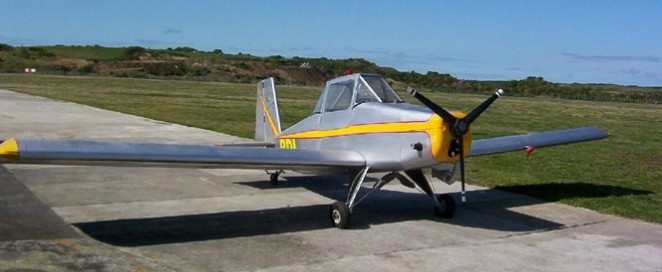
Bobcat
Engine: Rotax 277
Empty wt. lbs: 251
Max wt: 500 lb
Wing span: 27ft 8in
Wing area: 112 sq.ft
Wing loading: 4.46 lbs/sq.ft
Power loading: 17.86 lbs/hp
Max speed: 63 mph
Cruise: 50 mph
Stall: 27 mph
Vne: 80 mph
Seats: 1
Bobcat
Engine: KFM 107ER (334 cc) 25 hp.
Static thrust: 190 lbs.
Empty wt: 248 lbs.
Wing span: 27 ft 8 in
Wing area: 120 sq.ft.
Height: 6 ft.
Length: 15 ft 3 in
Fuel cap; 5 USG.
Construction: Wood, Foam.
Max wt: 500 lbs.
Stall: 27 mph.
Max speed: 60 mph.
Vne: 80 mph.
Climb rate: 500 fpm @ 40 mph.
Design limit: +4, -3g.
Glide ratio: 12-1.
Wing loading: 4.17 lbs/sq.ft.
Power loading: 20.0 lbs/hp.
Bobcat
Engine: Rotax 447
Prop: ltra-prop 3 blade, 59″ diam., 18 deg. pitch ground adjustable
Wingspan: 27ft.
Fuel consumption: 17lt/hr.
MAUW: 300kg.
Fuel capacity: 35ltrs.
Cruise: 65-75mph.
Vne: 85mph.
Climb & land: 55mph.
Stall: 30mph.
Seats: 1
SuperCat
Engine: Rotax 447, 42 hp.
Wing span: 27.33 ft.
Wing area: 108 sq.ft.
Height: 6.33 ft.
Length: 15.8 ft.
Wing loading: 5.21 lbs/sq.ft
Power loading: 15.63 lbs/hp
Empty wt.: 330 lbs
Max wt.: 625 lbs
Max speed: 85 mph
Cruise: 65 mph
Stall: 37 mph
Vne: 100 mph
Range: 140 sm.
ROC: 900 fpm.
Take-off dist: 150 ft.
Landing dist: 200 ft.
Service ceiling: 10,000 ft.
Fuel cap: 8 USG.
Seats: 1.
Landing gear: tail wheel.
SuperCat
Engine: Rotax 503, 52 hp.
Prop: 3 Blade carbon Fibre ground adjustable.
Max all up weight 650lbs.
Empty weight 355lbs.
Fuel capacity: 30 litres
Endurance: 2.5 – 30 hours
Stall 27mph
Cruise 45-60 mph
VNE 80mph
Rate of climb 700fpm
Take off roll 150ft
Landing roll 200ft
First Class Shadow II
An open cockpit high-wing, wire-braced monoplane, pusher prop. Side-by-side two-place seating, center-mounted 3-axis control sticks.
Engine: Rotax 503, 48 hp.
Prop: Ultra prop, composite. 59in diameter.
Wingspan 32ft.
Wing area 160 sq.ft.
Empty weight 310 lbs.
Gross weight 750 lbs.
Cruise speed 42 mph.
Stall speed 26 mph.
Vmax 60 mph.
Climb 500 fpm.
Takeoff run 150ft.
Lan¬ding roll 135ft.
Landing gear: Tricycle, aluminum.
First Class Shadow
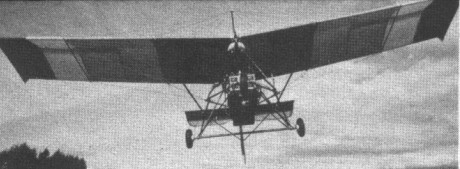
A 40 per¬cent, double-surface, high-wing monoplane, open cockpit, 3-axis stick control to elevator/spoilers, rudder foot-pedal controlled.
Engine: Rotax 377, 36 hp.
Prop: Ultra prop, 3-bladed, 59in diameter.
Wingspan 32 ft.
Wing area 160 sq.ft.
Empty weight 251 lbs.
Gross weight 576 lbs.
Cruise speed 45 mph.
Stall speed 20 mph.
Vmax 60 mph.
Climb 900 fpm.
Takeoff run 80ft.
Land¬ing roll 75ft.
Undercarriage: Tricycle, aluminum.
Price 1984: US$4,995.
FIRMA Qualt 200L
A two-seat monoplane

